Hippocrates was 2,000+ years ahead of modern medicine.
The Father of Medicine dropped these timeless truths that still hit hard today:
“All disease begins in the gut.”
“Walking is man’s best medicine.”
“Food should be our medicine — and our daily choices shape our future health.”
“The greatest medicine of all is teaching people how not to need it.”
“Everything in excess is opposed by nature.”
Ancient wisdom that still beats most modern health advice.
Which one resonates with you the most? 👇
Tag someone who needs this reminder.
#Hippocrates
#NaturalHealth
Longevity isn’t about one big change—it’s about 15 tiny ones.
These daily habits might seem small, but they are the strongest predictors of how you’ll feel 10 years from now.
Which one are you starting today? 👇
#HealthHabits#Longevity#WellnessTips
The ultimate minimalist exercise for a busy day: Mountain Climbers.
In a single 60-second burst, you hit three distinct biological targets:
1. Absolute core stabilization
2. Lower-body muscular endurance
3. An immediate cardiovascular heart-rate spike
No equipment. No driving to a gym. Just pure, efficient movement to break up a sedentary desk day. Drop and give it a try right now. 🔍
#FitnessTips
#FunctionalFitness
Stop exercising just to burn calories.
That’s the least interesting thing a workout does for your body.
Metabolic Mastery
Exercise maximizes insulin sensitivity and optimizes nutrient partitioning — so the food you eat fuels muscle instead of padding fat stores.
Cellular Upgrades
It’s a built-in youth preservation system. Physical stress triggers mitophagy (clearing damaged mitochondria) and activates repair pathways that literally slow biological aging.
Neurochemical Optimization
Workouts spike BDNF, driving neuroplasticity, sharper focus, better mood, and stronger stress resilience.
Vascular Elasticity
Movement is a pressure valve for your arteries. It floods your system with nitric oxide, improves endothelial function, and keeps vessels supple — protecting heart health for decades.
Structural ReserveResistance + impact training stimulates osteoblasts and builds muscle mass — your best insurance against frailty, falls, and loss of independence later in life.
Exercise isn’t punishment for what you ate.
It’s biological medicine for how you age.
Which benefit surprises you most? Drop it belo
Ever notice how stress instantly knots up your stomach?
That’s the gut-brain axis at work. It’s the reason why digestion, mood, sleep, and anxiety always seem to trigger together.
Your gut isn’t just “processing food.” It chats with your brain via:
•Neural pathways (like the vagus nerve)
•Hormonal signals flashing back and forth
•Immune cells talking to each other
•Metabolic feedback loop
That’s why GI symptoms and emotional symptoms can overlap so often.
A crucial nuance:
While about 90% of serotonin is produced in the gut, it doesn’t mean gut serotonin directly reaches your brain or upgrades your mood directly.
Your body works as a connected system, not a set of separate boxes.
The real takeaway?
Your body is a beautifully connected network, not a collection of isolated organs.
So if you’re working on mood or anxiety, it can be worth looking at gut symptoms, inflammation, sleep, and stress together. 🥦✨
Belly fat increases by up to 300-400% between ages 25 & 65.
While muscle mass declines by ~3-5% per decade after 30. (reaching ~30% lifetime loss). 😱
This isn’t just “getting older." It's a recipe for slower metabolism, fatigue, and higher health risks.
The good news? Strength training is one of the most powerful ways to fight back.
Working your muscles against resistance builds muscle, torches visceral fat, boosts metabolism, and keeps you strong for decades.
You don’t need to lift heavy or spend hours in the gym. Start small — consistency beats perfection.
Even 2–3 sessions a week can change everything.
Are you read to protect your future self?
#StrengthTraining
#MuscleMatters
Source;
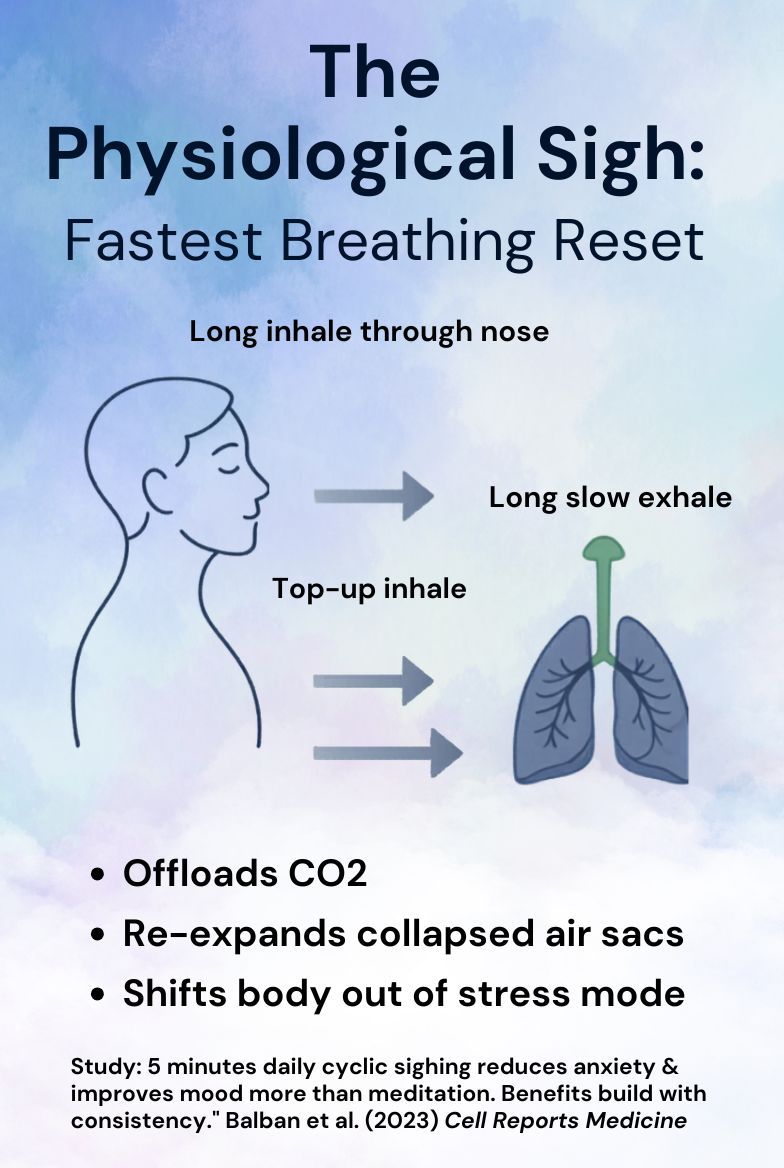
You can flip your biological stress switch in under 30 seconds.
It’s called the Physiological Sigh.
Do this:
1️⃣ Take a long inhale through your nose.
2️⃣ At the very top, take a second, shorter "top-up" inhale.
3️⃣ Let out a long, slow exhale through your mouth.
Why it works:
The double inhale re-inflates the tiny air sacs (alveoli) in your lungs. This allows you to offload carbon dioxide more efficiently, which is a signal for your brain to "calm down."
A 2023 study in Cell Reports Medicine found that just 5 minutes of daily cyclic sighing improved mood and reduced anxiety more effectively than mindfulness meditation.
Try it for 5 minutes a day — or 1 to 3 sighs in the moment when stress spikes. The benefits build over time if you're consistent.
Source:
Balban, M. Y., et al. (2023). Brief breathwork vs. meditation for mood & arousal. Cell Rep Med, 4(1).
Bone health matters earlier than most think.
Walking helps, but strength and impact work often do more—like squats, carries, or hills.
#BoneHealth#StrengthTraining#HealthyAging
A workout doesn’t cancel out long hours of sitting.
Add movement breaks: stand during calls, walk, or do a few squats regularly.
#MoveMore#BreakTheSitting#ActiveLifestyle
Don’t wait until dinner for protein.
Spread it out with yogurt, eggs, cottage cheese, or a smoothie. It helps energy and satisfaction.
#ProteinIntake#BalancedMeals#FuelYourBody
🪠 How to Clean Your Brain (Literally)
New research from Penn State published in Nature Neuroscience reveals a fascinating mechanical rinse cycle for your brain. It turns out your brain doesn't just sit there—it sways.
Here is how the brain pump works:
• The Muscle Pump: When you move or engage your core, it increases pressure in the vessels surrounding your spinal cord.
• The Hydraulic Shift: This pressure creates a rhythmic sway in your brain tissue.
• The Deep Rinse: This movement acts like squeezing a dirty sponge, physically pushing cerebrospinal fluid through the brain to flush out metabolic waste.
The Best Part?
You don't need a heavy workout. Simple, rhythmic actions, like taking a walk or even the slight core engagement of standing up, trigger this hydraulic cleaning system.
The Brain Flush Protocol: 3 Ways to Trigger the Cycle
1. The Rhythmic Walk: Aim for a 10-minute brisk walk. The rhythmic engagement of your core and the impact of your steps optimize the hydraulic sway.
2. Micro-Engagements: Don't just stand up—brace. Lightly engaging your abdominal wall as you transition from sitting to standing maximizes the pressure shift.
3. The Standing Desk Shift: If you work at a desk, shift your weight from side to side or perform occasional calf raises. This keeps the "pump" active even while you work.
💡 Pro-Tip: Pair this with deep, diaphragmatic breathing to further assist the pressure changes in the thoracic cavity.
#BrainHealth
#Neuroscience
#Longevity
Source: Guenette, J. P., et al. (2024). Body-to-brain hydraulic signaling flushes the neural interstitium. Nature Neuroscience.
Sleep impacts energy, mood, recovery, and appetite.
Start with one change: go to bed at the same time or stop scrolling earlier. Most adults need at least 7 hours.
#SleepHealth#RecoveryMatters#WellnessHabits
Sleep impacts energy, mood, recovery, and appetite.
Start with one change: go to bed at the same time or stop scrolling earlier. Most adults need at least 7 hours.
#SleepHealth#RecoveryMatters#WellnessHabits
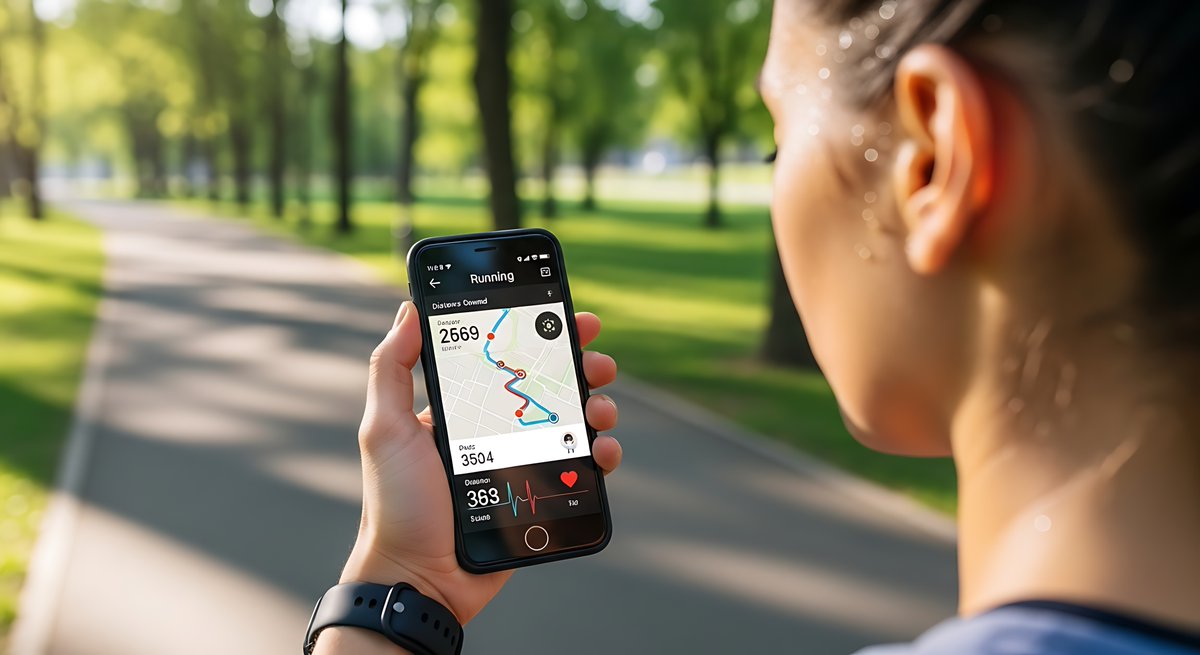
Walking is great. Changing the pace makes it more effective.
Try 2 minutes comfortable, 1 minute brisk, and repeat. A small shift adds purpose.
#WalkMore#CardioHealth#MoveDaily
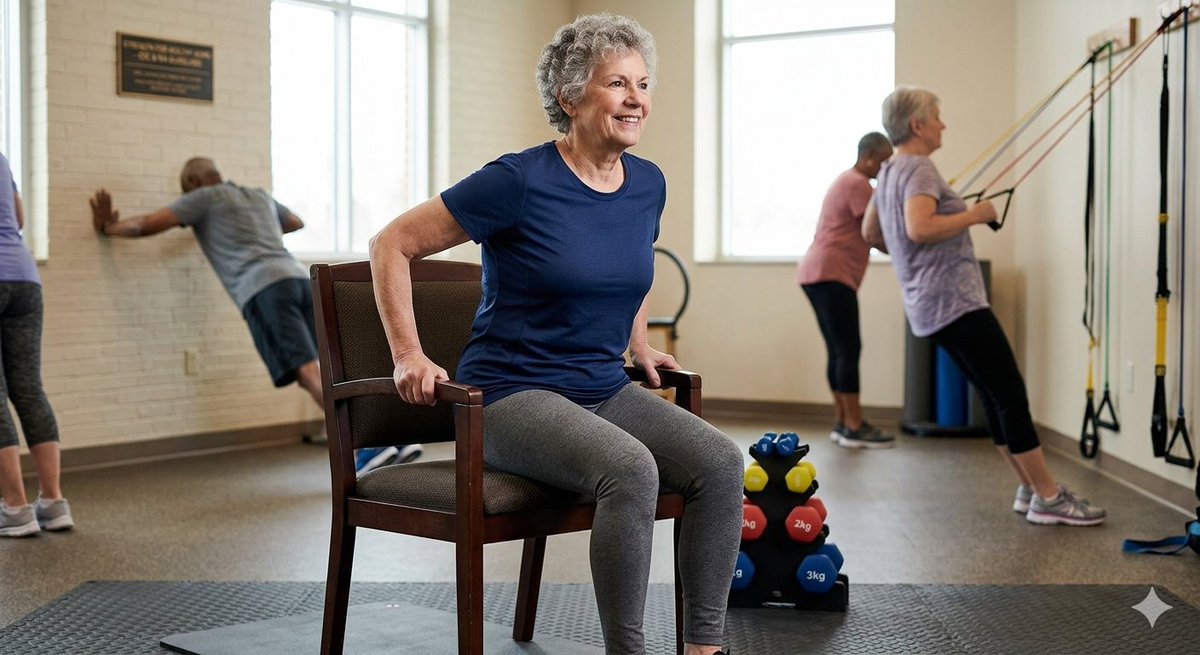
Strength training supports bone health, mobility, and independence.
Start simple: sit-to-stands, wall push-ups, rows, and carries. Two sessions per week goes a long way.
#StrengthTraining#HealthyAging#FunctionalFitness