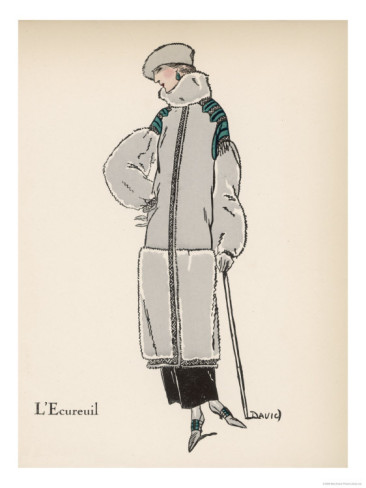
This @wwd article "Culottes, Culottes, Culottes" from April 1936 tells "conservatively-minded" women, "the culottes should be promoted as a comfortable fashion (because ) it looks exactly like a dress, but it's really a style utility."
#Fashionhistory#womeninpants
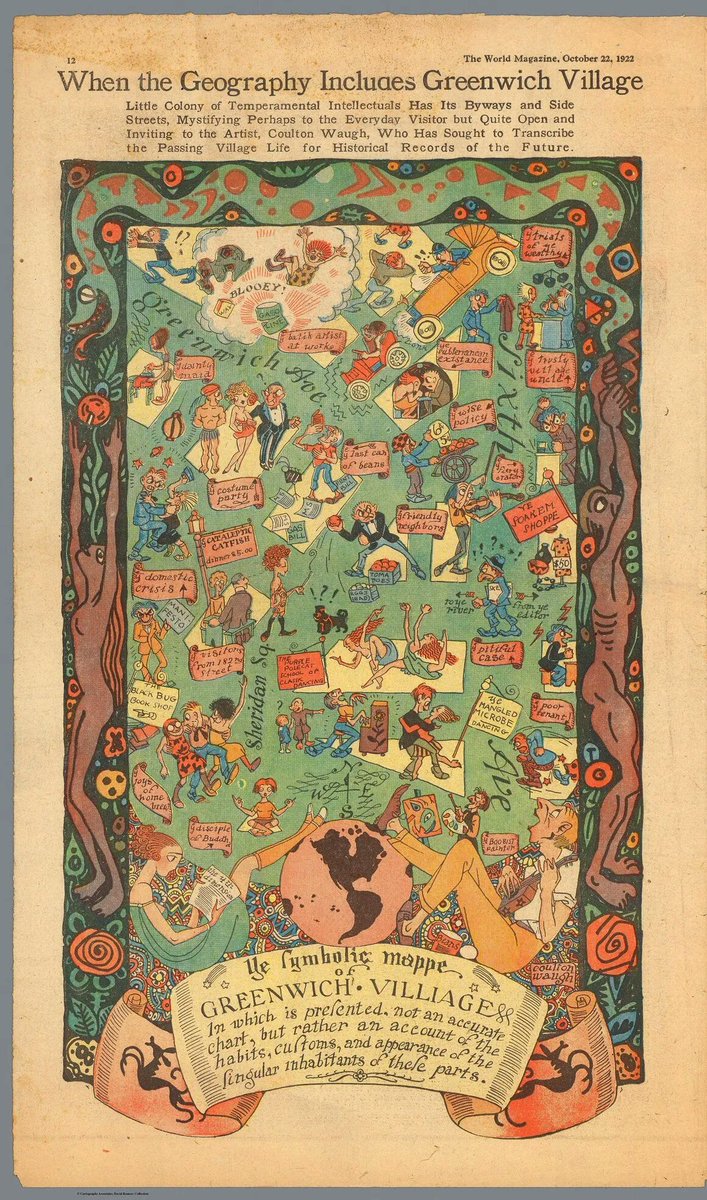
Dutch artist Pieter Mijer brought Batik from Java to Greenwich Village in 1911. It was used to create colorful borders for smocked dresses. Bleached cotton is painted with wax, dipped into dye baths for a pattern. The wax is removed with gasoline. https://t.co/nf73cJHWVq @GVSHP
The Trufflers (1917) called Greenwich Villagers “anarchists, feminists, Freudian psycho-anayists of self, Jewish intellectuals, painters of all nationalities, sex hygiene enthusiasts, theatrical press agents and youthful experimenters in living." #GreenwichVillage
"His creations will be seen in the context of a vast retrospective that will gather some 577 items – 212 silhouettes and accessories; 365 paintings, sculptures, jewels, photographs and more, all looking to underline Elsa’s cultural impact."
#Schiaparelli
https://t.co/JbpsIvEdIf
The AHA will host a webinar on Abortion, Choice, and the Supreme Court: History Behind the Headlines, bringing together leading scholars to place #DobbsvJackson in historical context. More details about the webinar coming soon.
"No, mother. I don't study that period. I know you're annoyed, but I just won't get into the accuracy of the costumes." #fashionhistory
Bridgerton: in defence of 'inaccurate' costumes in period dramas https://t.co/Cj1ghyQVZG via @ConversationUK
Yeah for one of my favorite students, PhD candidate Doris Morgan Rueda. Historians find intellectual inspiration from many places...here's @dee_linquent 's take on the connections between art and history. @ncph