Nous étudions le lien entre la santé mentale et physique.
We study the interplay between mental and physical health.
Dr @ClaudiaTFitz's team @uqtr & @fiusmm.
📢 Bienvenue // Welcome!
👥 Pour ce premier tweet, nous sommes https://t.co/z4DlgZl7WR de vous présenter les membres actuels de notre équipe!
//
For this first tweet, we are pleased to introduce our current team members!
1/n
Trudel-Fitzgerald, C., et al. (2017). "The relationship of perfectionism with psychological symptoms in cancer patients and the contributing role of hyperarousability and coping." Psychological Health, 32(4): 381–401.
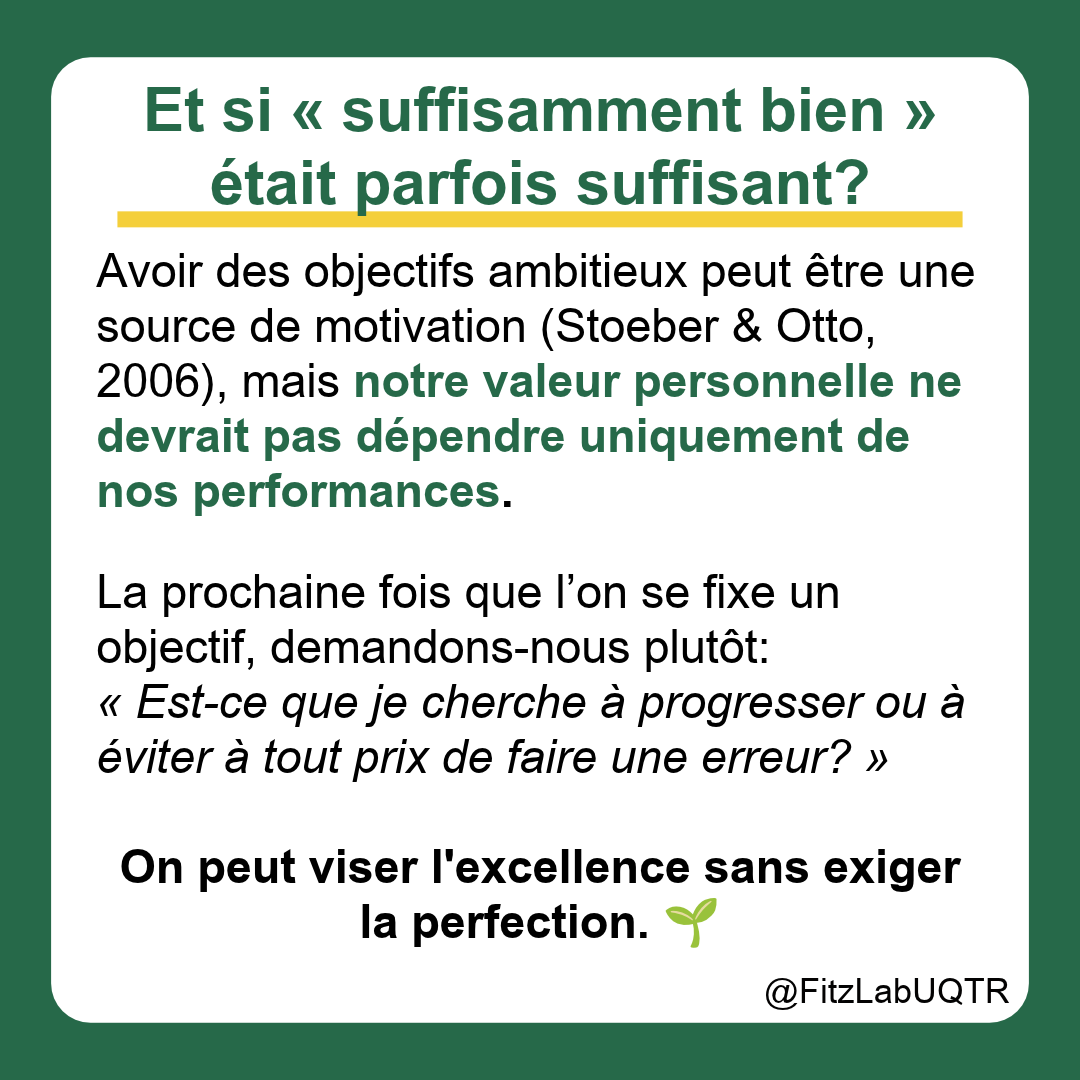
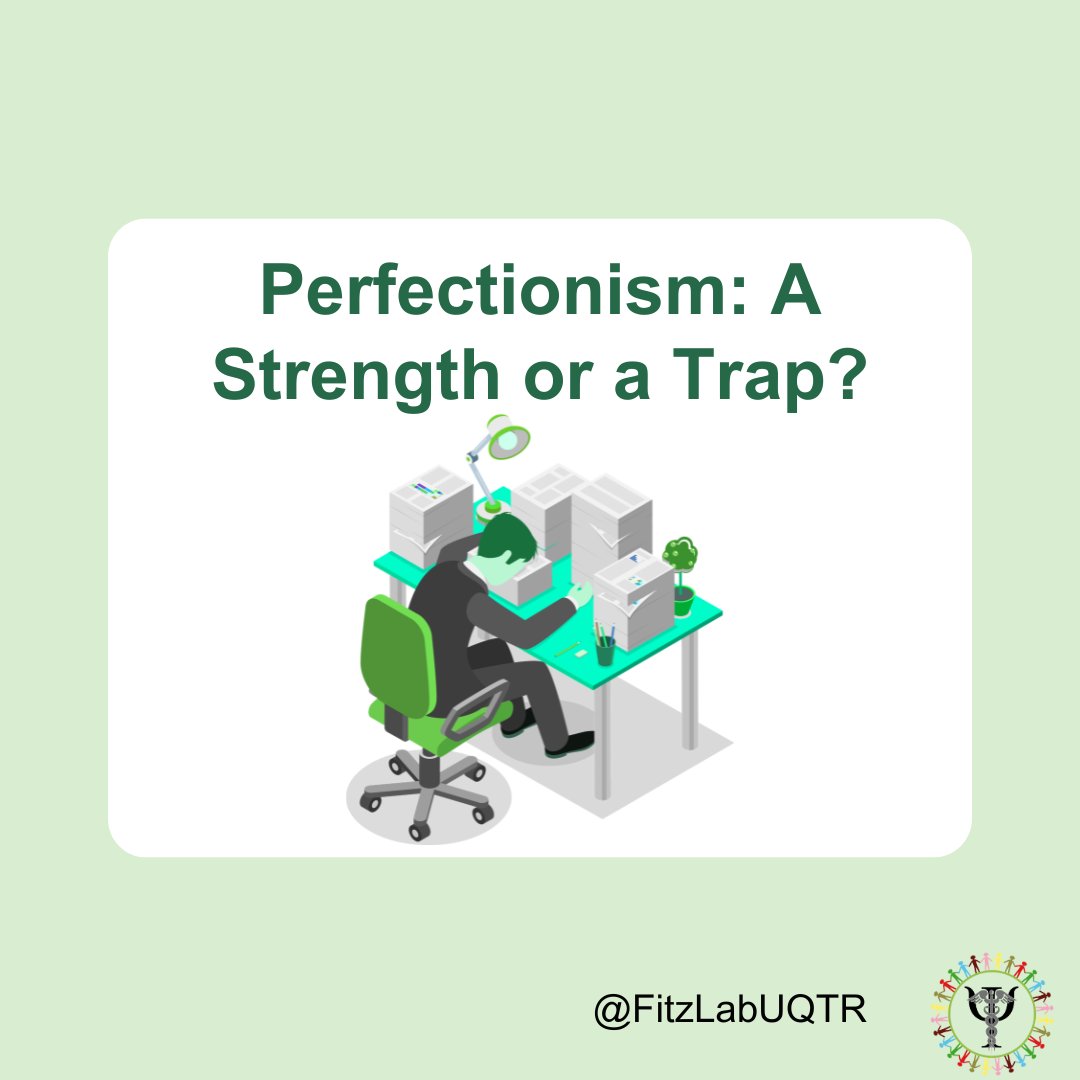
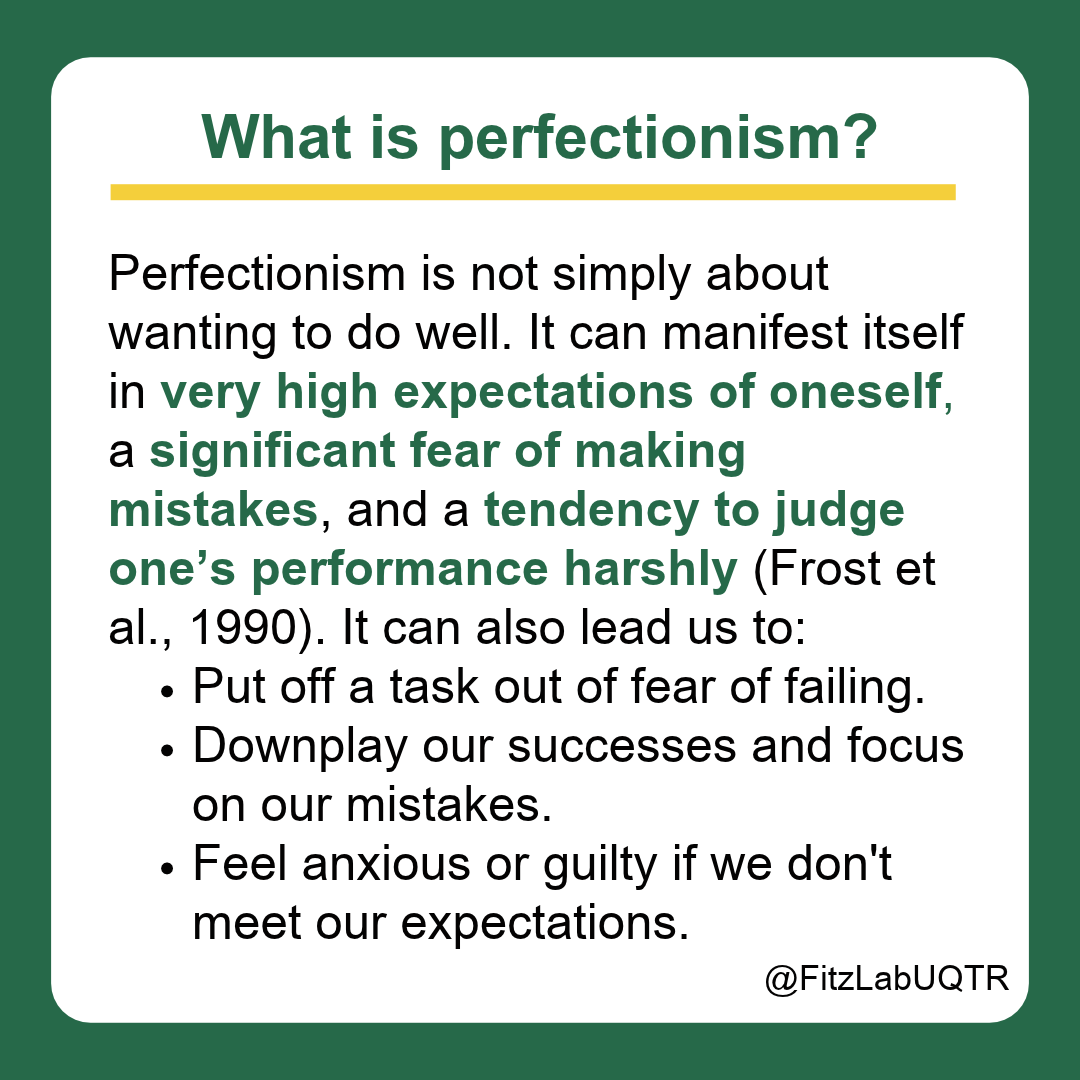
Se fixer des objectifs élevés peut nous pousser à nous dépasser, mais poussée à l'extrême, la recherche de la perfection peut devenir un véritable poids. Aujourd'hui, Arianne aborde les pièges du perfectionnisme et son impact dans un contexte de maladie chronique.
Stoeber, J., & Otto, K. (2006). Positive conceptions of perfectionism: Approaches, evidence, challenges. Personality and social psychology review, 10(4), 295-319.
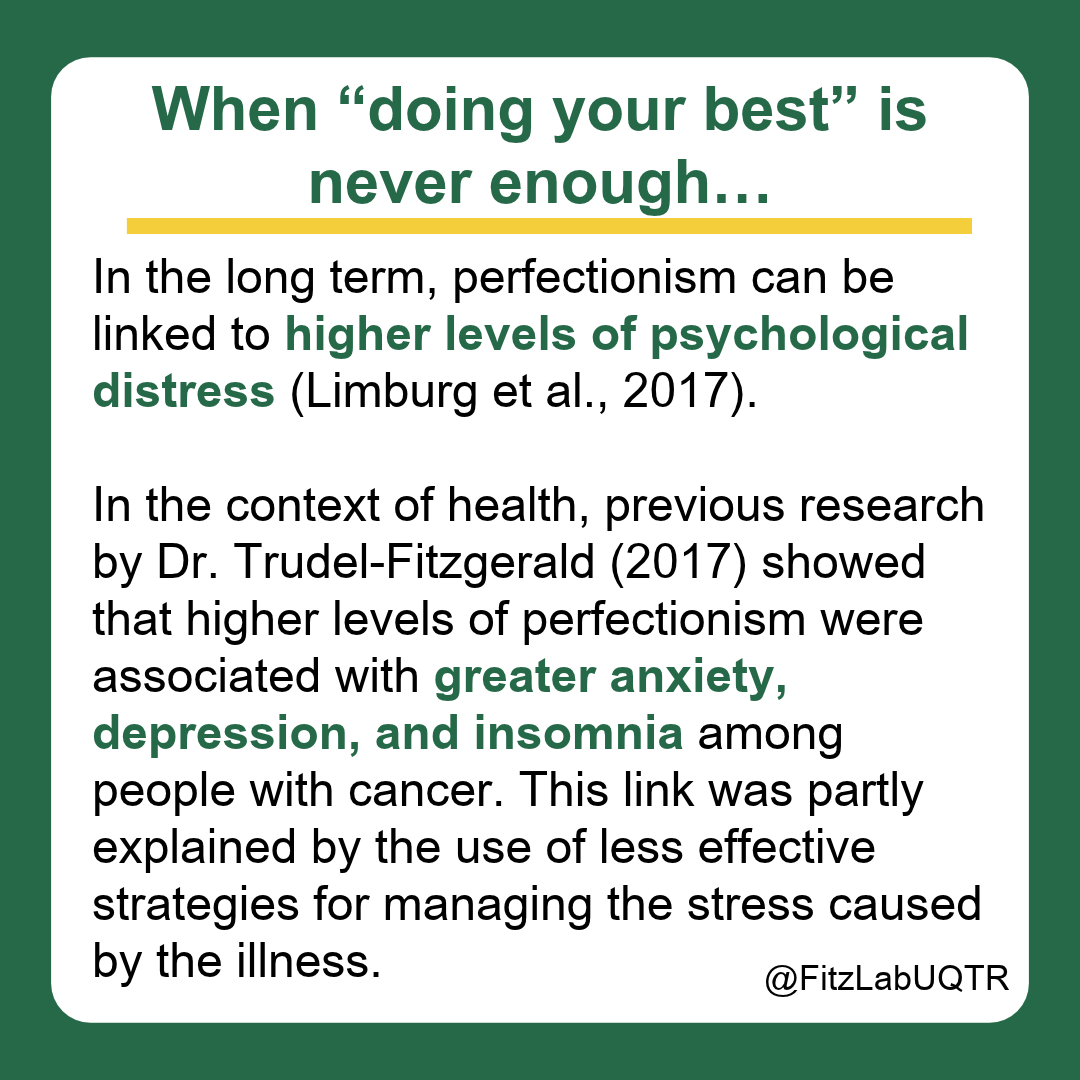
Limburg, K., Watson, H. J., Hagger, M. S., & Egan, S. J. (2017). The relationship between perfectionism and psychopathology: A meta‐analysis. Journal of clinical psychology, 73(10), 1301-1326.
Trudel-Fitzgerald, C., et al. (2017). "The relationship of perfectionism with psychological symptoms in cancer patients and the contributing role of hyperarousability and coping." Psychological Health, 32(4): 381–401.
Setting high goals can push us to surpass ourselves. But when mistakes feel like a failure and successes seem inadequate, the pursuit of perfection can become a burden. Today, Arianne explains the pitfalls of perfectionism and its impact in the context of chronic illness.
Stoeber, J., & Otto, K. (2006). Positive conceptions of perfectionism: Approaches, evidence, challenges. Personality and social psychology review, 10(4), 295-319.
Limburg, K., Watson, H. J., Hagger, M. S., & Egan, S. J. (2017). The relationship between perfectionism and psychopathology: A meta‐analysis. Journal of clinical psychology, 73(10), 1301-1326.
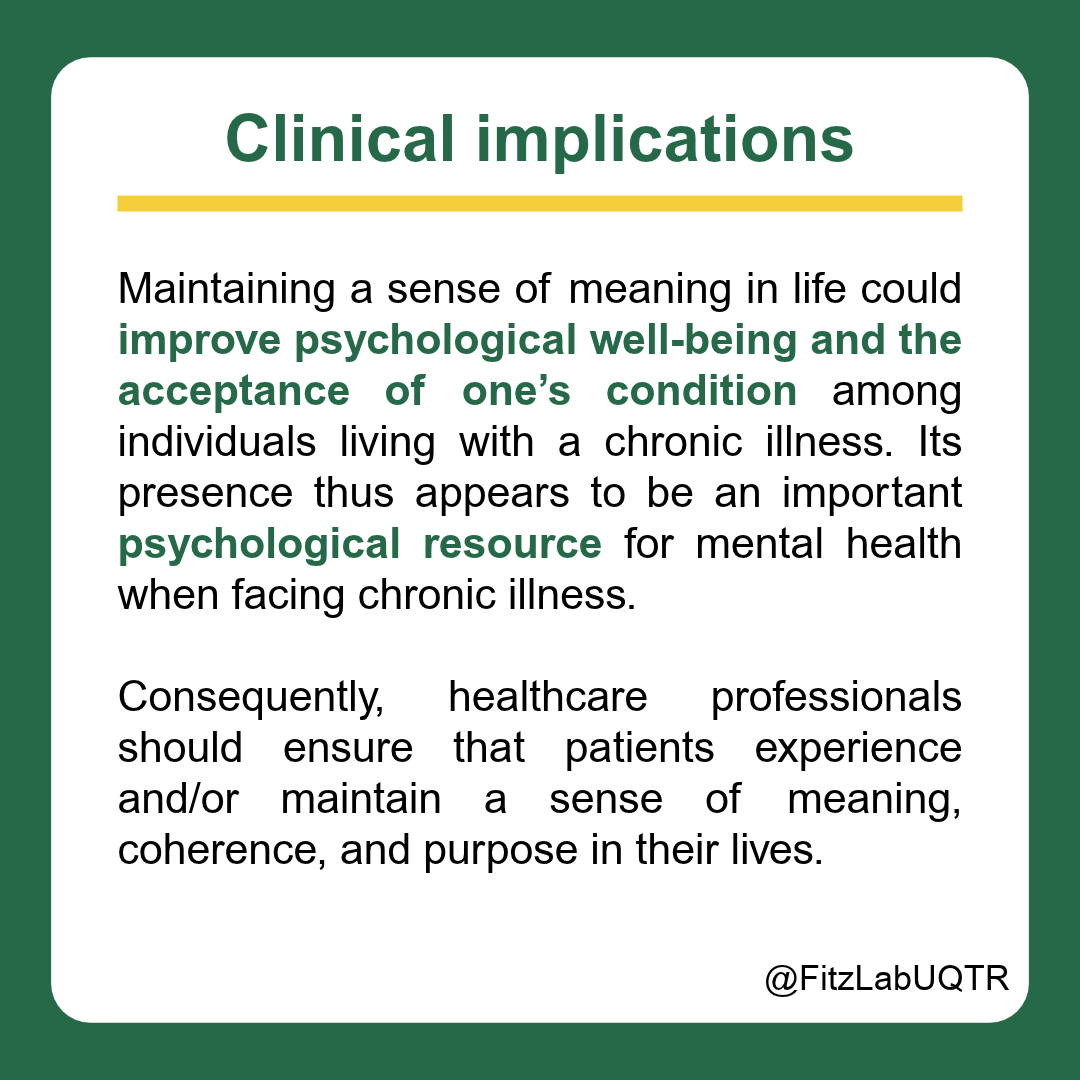
La semaine dernière, Léa vous parlait du sens de la vie comme déterminant de la santé cognitive. Aujourd'hui, Haiel partage avec vous une étude ciblant le sens de la vie plutôt comme indicateur de l'adaptation psychologique à une maladie chronique.
Last week, Léa spoke about having a sense of purpose in life as a determinant of cognitive health. Today, Haiel shares a study that looks at a sense of purpose in life instead as an indicator of psychological adjustment to a chronic illness.
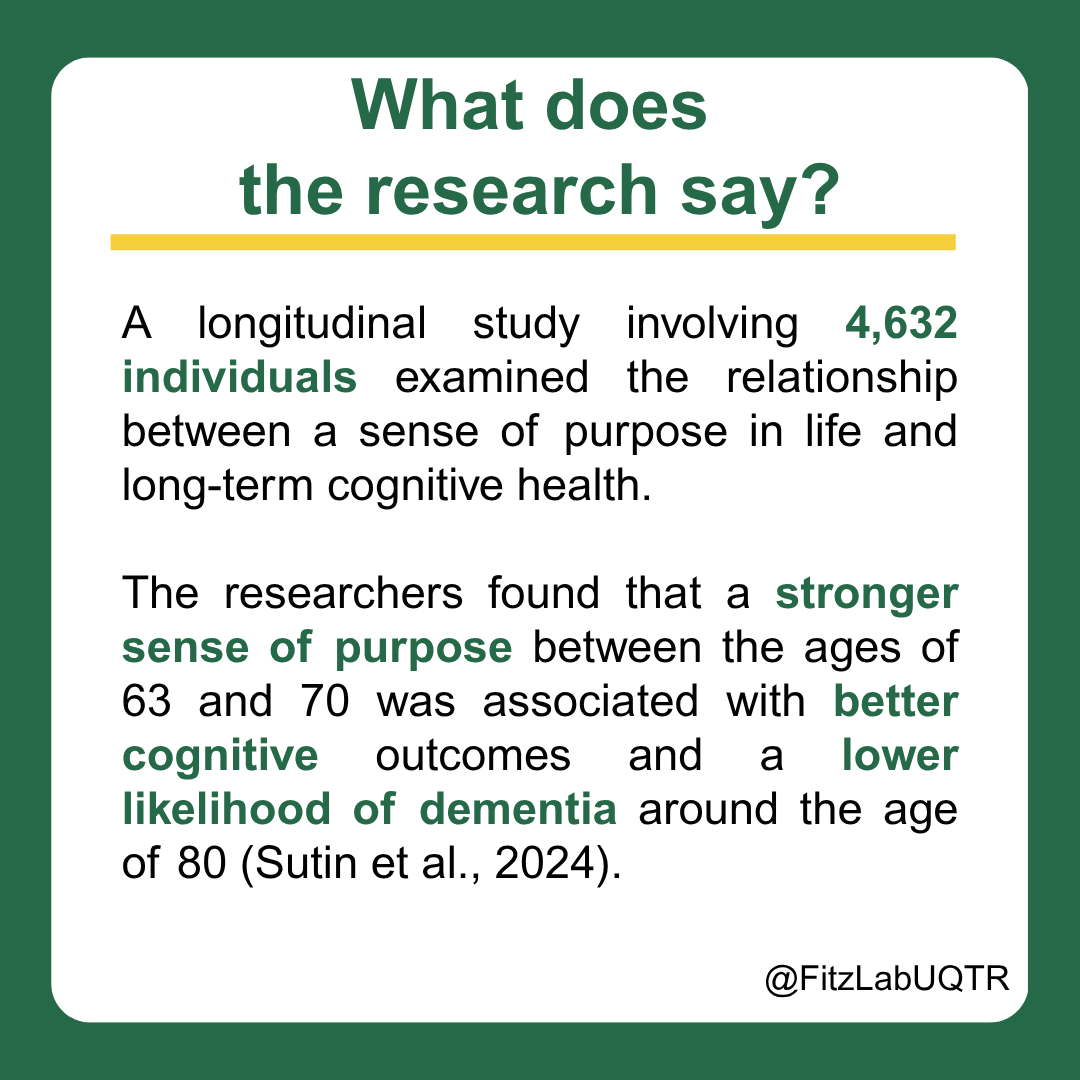
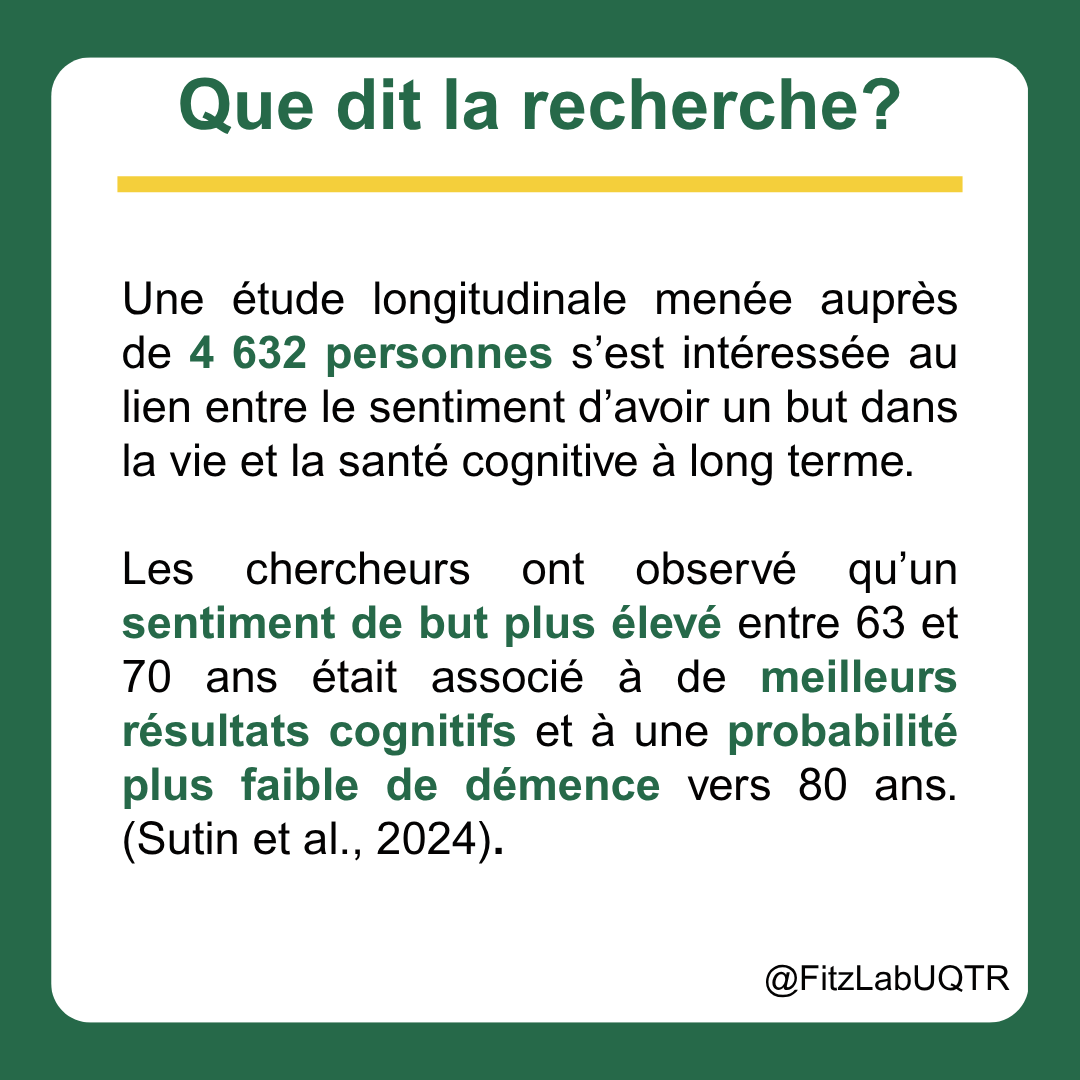
👴🧓Could having a sense of purpose in life be linked to better cognitive health and a reduced risk of #dementia as we age? Léa explains how, right here.⬇️
🧓👴Le sentiment d’avoir un but dans la vie pourrait-il être lié à une meilleure santé cognitive et à un risque réduit de #démence en vieillissant? Léa vous explique comment ici ⬇️
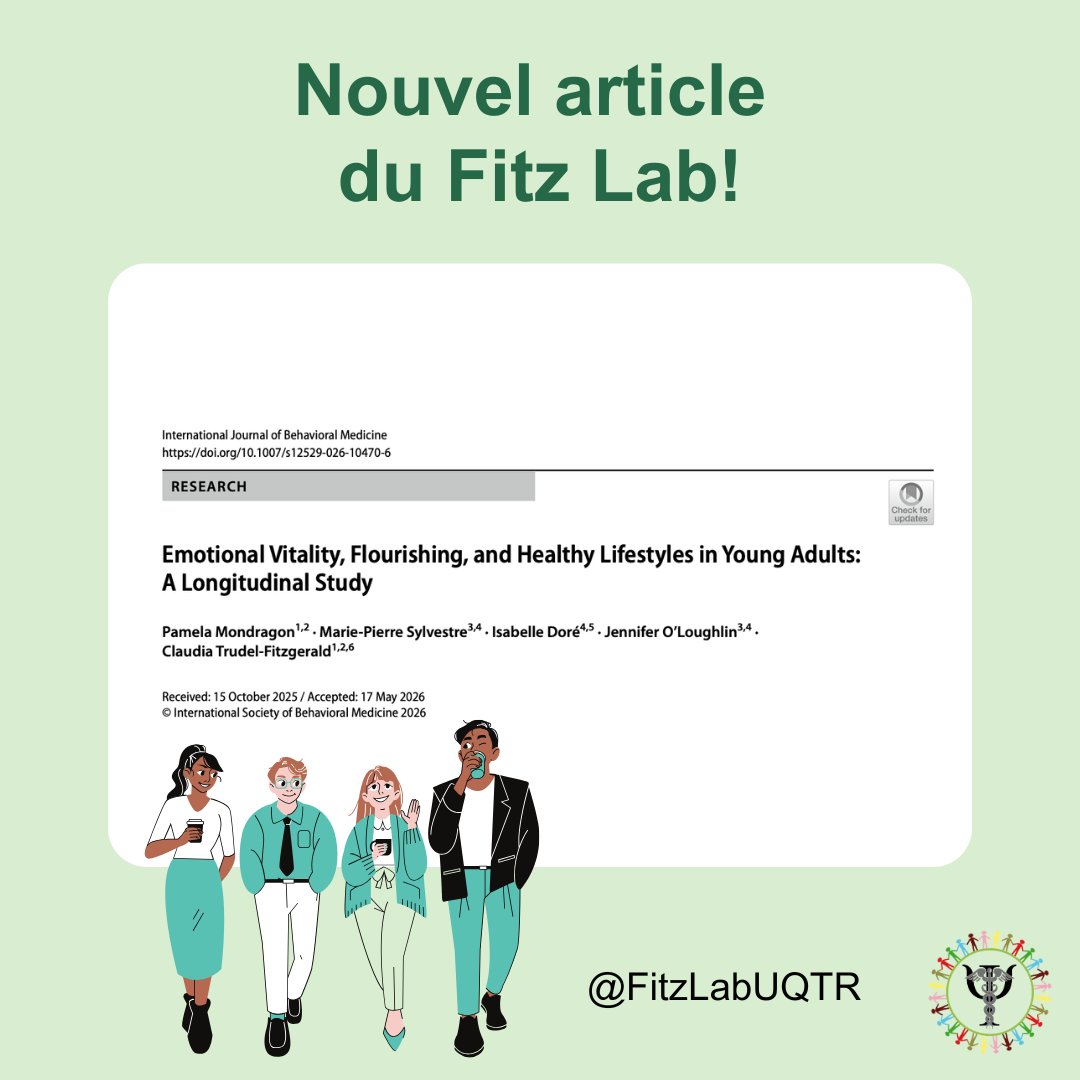
👩🏫 Nous sommes très enthousiastes de partager le premier article de thèse de Pamela, qui a récemment été publié dans le International Journal of Behavioral Medicine! Bonne lecture!
https://t.co/6qZoFk8Izv
@UQTR
👩🏫 We are very happy to share Pamela's first thesis article, which was recently published in the International Journal of Behavioral Medicine! Enjoy your reading!
https://t.co/6qZoFk8Izv
@UQTR
Ottaviani, C., Thayer, J. F., Verkuil, B., Lonigro, A., Medea, B., Couyoumdjian, A., & Brosschot, J. F. (2016). Physiological concomitants of perseverative cognition: A systematic review and meta-analysis. Psychological Bulletin, 142(3), 231–259.
https://t.co/Gafp2MyTRH
Brosschot, J. F., Gerin, W., & Thayer, J. F. (2006). The perseverative cognition hypothesis: A review of worry, prolonged stress-related physiological activation, and health. Journal of Psychosomatic Research, 60(2), 113–124. https://t.co/ZFubQM60Ko