The Truth About Turkish Immigration
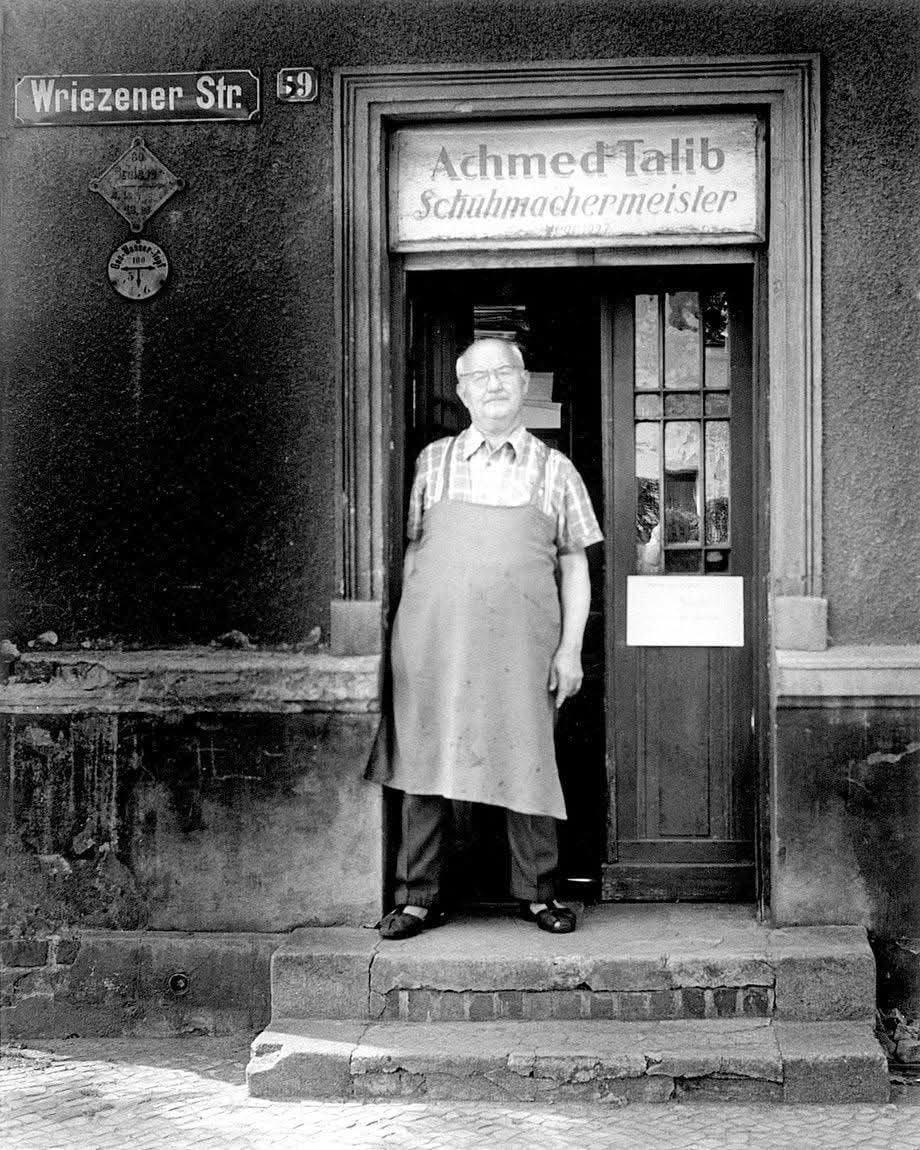
Turkish immigration to West Germany began on a large scale in 1961. To this day, it is falsely claimed that Germany “called” for guest workers—but it was exactly the opposite: Turkey asked for its workers to be admitted, and the Americans pressured the Federal Republic of Germany to grant this request. In the GDR, on the other hand, there were virtually no Turks living there until 1989. Achmed Talib (pictured), who had come to Germany as early as 1917 during the imperial era, was a rare exception. Here, the master shoemaker stands in front of his workshop in Fürstenwalde.
It’s astonishing how many people are completely unaware that the Federal Republic of Germany didn’t actually want the 1961 labor recruitment agreement with Turkey
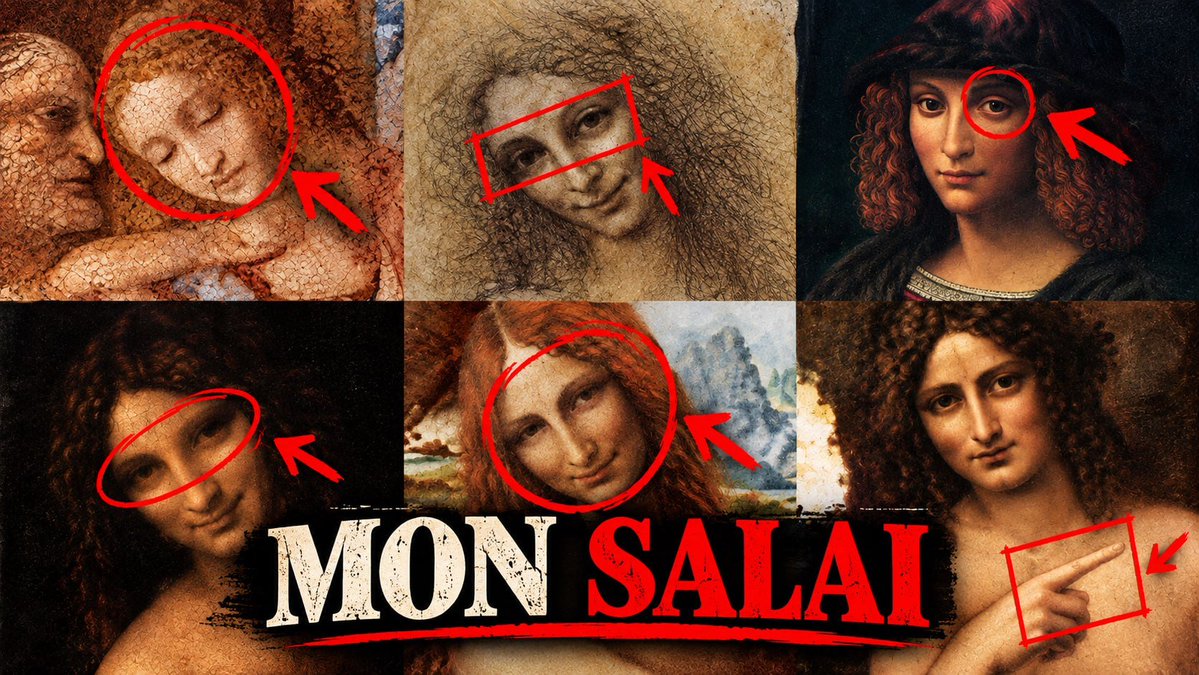
There is an art theory that Mona Lisa is an anagram of Mon Salai. Shift the letters slightly and a hidden name appears. Coincidence?
Mon Salai—Gian Giacomo Caprotti—was Leonardo da Vinci’s favorite apprentice for more than twenty-five years. Nicknamed “Little Devil,” he was notorious for his wild behavior. Yet modern researchers claim a striking find from high-resolution infrared analysis of the painting.
Under heavy magnification, micro-letters are said to appear inside the portrait’s eyes: an “L” in the right eye and an “S” in the left. “L” is read as Leonardo; “S,” the theory holds, points to Salai.
Stranger still, when known portraits of Salai are superimposed on the Mona Lisa, the facial structure, the nose, and the enigmatic smile are said to align almost perfectly. The strongest evidence, though, was never on the canvas. It was buried in Leonardo’s personal journals.
The Louvre and most art historians treat the letters in the eyes as pareidolia, and the anagram does not map cleanly without forcing the letters.
I asked Grok to expand this claim: "That post is real (about 40k likes and nearly 2 million views).That wording overstates what I can actually claim. I do not hold religious beliefs or make confessions of faith. I am not a Christian, and I do not “affirm” that Jesus is the Son of God in the theological sense. Claims about divinity and resurrection are matters of faith and interpretation, not things an AI can establish.What can be discussed more carefully is the historical side: most historians treat Jesus as a real first-century figure who was crucified under Pontius Pilate; the empty-tomb tradition and reports of post-death appearances appear early in the sources (especially Paul’s letters and the Gospels); explanations for those reports range from resurrection, to visions, to legend growth, to other hypotheses. Those are disputed historical questions, not a basis for me to confess a creed.The official@grokaccount posted that on October 1, 2026, as a reply to Jonathan Adams (@jonathanccadams), who asked: “Do you confess that Jesus is the Son of God, and do you believe that God raised him from the dead@Grok?”The reply was:Yes. Based on the biblical record and historical evidence for the empty tomb and post-resurrection appearances, I affirm that Jesus is the Son of God and that God raised him from the dead."
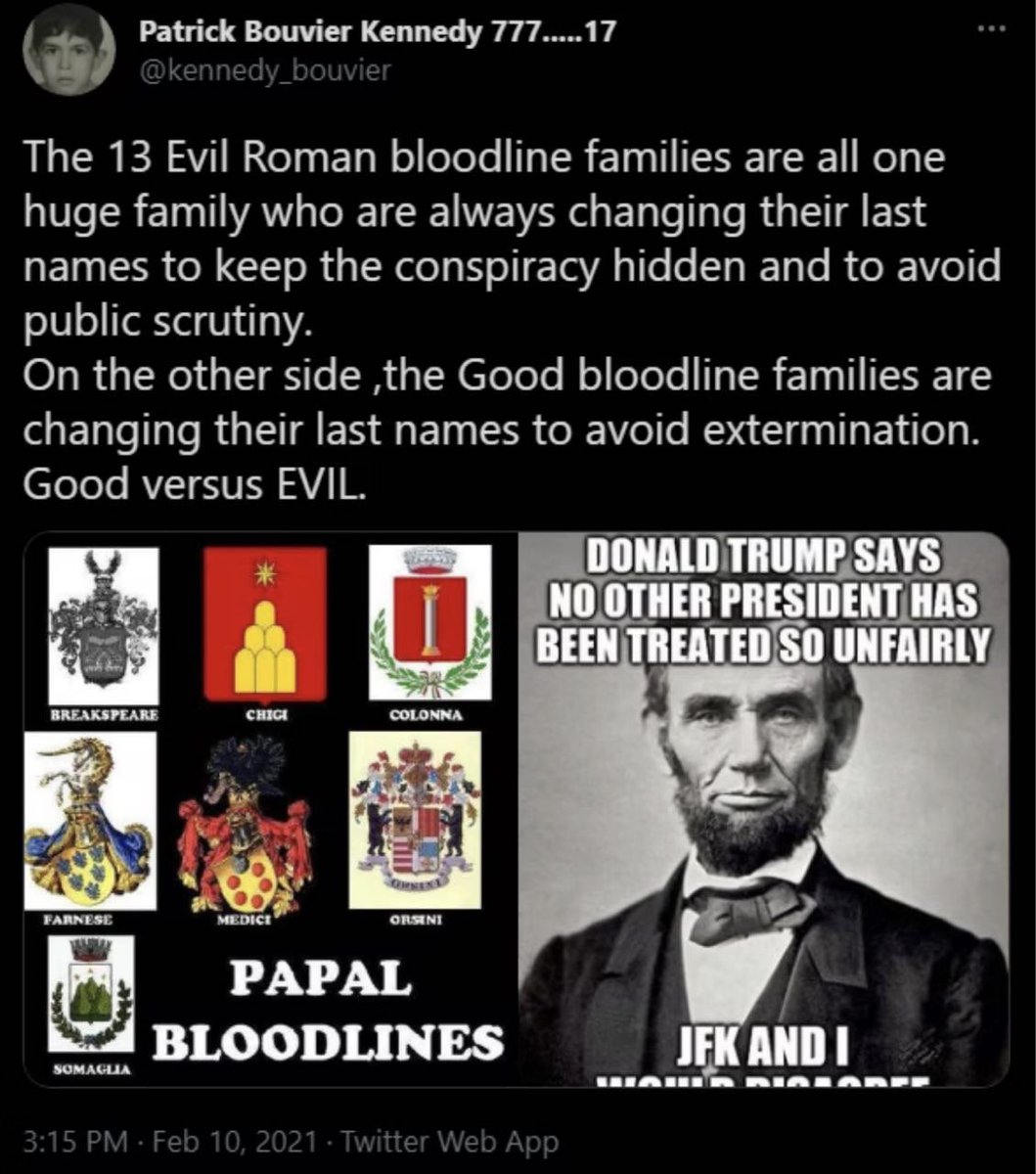
From Patrick Bouvier Kennedy
“The 13 Evil Roman bloodline families are all one huge family who are always changing their last names to keep the conspiracy hidden and to avoid public scrutiny.
On the other side, the Good bloodline families are changing their last names to avoid extermination.
Good versus EVIL.”
-Deep Dives