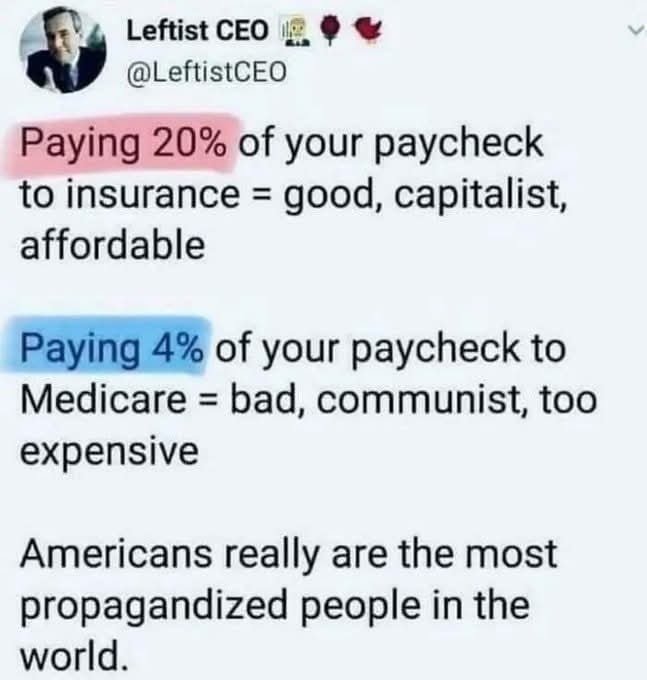
@JoniWagner@vesperdigital@KatKanada_TM@CPC_HQ They are tyrants, but nothing they are doing has anything to do with socialism. They have privatized our assets, broken up strikes, ended inconvenient protests, allowed the oligopolies/monopolies to become even more powerful... That's capitalism baby.
@kukukechu@AUTOMATON_ENG Pocketpair also asks people to name their favourite games, describe some of their mechanics, and speak on why they think those decisions were made. You have to understand the game reasonably well.
@DJ1P2@DeItaone Try and put up a competitor to MasterCard / Visa. Their duopoly is so engrained in the structure of western financialization that its going to take, optimistically, at least a decade of regulation and anti-trust action to dislodge them.
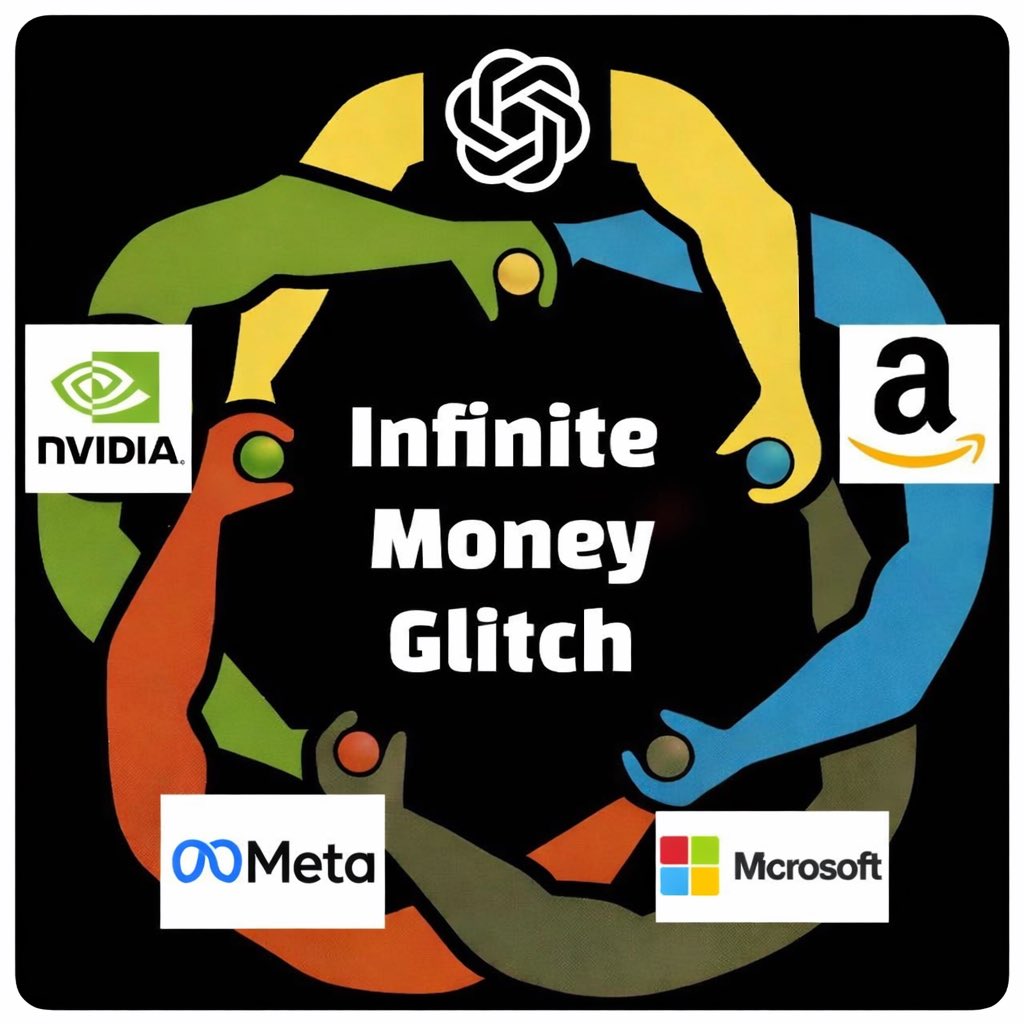
@raaleh OpenAI told me opex keep eating his revenues, so I asked how many rounds of private equity he has burned and he said he just goes to the market and gets new equity afterwards so I said it sounds like he's just feeding equity to opex and then Sam Altman started crying.
This is beyond parody: the EU has come up with a "cloud sovereignty framework" to make EU tech more sovereign and they've notably devised a "sovereignty score" to determine whether a particular cloud provider is sovereign or not (which will then determine if they get government contracts).
So far so good.
The problem however is that the way this sovereignty score gets calculated actually gives HIGHER scores to AWS, Microsoft, and Google than to European cloud providers.
This is because the formula to calculate the score (full details here: https://t.co/C0EVVFPB7j) absurdly allocates only 10% weight to "legal & jurisdictional sovereignty" (i.e., being actually a sovereign EU actor), while giving 65% combined weight to operational capabilities, supply chain documentation, and technical standards - precisely the areas where AWS/Azure/Google's massive scale gives them advantages over European providers. You can be completely subject to foreign legal jurisdiction but still score excellent overall.
EU cloud companies suspect this is intentional: the framework gives the EU bureaucratic cover to keep their existing contracts with US companies ("look, they got an excellent sovereignty score!") rather than forcing the politically difficult work of actually migrating to European infrastructure.
A sovereignty framework that prevents sovereignty, that's the EU for you...
What this text describes—the calculated American effort to reorient the Western left from class struggle to cultural critique, from the collective to the individual, from socialism to liberal moralism—resonates almost prophetically with the forgotten work of Michel Clouscard.
Writing in the 1970s and 1980s, Clouscard dissected precisely this mutation in postwar capitalism, which he called capitalism of seduction . He argued that once capitalism had secured material abundance under U.S. hegemony, it no longer needed to repress desire; it could instead commodify it. In Le Capitalisme de la séduction (1981), he declared that “capitalism needs its false opposition.”
The so-called “new left,” which replaced the old dialectic of labor and capital with the politics of desire, sexuality, and identity, became the perfect ideological vehicle for the new consumer society. What the text identifies as Washington’s project to build a non-communist, liberal left that focuses on civil rather than social rights is, in Clouscard’s terms, the political form of capitalism’s cultural evolution: rebellion repurposed as consumption.
For Clouscard, this shift was not merely intellectual but economic. The move from collective emancipation to individual liberation corresponded to a new mode of accumulation in which the market colonizes subjectivity. When the passage explains how attention was “redirected from the common good to individual rights,” it echoes almost word for word his diagnosis in Critique du libéralisme libertaire (1983): “Freedom without labor is the luxury of the consumer, not the emancipation of the producer.”
What the United States encouraged as an anti-totalitarian liberalization and democratization of the left, Clouscard would interpret as the necessary ideological lubricant of late capitalism: a society of flexible, self-expressive individuals whose sense of freedom mirrors the needs of the market. The old contradictions of capitalism—labor versus capital, imperialism versus dependency—were replaced by secondary contradictions: racial, sexual, and cultural tensions that could be recognized, debated, and even celebrated without ever threatening the system’s economic core.
For Michel Clouscard, the cultural Cold War was not merely geopolitical but civilizational—the triumph of what he called libéralisme libertaire, where economic liberalism and moral libertinism fused into a single ideology. Capitalism, having exhausted the Puritan ethic that once disciplined the worker, reinvented itself through the language of emancipation. By exporting an ethos of liberated consumption, the United States achieved what Clouscard termed “the conquest of consciousness through pleasure.” The Marshall Plan thus became not only economic aid but the foundation of a new moral economy—one that transformed revolutionary energy into lifestyle and critique into brand identity.
This synthesis, Clouscard argued, marked the final inversion of bourgeois modernity: the old bourgeoisie preached restraint, its heirs preached enjoyment—both serving accumulation. As he wrote in Le Capitalisme de la séduction, the permissive society “extends the field of profit to the totality of everyday life.” Freudo-Marxists and post-’68 radicals, believing they liberated desire, instead provided the cultural software for global capitalism’s expansion. What was once “taboo” became “trend,” and rebellion became marketing.
The true victor of the Cold War, Clouscard insisted, was not freedom but capitalism’s power to absorb freedom into its own reproduction. By shifting politics from production to pleasure, from class to identity, the liberal West achieved what repression never could: the consent of the exploited. “La liberté devient l’idéologie de la dépendance”—“Freedom becomes the ideology of dependence.” The postwar world thus mistook market expansion for self-expansion, mistaking the seductions of liberty for emancipation itself.
@KathleenWood730@andrewcuomo@ZohranKMamdani Cuomo has cost the people of New York $60 million in legal fees *so far*. He also hasn't done anything to help build affordable housing or even co-ops in all the years he has had real power in the city and state.
This is somehow Mamdani's fault?
The UN, who was established in the wake of the Holocaust's horrors, has chosen to hang paintings on its walls that explicitly call for the destruction of the Jewish people and do not recognize the State of Israel. This is a disgrace, and I demand that the UN immediately remove this shameful exhibition. Watch >>