Before the table fills up, ask who might be missing from your heart.
Families gather with old hurts sitting quietly in the room. Forgiveness is what nourishes a soul that has been running on resentment. It isn't excusing what happened or pretending it didn't. It's choosing to release it, because the Lord first forgave us (Colossians 3:13). And sometimes the first move is ours.
Embrace the freedom of forgiveness.
Below are 13 questions for you to think about or discuss aloud on Thanksgiving:
1. Would the people who live nearest to you characterize you as a complaining person or a thankful person?
2. When was the last time you sat down to literally count your blessings?
3. When was the last time you spent time grumbling, moaning and complaining about life?
4. When you look at your world, are you pessimistic about everything that’s going wrong?
5. When you look at your world, do find yourself celebrating God’s common grace?
6. Do you view yourself as one who has been continuously short-changed and neglected?
7. Do you view yourself as one who has been unfairly showered with blessings?
8. How often do you fill in the blank with grumbling, like “If only I had _____” or “I wish _______ was different”?
9. How often do you fill in the blank with gratitude, like “I can't believe God has given me _________”?
10. In your relationships, are you encouraging friends and family to continue their grumbling?
11. In your relationships, are you encouraging friends and family to find reasons to give thanks to God?
12. In your relationships, do you find yourself frequently tearing others down?
13. In your relationships, do you find yourself frequently building others up?
When we are suffering, we must force ourselves to pay attention to our private conversation, that is, the words we say to ourselves that no one else hears.
We are always talking to ourselves about ourselves, life, God, others, meaning and purpose, relationships, trouble, solutions, hope, the past, the future, and so on.
Because of this constant internal conversation, we influence ourselves more than anyone else does, since we hear what we ourselves have to say more than we hear anyone else.
But every sufferer must ask, "Has my suffering caused me to begin to believe things that are not true and therefore to say to myself things that are not true?"
We need to question our own assumptions.
We need to argue with our own hearts.
We need to confront evidence of unbelief in our private conversation.
Fighting the devil's lies means being aware of the talk of our own heart and defending our heart against any perspective that would call into question the wisdom, love, goodness, grace, and faithfulness of God. We must pray that God would give us insight into our own hearts and the strength to fight this spiritual battle even in moments when we feel profoundly weak.
This morning, I read something in my devotional that really convicted me. And I wanted to share it because I have a feeling I’m not the only Christian who needs to hear it.
I was reading Oswald Chambers, and this statement really hit me:
“God never gives us discernment so that we may criticize, but that we may intercede.”
Ouch. That one stung a little.
If you know me, you know I have strong convictions about my faith. I believe God’s Word is truth, and I don’t believe we should ever compromise that truth just because the world doesn’t want to hear it.
But here’s what really struck me this morning.
Sometimes we can get so caught up in what’s wrong with the world, what people are doing, what they’re saying, and how far our culture has moved away from God, that we forget to pay attention to what’s happening in our own hearts.
We can be absolutely right about what the Bible says and still be wrong in how we treat people.
We can recognize sin in someone else’s life and, before we even realize it, allow frustration, resentment, or even contempt toward that person to creep into our hearts.
And if we’re not careful, we can get so wrapped up in defending ourselves, explaining our beliefs, or trying to make people understand where we’re coming from that winning the argument becomes more important than reflecting Christ.
That’s a hard one for me.
Now, don’t misunderstand me. I’m not saying we should back down from biblical truth, water down Scripture, or stop speaking out about things that are wrong. I believe we should be bold and unafraid when it comes to standing for God’s Word.
But I was reminded this morning that standing for truth and showing the love and character of Christ are not two different choices. We’re called to do both.
And maybe instead of always feeling the need to criticize someone whose life or beliefs go against Scripture, we should spend a little more time praying for them.
After all, every single one of us is a sinner in need of God’s grace. Myself included.
I think sometimes it’s a whole lot easier to see what’s wrong with everybody else than it is to let God show us what’s wrong in our own hearts.
And this morning, that’s exactly what He did for me.
Just something that was on my heart this morning that I thought was worth sharing.
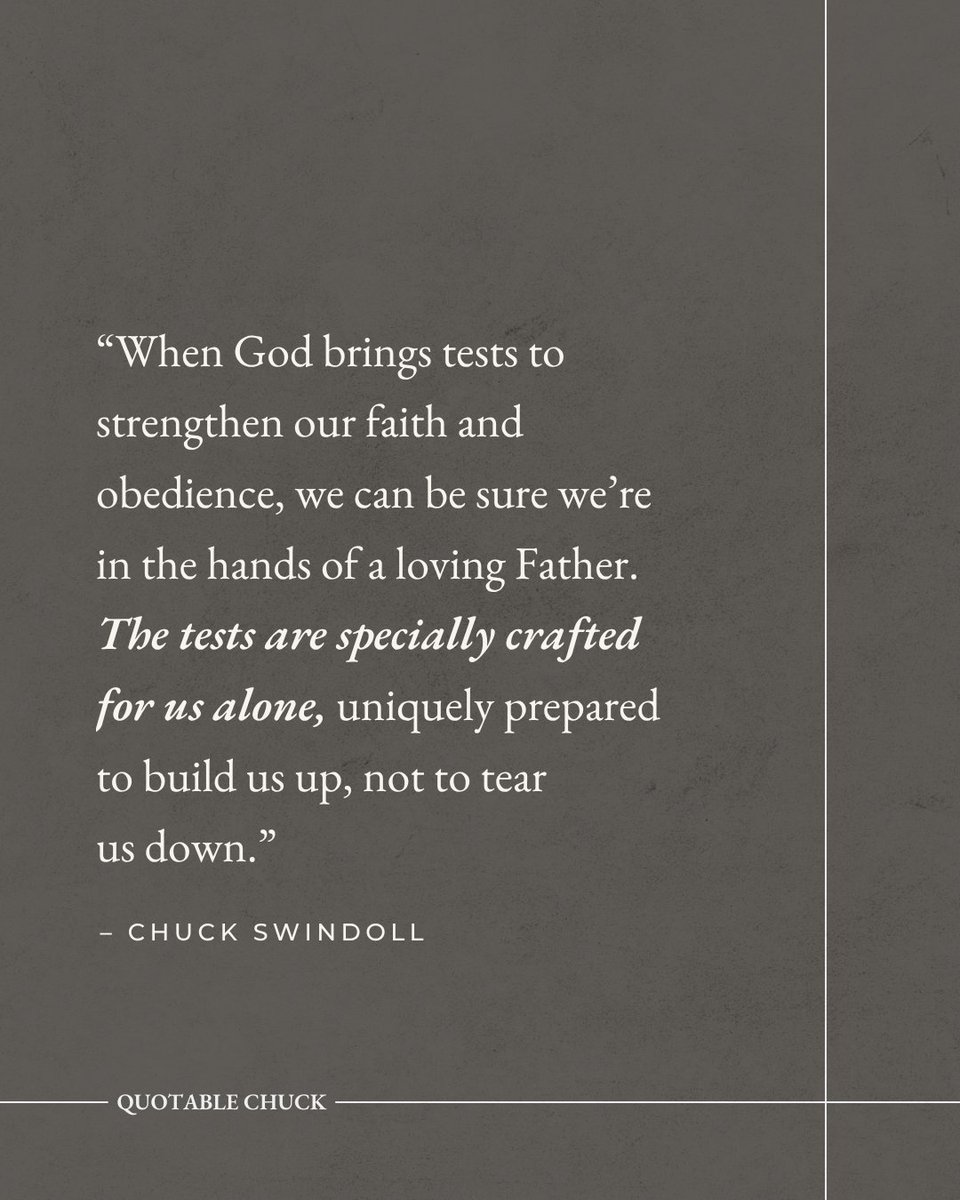
There's a difference between being punished and being trained. In hard seasons, most of us assume the first.
Nothing reaches you that hasn't first passed through the hands of a Father who is for you.
What if this season isn't God's displeasure, but His preparation?
I used to watch and listen to it all: Fox News, Rush Limbaugh, Sean Hannity, Michael Savage, Bill O'Reilly, and the rest. But what good does it really do?
Nothing.
You think you're staying informed, but ask yourself: What can you actually change? Unless you enter politics yourself, your influence is limited. And even then, how long before the very system you're trying to change begins to corrupt you?
Constantly listening to political pundits, absorbing their outrage, fear, and division, does nothing but consume your mind.
"And be not conformed to this world: but be ye transformed by the renewing of your mind..." — Romans 12:2 (KJV)
When you learn to see the world through God's eyes rather than through the lens of the world, your perspective changes. You learn to trust Him, stand on His Word, and rest in His promises.
"Set your affection on things above, not on things on the earth." — Colossians 3:2 (KJV)
The world will always have another crisis, another controversy, and another reason to be afraid. But God is still on His throne.
"Thou wilt keep him in perfect peace, whose mind is stayed on thee: because he trusteth in thee." — Isaiah 26:3 (KJV)
That's all one needs. Not the world's endless commentary, but faith in the One who holds the world in His hands.
🚨 BREAKING: Google Maps just rolled-out a massive upgrade.
This will be the biggest upgrade in over a decade.
Here are 7 Mind-blowing features that will surprise you:
We know that prayer is hard work. Prayer can be discouraging. Often, we pray expecting immediate answers. It’s sort of like when we were gardening, when our children were young, and I had them come out and put the seeds in the row, and we covered them up with dirt, and we watered it. And my daughter came out the next morning and looked at the garden and said, “Dad, it didn’t work,” because she was expecting immediate fruit. Sometimes we do that with prayer.
So how to pray? Remember who you are. Remember who God is. Remember what you have been given. Quote Scripture as you pray. Rest in God's presence and power. Pray for grace and then get up and continue what God has called for you to do!
If you feel unprepared to defend Jesus or Christianity when challenged, you don't need any clever arguments or advanced training. There are simple, clear and biblically grounded ways to answer a few of the most common objections...
• If they say: "Jesus never existed."
You say: Even non-Christian historians like Tacitus, Josephus and Pliny the Younger mention Him. No serious historian doubts that a man named Jesus of Nazareth existed and was crucified under Pontius Pilate.
• If they say: "The Bible has been manipulated and changed too many times, it can't be trusted."
You say: Ask them, How precisely do you know what the Bible originally said in order to make such a claim? We have over 5,800 Greek manuscripts of the New Testament. Scholars compare them carefully, and the core text remains about 99.5% consistent. No other ancient document comes close to that level of preservation. The message is cohesive throughout, there is a unity of thought and none of the real variations change any core teaching or big idea within it.
• If they say: "The disciples just stole the body of Christ."
You say: People will die for what they sincerely believe is true. They do not willingly get tortured and executed for something they know is a lie. Most of the disciples, except John who died of old age, were persecuted and martyred for claiming they had seen the risen Jesus and none of them recanted to save themselves.
• If they say: "Jesus was just a good moral teacher."
You say: A good moral teacher does not claim to forgive sins, accept worship, or call Himself equal with God. Those claims force a choice: He was either lying, insane, or telling The Truth. The Gospels present Him as the last of these. [see John 10:30, Mark 2:5–12 & John 20:28]
• If they say: "A good God wouldn't allow suffering."
You say: Christianity is the only worldview in which even God Himself entered human suffering. He did not merely watch from a distance, He was tortured and killed on a cross for sinners and the only one to defeat death. No other religion has a God with physical scars. [Isaiah 53; Philippians 2:5–8; Revelation 5:6]
These short replies are easy to understand, historically grounded and rooted in the biblical picture of who Jesus is and what He did. I hope they can help you to earnestly contend for the faith. :)
Jesus prepared the Twelve for this. Where a town would not receive them, they were to shake the dust from their feet and move on (Luke 9:5). No arguing. No campaign to be understood. No staying to win over people who had already decided.
Listen to objections. Take in real criticism. But don't hand strangers the authority to tell you who you are.
Rest in the true authority of God and His Word.
Vivaldi's “Winter,” visualized in a fascinating way, so that the auditory experience is even more intense; one can literally “see” the music, so to speak
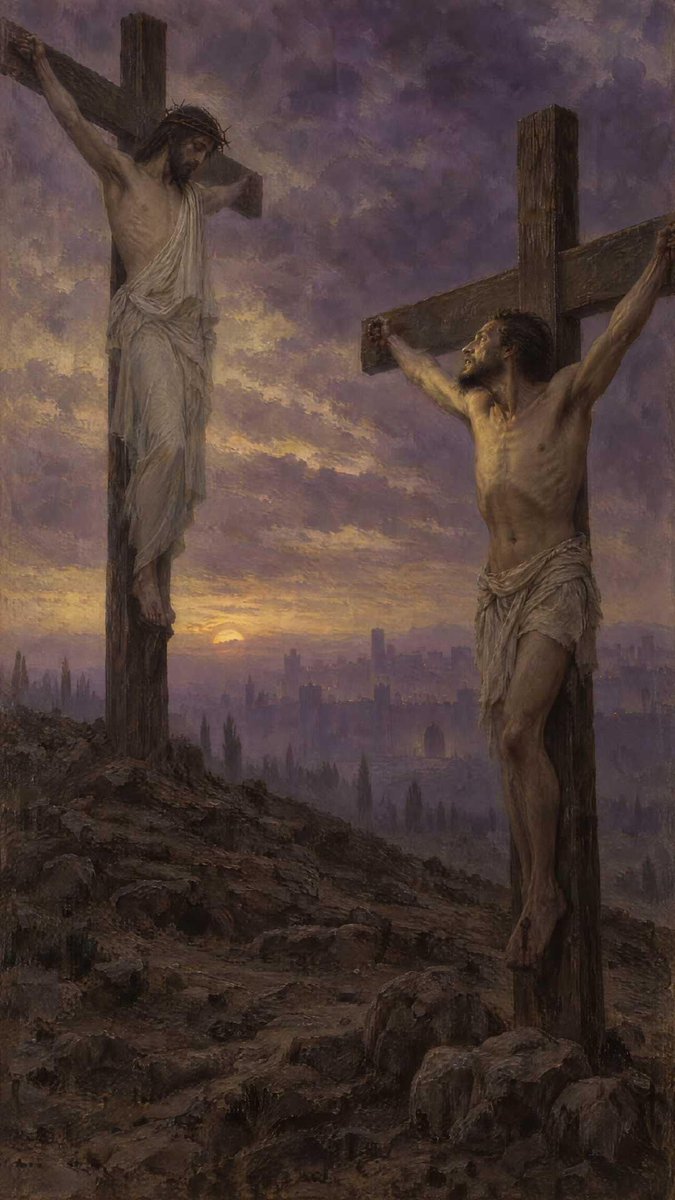
The first person Jesus promised heaven to was a criminal who spent part of that morning cursing Him.
Matthew 27:44. The thieves also, who were crucified with him, cast the same in his teeth.
Both of them. Plural. Matthew and Mark both say that the two men dying beside Him joined the crowd and mocked Him.
Then something happened to one of them.
Nobody preached to him. Nobody gave him a tract. He watched a man get stripped, nailed, mocked by priests, gambled over by soldiers, and somewhere in those hours he changed his mind about who was hanging in the middle.
Luke 23:40. Dost not thou fear God, seeing thou art in the same condemnation?
He turns on his own partner first.
Then: And we indeed justly; for we receive the due reward of our deeds.
He doesn't minimize it. Doesn't blame Rome. Doesn't say he fell in with the wrong crowd. He says: I earned this cross.
Then: but this man hath done nothing amiss.
The only man in Jerusalem that day who publicly declared Jesus innocent was a condemned criminal with nails in his wrists. Pilate had said it and then washed his hands. Peter had said it and then denied it. The disciples had scattered.
A thief said it out loud from a cross and couldn't run.
Then he says the sentence that should stop you cold.
Lord, remember me when thou comest into thy kingdom.
Look at what he's looking at while he says it.
A man who can't move. Naked. Bleeding out. Nailed to wood between two criminals. No army. No crown. No miracle. The sky going dark and His own mother sobbing at His feet.
And this man calls Him Lord and says kingdom.
Everyone else that day used the word king as a joke. The soldiers jammed thorns on His head and knelt down, mocking: Hail, King of the Jews. The priests shouted Let Christ the King of Israel descend now from the cross. Pilate nailed a sign above His head in three languages: THIS IS THE KING OF THE JEWS, and meant it as an insult to the whole nation.
Everybody in the story said the word. One man believed it.
And think about the faith required. Every other person who trusted Jesus in the gospels had evidence. They saw blind eyes open. They saw a dead man walk out of a tomb. They watched Him still a storm.
This man saw none of it. He saw Jesus fail. He saw Him lose, publicly, completely, in the most humiliating way the Roman Empire could engineer.
And he looked at total defeat and said: I want to be in your kingdom.
That's the greatest act of faith recorded in the Bible, and it came from a man who had hours left to live.
Now look at what he asked for.
Remember me.
That's all. Not save me. Not take me with you. Just when you come into whatever it is you're coming into, think of me. He asked for a thought. A memory. The smallest thing a man can ask.
And look at the answer.
Luke 23:43. Verily I say unto thee, To day shalt thou be with me in paradise.
He asked to be remembered someday. Jesus said today.
He asked for a thought. Jesus said With me.
He asked to be included. Jesus said paradise.
Now that word. Paradise.
In Greek it's paradeisos. It isn't originally a religious word at all; it's an old Persian term for a walled garden, an enclosed park belonging to a king.
And when Jewish scholars translated the Hebrew Bible into Greek, that's the word they chose for one specific place.
Genesis 2:8. And the LORD God planted a garden eastward in Eden.
Paradeisos. The garden.
So read the promise again with that in your ears.
A man is dying for his crimes, and the Son of God tells him: today you'll be with me in the garden.
The garden humanity was thrown out of. Genesis 3:24: God placed cherubim at the east of the garden of Eden, and a flaming sword which turned every way, to keep the way of the tree of life.
An angel with a burning sword stood at that gate for the whole Old Testament. Nobody got back in. Not Abraham. Not Moses. Not David.
And the first human being told he was going back in was a convicted criminal, and the announcement was made by a man bleeding to death three feet away from him.
The sword came down on the wrong man, and the gate came open.
Now count what the thief had.
No baptism. He was nailed to a cross; he wasn't going anywhere near water.
No good works. His hands were fixed to wood. He could not physically do one single thing for God for the rest of his life.
No restitution. Whoever he stole from never got it back.
No church. No membership, no giving, no service, no years of faithfulness.
No time. He had hours.
He had nothing. He came with empty hands, an honest confession, and one sentence of faith.
And he is the only person in the entire Bible that Jesus personally, verbally, by name guaranteed would be with Him in paradise that same day.
The man we are most certain is in heaven did the fewest works of anyone in Scripture.
That should wreck your arithmetic.
Because you've been keeping a ledger. Years of church against years you were gone. Prayers against failures. The version of you people see against the one you actually are. You've got some idea that there's a number you have to hit before God will look at you and you're behind on it, and you know it.
The thief had nothing on his side of the ledger but a lifetime of theft and a morning of mockery.
Jesus didn't ask him for anything else.
And notice: Jesus never told him to clean up first. Never said if you had more time. Never asked what he'd stolen or from whom. The man asked to be remembered, and Jesus handed him the garden.
If you're reading this thinking you're too far gone, or too late, or too dirty, or that you'd need years to get right before God would want you.
He saved a man who had six hours left and couldn't move his hands.
He can do something with what's left of yours.
Say what the thief said.
Remember me.
Dear Christian: The Bible is not just a "book."
You're holding the BREATH of the living God in your lap. What an incredible gift.
h/t Pastor @howertonjosh
Patrick Mahomes - “Jesus is my Lord and Savior. It’s someone that I lookup every single day to decide what I want to do with my life, and how I want to live my life. Jesus is everything to me at the end of the day. I always lean on Acts 20:7-12.” 🙌🙏