This study concludes that ESWT is an effective adjuvant therapy for tennis elbow, providing superior long-term pain relief compared to US. Further research is needed to optimize treatment approaches and evaluate potential side effects. 4/4
📖: A comparative study of the efficacy of ultrasonics and extracorporeal shock wave in the treatment of tennis elbow: a meta-analysis of randomized controlled trials: 2019
📚: https://t.co/f0A7lzffCn
Summary Below: 🧵 1/4
ESWT's superior efficacy may be attributed to its greater energy release and cavitation effect, stimulating pain receptors and promoting tissue healing. Although no significant difference was found in functional scores, subjective evaluation favoured ESWT. 3/4
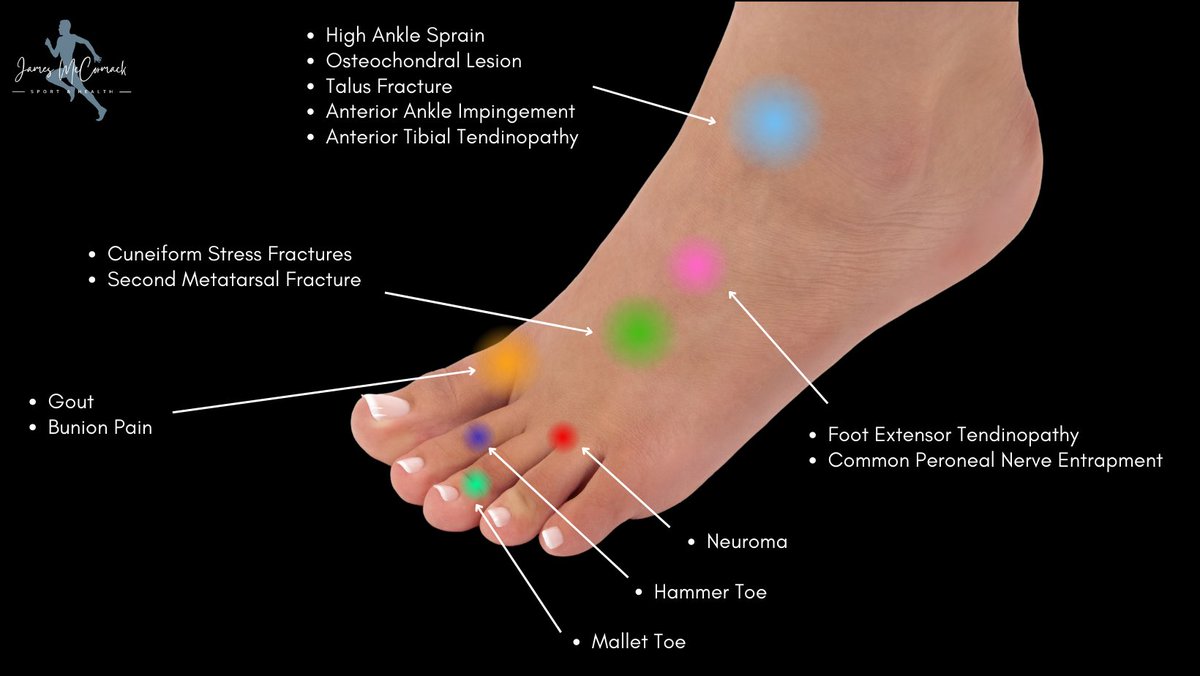
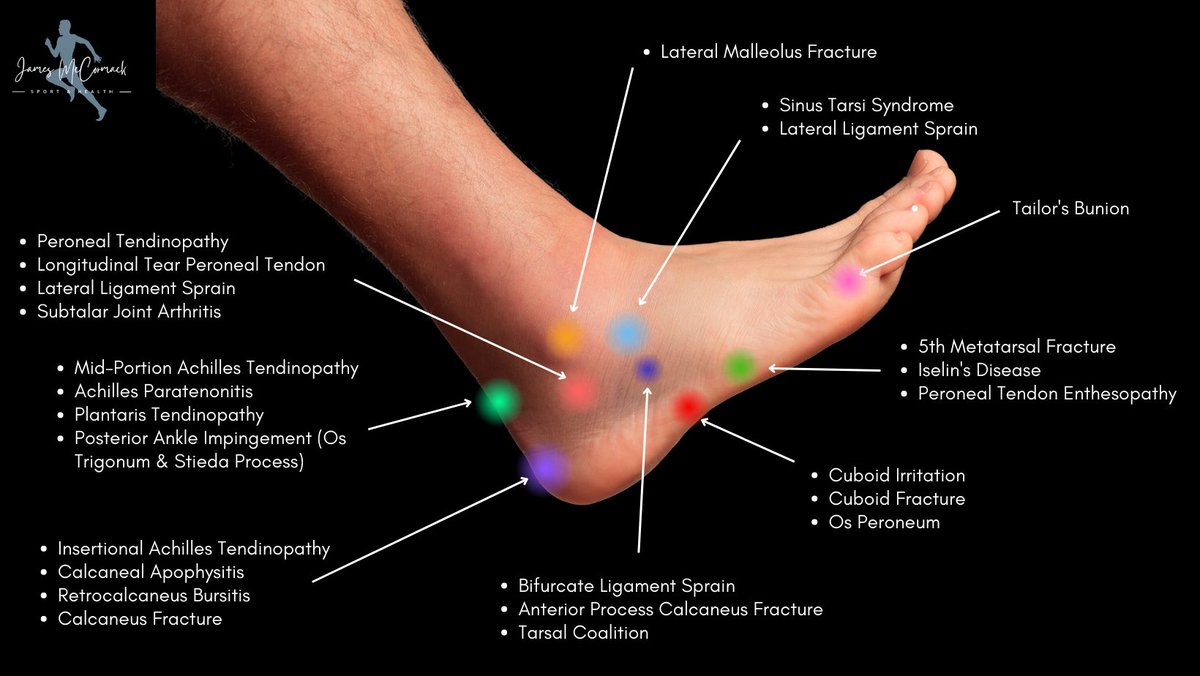
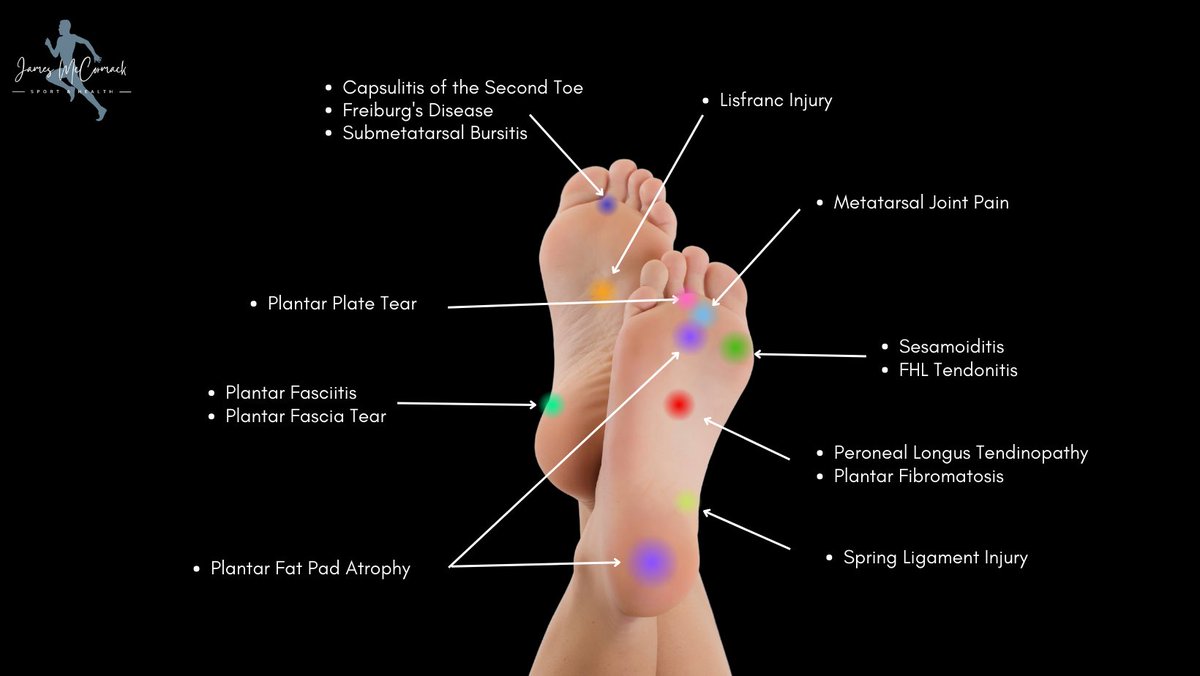
🦶Our Updated Differential Diagnosis around the Foot🦶
*These pictures don’t represent the exact location of pain, the purpose is to increase people’s awareness of potential diff Dx*
An intriguing finding: Swimmers with a certain stroke error, and Hand Entry (HE) error were found to have lower odds of shoulder pain. More research is needed, but this finding could inform novel injury prevention strategies. 4/4
A recent study forecasts shoulder pain in competitive swimmers, with about 1/3 facing such pain. While needing refinement, this tool could be vital for therapists and trainers. 🧵1/4
The study emphasizes muscle endurance in guarding against injury. Better muscle stamina, gauged by the Posterior Shoulder Endurance (PSE) score, reduces shoulder pain risk. Strength training can help. 3/4
📕: Kinetic chain revisited: consensus expert opinion on terminology, clinical reasoning, examination, and treatment in people with shoulder pain: 2023
📖: https://t.co/WyDSsdI3uQ
Overall, the study underscores the importance of exercise for metabolic health improvements and reducing visceral fat in people with overweight and/or obesity. Further research is needed to confirm the effects of caloric restriction on visceral fat. 5/5
This study compared the effects of exercise & caloric restriction for ⬇️ visceral fat in people with overweight and/or obesity. It found that while both interventions reduced visceral fat, only exercise demonstrated a dose-response relationship🧵1/5
https://t.co/mKUsKLaNop
The study highlights the limitations of using BMI as a measure of metabolic health and the need to distinguish between subcutaneous and visceral fat. Visceral fat represents a far greater metabolic risk than subcutaneous fat. 4/5
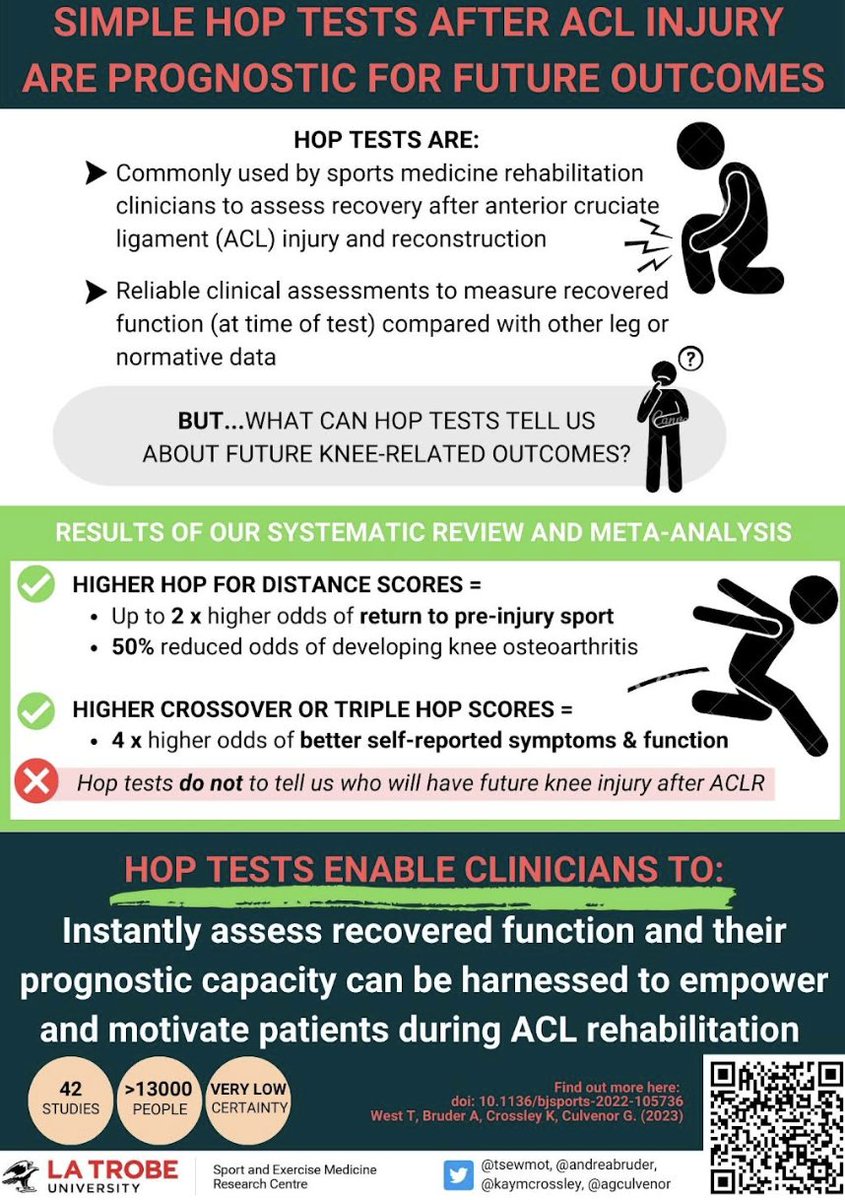
🚨 #NEW BJSM Blog: ACL Outcomes ⚡️
Simple hop tests after ACL injury are prognostic for future outcomes 🧐
We break down a recent study into digestable chunks 📑
READ MORE HERE ➡️ https://t.co/AeR0VmrQqB
The study's limitations include inconsistent wording to describe the training status of participants and the lack of investigation into the influence of training level, sex, and age. 5/5
📖: Article Summary
This study compared the effects of a one hour daily stretching intervention with a hypertrophy training routine for six weeks. Results showed similar increases in maximal strength, muscle thickness, and flexibility. 🧵 1/5
https://t.co/UV63NMW8Fw
Stretch-mediated strength increases have been previously shown in animal and human studies. The underlying physiological processes of stretch-activated increases in maximal strength and muscle thickness remain unclear. 4/5