Lab: Why aren't we on Twitter?
Dan: Umm. I don't follow Twitter.
Lab: But the rest of the world does. Scientists too.
Dan: I see. What's your point?
Lab: We should be on Twitter. And join scientific discussions.
Dan: I'm more the silent type.
Lab: We'll run it.
Dan: Go for it!
We are recruiting participants for endometriosis research. Our lab is studying menstrual blood to develop better diagnostic and therapeutic tools for endometriosis. If you would like to participate, please complete this survey: https://t.co/L5WuTsFkNt
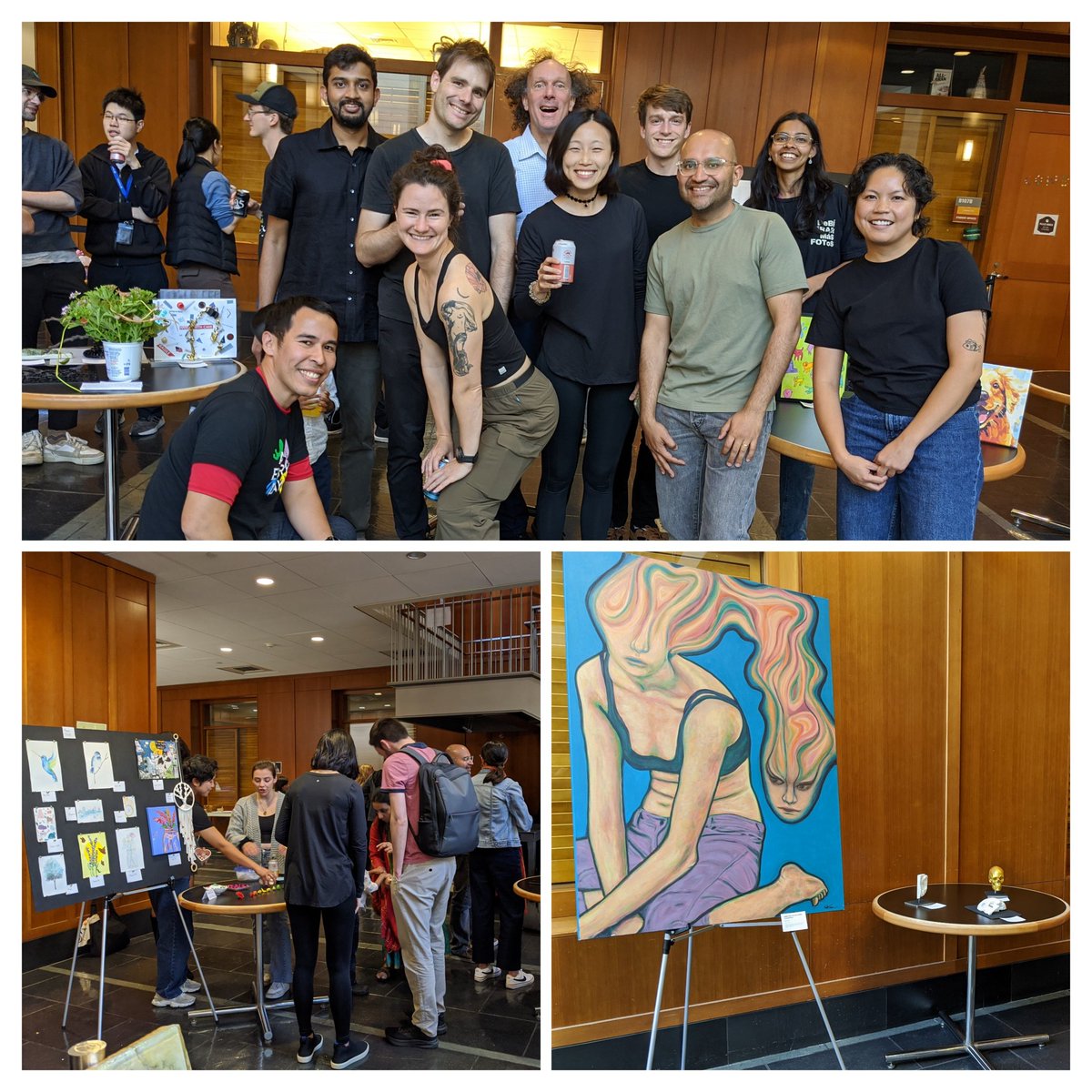
A huge thanks to everyone who participated in the Fletcher Lab Art Show 2026! Your creativity, talent, and passion made this event truly special. Check out the Ground State Ensemble performance: https://t.co/wDyUneFeXX
Congratulations to Carlos (@NG04) for being a recipient of the 2026 Outstanding Graduate Student Peer Mentor Award. Images courtesy of Laure Andrillon.
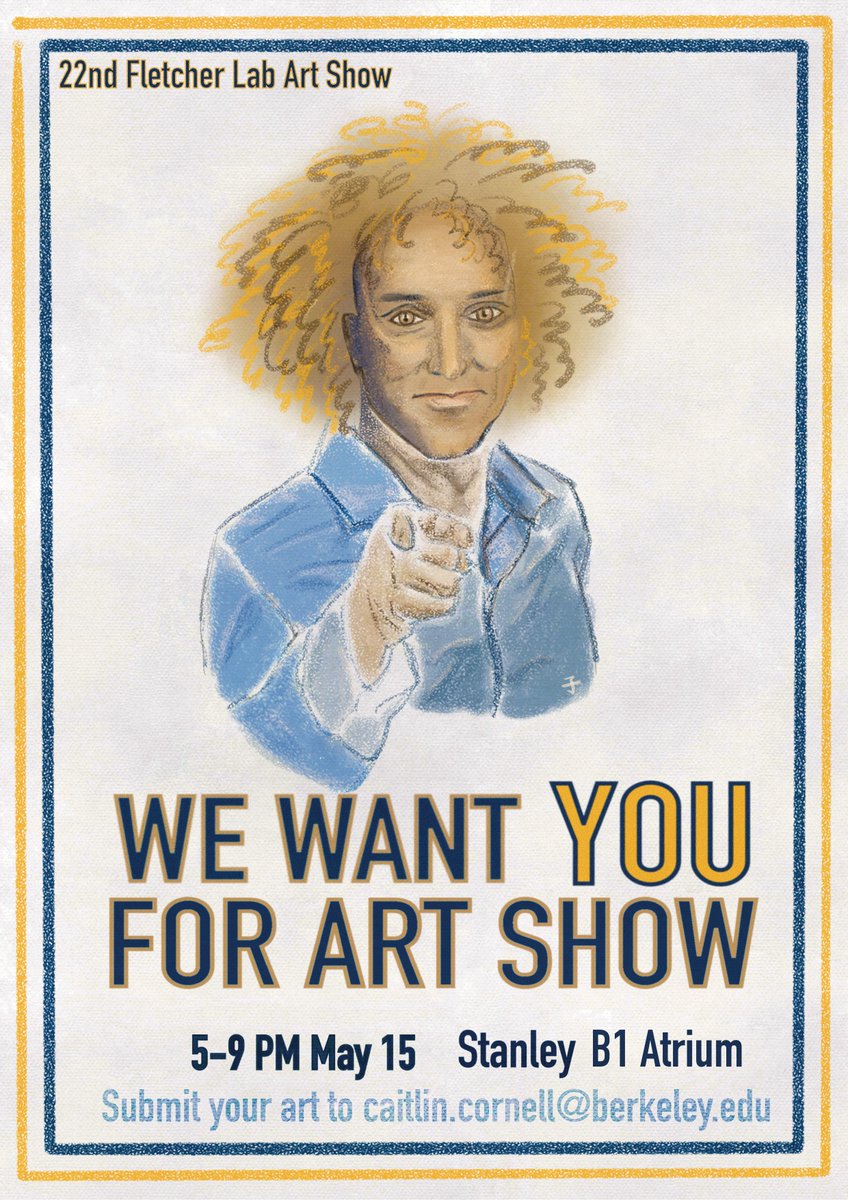
Join us for the 22nd Fletcher Lab Artshow! We’re looking for artists to submit their work and be part of an evening celebrating creativity and community. We will also have the return of the Ground State Ensemble! Art by @chunzi_liu@QB3Berkeley@UCB_Biophysics@berkeleyMCB
In our new work published in @natBME in collaboration with @TheOttLab and @Doudna_lab, we introduce "interfering" guide RNAs (igRNAs) for CRISPR-Cas13a that regulate enzyme activity after activation. Congratulations to all the authors!
https://t.co/d8k3x4hTt5
Happy #internationalwomensday to all of the incredible women, especially those from our lab (past and present). Your curiosity, creativity and determination continue to shape our science and community.
The NTDscope is a portable brightfield, darkfield, and fluorescence microscope used for diagnosing neglected tropical diseases (NTDs). This video shows S. mansoni miracidia. Check out our most recent publication: https://t.co/OKN9qAULAG
Check out our latest preprint: LUCas! A direct light control of Cas13 trans-cleavage activity. Congrats to all the authors: Carlos (@NG04), Deepak (@deepak_me90), Andres (@adextre521), and Aymeric.
https://t.co/ntVf9qa3Pf
Preprint out! Cell surfaces are crowded with tall proteins that block immune recognition.
We discovered tall binding proteins create “stepping stones” that help short receptors engage, even in dense crowds.
In memory of Phillip L. Geissler
https://t.co/XS3yKP1n7u
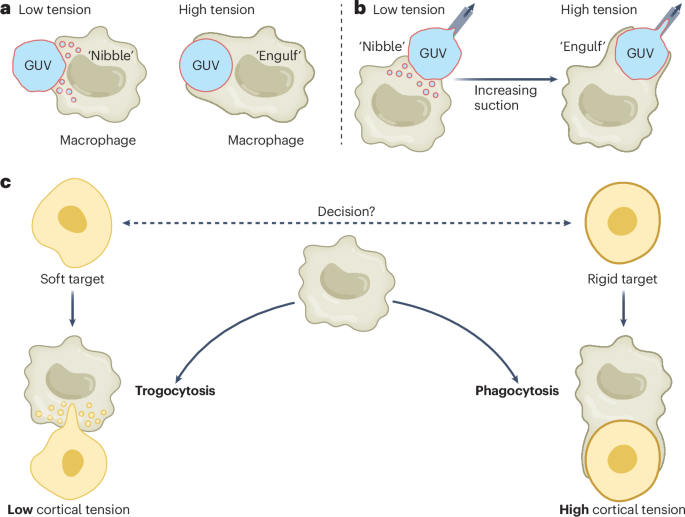
How does a macrophage decide to eat or simply nibble? Check out our latest paper! You can also read this nice review. Congrats @CaitlinCornell6 for leading this amazing work!
https://t.co/4kw2vhqdCi
https://t.co/BLRZpHcWts
Macrophages can engulf targets whole (phagocytosis) or nibble them in small fragments (trogocytosis), a decision controlled by cortical tension in the targets (high tension favors former, low latter)
https://t.co/bWqUvSxpRs
https://t.co/eBZHkmmHb6
@NatureCellBio@UCBerkeley
Check out our latest published manuscript: SurFlex microscopy, a new technique to measure molecular flexibility. Congrats to Aymeric, Sid (@SidAg92), Lena (@lfblackmon) and Andrés (@adextre521)!
https://t.co/jZEJeyZzFK
Dan Fletcher, Chatterjee Professor of Bioengineering and Biophysics, is among the 100 new members elected to the National Academy of Medicine (@theNAMedicine)!
Learn more: https://t.co/G0tTMZPyAF
Our team is developing portable digital microscopes that harness AI to automatically detect parasitic infections.
This shows great potential to help public health programs expand access to affordable disease screening in low-resource settings.
Link: https://t.co/KIIl8jdVuh