Daily fact about experimental flight test, test pilots, flight test engineers, and flight related applications of engineering and mathematics by @markjonesjr
I remember this day and event very well. I was a USAF Test Pilot School Instructor at that time, and just happened to be the Edwards AFB Supervisor of Flying (SOF) on that day. After hearing that a B-1B with a nose landing gear that was stuck in the up position was diverting to Edwards AFB to attempt a lakebed landing, I drove the SOF radio-equipped vehicle out by the Rogers Dry Lakebed and was on the radio with the B-1B aircrew once they were in radio range. That particular B-1B was from another base in a different state (it was not a test B-1 from Edwards AFB), and had been advised to divert to Edwards AFB, California. This brave aircrew were going to attempt to save this amazing bomber, and the Rogers Dry Lakebed was the safest place to attempt to land their B-1B while minimizing damage to both the aircrew and aircraft.
Since depth perception is a different challenge on the dry lakebed surface, we have black oil strips that outline the runway and help pilots judge their altitude during their approach to landing. Experimental Test Pilots are used to it, because we use the dry lakebed runways for many types of emergency landings. The gypsum dust on the dry lakebed acts as a fire suppressant during the landing rollout (or skid). We sometimes also choose to land a perfectly good jet (like a T-38) on the dry lakebed just for practice.
I had the aircrew practice low-level approaches and go arounds several times before they final approach. They had been on the radio for several hours already with design engineers from Rockwell, but none of the suggested workarounds attempts had been successful at gettng the nose gear to lower. This was their best option to save this expensive supersonic swing-wing bomber. An F-111 had been tasked to rejoin them inflight to act as a safety chase aircraft, as the flight envelope of the F-111 was very compatible with the B-1. F-111s and had also been used as chase planes during early B-1A prototype testing for the B-1B version.
I coached them to hold the nose up using the elevator until they slowed down without braking and allow the spoilers on the main wings slow them down along with main gear wheel friction, and then to gently lower the nose until it softly touched down. The sun was setting soon, so I advised them to attempt the actual lakebed landing on the very next pass as doing it after dark without their nose gear landing lights would be almost impossible to accomplish safely.
The next pattern showed that their practice low approaches had paid off as they were able to smoothly touch down on the main landing gear and hold off the nose until they got slow enough to gently lower the nose to skid out on the nose radome. Once the radome gently touched down, the entire aircraft was engulfed in a giant plume of gypsum dust from the lakebed. For a few moments, I feared the entire aircraft might have broken up! But, as they finally came to a stop and the dust cleared, everything was intact, no fire erupted and the aircraft and crew were saved. Cranes came out and gently lifted the nose up as the crew entry door is on the bottom behind the nose gear well. No one was injured, and the nose gear was extended manually by a ground maintenance crew.
That B-1B was fully repaired and returned to full flight status, thanks to the Rogers Dry Lakebed's properties. It the world's largest Dry lakebed and the reason Muroc Airfield (now Edwards AFB) was established there in the first place. It has saved the lives of many test pilots over the years, and was the perfect place to save this brave aircrew and their B-1B on that day, too.
@unmanndairspace@ButterworthHay
I just want to tell you that you are doing a fantastic job with Urban Air mobility news. It's one of the few sites that I've followed for years with my Feedly. Keep up the great work.
"At that time (1909) the chief engineer was almost always the chief test pilot as well. That had the fortunate result of eliminating poor engineering early in aviation" (Igor Sikorsky).
H/T @david
About 18 months after XB-1's last test flight, the team is back in a control room getting ready for our next big test event.
They're all pretty happy it's *not* in the Mojave desert this time.
Happy break the sound barrier day to those who celebrate!
On Oct 14, 1947, Yeager piloted Glamorous Glennis, a flight test orange airplane, to supersonic speeds.
https://t.co/yBT9lAxESC
#flighttest
Happy break the sound barrier day to those who celebrate!
On Oct 14, 1947, Yeager piloted Glamorous Glennis, a flight test orange airplane, to supersonic speeds.
https://t.co/yBT9lAxESC
#flighttest
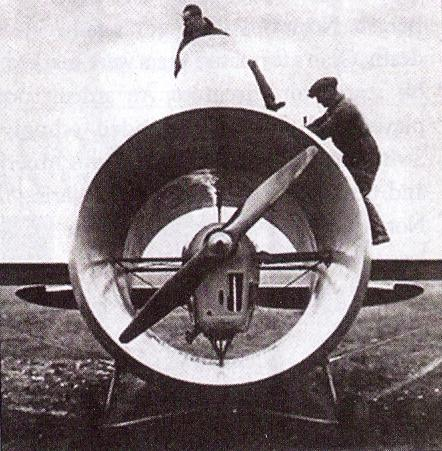
10/7/1932 First flight #flighttest of the Stipa Caproni "flying barrel" ducted fan test bed
https://t.co/EPYJsiCuJx
| Primer vuelo del Stipa Caproni fue el 10/7/1932 via @josemanzella
100 years after the first successful circumnavigation of the world by airplane, SpaceX demonstrates successful orbits of its Starship. Wow
Wow.
https://t.co/njjYEVRPsK
#flighttest
🚀⚡️ REGENT just made history. We just completed the world's first flight of the Viceroy Seaglider prototype, the largest-ever all-electric wing-in-ground effect (WIG) craft to fly with people on board!
Strictly speaking, entropy has increased everywhere, which is also "objectively worse."
But that doesn't mean a lot of things aren't much, much better.
Not meaning to complain too much, but... I've just had this overwhelming feeling lately that so many things are objectively WORSE in 2026 than they were say 7 years ago. Here's a short list of things:
1. Google. I no longer get anywhere near an honest search, mostly either AI or ads
2. YouTube, search is also completely broken, serving only recent things and / or shorts. I guess social media in general just feels more and more pointless and far less about humans.
3. Uber / Lyft, prices are INSANE
4. DoorDash, prices are also absolutely off the charts
5. Rental cars, needed to rent a car yesterday, couldn't do it under a few hundred for 2 days.
6. Groceries are almost $200 every time I go
7. Insurance has sky rocketed for everything. The house in Texas is about 2 times more expensive to insure in 2026 than it was in just 2021
8. Food. Starbucks and Subway sandwiches were never particularly amazing, but now they're not even a shell of what they used to be, and many many others.
9. Online ordering. I feel like I used to kind of know what I'd get. Now there's a decent chance of seeing some AI slop and getting a complete scam of a product with no responsibility
10. Phones. I'm less happy with my phone and getting more and more spam calls now more than ever, and I'm more often either waiting for faceID to work, or accidentally hitting something, or accidentally hitting the camera button, or accidentally changing the background. Like multiple times a day, I'm doing an input that I did not want to do. That didn't used to happen
11. Housing / Rent prices / hotel prices
12. EVERYTHING being "private equity", screw that. Stop chasing profit, chase making good products.
I guess a lot of this is just inflation in general. I'm really noticing the price of things get more and more ridiculous...
But it also feels like a lot of things are just getting worse. Adding features that shouldn't exist, chasing profits over making a good product, adding steps to make something more frustrating to use or order or do. Trying to have AI just simply "replace" something instead of being a tool to help improve it, or a way to just opt back.
I don't know. I'm trying hard to just keep my head down and do my work the old fashioned way, and I just feel like there's this mantra of "hurry up or you'll miss out". I've been enjoying being outside more, trying to be healthy and offline, and it just feels more and more like things aren't what it used to be.
I say this, yet I'm still hopeful for the future. I still think there's incredible things happening and amazing technologies, and exciting things happening in our world. I just feel like if I could hit the rewind button on a few things, I absolutely would. Would you? Maybe this is just part of growing older and feeling nostalgic? I am getting old...
That's way up there!
25 years ago on Aug 13, 2001, the experimental Helios Prototype—a solar-powered, remotely-piloted aircraft developed under NASA's ERAST program—reached an altitude of 96,863 feet (29,524 m), achieving a world altitude record for sustained horizontal flight by a winged, propeller-driven aircraft.
At this altitude, the air's density is less than 2% that at sea level.
A child will learn
the words to say
before he learns
the letter "a".
Similarly...
Our heads will learn
each piece and part
of those things that
we know by heart.
#grooks