Konstantinos Sathas (1842–1914), regarded by many scholars as one of the greatest Greek historians of the nineteenth century, devoted his life to the discovery and publication of previously unknown Byzantine and post-Byzantine manuscripts. Working directly in the archives of Constantinople, Venice, Florence, Mount Athos, and Greece, he brought to light a vast body of material, much of which still remains a primary source for the study of the medieval Balkans.
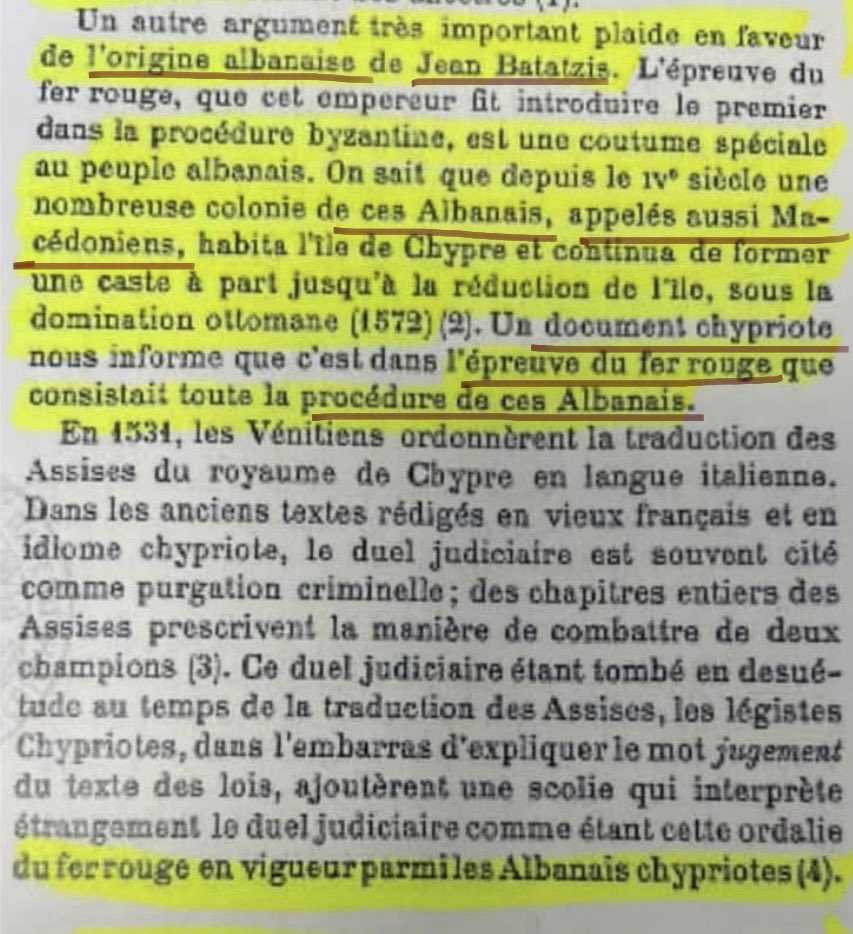
His testimony is particularly significant in debates concerning Albanians and Macedonians, as he explicitly states that « throughout the Middle Ages, this people bore the name of Macedonians » and refers to the « Albanians, also called Macedonians » in Byzantine and Cypriot sources. Sathas also argued that there existed « a very important argument in favor of the Albanian origin of John Vatatzes », noting that the ordeal of the red-hot iron introduced by the emperor into Byzantine judicial procedure was regarded as a specifically Albanian custom. He further emphasized that, from the fourteenth century onward, large Albanian communities settled in Cyprus and continued to form a distinct social group until the Ottoman conquest of the island in 1572, adding that these Albanians were likewise « called Macedonians » in the sources.
Although some of Sathas’ interpretations are contested today, this is partly because they conflict with modern national historiographical frameworks developed during the nineteenth and twentieth centuries, which often imposed rigid ethnic categories upon identities that were far more fluid in medieval sources. Nevertheless, even his critics acknowledge the exceptional documentary value of his work, precisely because it was based on chronicles and archival materials to which very few scholars of his time, and in some cases even after him, ever had access.
#history #albania #ancientmacedonia
When Albanians unite under strong leadership they become unstoppable. The Macedonians were an army of lions led by a lion, Alexander the Great who never lost a battle against the fiercest peoples of the ancient world, Anatolians, Phoenicians, Iranians, Kurds, Afghans, Scythian, Turkmens, Indians, etc.
#albania #ancientmacedonia
Donika Kastrioti (1428–1506), wife of Gjerg Kastrioti Scanderbeg was the daughter of the Albanian nobleman Gjergj Arianiti. Following the Ottoman conquest of Albania, the Kastrioti family was granted peerage in the Kingdom of Naples. After the outbreak of the Italian Wars at the end of the fifteenth century, Donika went into exile and eventually settled in Valencia around 1501, where she spent the final years of her life.
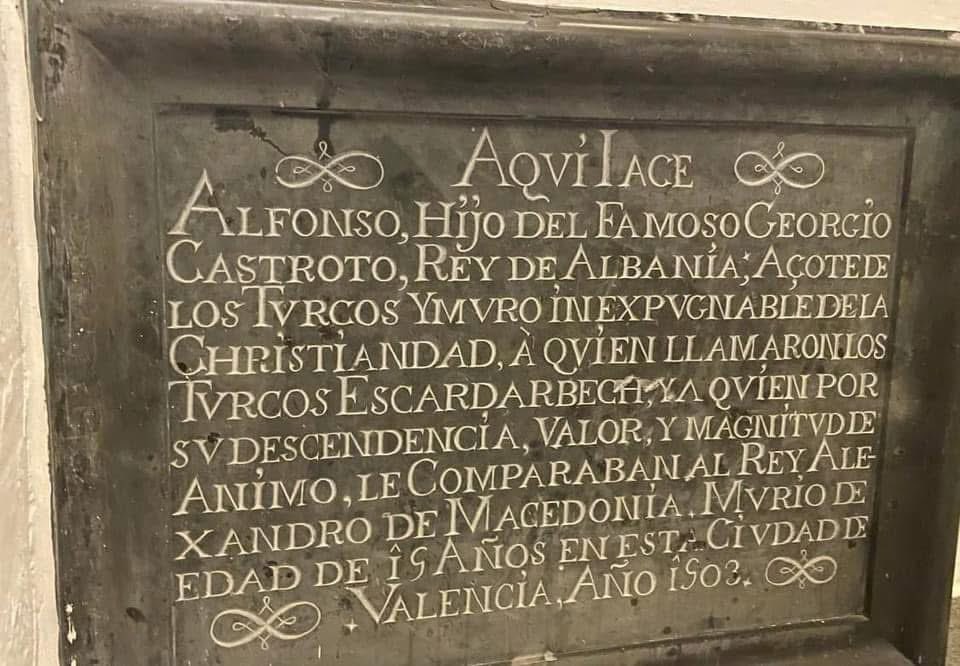
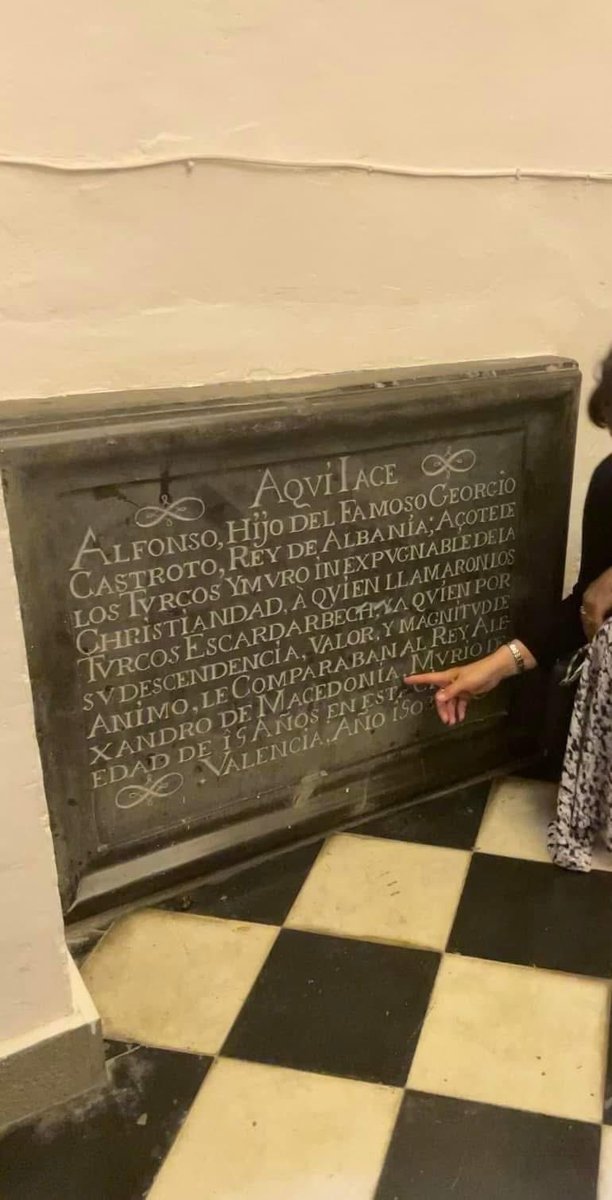
In July 2022, I visited Kanina’s castle, the birthplace of our Queen. A few weeks later, in August 2022, I travelled to Valencia, Spain, where I had the opportunity to visit her tomb in the Real Monasterio de la Trinidad de Valencia, where she is buried beside her grandson Alfonso. As the monastery is generally closed to the public, access is rarely granted. I am therefore grateful to the two Spanish nuns who allowed me to visit the site. During my visit, they showed me a Spanish inscription explaining that:
« Gjergj Kastrioti, King of Albania, was called Scanderbeg, « Lord Alexander » by the Turks because he possessed the same blood, courage, and greatness of spirit as Alexander the Great, King of Macedon. »
The inscription explicitly presents Gjergj Kastriot within the symbolic legacy of Alexander the Great. The historical parallels are also notable. In several respects, Scanderbeg’s political role recalls that of Philip of Macedon, Alexander’s father. Both succeeded in consolidating Albanian clans through alliances between Ghegs and Tosks, and both married Tosk women, Philip married Olympia, while Scanderbeg married Donika.
Before leaving Kanina, I collected a few small stones from the ruins of Donika’s castle. When I visited her tomb in Valencia, I placed them there as a symbolic gesture linking her place of origin in Albania with the place of her exile and burial in Spain.
Standing before her tomb also raised a broader historical question: whether Donika Kastrioti, like Zog I of Albania or Pashko Vasa, might one day be repatriated to Albania.
#albania #history #scanderbeg #alexanderthegreat #valencia #spain
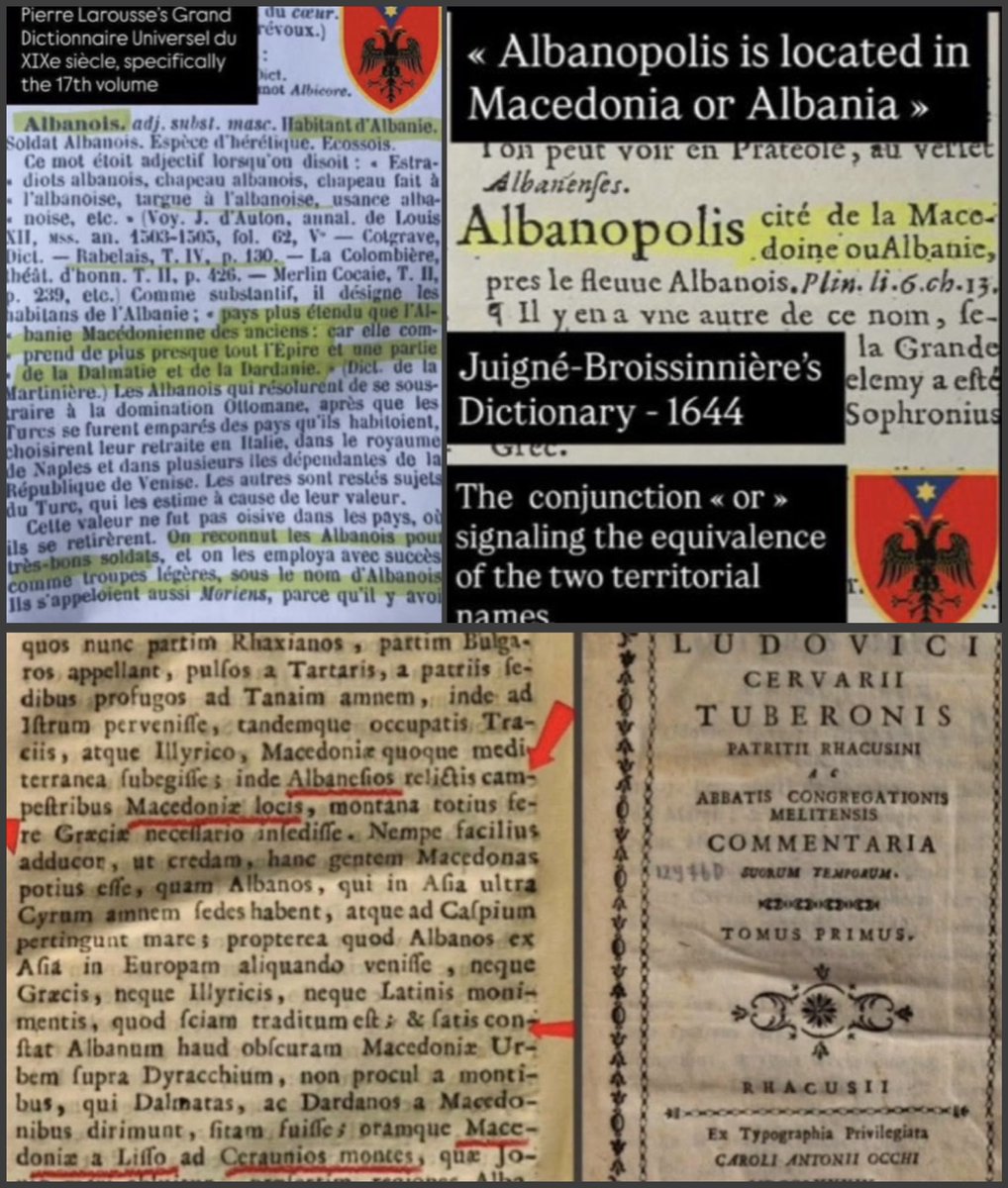
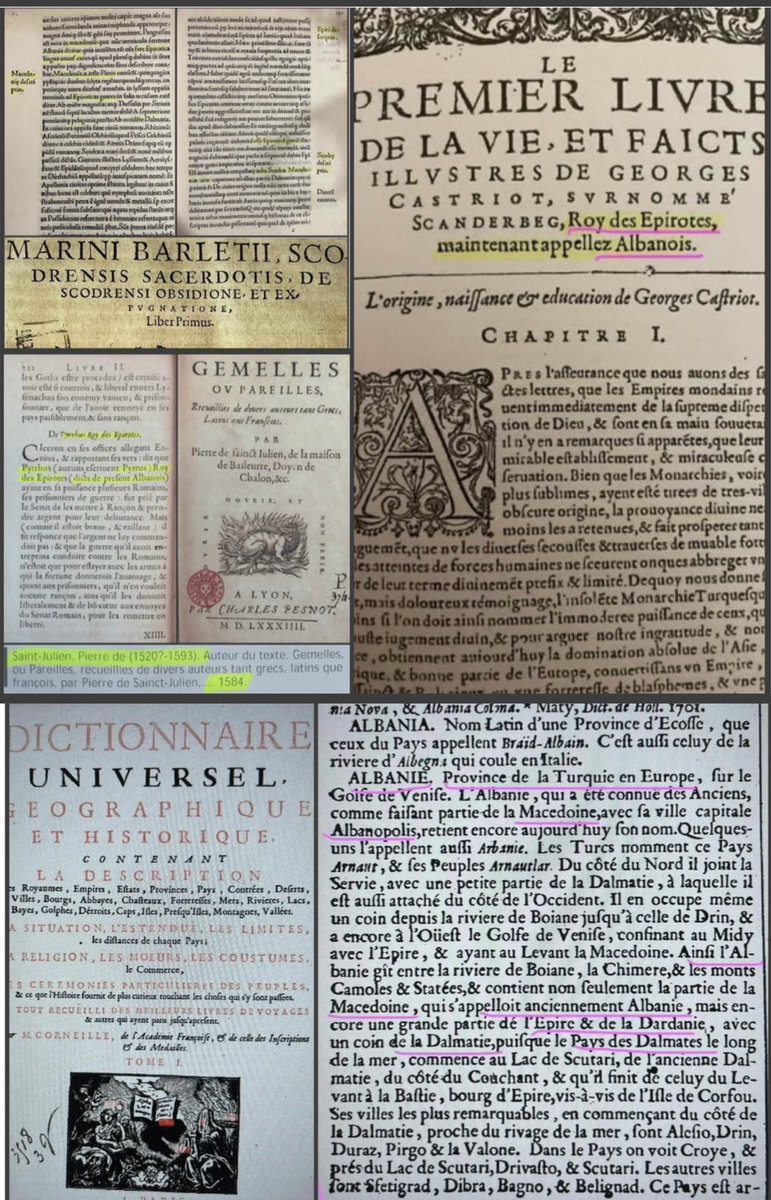
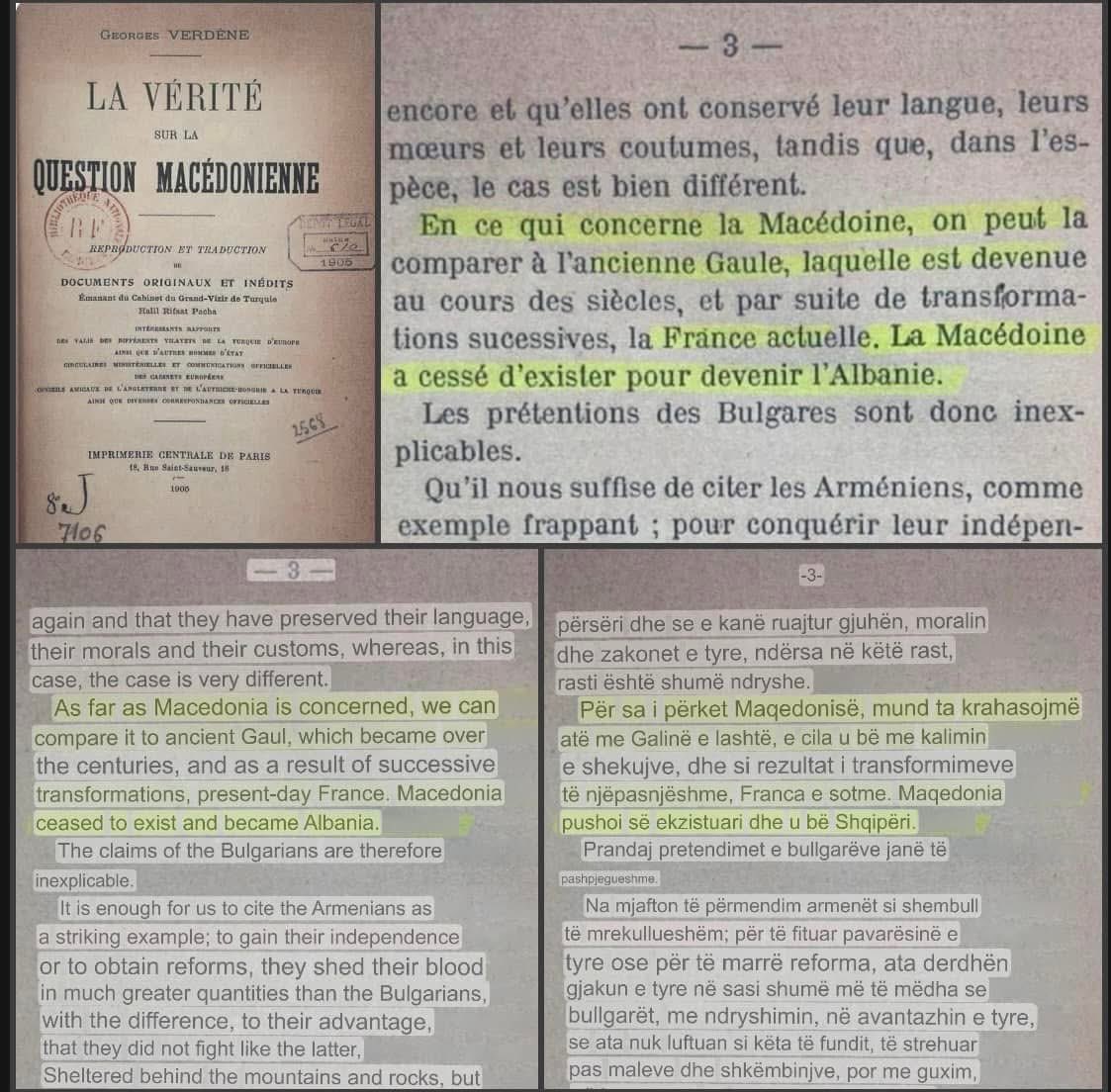
Taken together, a vast corpus of early modern and nineteenth-century geographical descriptions, historical narratives, lexicographical compilations, numismatic studies, dynastic histories, and antiquarian works articulates a remarkably consistent historical understanding: Albania and the Albanians belonged to a broader Macedonian–Epirote continuum. Across centuries, these sources repeatedly describe Albania as Macedonia, whose later political separation reflected administrative fragmentation rather than any perceived ethnic discontinuity.
Albanians themselves are identified as the inhabitants or descendants of populations formerly known as Epirotes or Macedonians. Authors such as Étienne de Lusignan, Giorgio Merula, Guillaume Rouillé, Philipp Lonicer, Simon Schard, Jean Nicot, Pierre Larousse, Pietro Bembi, Ludovic Tuberon, Pierre d’Avity, Saint-Julien, Antoine Le Pois, Lady Montagu, Edward Clarke and many more writing independently across different centuries and intellectual traditions, consistently affirm that historical Albania encompassed not only western Macedonia, but also Epirus, Dardania, and even parts of Dalmatia.
Dynastic and biographical traditions further reinforce this continuity by presenting figures such as Scanderbeg as prince of Epirus, Macedonia, Albania within a territory described as formerly Macedonian. Numismatic and antiquarian literature likewise identifies Epirote rulers as predecessors or ancestors of the populations later designated as Albanians, thereby embedding Albanian historical identity within a larger Balkan antiquity linked to Epirus and Macedonia.
Equally significant is the complete absence, within this extensive corpus, of any tradition describing the Albanians as late arrivals, foreign settlers, or migrant populations newly entering the Balkans. None of these authors speaks of an Albanian migration into Macedonia or Epirus, on the contrary, they consistently describe the Albanians as an established and indigenous population already rooted within these regions. The continuity assumed throughout these texts is territorial, historical, and demographic: the people themselves are presented as enduring inhabitants of the same geographical space.
Crucially, the overwhelming majority of these testimonies predate the emergence of modern Balkan nationalisms. They therefore reflect neither nineteenth-century nationalist mythmaking nor modern territorial disputes, but rather a pre-national scholarly tradition in which political names and administrative frontiers could change while historical populations, regional continuity, and collective memory were understood to endure across centuries.
The Ancient Macedonians and Epirotes did not vanish from history, they merely survived under the name Albanian.
#albania #history
David Hosaflook notes that for Marin Barleti, « Epirus » and « Epirotae » refer to Albania and its people. Barleti presents Albanians as heirs of the Epirotes and effectively identifies Albania with Macedonia.
#albania#ancientmacedonia#epirus
La Trémoille, an 19th-century French aristocrat, recalls in his private memoirs being offered command of the « regiment of Macedonia (or of the Albanians) » in Naples.
A direct testimony.
Not an interpretation, simply the language of the time.
#frenchsource#history
No Hittites in Greek history. NONE.
The silence isn’t accidental, it’s chronological. The Greeks emerge after the Bronze Age collapse, inheriting, rather than originating, the cultural and mythological legacy of the Pelasgians, and claiming it as their own.
First French translation (1576) of Marin Barleti’s work by Jacques de Lavardin. The 6th edition (1621) is entitled « History of George Castriot, surnamed Scanderbeg. »
It states: «Scanderbeg, King of the Epirotes, now called Albanians».
#albania#scanderbeg#alexanderthegreat
Frang Bardhi (1606–1643) was an Albanian Catholic bishop and writer. He is the author of the first Latin-Albanian dictionary, entitled Dictionarium Latino-Epiroticum (1635) 🇦🇱
#albania#history#heritage#youcannotbreakthechain
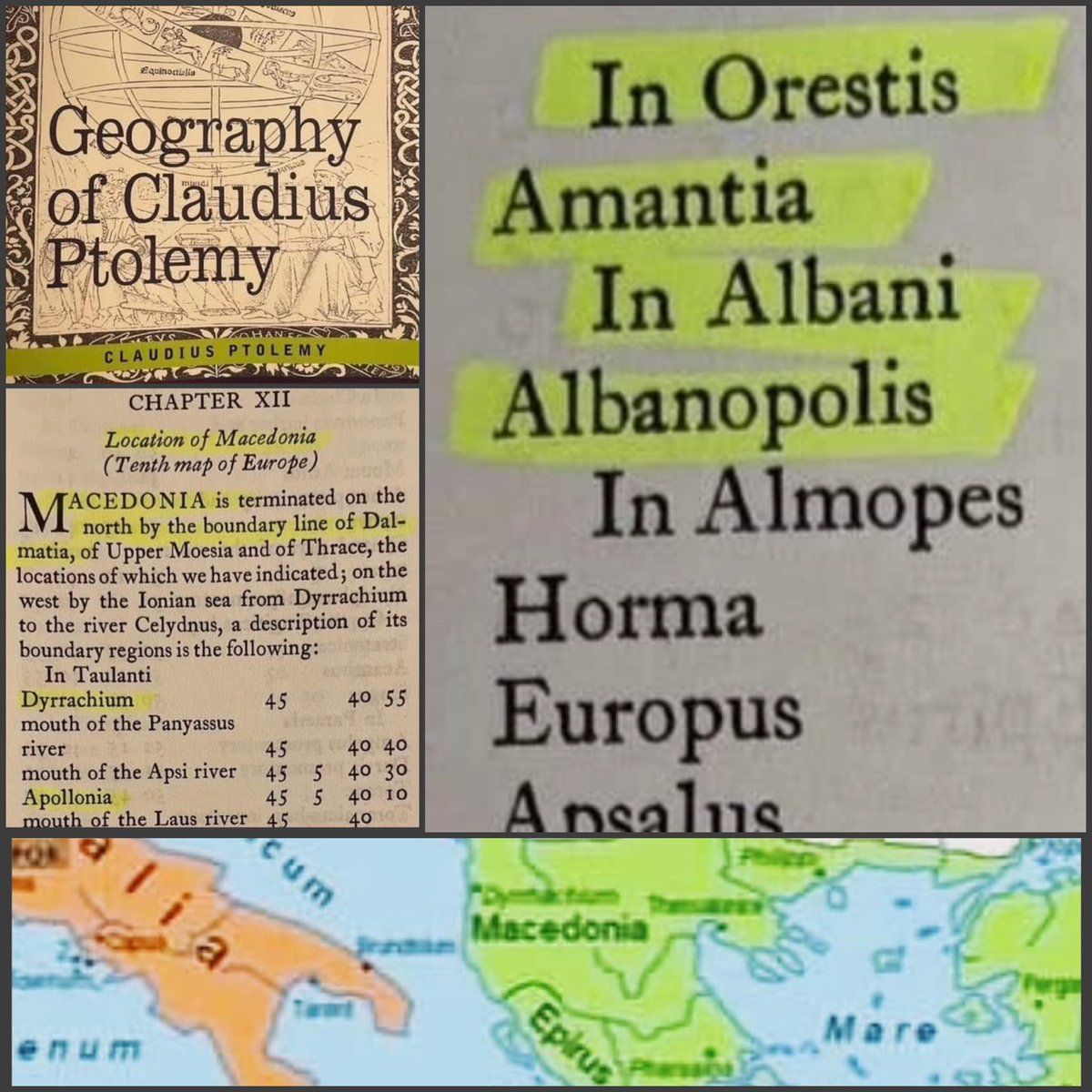
The earliest explicit attestation of the ethnonym ALBANI appears in Book III of Claudius Ptolemy’s Geographia (2nd century AD), where they are associated with Albanopolis and located in Macedonia, in a region broadly corresponding to present-day Albania.
#albania#history
« They shall curse Philip… and the entire Macedonian race and nation. » - Livy (31.44)
Even in hostile rhetoric, the Macedonians are defined as a distinct people and nation, not merely another Greek polis.
#ancientsources#nomorelies
Justin writes that « almost all Greece… rose to recover their liberty » after Alexander left.
If Macedonia were simply Greek, who were they freeing themselves from?
#nomorelies
The Macedonian Empire of Philip II and his son Alexander built where it mattered most, Albania holds the richest 4th c. BC fortifications in the Balkans. 🇦🇱
#nomorelies#greatawakening#shqiperia
Archelaus, then Philip & Alexander, heavily fortified Albania in the 4th c. BC. If they were truly « Greek, » why invest so much there? Empires don’t pour gold into marginal lands. The simplest answer: Albania wasn’t peripheral, it was central. 🇦🇱
Head of Zeus, Bylis 🇦🇱, 3rd c. BC.
At Dodona, Zeus was HEARD through the sacred oak.
Porphyry mentions a tomb of Zeus in Crete. Ancient tradition calls him Zan.
In Albanian, zan means « VOICE. »
Coincidence?
Celebrating the spring equinox ☀️
Albanian stands apart: Diell (sun) gives ditë (day), dritë (light), and di (to know).
A unique linguistic system where light, knowledge, and the divine are intrinsically linked.