Most of you know the Delphic maxim "ΓΝΩΘΙ ΣΑΥΤΟΝ" (Know Thyself). In the grammar of the Greek language, the verb is in a tense no longer used today: the Aorist (past) Imperative (and on 2nd person singular, active voice). The question now is: how is it possible to command someone in the aorist (past) tense?
Commanding someone in the aorist is very powerful, yet quite common in "Ancient" Greek. It is a deliberate choice that changes the very nature of the exhortation.
In Greek Philosophy, the Delphic maxims are considered "commands of Apollo." Through these maxims, the philosophers demand that you, the student, become better.
So when it commands you to know yourself:
1. It is not interested in duration, but in the result or the beginning of the action.
2. "Begin to know" - "Come and know."
3. Do it. Now. Do not postpone it.
They did not want a mild, philosophical piece of advice like "try to know yourself a little every day." The Delphic maxim commands you and says:
"Wake up. Finally realize who you really are YESTERDAY."
Proclus writes:
"Just as the inscription at the entrance to the Eleusinian sanctuary announced that the uninitiated and the unperfected should not enter the inner sanctum, so too the inscribed ‘Know Thyself’ at the entrance of the Delphic temple declared the way of the upward journey toward the Divine and the most beneficial and effective path that leads to purification. It says, almost plainly to those who can understand, that the one who knows himself, beginning from his own hearth, can come into contact with the god who reveals the whole truth and is the leader of the purifying life. On the contrary, the one who is ignorant of who he is, being uninitiated and unperfected, is unfit to partake in the providence of Apollo."
- Proclus, Commentary on Plato’s First Alcibiades, Book I, 5.3–5.12
And we also have this passage from Xenophon, where Socrates, the main teacher of the maxim "Know Thyself", says the following:
SOCRATES:
Tell me, Euthydemus, have you ever visited the Oracle at Delphi?
EUTHYDEMUS:
Yes, by Zeus, I have visited it twice.
SOCRATES:
So when you entered the temple, you had the opportunity to see the inscription "Know Thyself"?
EUTHYDEMUS:
Of course I saw it.
SOCRATES:
And after that, what did you do? Did you take care to follow the command of the inscription, or did you make no attempt at all to approach yourself, so as to see who you really are?
EUTHYDEMUS:
By Zeus, not at all. For I am not so childish or ignorant as to not know who I am. I assumed that I knew myself. I mean, is it possible not to know oneself?
SOCRATES:
But perhaps what you know is only the name of yourself, that is, your external characteristics, while you remain ignorant of your real abilities (those hidden in your soul). Shouldn’t you examine yourself in the same way one does when wanting to buy a horse? Besides its external appearance, one must also be interested in a series of particular traits and qualities: whether it is obedient and disciplined or disobedient and unruly; whether it is strong and manageable or weak and difficult to control; and also whether it can run fast or tires easily. For just as one would want to learn all these qualities of a horse, in the same way one must want to learn the corresponding expected qualities of one’s own self. Do we really know, then, what our own worth and power are?
EUTHYDEMUS:
It seems, Socrates, that whoever does not proceed to apply "Know Thyself" will necessarily remain ignorant of his own inner powers as well.
- Xenophon, Memorabilia, Book IV, 24
Thanks for reading me,
Homer Pavlos
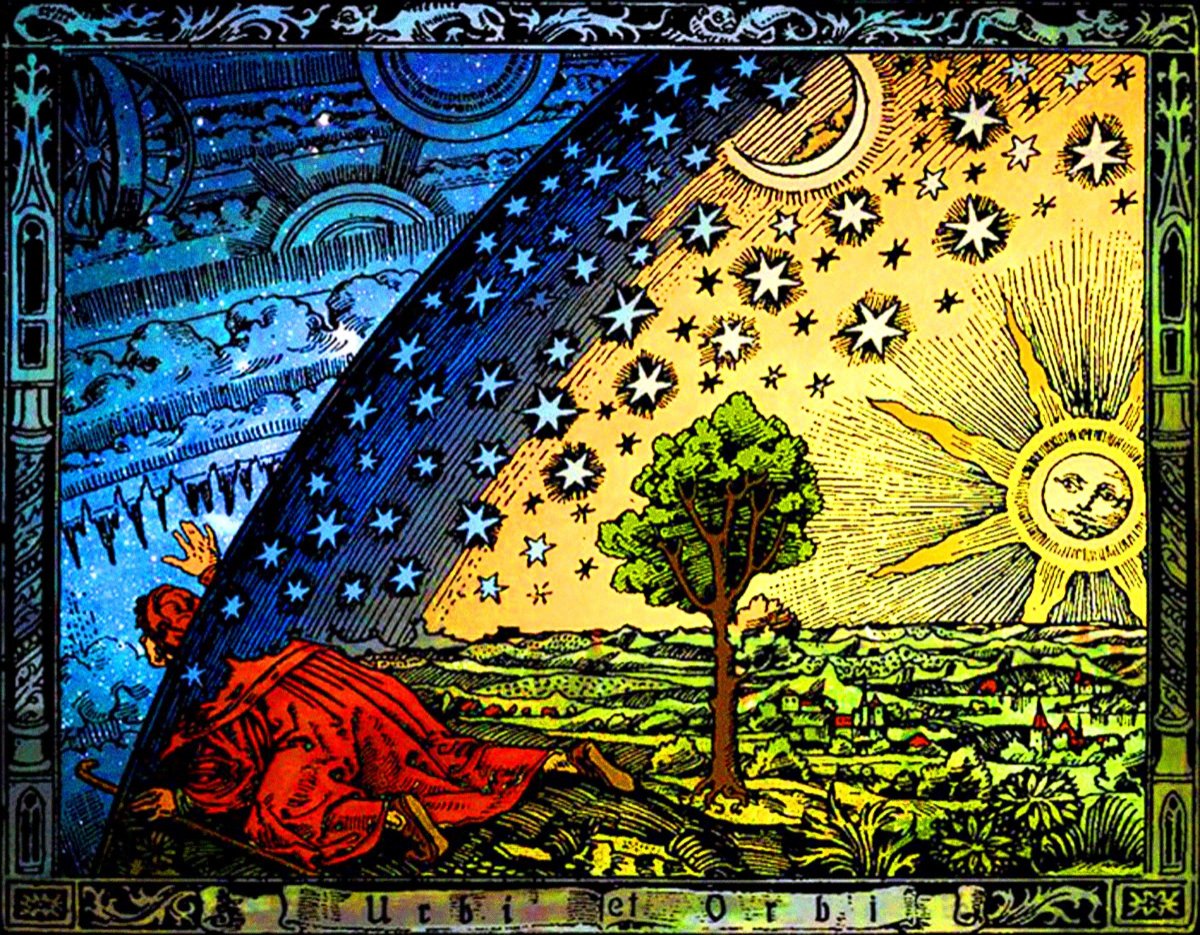
Ancient book frontispiece (1496) with five Latin proverbs you should remember:
1. Hominēs et arborēs a frūctibus cognōscuntur — “Men and trees are known by their fruits.”
2. Per Deum omnia facta sunt, et sine Ipsō nihil factum — “Through God, all things were made, and without Him, nothing was made.”
3. Rēs cognōscuntur per terminōs — “Things are known by their limits.”
4. Vīs amārī, amā — “If you want to be loved, love.”
5. Porrige porrigentī — “Give to the one who gives.”