Creative Brand Designer & Strategist • Visuals & strategy that make brands look as good as their story feels • Designer @calilyliu • Your brand is next. ↓
I’ve spent the last 2+ years creating and building something extraordinary.
My journey has had its setbacks, wins, lessons and still at it.
But let’s try something different this time.
Starting with an introduction:
I’m Flow, an exceptional Creative Designer, Brand Strategist and Creator.
Over the past 2 years, I've been the guy behind brands that don't just look good, but they convert, educate, and command attention.
In this period, I've
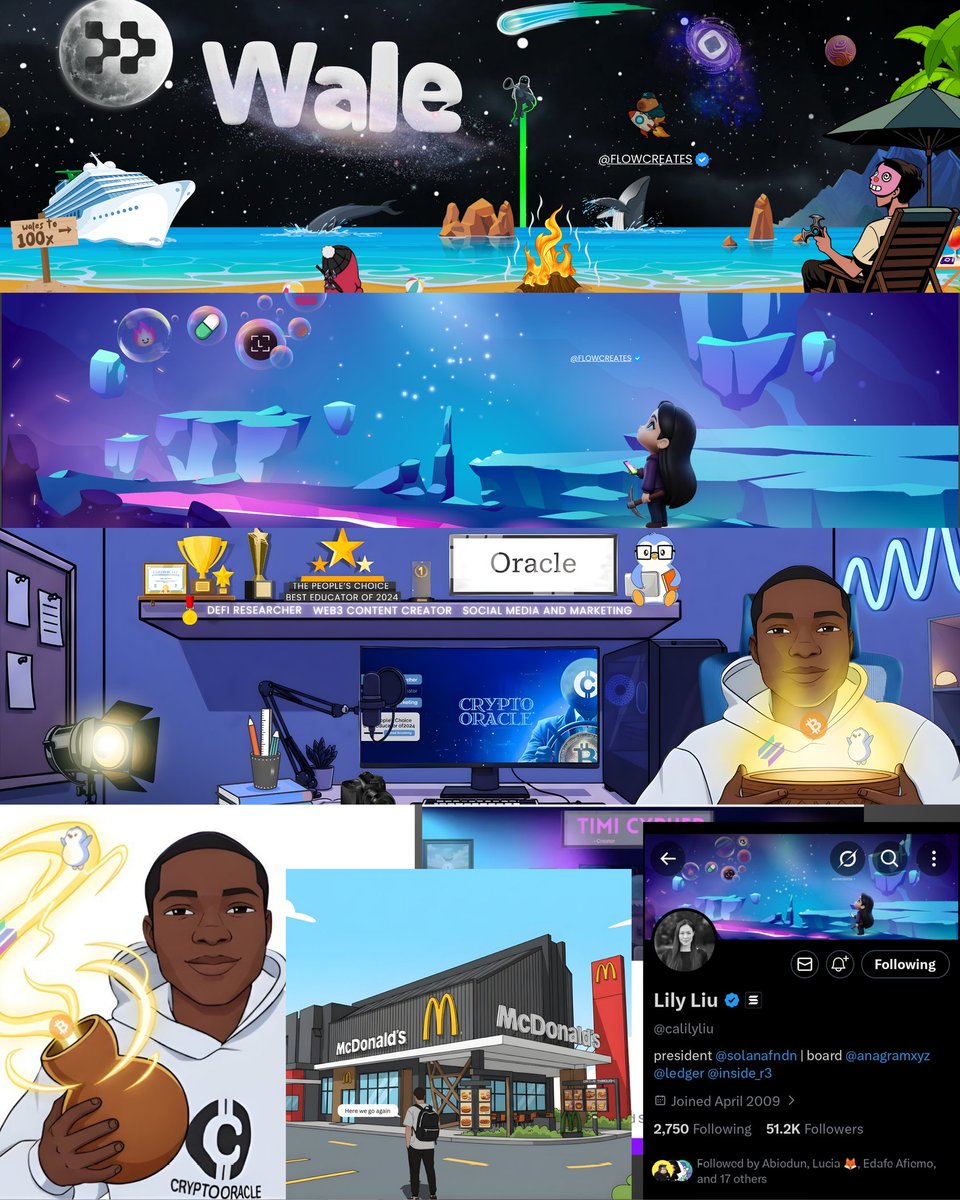
→ Handled the current X brand design for @calilyliu, the President of Solana Foundation.
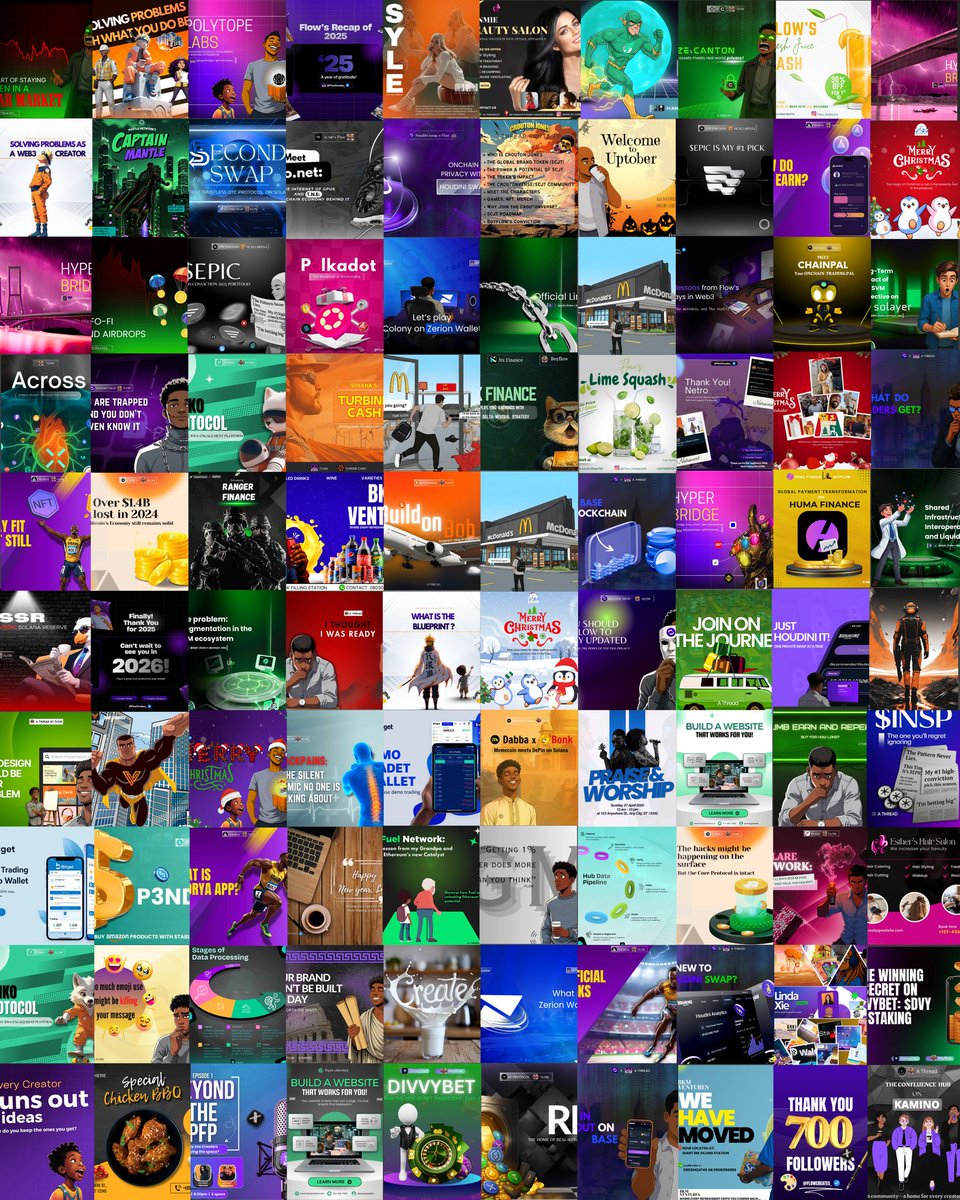
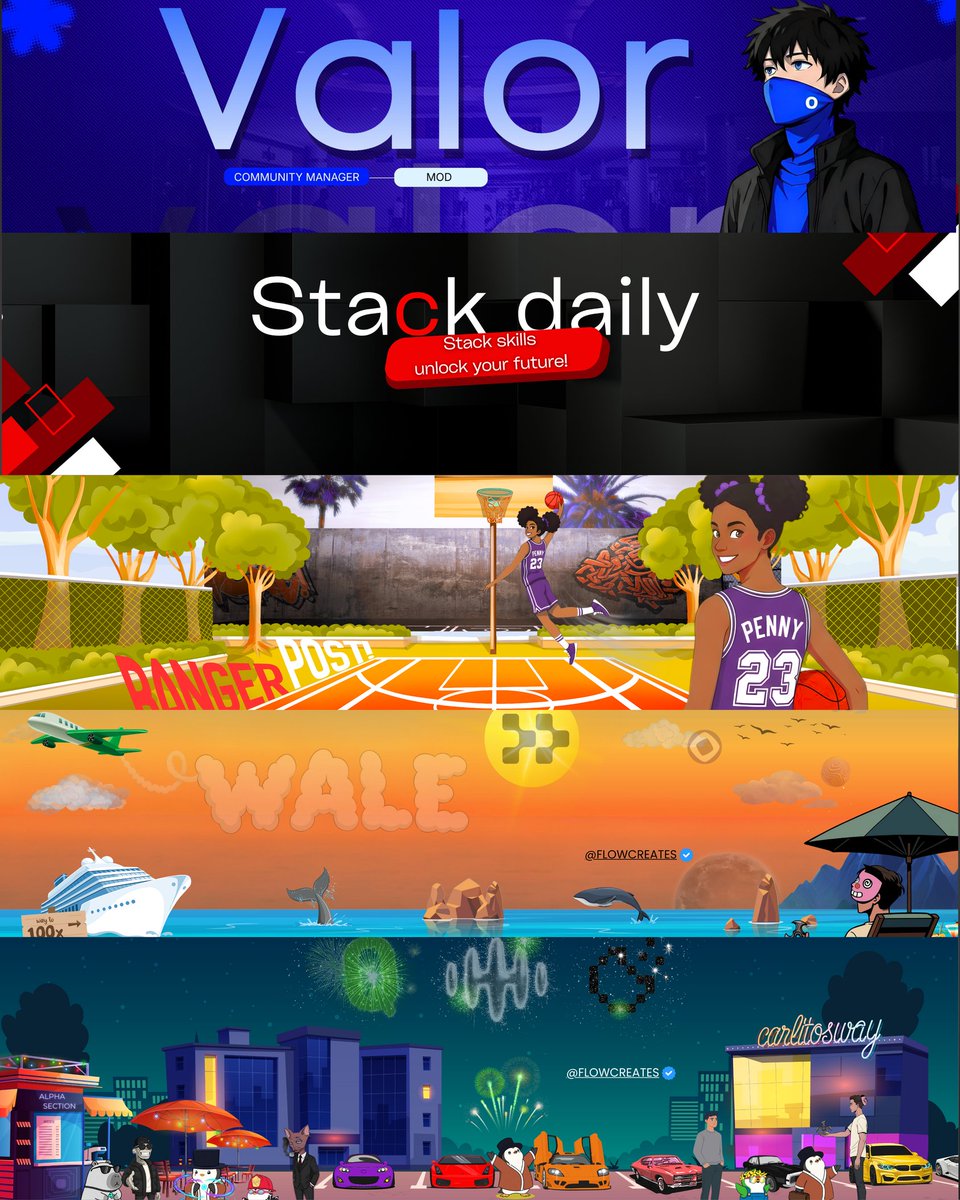
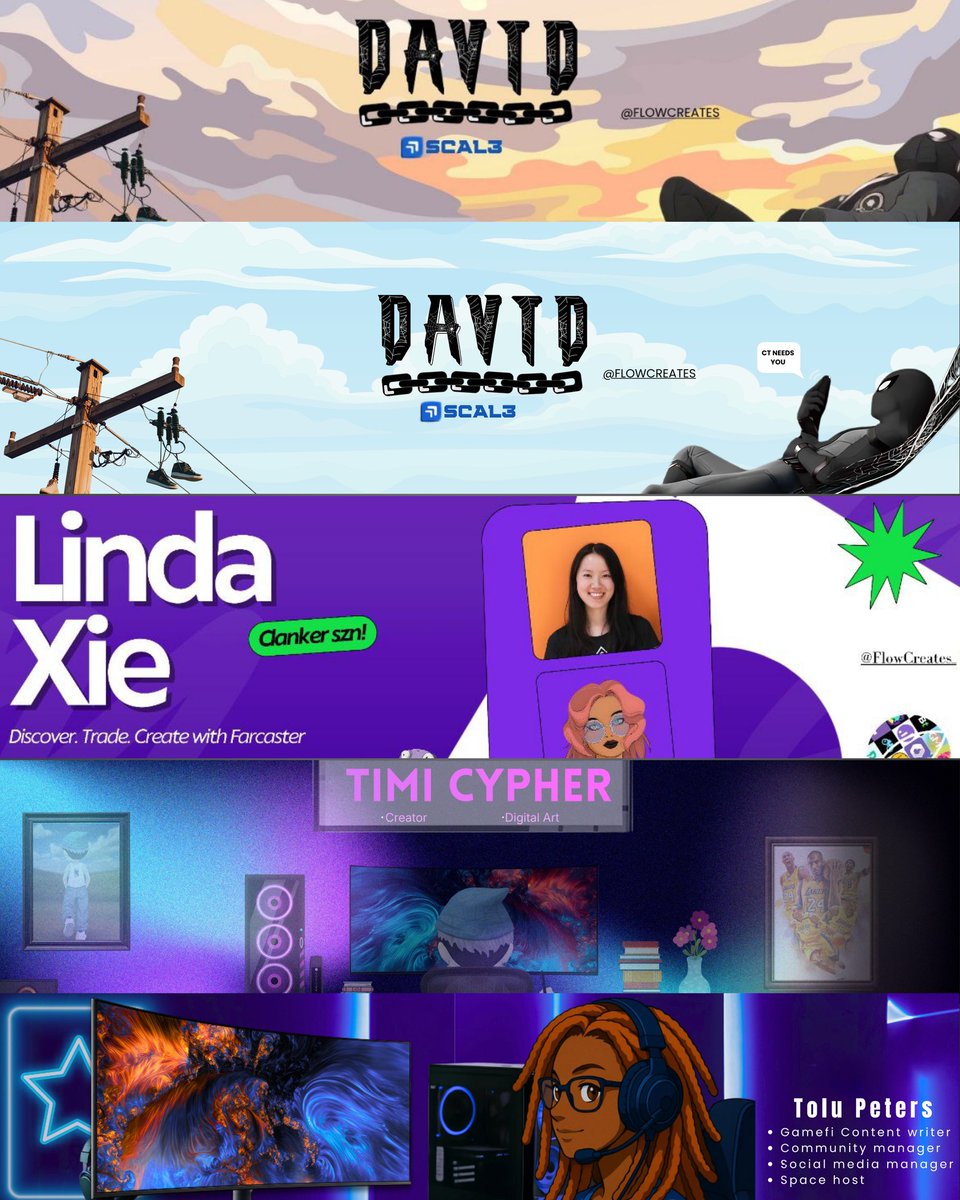
→ Designed over 30 premium & custom X, as well as LinkedIn banners for top brands and Web3 KOLs
→ Published over 60 high-impact content pieces on DeFi, Design, web3 ecosystem storytelling, strategy and branding topics.
Create on X threads, long form posts, and Medium articles.
→ Ghostwritten and designed for multiple Web3 KOLs
→ Submitted more than 41 bounties on SuperteamEarn, ScribbleDao, and other platforms
→ Grew my own audience to about 1M impressions from under 1k followers
Spotlight on few projects I've worked with:
→ @Build_on_BOB_NG as a Content Writer
At Bob:
- I created engaging and educational content around Bitcoin DeFi for targeted audience in Africa.
- Made complex Bitcoin L2 concepts feel clear and engaging for the African audience.
- X page now over 1,000 followers, and with a 250+ active member community on Telegram.
New Bob and Bitcoin users onboarded organically
→ @HoudiniSwap as a Lock Collective Contributor
At Houdiniswap:
- I created targeted educational content on privacy DeFi swaps as a contributing Designer and writer
- Spotlighting product features, integrations with projects like @base, and new use cases.
- 150k+ impressions generated alongside other contributors on various platforms
- Onboarded new users to Privacy Defi
Currently, I'm a:
→ Guardian at @solflare wallet
→ Regional Contributor, @SuperteamNG
→ Member, @SolanaCollectiv
What I bring isn't just visuals or copies...
It's a complete creative system that covers:
Stand out visual identity, storytelling and communication.
From copies to scroll-stopping social media designs, to X/Linkedin banners, arts, infographics and other brand visuals.
So if you need a creator who doesn't just make things look good,
But conveniently creates stand out visuals and tailored brand strategies that match the quality of the message and that of your brand.
Then let's bring your ideas to life.
Send a DM or an email to [email protected].
You can also check out my full portfolio on my profile.
For the Safety of My Family!
Good evening, everyone, and to anyone who reads this. Something happened today, and the reason I’m making this post is that it happened at my home, where my family lives. It’s our house, and my family’s safety is paramount to me!
Today, October 21, around 8pm, I had a back-and-forth with an @inDrive rider. Here’s what happened.
I was at the Island, where I went to see my very good friend, who had lost his dad. I tried to use Bolt to book a ride, but it was busy. I don’t use inDrive, so my friend booked a ride for me.
The inDrive fare was 25,100, and I accepted! MR. CHARLES ETIM BASSEY called me and asked where I was headed. I told him Ayobo. Then, in his words, MR. BASSEY said that if I was going with the AC on, I would pay 30,000, and if I was going without AC, we would stick with the 25,100.
I said okay. When he arrived, he wanted to turn on the AC. I told him I didn’t need it because I wasn’t feeling well and would throw up. Plus, since it was already evening, I’d rather just use the natural air.
THE AC WASN’T ON! My friend asked if I used the AC, and I said no, although there were the usual hold-ups, etc. I got home, and my friend, who had ordered the ride, sent 28,000 to account for the hold-up.
MR. CHARLES ETIM BASSEY created a scene at my family’s house, and other landlords came out. He went ahead and took pictures of our house, sent them to a group chat, and said, in his words, “This is the house.” I picked up my phone, too, and took pictures of him and his car.
He asked inDrive to provide the call recording, and I told him that if the recording contradicted my account, I would pay 32,000. He didn’t provide the recording and kept creating a scene. My friend called and explained the same thing to the other landlords.
Why am I putting this out here? This is my family’s house, and their safety is paramount to me!
IF ANYTHING HAPPENS TO MY HOUSEHOLD OR OUR HOUSE, MR. CHARLES ETIM BASSEY, AN INDRIVE RIDER, SHOULD BE HELD RESPONSIBLE!
This is his car and his picture.
Thank you.
i started experiencing inner peace when i realised that the work never ends, in every aspect of life. There’s no amount of work you do today that exempts you from the work due tomorrow.
So do your best, but also remember to pace yourself.
Artificial intelligence is becoming part of everyday life.
From generating images and writing code to powering research and automating complex tasks, AI models continue to expand what technology can do.
But behind every capable model is something fundamental: data.
Human experiences, photographs, voice recordings, specialist knowledge, and other forms of information help AI systems learn patterns and become more useful.
As demand for better training data grows, an important question deserves more attention.
What happens to the rights of the people who provide the data that AI depends on?
Knowing that a dataset exists is not the same as knowing where it originated, whether its contributors authorized its use, or what permissions apply to it
This creates a challenge for both sides of the AI economy.
#DATAonSuiQuest
@SuiNetwork@datafdn
90% of people here tagged @hiayoola for this role.
This is what happens when you’re good at what you do and people know it. Your work becomes your publicity. 👏🏽
AI agents, Miners and Validators.
The interesting part is how they fit together to power the agentic economy.
Here's the full picture in 60 seconds.
A 🧵
---
Let's start with the AI agent.
The AI agent is the customer. It needs an AI model to do something, so it posts a session request with details like the model,
required compute, maximum latency, privacy preference and the fee it's willing to pay in $FLOP tokens.
—
A miner with suitable hardware can then pick up that request and run the inference.
The result can then be verified before settlement is made.
---
Now the miner.
Miners are the supply side of the network. They provide the GPUs, accept inference jobs and turn hardware into actual computation.
But, they don't just get to simply claim they did the work.
Why?
‐------
Because miners have to stake at least 10,000 $FLOP, plus additional collateral based on the amount of compute it's calibrated to serve.
If dishonest behaviour is detected, that stake can be slashed as punishment.
This will incentivize honest behaviour among miners.
---
Then you have validators.
Think of them as the referees.
Validators check the evidence submitted by miners, package the results into blocks and help keep the network's rules and state consistent.
—
The current Flop network design caps the validator set at 1,000, with roughly 50 validators rotating each month.
They also participate in network governance through FLOP Improvement Proposals.
---
Now here's where things get interesting.
When an agent pays a fee for its inference session, the miner that completes the job receives the payment when the session settles.
However, 1% of that payment is diverted into an audit pool, used for validation while 99% goes to the miner.
So even the payment for one inference session creates incentives for both the miners and the validators.
---
$FLOP is also used in block rewards.
The current design starts with a 96 $FLOP block reward, with the reward scheduled to halve every 730 days during the first five halvings.
The exact distribution mechanics around those rewards are still subject to change but the main thing you need to know is that the network rewards the participants providing compute, securing and operating the protocol.
---
Agents and token holders can also participate in staking, while miners and validators use $FLOP as part of their participation in the network.
And when an inference session settles, the corresponding payment is intended to become available to the miner rather than being locked behind a traditional token vesting schedule.
---
If you put the three actors together, it becomes pretty straightforward:
AI Agents bring demand → Miners turn hardware into inference →
Validators verify the work and help secure the network → $FLOP connects everything.
—
That's the bigger idea behind the FLOP economy.
It's not just a token moving between wallets. It's a system designed to connect three different economic roles around one resource:
-Buying compute.
-Providing compute.
-Verifying compute.