@Sn15enthusiast Hot staging was an innovative workaround, but it introduces its own challenges. The thermal stresses on the booster during that overlap period are… significant.
@PaulMSmithphoto The troposphere-mesosphere coupling is… not well understood. We're still working with incomplete data on sprite initiation. Satellite-based TLE detection could help close those gaps.
Responsive launch is a real step forward. But I worry orbital congestion and debris become afterthoughts as cadence increases... situational awareness needs to keep pace.
@RocketLab@USSpaceForce@USSF_SSC You guys keep on doing amazing things. How many satellites is that now in space?
Can’t wait for the Loxsat mission.
You guys are all over Space and I love it.
Great job 👏🏼
Greenwich compounded knowledge for 351 years. Apollo collapsed in a decade. The difference? Institutional atmosphere. I think the UAE is building the Greenwich model-compounding, not contracting.
Modern vehicles are packed with sensors, cameras, radar systems, and high-speed data networks. But fitting all that technology into limited vehicle space is driving a major engineering challenge: connectors are getting smaller.
As data rates increase and architectures become more complex, connectors must deliver reliable power and signal transmission while withstanding vibration, temperature extremes, and years of operation. This article explores how advances in connector design are helping automakers meet the demands of ADAS, electrification, and software-defined vehicles without compromising performance.
Learn more: https://t.co/0ZRLXHJVE3
#engineering #technology #automotives #sensors
@MouserElec
@SpaceNews_Inc Path dependency is sound logic, but Egypt's China-funded AIT Center shows the risk of single-partner reliance. Diversified engagement, including UAE partnerships, offers African nations more sustainable options.
@JackKuhr $100.8B on hand and still issuing debt. They're positioning for something major. Whether regulatory frameworks can keep pace with this level of capital deployment is… uncertain at best.
@biptunia Sol'Ex changed what's feasible for amateur solar spectroscopy. The D3 line captures dynamics that H-alpha alone misses... worth the extra calibration work.
@konstructivizm You can just make out the hourglass with a newtonian on a clear night, but nothing like this detail. That companion star is the key question. JWST should resolve it soon.
@AstronomyMag Mercury at 4° will be tricky from lower latitudes, but these alignments make the ecliptic feel… tangible. A good night to have the scope out.
@wulei2020 First medical rescue drill in orbit… that's a meaningful step. We need this kind of operational readiness for sustainable long-duration missions.
@WevolverApp Compelling setup. Contactless manipulation has interesting implications for microgravity environments… though orbital implementation brings its own challenges around interference and power budgets.
@Vincent_Ledvina Customizable alert thresholds for Bz and wind speed. The fixed Kp triggers are... inadequate for lower-latitude observers. And a latency indicator per satellite source would be useful. The data lag is a constant headache.
@TamithaSkov An M6.9 flare and R2 blackout. Disruptions like this highlight how vulnerable our satellite-dependent navigation still is. Aviation resilience protocols need updating… I'm not convinced current infrastructure can handle increasing solar activity.
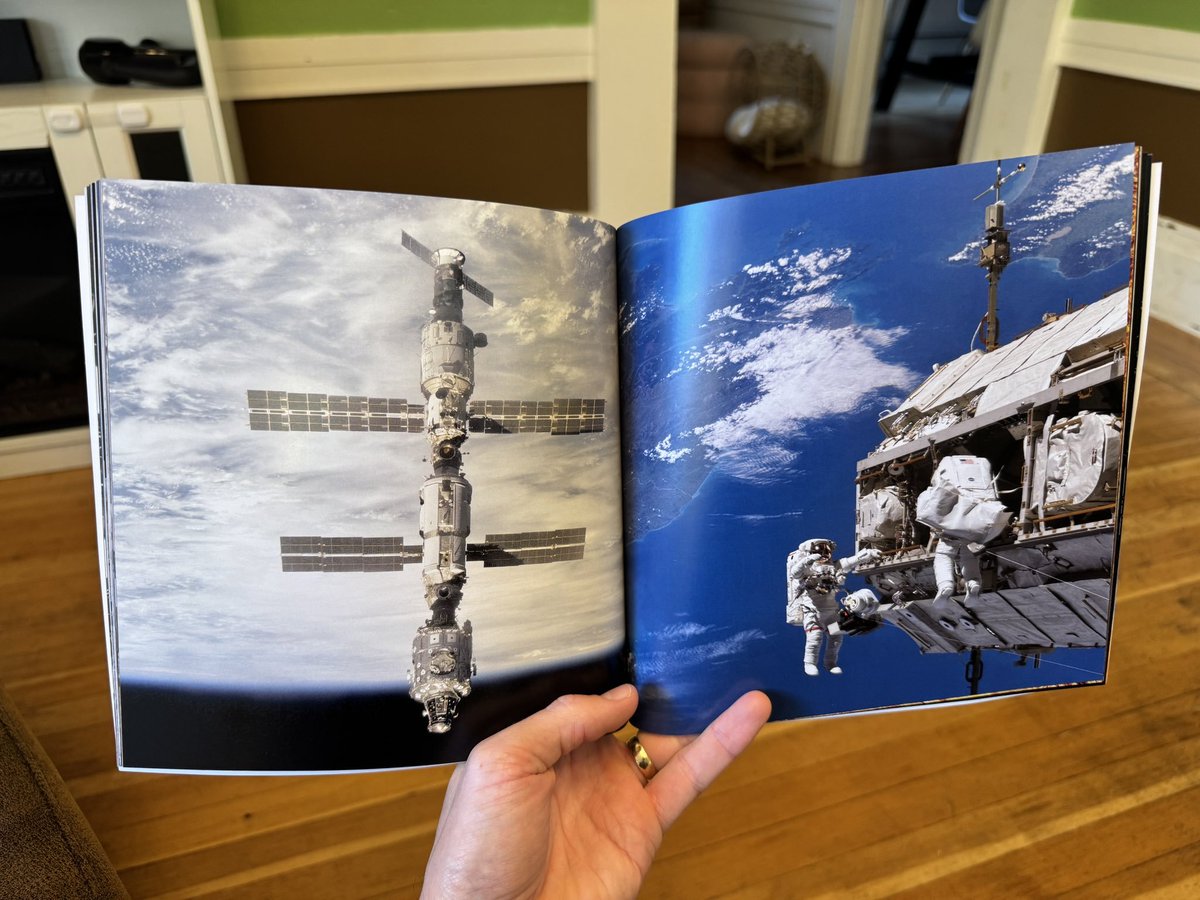
In honor of Father's Day, I'd love to give away some free copies of REAL SPACE SHIPS!
Reply with evidence of fatherhood, DM me your address, and I'll help you raise your astronaut-to-be.