“The only way to serve your company’s interest is to serve your customer’s interest.” - Philip Kotler
The future of...so many things, is at stake. Aviation and travel is my industry. I want to do whatever I can to help. What can *you* do?
Loads. I've se…https://t.co/pSsdSPompy
Thank you guys for 100K followers 🥳
To give back during this market crash, I will choose 5 random followers and give away $2500 worth of #Bitcoin to them!
To participate 👇
🤝 Follow me: @TKralow
♻️ Retweet this tweet
❤️ Like this tweet
Winner selection: Next Fri 12.07
Want to become AI & ChatGPT genius for FREE? 🤖
Join this 3-hour workshop by @Growthschoolio & learn 10+ AI tools to boost productivity & growth 🚀
Worth $99, but FREE for First 100 people
👉 Register here: https://t.co/fz75iBl8UP
#growthschoolchatgpt101
@manurishiguptha Learnt a couple of things:
- it seems Twitter is now a blogging platform
- regular folks still think that culture change will magically happen *just because* ownership change happens
- regular folks imagine everything can be pre-planned in advance for such disruptions.
Elon Musk fired 6,500 employees at Twitter.
A little birdie told me it's down to:
- 2 designers
- 6 iOS developers
- 20 web developers
- Around 1,400 sales and operations people
How is it possible that we are still using this website?
Two words:
Parkinson's Law.
Have you ever wondered why seemingly simple tech companies have tens of thousands of employees?
Sometimes, it's because they have huge sales forces or tech support/operations people.
But often it's also due to Parkinson's Law.
Parkinson's law is like lighter fluid for bureaucracy.
It's a business tapeworm that slowly eats away at companies, making them less and less efficient and innovative over time.
Parkinson's Law is the idea that the work will generally expand to the amount of time, budget, and number of people allocated to it, and no matter how many people you allocate to it, those people will feel busy.
They'll feel busy because, due to the excess time/slack in the system, they'll start focusing on less and less important tasks.
Here's how it manifests on an individual level:
Let's say you have a report due in a week.
The report might only take you around five hours to finish if you really focus and work efficiently. However, because you know you have a week to complete it, you might find yourself spending a lot more time on it than you need to.
You'll be more prone to distractions, take longer breaks, or perhaps decide to add more details, tables, graphs, and so forth.
Essentially, the task becomes more complex and time-consuming purely because you have more time in which to do it.
And here's how it manifests across organizations:
Imagine a big tech company. A social media company with various departments. Each department has tasks that it must complete to contribute to the overall productivity of the company.
Now, suppose each department is given a budget and a set amount of time to complete its tasks for the year.
According to Parkinson's Law, each department will use its entire budget and the entire allotted time, even if the tasks could have been completed more efficiently.
This is because as resources and time increase, departments tend to become more complex and less efficient.
For example, a department might add more steps to its procedures, requiring more approvals and creating more paperwork, which slows down the process.
Or it might use the full budget on additional personnel or equipment that doesn't necessarily improve productivity.
The department might also use the full budget to justify the same or larger budget for the next year, since budgets in many organizations are often determined based on the previous year's spending.
This is a phenomenon known as "budget padding" or "spend it or lose it" mentality.
Inefficiencies can also develop in staff allocation. If a department expands, it might add managerial positions that aren't strictly necessary.
More employees are hired to manage, creating layers of bureaucracy that may not contribute to productivity and can even slow decision-making.
I have seen this occur over and over again in my career. The larger the team, the larger the budget, the longer the timeline, the less gets accomplished.
I'm very curious to see how many more tech companies come to this realization.
So often, good times + revenue growth = Parkinson's Law.
Saudi Arabia is spending BILLIONS on sports, and many people think they are just sportswashing their image.
But the real story is more complex — and their involvement is much deeper than most realize.
Here's a quick breakdown:
So Saudi Arabia makes A LOT of money on oil.
The country’s state-controlled oil company Aramco produces more than 10 million barrels of crude oil daily, reporting a PROFIT of $161 billion last year alone.
That's...
$441 million in profit every day
$18 million in profit per hour
$ 306,000 in profit every minute
And it was the highest-ever recorded annual profit by a publicly listed company in history.
Saudi Aramco Company Overview
• Controlled by Saudi Arabia
• World’s largest oil producer
• Record $161 billion in profit last year
• Market cap of $2.1 trillion (3rd largest behind Apple & Microsoft)
But oil is still a tricky business, and Saudi Arabia is highly reliant on fossil fuels.
For example, oil accounts for 42% of Saudi Arabia’s total gross domestic product (GDP), 87% of its budget revenues, and 90% of export earnings.
And when Saudi Arabia saw a sharp decline in oil prices throughout the early 1980s, they entered a deep, prolonged recession that took nearly three decades to recover from.
So that’s why Saudi Arabia’s Crown Prince Mohammed bin Salman (MBS) announced the Saudi Vision 2030 plan in 2016.
The plan laid out a framework to reduce the Kingdom's economic dependence on oil by diverting profits (via their $620 billion sovereign wealth fund) into other industries like sports.
So Saudi Arabia got to work and has already spent over $10 billion on different assets across sports.
Here are a few examples:
• Saudi Arabia bought Newcastle United FC for $408 million in 2021.
• Saudi Arabia has a 10-year, $1 billion deal with WWE that guarantees them at least two events each year.
• Saudi Arabia has a 10-year deal with Formula 1 worth $650 million, guaranteeing them a home race each year. And their state-owned oil company Aramco has a 10-year, $450 million sponsorship deal with F1, too.
• Saudi Arabia has paid at least $150 million to host high-profile boxing events, including fights with Anthony Joshua, Oleksandr Usyk, and Andy Ruiz Jr.
And this is really just the tip of the iceberg.
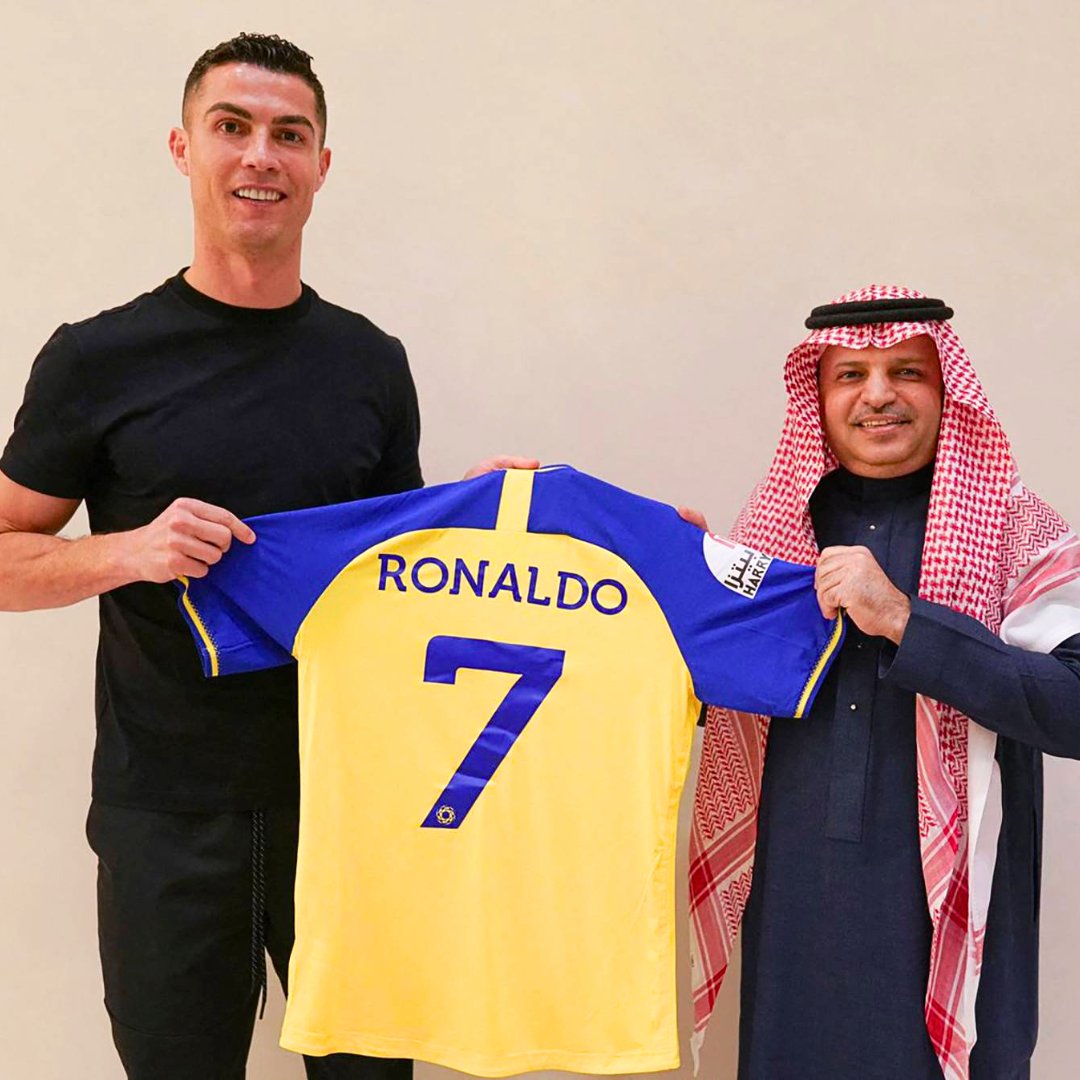
Saudi Arabia recently committed at least $3 billion to a partnership with the PGA Tour. And they also took over ownership of the country's four biggest soccer teams, signing Cristiano Ronaldo, Karim Benzema, and others to deals worth more than $2 billion.
But that doesn't mean sportswashing isn't happening.
Sports can be an extremely lucrative investment — but they can also be used to portray a more positive image of the country to the Western World, enabling Saudi Arabia to invest in many other (ancillary) businesses.
So don't expect Saudi Arabia to stop anytime soon.
If anything, they are getting started.
Ps. This is a short excerpt from my 3x weekly podcast (Top 25 in US sports). Subscribe using the links below so you don't miss any upcoming episodes!
Apple: https://t.co/oxtjqN8JOE
Spotify: https://t.co/pYRzIko8gQ
Just admit it, you think E-commerce is hard.
ChatGPT don't.
That's why I built 300 prompts to help entrepreneurs run a profitable store.
Normally $97
But for the next 24 hrs, it's FREE of charge!
Like, RT & Reply below with a "✅" and I'll send you the bundle.
The L in the middLe - East
Is it Luxury?
Or
Is it it Low Cost?
Or maybe a Little of Both!
That’s why it called the Middle East!
#aviation#travel#luxury @business https://t.co/QlzOmPtDUz
𝗥𝗲𝘃𝗲𝗻𝗴𝗲-𝗖𝗼𝗻𝗳𝗲𝗿𝗲𝗻𝗰𝗶𝗻𝗴, 𝗪𝗼𝗿𝗸𝘀𝗵𝗼𝗽𝘀 & 𝗦𝗽𝗲𝗮𝗸𝗶𝗻𝗴. In 1H2023 travel has rebounded, 𝘴𝘶𝘱𝘦𝘳𝘤𝘩𝘢𝘳𝘨𝘪𝘯𝘨 in-person engagements and the appetite for business development. What's new? Here's my reflections:
So within the a…https://t.co/bor7XyVrtm
𝗜𝗻𝗱𝗶𝗮 𝗥𝗶𝘀𝗶𝗻𝗴! Or is it? Is India ready to become a new "tourism force"? Very insightful article here but I have some thoughts based on my own 10-yr experience living and working in/with India...
While the article provi…https://t.co/Hnj5Qi2fNy https://t.co/00zngi9uo0
The “myth” of seamless travel. There will always be seams in air travel…
Every now and then you hear an inconvenient truth in aviation conferences. For me, this was one of the best ones yet!
The only folks who talk about “seamless” are vendors, industr…https://t.co/PNqVQqw4de
“We are taking the customer from B to A”. Have you heard it put that way before?
BEOND caught my attention when I first heard of them in September 2022. At first it was the 68 seats on an A321 and flying from Maldives to major c…https://t.co/gV9dx36Vb2 https://t.co/nP9J2LEMz8
It's a 𝗛𝗔𝗧𝗧𝗥𝗜𝗖𝗞! That's 𝟯 𝗮𝘄𝗮𝗿𝗱𝘀 🏆in one glorious night for AirFi!
🏆 Congratulations to our wonderful and newest addition to the AirFi family easyJet for winning the "𝘽𝙚𝙨𝙩 𝙛𝙤𝙧 𝙊𝙣𝙗𝙤𝙖𝙧𝙙 𝙏𝙚𝙘𝙝𝙣𝙤𝙡𝙤𝙜𝙮" with their raved…https://t.co/CbRZmjHoiZ
𝙏𝙖𝙠𝙚 𝙢𝙮 𝙗𝙧𝙚𝙖𝙩𝙝 𝙖𝙬𝙖𝙮...! A huge video screen, a suspended AirFi "Box", 8 chairs, 4 tables, 2 demo kits and a passionate bunch of 𝘈𝘪𝘳𝘍𝘪-𝘯𝘦𝘳𝘴 ready to dazzle at Aircraft Interiors Expo for the next couple of days...
OK, so if ✈️ can…https://t.co/de5MtD5r4T
Customer Experience, Inflight Wifi and…”muscle building” as I travel to Hamburg. How are they related?
Monday morning and I find myself back the airport. Inspired to make a video speaking about things that I’ve read and watched over the weekend - of cou…https://t.co/hOFRG3MKAh
𝗙𝗿𝗲𝗲-𝘁𝗼-𝗿𝗲𝗴𝗶𝘀𝘁𝗲𝗿 𝘄𝗲𝗯𝗶𝗻𝗮𝗿 𝗼𝗻 𝗔𝗶𝗿𝗹𝗶𝗻𝗲 𝗥𝗲𝘁𝗮𝗶𝗹𝗶𝗻𝗴. Join us for the definitive deep dive into the vast landscape of "Airline Retailing" as we dissect 𝗧𝗲𝗿𝗺𝗶𝗻𝗼𝗹𝗼𝗴𝘆, 𝗧𝗲𝗰𝗵𝗻𝗼𝗹𝗼𝗴𝘆 and 𝗧𝗮𝗰𝘁𝗶𝗰𝘀!
The i…https://t.co/lUZJM4I6Rl
Attention airline commercial and ancillary folks!
👉 𝗛𝗼𝘄 𝗦𝗵𝗼𝘂𝗹𝗱 𝘆𝗼𝘂 𝗩𝗮𝗹𝘂𝗲 𝗮𝗻 𝗜𝗙𝗘𝗖 𝗦𝘆𝘀𝘁𝗲𝗺?
Admittedly, this is not a question I've ever heard, nor been asked. Coming out of the recent…https://t.co/tUPgf4WOBY https://t.co/ut8rNOyEgm