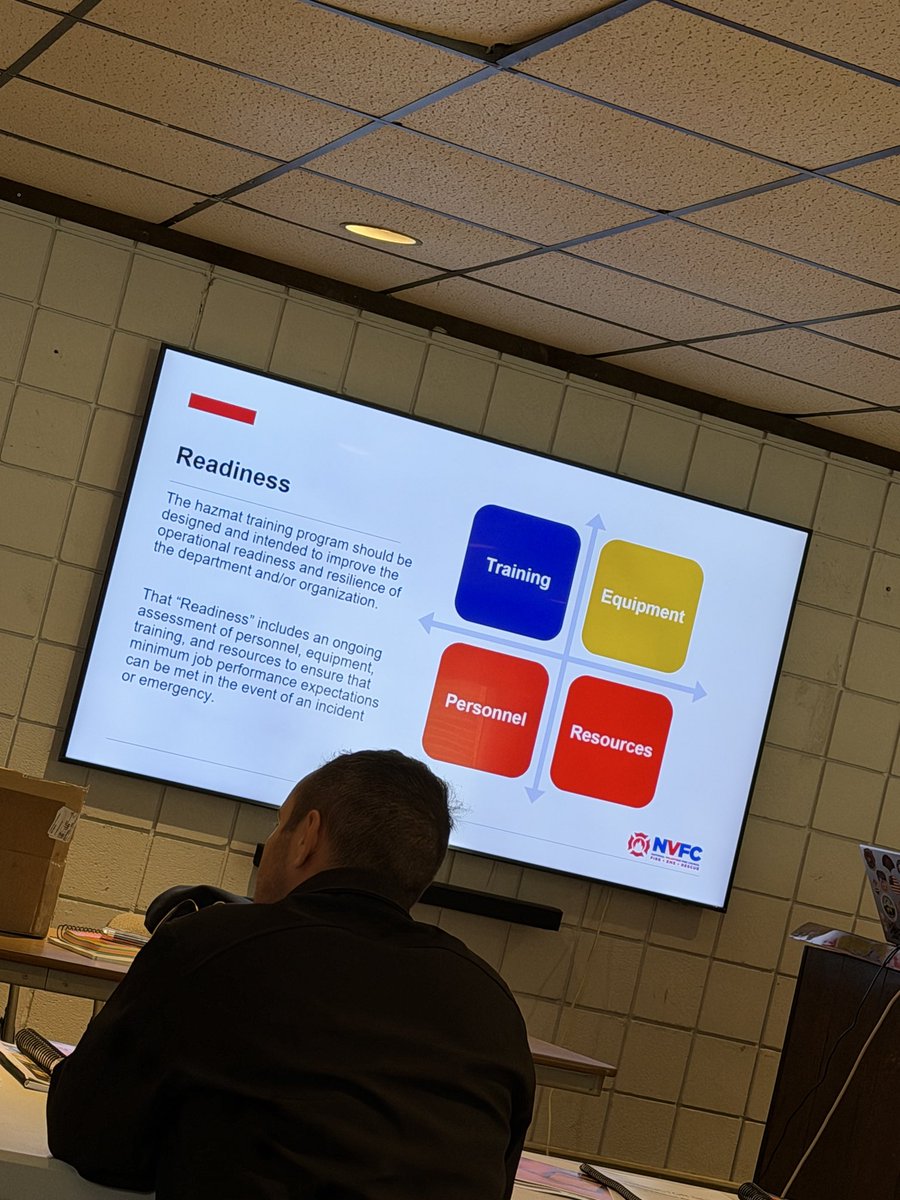
Presented NVFC “Teaching Haz Mat Basics” to a group of instructors in Lanesborough, MA. Great group of students wanting to better present to their students.
I touched this hot thing when I was 6 years old and in my grandfather/ truck outside the Langley, SC post office on Depot Street. Let me tell you, I have NEVER forgotten the pain!
How can you justify reading or creating art when the world is falling apart?
C.S. Lewis asked this question in a sermon called "Learning in Wartime," delivered to university students while Germans were dropping bombs on London.
His first point is crucial:
"The war creates absolutely no new situation; it simply aggravates the permanent situation."
The belief that study belongs only to peacetime is a false illusion born of modern comfort. Our greatest thinkers pursued Beauty in times of war.
Moreover, our literary tradition itself accepts war as an inescapable truth of reality:
The Iliad, Cain and Abel, Romulus and Remus — every founding myth of the Western Tradition wrestles with war, violence, and even fratricide.
Lewis reminds us that civilization was not built by scholars in times of peace; rather, it was built by courageous souls who sought virtue in the face of death. Abandoning study leads to grave consequences for our culture:
"If you don't read good books, you will read bad ones. If you don't go on thinking rationally, you will think irrationally. If you reject aesthetic satisfactions, you will fall into sensual satisfactions."
The fact is, culture is never neutral. If we abandon the pursuit of Truth, Beauty, and Goodness, our civilization ceases to be True, Beautiful, or even Good.
Lewis insists the intellectual life is itself a form of resistance:
"Good philosophy must exist, if for no other reason, because bad philosophy needs to be answered."
Reading then, is not just a leisurely pursuit in peacetime, nor is it an escape from the troubles of the world.
It's the very practice that makes civilization beautiful, and makes your own life meaningful and worth living.
This Memorial Day, I come bearing a message from the dead.
Not from Arlington. Not from Baghdad or Kandahar. But from a quiet Tennessee field where thunder once walked on two legs. Where America, for the first time, saw what it had really done to itself.
Shiloh.
The name means “place of peace.” But in April 1862, it became the bloodiest battlefield in the Western Hemisphere up to that point. Over 23,000 Americans fell in just two days.
By the time the smoke cleared at Shiloh, more Americans had fallen in that single battle than in the entire Civil War up to that point, and nearly as many as in all our previous wars combined.
It wasn’t supposed to be that way. Until then, people thought war would be quick. Glorious. Clean. Shiloh shattered the illusion.
In Grant’s own memoirs, he described one field so covered in bodies, you could walk across it without touching the earth. North. South. Blue. Gray. All American. Because who's the traitor in a civil war? Whoever you're aiming at.
I don’t need to rehash tactics or terrain. I’ve studied enough battle maps to know where men fell without ever having been there. That’s not what matters.
What matters is what they still whisper if you’re willing to listen:
“Why are you trying to relearn the lessons we paid for in fire and blood?”
This is about understanding what happens when a country turns on itself, when honor outweighs reason, when the illusion of righteousness becomes more important than unity.
You want to erase the ugliness of the past? Be careful. Because if you only remember one side of a war, you’re halfway to starting another.
This Memorial Day, remember both sides. Not to praise them. But to reflect on the complexity of men and the situations they're thrust into. To reflect on the cost. And to promise.... deep in your soul... not to pay it again.
Industrial fire depts should focus training on site hazards: large open cubicle areas, high hazard processes, and other problem search areas: auditoriums, cafeteria seating, warehouses, etc. On-site fire depts have ability to VERY quickly arrive onscene and go to work!
Hey friends (and not yet friends) I am just reminding everyone I have two big giveaways coming up. 10K on X and 20K on YouTube. We are giving this away for each threshold, the Walnut Furniture M4 Panzer.
You just have to be a follower and repost. When we hit 10K and 20K, respectively, I will have Grok pick our winner.
If you cannot own said Firearm we can discuss a Prize of equal value that you can own!!
Let's do it!
Nobody Knew Scotland Until Braveheart. Now the World Has 🇺🇦Killhouse.
Ukraine just made the war film that explains everything you didn’t understand about modern warfare.
It’s called Killhouse.
It opens April 23. And you need to see it.
Here are 5 reasons why. 🧵👇
They did not take cursive from the schools because children no longer needed it. They took it because of what it was quietly building in them.
Consider what the exercise actually is. A child, six years old, is handed a pen and asked to draw a single unbroken line that becomes a word. The wrist must float. The fingers must hold a living pressure, never quite the same twice, always correcting. The eye must follow the ink forward and trust the hand to finish what it has begun. There is no lifting, no stopping, no starting over mid-word. The loop must close. The ascender must rise and return. The sentence must travel from one margin to the other as a single continuous gesture, and at the end of it the hand must still be steady.
Twelve years of this. Every day. Ten thousand small acts of sustained, self-correcting attention, carried out below the level of conscious thought, until the motion belongs to the body and the body belongs to the motion.
This is not penmanship. It is the slow construction of an interior form.
The hand that has learned to carry a line without breaking it is the hand of a mind that has learned to carry a thought without breaking it. The two are not metaphors for one another. They are the same faculty, trained in the same child, by the same daily discipline. Continuity of the stroke becomes continuity of the reasoning. The patience of the loop becomes the patience of the argument. The commitment to finish a word one has started becomes the commitment to finish a sentence, a paragraph, a life's idea, without reaching for the nearest distraction halfway through.
Print is a different creature entirely. Print lifts. Print stops. Print assembles a word out of separate, stamped, interchangeable pieces, each one beginning and ending in isolation. A mind raised only on print learns to think the way print is made, in discrete tokens, in replaceable units, in fragments that can be recombined by any outside hand without the owner noticing the substitution. It is precisely the shape of thought a language model produces. It is precisely the shape of thought a language model can steer.
Cursive is kata. This is the whole of it. A form repeated daily, for years, not for the sake of the form but for what the repetition lays down in the practitioner beneath the form. The swordsman does not train kata so that one day he may fight in kata. He trains it so that when the moment comes and there is no time to think, the movement is already inside him, older and deeper than thought, and it rises on its own. Cursive was the kata of the literate mind, the daily quiet drilling of continuity, of patience, of a line held steady under the long pressure of its own length. And the signature it produced at the end, that small flourished mark unique to a single human being on earth, was only the outward proof of an inward form no machine and no other hand could ever reproduce.
Take the kata away and the practitioner is left with vocabulary in place of faculty. He can recognise a whole thought when he encounters one. He cannot carry one himself. He can admire a finished argument. He cannot sustain one long enough to close its loop. He begins books he does not finish, sentences he does not end, ideas he abandons the moment the screen in his palm offers him a brighter one. And when the machine begins feeding him tokens in the exact shape his schooling taught him to receive, he meets it with no interior resistance at all, because no interior form was ever built in him to push back with.
They removed it quietly, across a generation, and they removed it in the last years before the machines arrived. Twelve years of daily practice in unbroken, embodied, self-authored thought, gone from the curriculum of almost every child in the Western world, just as the instruments designed to complete their sentences for them came online.
The hand forgets. The mind, having never been taught the kata, forgets a thing it never knew it had.
That is what cursive was. That is what was taken. And that is why the thought of anyone who still writes by hand, in long unlifted lines, remains, quietly, stubbornly, and without their ever needing to announce it, their own.
Now the question stands open. What else has been banned, phased out, quietly retired from the curriculum and from common life over these same decades, under the same soft excuses? Mental arithmetic. Memorisation of poetry. Latin. Logic as a formal subject. Map reading. Knot work. The keeping of a commonplace book. The reading aloud of long passages in class. Singing in parts.
What was each of those actually building in the child, beneath the surface of the lesson, and whose interest was served by its disappearance?
Some traditions don’t fade. They define who you are.
Charlotte Fire is one of the last two departments still training on the pompier ladder, a tool introduced in the late 1800s for rescues before modern building protections.
Today, it’s about more than the ladder. It’s about trust, discipline, and understanding you’re part of something bigger.
One rung at a time.
That’s Charlotte Fire.
EV emergencies class for Fire and LE in Phoenix, AZ metro area:
Arizona DPS, Peoria PD; Glendale PD; Marker Towing; Glendale Fire; El Mirage Fire; Mesa Fire; Phoenix Fire; Peoria Fire; Phoenix PD, and; Luke AFB came together to train.
@BarackObama Mr President, by insurance premiums moved higher from $7,200/yr to $25,000/yr. If this was help, I am glad this was not a life jacket for those on the open seas…
A very good day at the Congressional Fire Service Institute’s annual meeting and dinner. Yesterday was spent meeting with my state’s members of Congress to discuss fire service issues.
America is a great place, provided U R able 2 put your biases aside & see positives around you. This afternoon, I am in Washington, DC in Chinatown, in a Mexican restaurant, owned/operated by Asians, & occupied by me & 2 black females & 1 black male. About as diverse as it gets.
I am in Washington, DC for the Congressional Fire Services Institute conference and dinner. Tomorrow is full of meetings with federal representatives and senators. I am expecting a great time over the next few days. This is my first time attending this event.
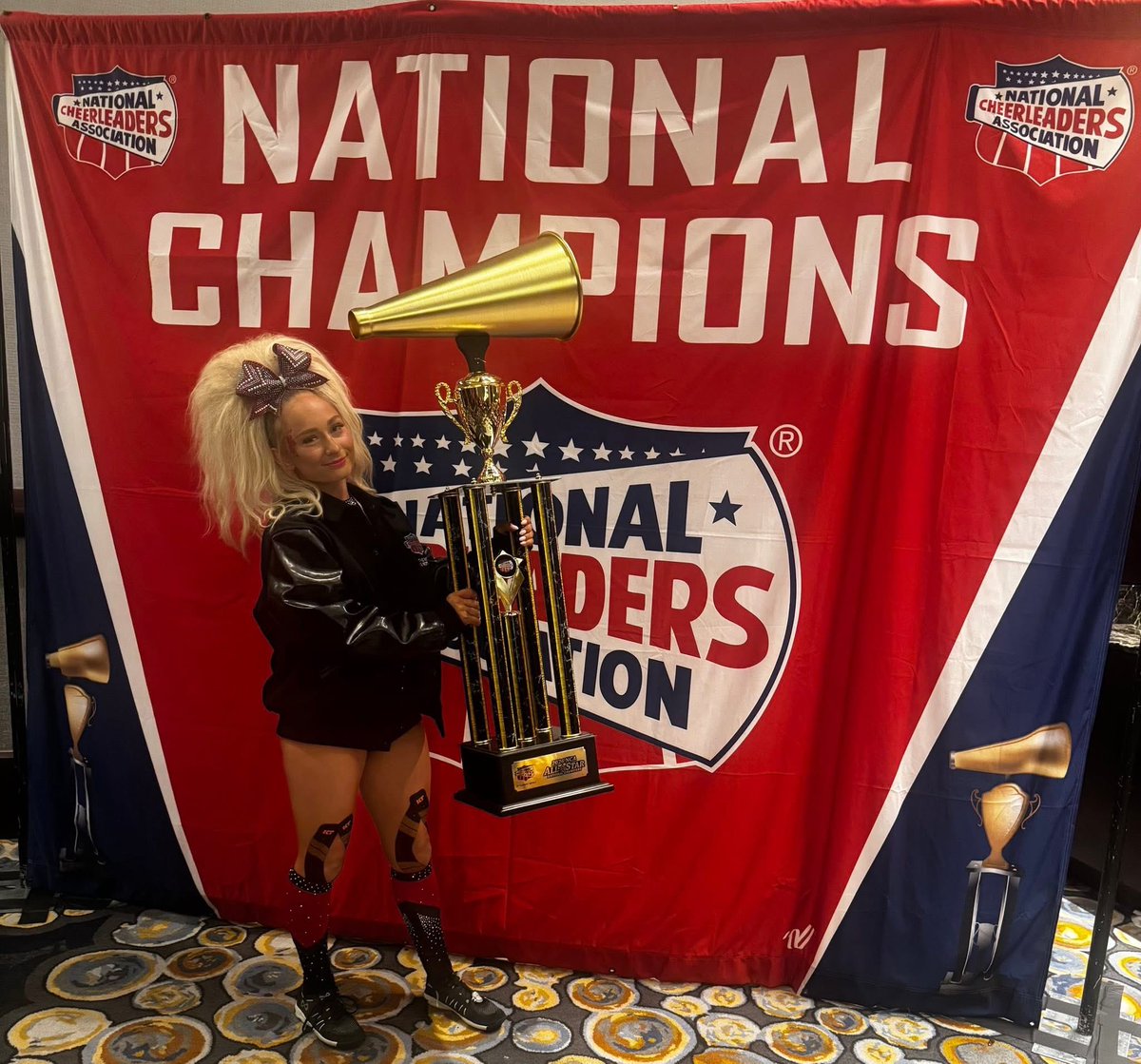
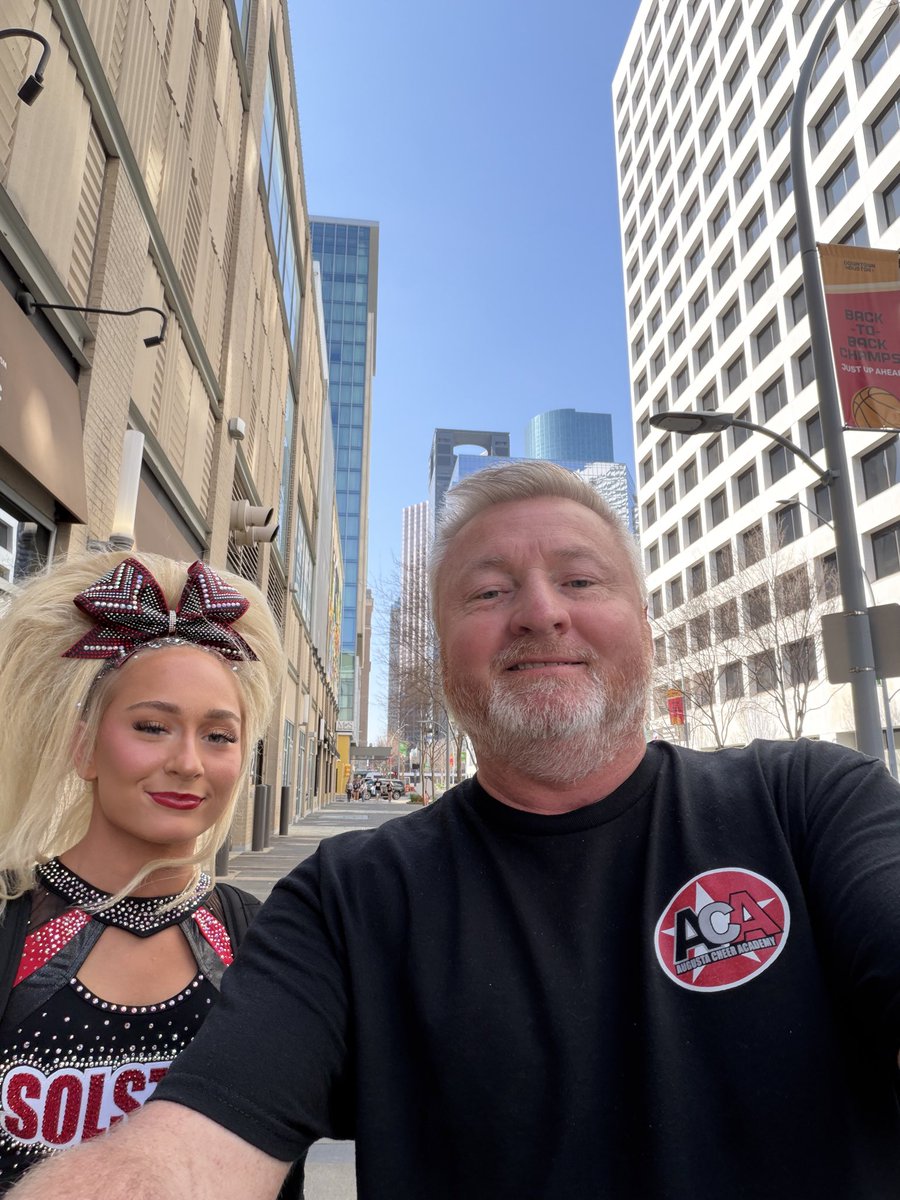
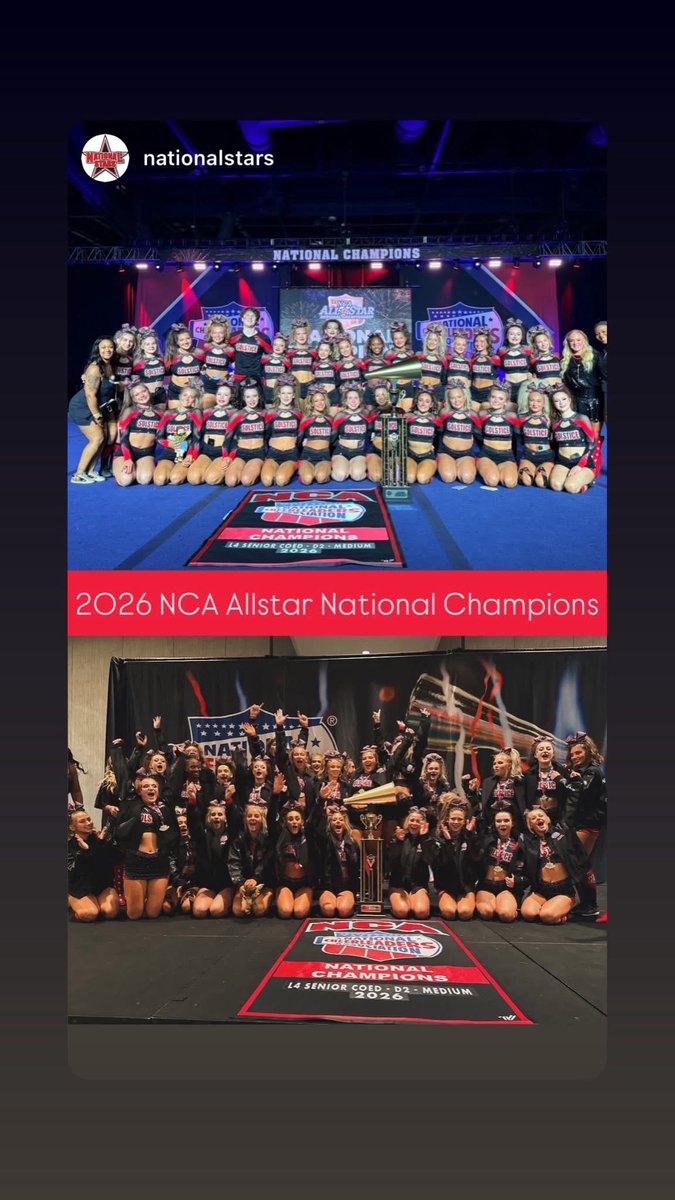
Have to brag on my daughter. She and her teammates have worked hard. Today, they won the National Cheerleader’s Association National Championship for their division. Hard work pays off!