People chase money. We chase the signals that change direction. The greatest fortunes are built not on opportunities the crowd already sees, but on shifts that haven't even been named yet. This club is for those who see change early. @FocalHubb
Why The Biggest AI Bull Just Went 100% Cash?
Major market shifts happen precisely when everyone is looking in the same direction.
Leopold Aschenbrenner (Situational Awareness LP), who authored one of the most striking manifestos of the AI era and predicted the trillion dollar AI wave, has liquidated all of his fund's public stock positions according to SEC filings.
So, why did one of the biggest AI bulls in the market step back from the public stage?
This isn't throwing in the towel; it's the start of a new fractal cycle where capital simply shifts dimensions.
Here is the opportunity map you shouldn't miss while reading into this move:
1. Public Market Saturation & Private Market Opportunities Visionaries like Aschenbrenner see that valuation multiples for public AI giants have reached short term saturation. Capital isn't leaving the ecosystem it's shifting shape. The massive growth potential is migrating toward pre IPO infrastructure, custom chip designs, and venture stage deep tech.
2. The Energy & Infrastructure Bottleneck (Fractal Expansion)At the core of the thesis lies the energy crunch. As AI models scale exponentially, the main bottleneck is no longer just compute, but gigawatt-scale power. Smart capital exiting mainstream tech stocks is flowing into nuclear energy, small modular reactors (SMRs), liquid cooling technologies, and grid infrastructure.
In summary: Instruments change, but fractal trends remain constant. The AI revolution isn't over it's evolving from the hype driven public stock phase into infrastructure, energy, deep tech, and private market allocation.ic risk/reward bets at much lower entries during an inevitable macro drawdown.
In summary:Instruments change, but fractal trends remain constant. The AI revolution isn't over it's evolving from the hype driven public stock phase into infrastructure, energy, deep tech, and private market allocation.
Those who read the market superficially mistake withdrawal for a crash; those who understand the underlying structure prepare for the next layer of opportunity.
#LeopoldAschenbrenner
THE JULIE FELSS MASINO ERA AT CRACKER BARREL HAS COME TO AN END :
The radical "modernization" and "woke" marketing push by traditional American restaurant giant Cracker Barrel has resulted in total corporate destruction. Facing a eroded customer base and plummeting stock prices, CEO Julie Felss Masino is stepping down.
Yet this is far more than just a restaurant crisis; it's a showcase of the fractal butterfly effect triggered by a single boardroom decision and the massive opportunities left in its wake 👇
1️⃣ Brand Identity Fractal (Cultural Opportunity)Cracker Barrel was an iconic symbol of traditional American culture. CEO Masino tried to chase Gen Z by overhauling everything from logo simplification to store concepts.
• The Result: The loyal base that sustained the brand for decades boycotted it. The targeted new audience never showed up.
• The Opportunity: Tastes are shifting dramatically toward "Authentic and Traditional." Massive market share has opened up for niche brands that stay true to their identity.
2️⃣ Stock & Arbitrage Fractal (Financial Opportunity)Companies facing similar crises (like Bud Light and Target) follow the exact same fractal pattern on their stock charts:
• Phase 1: Radical pivot & Harsh cultural backlash
• Phase 2: Boycotts & Freefalling sales
• Phase 3: CEO resignation & Strategic retreat
• Phase 4: Bottoming out, returning to core values, and recovery (Turnaround).
• The Opportunity: Distressed giants signaling a return to their roots after a CEO exit present prime long term Value Investing setups at deep discounts.
3️⃣ Corporate Strategy Fractal (Managerial Opportunity)Marketing is a hypothesis; customer loyalty is a financial reality. Alienating your core user base is corporate suicide. In today’s climate, reading a company's cultural resilience is just as critical as reading its balance sheet.
Do you think a brand that burned its most loyal customers can rebuild its legacy with a new CEO? 📊👇
#CrackerBarrel #JulieFelss
Since 1913, the US Dollar has lost over 96% of its purchasing power.
Is this a collapse or a massive fractal opportunity for those who know how to read historical cycles?
Financial markets and monetary policies consist of self-repeating, scalable patterns (fractals).
1934 (Gold Reserve Act) ➔ 1971 (Nixon Shock / End of Gold Standard) ➔ 2008 (Unlimited QE) ➔ Post-2020 Uncontrolled Expansion.
Every major money-printing wave triggers the exact same fractal sequence:
M2 money supply surges.
Purchasing power of fiat currency evaporates.
Hard assets (scarce resources) gain astronomical value.
For 113 years, holding cash has meant watching value disappear under a hidden inflation tax. In this system, "saving cash" isn't a strategy it's a guaranteed loss.
So, how does an opportunity hunter turn this fractal to their advantage?
Treat Cash as Ammunition: Cash isn't wealth; it’s gunpowder kept ready to scoop up undervalued assets during market dips and manipulations.
Position in Scarce Assets: Focus on structures whose supply cannot be manipulated either hardcoded or naturally limited (Bitcoin, Gold, Strategic Commodities).
Catch the Historical Wealth Transfer: In inflationary environments, the system rewards those who inflate away debt and shift out of melting cash into hard, finite assets.
The system penalizes those who don't play by the rules. Recognize the fractal, don't sit on cash, and stay ready to strike the right asset at the right time. 🦅📊
Nvidia in Talks with OpenAI to Guarantee $250 Billion Financing for Ohio Data Center: A Fractal Opportunity Map👇👇👇
The AI infrastructure race just reached a whole new level. Nvidia is in talks with OpenAI to guarantee $250 billion in financing to help them lease a massive 10 GW data center being developed by SoftBank in Ohio. With the total cost expected to surpass $500 billion, this mega project stands as the largest data center development in human history.
This isn't merely a commercial deal. The power distribution is directly overseen by US Commerce Secretary Howard Lutnick, and the project is backed by 9.2 GW of new power infrastructure funded separately by Japan under a recent trade agreement proving that energy is officially the new geopolitical currency.
So, how does a "Fractal Opportunity Hunter" look at this $500 billion wave and capitalize on the secondary and tertiary ripple effects?
⚡ 1. Power Infrastructure, Grid Modernization & Nuclear (SMR)10 GW is equivalent to the power consumption of millions of homes. Existing power grids cannot sustain this load. SMR (Small Modular Reactor) developers, high voltage transformer manufacturers, and grid modernization companies will be the primary beneficiaries of this liquidity surge.
💧 2. Liquid Cooling & Thermal ManagementCooling a 10 GW chip cluster with traditional air cooling is physically impossible. A massive supercycle is beginning for niche players specializing in Direct to Chip liquid cooling, immersion cooling, and industrial thermal management.
🏗️ 3. The Ohio Basin, Logistics & Data Center REITsThe site in Piketon, Ohio a former uranium enrichment facility is being transformed into the new power and data capital of the AI era. Local industrial real estate developers and Data Center REITs are positioned for an unprecedented influx of cash flow.
🏛️ 4. The "Politicization of Electrons" & State Sanctioned AllocationWith Secretary Lutnick personally involved in deciding who gets power, a new rule for the AI race has been written: victory belongs not just to whoever builds the best model, but to whoever secures state sanctioned power quotas. Energy and AI firms with strong government partnerships will significantly outperform.
Bottom line: Traditional investors only look at Nvidia or OpenAI. The fractal perspective flows into the sub layers powering that massive compute engine: energy, advanced cooling, grid infrastructure, and geopolitical power allocations.
#AI #Nvidia #OpenAI
Elon Musk Said "Money Won't Matter by 2036": Where are the Fractal Opportunities Building Up?
Elon Musk’s statement that "By 2036, money as we know it will have no value due to AI and humanoid robots" isn't just a simple futuristic fantasy. It represents a collapse scenario for the very cornerstone of economics: scarcity.
So, where exactly does the Fractal Opportunity lie here?
When economic systems undergo massive disruption, opportunities don't emerge at just a single point; they trigger a chain reaction (a fractal pattern) across every layer, from micro to macro scales. In an "abundance economy" where money becomes redundant, those who foresee the new hubs of capital and power today will build tomorrow.
Here is the fractal opportunity roadmap you need to capture during this grand transition:
1. Micro Layer: "Attention and Authentic Human Input"
In a world where robots manufacture everything and AI handles all analytical labor, the cost of physical or digital production approaches zero.
Opportunity: As standardized production loses value, authentic human experience, storytelling, and personal branding become the rarest assets. Where money no longer carries weight, the strongest currency will be "Attention" and "Trust." Those building communities today will run the ecosystems of tomorrow.
2. Mesophysical Layer: "Raw Materials, Energy, and Infrastructure"
For money to lose its meaning, robotic labor and AI must operate endlessly. Boundless operation, however, creates a massive bottleneck in energy and raw materials.
Opportunity: The nuclear/fusion energy, rare earth elements, chip supply chains, and data center infrastructures that feed AI models and robot fleets are the true "gold mines" of the next decade. Whether at an investment or startup scale, whoever solves physical bottlenecks wins.
3. Macro Layer: "Ownership and Asset Exchange (Tokenization)"
When traditional fiat currencies (USD, EUR, etc.) become obsolete, what will measure value? The only thing that cannot be infinitely produced: Real-World Assets and Finite Resources.
Opportunity: Tokenization of Real-World Assets (RWA) on the blockchain, such as land, real estate, energy rights, and algorithmic ownership. The medium for storing value won't be paper currency, but code verified, indivisible, and finite digital/physical assets.
In Short: The Grand Algorithm is Changing
The 2036 benchmark Musk points to is a threshold where labor shifts from a necessity to an "option." However, the transition period leading up to that threshold will witness the largest wealth transfer in financial history.
Where money ends, the equation becomes Capital = Infrastructure + Verifiable Assets + Authentic Human-Generated Trust. Will you be swallowed by the wave, or surf on top of it?
#AI #ElonMusk
MILLIONS WERE USING IT! THE 139 YEAR OLD BATTERY GIANT FILED FOR INSOLVENCY:
Traditional news outlets might serve this up under a classic "Collapse of a German Giant" headline. However, for those seeking depth in financial markets, this crisis actually presents a textbook fractal map of opportunities.
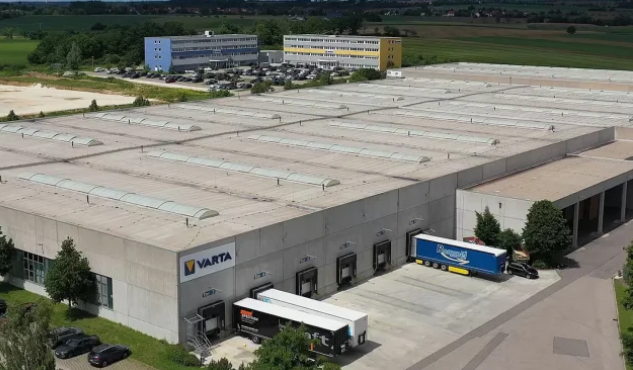
The 139 year old industrial titan Varta has applied to the Stuttgart District Court for insolvency protection under a temporary self administration model for its main holding company and three subsidiaries. Management will remain in place, production won't halt, and worker salaries are secured for now. Yet, uncontrolled debt burden and a severe liquidity crisis are what brought the company to this brink.
So, while the crowd focuses on the downfall, what is smart capital chasing behind the scenes?
💡 The Game Changing Detail: Varta Consumer Batteries The most critical detail lies right here: the company’s most profitable retail unit Varta Consumer Batteries, which produces the household batteries we all buy off store shelves was left completely OUTSIDE of this insolvency protection process.
This is where fractal logic comes into play. A macro scale crisis transforms into a micro scale value hunt.
🔍 1. Vulture Capital and Asset Stripping Market crises follow an unwritten rule: detach the healthy, profitable organs from the drowning, debt-laden body. It is no coincidence that Deutsche Bank and major global investment funds are already conducting due diligence to step in for this independent, profitable unit. Smart capital doesn't mourn the sinking ship; it buys up the most valuable cargo at a distress discount.
⚙��� 2. Supply Chain Disruptions & Market Share ShiftsVarta’s forced downsizing in micro batteries and energy storage will leave a significant void in global markets. This directly translates into a market share transfer toward Asian energy storage competitors and niche European battery manufacturers. The cardinal rule of finance never changes: capital doesn't disappear, it merely shifts hands.
📉 The Takeaway: Varta’s breakdown underscores how vulnerable legacy industrial giants are when caught between aggressive green energy transitions, high borrowing costs, and fierce Asian competition. While the crowd reacts to the headline, institutional funds are racing to claim the most lucrative piece of the pie.
Which global player do you think will acquire Varta's most valuable unit?
#Varta
🧵 From 8 Hour Grind to 1 Hour Innovation: HaloBraid & The Fractal Opportunity Waves
A traditional hair braiding session takes 4 to 8 hours. Harvard educated engineer Yinka Ogunbiyi built HaloBraid the world’s first braiding assistant robot slashing that time down to just 1 hour. The result? $7M in funding and a waitlist of 7,000+ salons.
So what does this really tell us? It’s not just about a robot; it’s about the Fractal Opportunity Waves it creates:
1️⃣ Capacity Multiplier & Service Arbitrage: While a braider can currently serve maybe 2 clients a day, this tech pushes it to 6–8. Salon revenues scale 3x–4x while physical burnout drops to zero.
2️⃣ Robotics as a Service (RaaS): These devices will likely roll out on a subscription model. Salons that secure early access will build local monopolies in "express braiding" and command pricing power.
3️⃣ Derivative Markets: When time drops to 1 hour, braiding shifts from a "special occasion" commitment to a "daily routine." This unlocks entirely new vertical markets specialized synthetic hair cartridges, automated maintenance tools, and custom consumables.
Solving a seemingly hyper niche micro problem can ignite a massive micro economy.
While everyone is hyper focused on LLMs, keep an eye on automation solving physical world bottlenecks. That’s where the real layered opportunities lie. 🧠⚙️
Why Don't Gas Prices Drop When Crude Oil Falls? The Market's "Rocket and Feather" Illusion & Hidden Opportunities 🚀
When crude oil hits $90, gas price hikes hit the pump displays in seconds. Yet when it drops to $70, those same displays seem completely frozen.
Most people simply write it off as "profiteering," but behind it lies a financial illusion of global markets. In economics, this is known as the "Rockets and Feathers Effect."
Why does this happen?
Refinery & Inventory Stage: Gas stations purchase and store fuel at the previous (higher) price, making them unable or unwilling to cut prices immediately. However, when crude oil rises, prices shoot up instantly to cover the risk of "new costs."
Asymmetrical Pricing: Driven by the fear of losses, market players pass on price increases at rocket speed. On the way down, they move as slowly as a feather to protect their profit margins.
🌀 What is the Fractal Opportunity Here?
The core logic of fractals is this: "A lag at the macro level translates to an arbitrage opportunity at the micro level."
This time lag between crude oil and pump prices feeds on market information asymmetry. Within these gaps, where massive systems respond sluggishly, three primary opportunities lie hidden:
💡 1. Macro Energy Arbitrage (Hedging Opportunity)
If crude oil drops while gas prices remain elevated, refining margins (Crack Spread) temporarily widen. During these periods, the short-term balance sheets of energy companies and refineries strengthen. This makes it an ideal time to monitor refinery/energy stocks and commodity ETFs in global markets.
💡 2. Logistics & Supply Chain Access
While the drop in oil prices has yet to reflect in consumer/product pricing, locking in freight or supply costs through forward contracts offers maximum margin flexibility at the micro level.
💡 3. Consumer/Investor Psychology & Cash Flow
During periods when prices stay stubbornly high, inflationary perception persists. Meanwhile, smart money stays liquid, waiting to scoop up bottom-level opportunities in transportation, aviation, and manufacturing sectors industries whose costs are bound to ease as a result of lower oil prices.
While the market skyrockets and falls like a feather, those who pay attention to the system's inertia will always stay one step ahead. 😉
#oil #gasoline
🚀 THE UNNOTICED AI SHIFT: Why Chinese Open Source Models Are a Goldmine for Builders & Investors
Jensen Huang just pinpointed a massive market shift that most people are completely sleeping on.
His latest comments on Kimi K3, DeepSeek, and China's open source AI models show exactly how the global AI ecosystem is being reshuffled and where the real opportunities lie 👇
1️⃣ The Market’s Big Misconception
The market misunderstood DeepSeek at first, and now it’s misunderstanding Kimi K3. Wall Street keeps missing the point, but Jensen put it clearly:
"American companies should absolutely be allowed to use Chinese AI models. You download the models, fine-tune them, guardrail them in any way you want."
There are no "backdoors" when you host and run weights locally. This isn't a threat; it’s a massive, free upgrade to global tech infrastructure.
2️⃣ Open Source Doesn't Kill Closed Models It Expands the Pie
Many believe open-source models will destroy closed-model profitability (OpenAI, Anthropic). Jensen dismissed this:
Great open models ➡️ Exponentially higher AI adoption ➡️ Massive demand for computing infrastructure.
Open source expands the market for everyone. But more importantly, it shifts value to the infrastructure layer.
3️⃣ Asymmetric Opportunities & The "Picks & Shovels" Play
NVIDIA wins in every single scenario because more model usage equals more GPUs and data centers. But where are the asymmetric opportunities for builders and investors?
💥 3 Fractal Opportunity Windows:
Vertical AI Fine Tuning: Stop paying exorbitant API fees for general models. Taking state of the art open source weights and fine tuning them for niche vertical markets (finance, law, healthcare, internal enterprise tools) creates defensible, high margin software.
Data Center & Energy Infrastructure: Don't just look at chipmakers. Look at liquid cooling technologies, localized energy grid providers, and specialized cloud hosting suited for open source model deployment.
Indie Hackers & Lean Startups: Open source models level the playing field. Solopreneurs can now deploy high intelligence AI applications at near zero marginal cost, out pacing legacy SaaS giants.
The crowd is arguing over geopolitics, while smart money is quietly leveraging open models to build high margin, low cost AI solutions.
Build quietly before the market wakes up. 🧵👇
#NVIDIA #JensenHuang
They Couldn’t Escape the Crisis! Giant Airline is Shutting Down : 👇👇👇
Reports indicate that Spanish regional carrier Air Nostrum is moving to liquidate Ireland based Hibernian Airlines and its parent entity, SARA Holding. Surging jet fuel prices in 2026, geopolitical spillovers, and rising operational costs are triggering a domino effect across mid to small carriers following the recent struggles of operators like Spirit Airlines, Magnicharters, and European Cargo.
So, where is the "Fractal Opportunity" hidden in this picture? 🔍
In macroeconomics and capital markets, the fractal cycle repeats itself with clockwork precision: Systemic shocks first eliminate thin margin, mid to small players. Market share and fleets then consolidate, allowing the surviving giants to establish tomorrow's monopolies.
The liquidation of Hibernian and broader market tightening reveal 3 critical fractal opportunity windows:
1️⃣ Asset Consolidation & Discounted Fleets: As wet-lease/ACMI providers like Hibernian exit, regional aircraft fleets (such as Bombardier CRJ1000s) become available at deeply discounted valuations for cash-rich conglomerates like IAG and Lufthansa Group.
2️⃣ Efficiency Cleansing in Regional Traffic: Air Nostrum trimming dead weight to double down on high-margin core domestic routes like the Balearic and Canary Islands shows how carriers are cutting liabilities to strengthen their core balance sheets.
3️⃣ Bottom Signals of the Fractal Pattern: We are seeing the exact pattern from the 2008 and 2020 crises. Sector bottoms are typically marked by mass liquidations of charter and regional carriers, followed by margin expansions for mega cap airlines utilizing robust fuel hedging strategies.
Those who read the big picture don't just watch companies go under they track who absorbs the abandoned market share and discounted assets. 📈
🚨 Trade Wars Aren’t Just Fought on the Frontlines: The US-Canada Auto Crisis & The "Fractal" Opportunity Map:
Canada’s unfair tariffs on American vehicles have slashed US auto imports by a massive 22%. This move dealt a multi billion dollar blow to the US automotive industry.
President Trump made it clear that Canada’s trade tactics won’t be tolerated: The US is now preparing to slap a 50% tariff on select Canadian goods.
While the crowd watches giant economies clash at the surface, who’s actually tracking the ripple effects the "Fractal Opportunities" emerging beneath?
Here are 3 critical areas set to profit from this shift:
📌 1. Auto Aftermarket & Used Car Demand
What happens when new car imports plunge by 22%? Existing vehicles in Canada rise in value, and keeping older cars running becomes a priority.
The Opportunity: A massive spike in demand for aftermarket parts, maintenance technologies, and non-US replacement part suppliers targeting the Canadian market.
📌 2. The 50% Retaliation & Alternative Suppliers
Slapping a 50% tariff on Canadian raw materials (aluminum, steel, timber, etc.) forces US manufacturers to scramble for alternative suppliers instantly.
The Opportunity: Non Canadian exporters (from Mexico, Asia, and global manufacturing hubs) now have a golden window to capture market share in the US.
📌 3. Logistics & Route Arbitrage
Trade wars block direct routes, but they turn indirect corridors into goldmines.
The Opportunity: Cross border logistics software, customs brokerages, and third-party logistics (3PL) providers navigating workaround routes are set to see huge profit margins.
💡 Bottom Line:Governments fight, rules change, but those who think fractally capture the small-scale opportunities inside big crises. The question is: Are you just reading the news, or positioning yourself along the shifting supply chain?
Let me know your thoughts in the comments! 📌
#Economy #TradeWar #Trump #Canada #Automotive #Markets #Investing #SupplyChain #Tariffs #Opportunities
🚨 WE ARE ON THE BRINK OF A MEMORY CRISIS: 100% DEMAND GROWTH vs. ZERO SUPPLY GROWTH:
SK Hynix ($SKHY) Chairman Chey Tae-won issued a market shaking warning:
"Next year, AI memory demand is expected to increase by 60–100%, and general memory demand by around 60%. However, supply will hardly increase at all. Global giants will be starving for memory chips."
This isn't just news about a "chip shortage" it’s the trigger for a cascade of fractal opportunity loops across financial markets.
The biggest profit margins won't belong to the obvious AI giants everyone is rushing toward; they’ll be hidden in the secondary and tertiary layers created by this supply squeeze. So, where will the asymmetric gains ripple out?
🔍 FRACTAL OPPORTUNITY MAP
1️⃣ Tier 1: Direct Pricing Power (Core Ecosystem)
HBM & DRAM Leaders: SK Hynix and Micron ($MU) can't keep up with Nvidia's memory demand. When demand completely absorbs supply, Pricing Power takes control. As producers shift capacity toward high margin HBM, standard PC/Server DRAM and NAND inventories will dry up. Expect unofficial price surges even among legacy memory makers.
2️⃣ Tier 2: Bottleneck Champions (Equipment & Packaging)The most asymmetric returns often belong not to those who design the chip, but to those who control the manufacturing bottlenecks:
Advanced Packaging: Stacking and interconnecting HBM chips is becoming harder than manufacturing them. TSMC ($TSM) and ASE Technology ($ASX) hold the keys here.
Semiconductor Equipment Giants: The only fix for supply deficit is CAPEX investment. ASML ($ASML), Lam Research ($LRCX), and Applied Materials ($AMAT) will inevitably see an order boom.
3️⃣ Tier 3: The Hidden Wave Heat & Power CrisesFaster memory density = Massive heat output and higher energy demands.
Liquid Cooling: Traditional air cooling can't handle the thermal load of high-bandwidth memory. Data center cooling leaders like Vertiv ($VRT) stand to be the silent, high margin winners of this memory crunch.
🎯 The Bottom Line:While the crowd asks "Which AI company will secure chips?", smart capital is positioning into pricing power, semiconductor equipment, and thermal/packaging infrastructure.
Which sub sector do you think will pull off the biggest surprise from this supply shock? 👇
$SKHY $MU $TSM $ASML $NVDA $AMAT $LRCX $VRT #ArtificialIntelligence #Semiconductors #StockMarket #Investing #HBM #TechStocks #Finance #AI
🚨 THE GREAT FINANCIAL TSUNAMI: US Debt Hits a Record $39.5 Trillion Here is How to Get Rich Off This Crisis :👇👇
US government debt has hit an all-time high of $39.5 trillion and is set to smash the $40 trillion barrier in just 3 to 4 months. Right now, a staggering 42% of all income tax revenue goes absolutely nowhere useful it is swallowed entirely by the INTEREST on this massive debt. Within a few years, this figure will surpass 50%. This means the government will bury one out of every two dollars collected from the public into past debt interest. What we are looking at is a mathematically unsustainable, legal Ponzi scheme!
Over the next 12 months, a whopping $9 trillion worth of US debt is maturing. The Treasury is forced to refinance (roll over) this debt at the current high market interest rates. On top of that, they will need to sell over $2 trillion in additional bonds just to plug the budget deficit. Faced with this massive flood of bonds hitting the market, global buyers will demand even higher yields. To keep the system on life support, the Fed will resort to the only trick it knows: running the digital printing presses to pump out infinite money.
The moment money is printed, the global purchasing power of the dollar melts, inflation becomes sticky, and while the cost of living skyrockets, incomes lag far behind. However, for a Fractal Opportunity Hunter who understands the rules of the game, this systemic collapse represents the greatest wealth transfer of the century! Here are the 3 asymmetric opportunity gates to multiply your capital while the dollar melts:
1. Scarcity-Driven Digital Assets (Bitcoin): While fiat currencies are printed into oblivion, Bitcoin is hard capped at a 21 million supply. The new wave of liquidity injected into the system will flood directly into these limited pools.
2. Hard Commodities (Gold & Silver): Throughout history, paper currencies have always trended toward zero. Gold and tech-driven silver remain the strongest shields against this inflationary devaluation.
3. High Pricing Power Global Corporations: Equities of monopoly tech and energy giants that can instantly pass rising costs onto the consumer act as cash machines, completely neutralizing the value destruction of holding raw cash.
The US will never pay down its debt; it will simply issue new debt to cover the old and devalue the currency. Cash is no longer king it is a melting ice cube. Do not just protect yourself in this financial fracture; pivot toward scarce assets and productive forces to turn this massive devaluation into a generational wealth-building opportunity!
🧵 / Digital Euro is Coming: The New "Big Bang" of Finance and the Fractal Opportunities Ahead : 🚨👇
Inspired by Brazil's hyper successful instant payment system PIX, the European Union is gearing up to launch the "Digital Euro" by 2027.
This isn’t just about "digitizing money" it’s a fundamental restructuring of the global financial architecture. So, how do we hunt for alpha here? Let’s break down the macro picture and the micro (fractal) opportunities. 👇
1️⃣ The Big Picture: What is the Digital Euro?
First off, it’s NOT a cryptocurrency. It’s a CBDC (Central Bank Digital Currency) issued directly by the European Central Bank (ECB), backed by state authority.
The Goal: To break the Visa/Mastercard monopoly, slash transaction costs to zero, and build a 24/7 instant payment ecosystem inside Europe, just like PIX.
2️⃣ Fractal Opportunity 1: Crypto & Privacy Tokens (The Sub Layer Shift)
When governments fully digitize money, tracing every single transaction becomes effortless. This will inevitably trigger a massive public reflex toward "privacy."
The Play: As Digital Euro regulations tighten, demand for Monero ($XMR), Railgun ($RAIL), or Zero Knowledge (ZK) proof-based privacy protocols could scale geometrically. The death of physical cash means DeFi’s privacy layer is bound to explode.
3️⃣ Fractal Opportunity 2: Fintech & Layer 2 Startups
The Digital Euro will weaken the monopoly of traditional commercial banks because funds can be held directly in ECB linked wallets. This opens the floodgates for next gen financial interfaces.
The Play: When PIX launched in Brazil, neobanks like Nubank absolutely skyrocketed. In Europe, micro payment apps, loyalty program softwares, and smart contract wallets that integrate early with the Digital Euro infrastructure will become the next multi billion dollar unicorns. Keep an eye on early stage European fintech equity now.
4️⃣ Fractal Opportunity 3: Arbitrage & Liquidity Provisioning
With the arrival of the Digital Euro, a massive bridging ecosystem will be required between Euro based stablecoins (like $EURC) and the official Digital Euro.
The Play: Providing liquidity (Yield Farming) in Euro Digital Euro Stablecoin pairs on DeFi pools will offer lucrative yields in the early phases. Speed and integration gaps between different platforms will also create a goldmine for MEV/arbitrage bots.
5️⃣ The Verdict & Strategy ⚡
2027 might seem far away, but the front running of a financial revolution of this scale happens in the headlines today.
The Game Plan:
Monitor Euro centric fintech startups.
Accumulate exposure in Decentralized Identity (DID) and ZK proof projects.
Prepare for the crypto narrative shift triggered by the "death of physical cash."
Massive structural fractures always create the biggest waves in the smaller sub layers (fractals). Those who position early will own the table.
👉 Will the Digital Euro kill crypto, or act as fuel to the fire? Let’s debate in the comments! 💬
#DigitalEuro #CBDC #Fintech #Crypto #PIX
History Doesn’t Repeat, It Fractals: Decoding Spain's Massive 50,000 Coin Discovery 👇
A routine water pipe excavation in Spain just uncovered a massive 600-KILOGRAM treasure containing over 50,000 Roman coins. Dating back to 290–310 AD, the most mind blowing detail is this: the coins are in MINT condition, virtually uncirculated. They were packed into amphoras, likely hoarded to secure soldier salaries or tax revenues against an impending systemic crisis.
Why is this more than just a "history fact"? Because history doesn't just repeat itself it operates on a fractal scale, repeating the same geometric patterns across different eras. Here are 3 massive "opportunity hunting" vision lessons we can extract from this 600 kg hoard:
1️⃣ He Who Anticipates Systemic Risk Wins: The early 300s AD was a period of hyperinflation and aggressive currency debasement for Rome. The mind that buried these amphoras foresaw the collapse and pulled the cleanest, most liquid assets out of circulation. In today’s market, while everyone is chasing hype, recognizing systemic risk and allocating capital into the "purest," hardest defensive assets (Gold, BTC, hard cash) remains the ultimate 1,700 year old wealth preservation play.
2️⃣ The Biggest Anomalies Are Hidden in Infrastructure: This treasure wasn't found in a remote mountain; it was sitting right under a city park during routine utility work. In business and markets, the biggest asymmetric returns often hide in the "boring" infrastructure, logistics, or back end operations that everyone else overlooks. The one who lays the pipeline is always the first to hit the treasure.
3️⃣ The Premium of Pristine Condition: The fact that these coins were never circulated multiplies their value 10x. When investing or building a product, don't just look at the asset class look at its market condition, scarcity, and unrepeatable nature. True scarcity always commands a premium.
History is filled with stories of people who analyzed the system perfectly but ran out of time to spend their wealth. In today's shifting digital landscape, what is your modern day "amphora," and are your assets secured for the next fractal shift?
💸 Global Finance War: US Government Struggles, While Visa Counts Cash in the Back!
The US government is threatening Brazil with a 25% tariff, claiming that Brazil’s domestic digital payment system, PIX, creates unfair competition. Supposedly, the goal is to protect the American giant, Visa.
The irony: Visa turned to the US and said, "No need to protect us, our revenue in Brazil has doubled since PIX launched!"
How did this happen? PIX brought millions of previously unbanked people into the digital economy. The pie grew so massive that even though Visa's market share shrank, its total earnings doubled. This is what we call the fractal (nested growth) structure of finance.
🎯 3 Billion-Dollar "Fractal" Opportunities Here:
1. FinTech & Open Banking (Pix Parcelado)
There is currently a "PIX-installments" craze in Brazil.
Opportunity: There is a global gold mine for developers and agencies building hybrid wallets, micro-credit APIs, and payment integrations that merge this system with traditional credit cards.
2. Global E-Commerce Gateway
E-commerce is booming in Brazil, and by 2028, half of all online sales are projected to be made via PIX.
Opportunity: While everyone is trying to dropship to the US market, smart sellers integrating PIX into their checkout are skyrocketing their conversion rates in the 200-million-strong Brazilian market.
3. Cybersecurity (Anti-Fraud)
Rapid digitalization has sent phone theft and instant transfer fraud through the roof.
Opportunity: Massive budgets are flying around for startups building AI-powered fraud detection and digital identity verification (KYC) software.
#visa #pix
The Diamond Disruption: How Technological Abundance
Shattered a Billion Dollar Monopoly
A profound systemic disruption is currently reshaping the global gemstone industry as China’s relentless, high volume laboratory production has utterly decimated diamond prices by over 90% since 2020.
This tectonic shift has forced traditional giants like De Beers to permanently retreat from the synthetic market, marking a historic turning point where an empire built on carefully engineered, artificial scarcity has finally succumbed to the unstoppable wave of technological abundance. Just as the fractal patterns within a diamond's atomic lattice repeat at every scale, the macroeconomic landscape is mirroring this exact design; the old illusion of natural diamond supremacy has shattered, exposing the fact that lab grown stones are chemically, physically, and optically identical to those mined from the earth.
Consequently, diamonds have been permanently stripped of their status as an elite, untouchable store of value, transitioning rapidly into a highly accessible, mass produced industrial commodity.
For forward-thinking innovators and opportunistic minds, however, this dramatic price collapse is far from a tragedy it is a golden ticket that transforms diamonds from a prohibitively expensive luxury constraint into a revolutionary raw material. Because diamond is the hardest known substance and the most efficient thermal conductor on Earth, its newfound affordability is poised to spark a massive wave of innovation across high-tech sectors, particularly in developing next-generation semiconductor processors and solving the intense overheating challenges plaguing the massive data centers powering artificial intelligence.
Simultaneously, this shift is completely rewriting the rules of the luxury market; with the raw material itself democratized, the true value is migrating away from the stone's carat weight and toward intellectual property, bespoke craftsmanship, and digital brand storytelling. Ultimately, the death of the traditional diamond cartel has birthed a lucrative new frontier, offering massive rewards to those who stop treating the diamond as a precious relic of the past and start leveraging it as a foundational building block for the future.
The "Desperate Seller" Alarm in Proposals: A Radical Design Manifesto to Paralyze the Negotiation Algorithm:
👇👇👇
The biggest mistake entrepreneurs, agencies, and freelancers make in their proposals is crowding pages with colorful graphics, long reference lists, and cliché visionary phrases like "we offer the best quality service." The moment a top-tier decision maker (Alpha Node) sees this visual noise, their subconscious immediately files a verdict: "A desperate supplier trying to mask operational inadequacy with an aesthetic illusion." In the real world, financial prestige is built when a proposal looks less like a sales brochure and more like an international memorandum, a classified lab report, or an asymmetric financial manifesto. The choice of words, whitespace ratios, and font hierarchy must leak a direct message into the reader's amygdala: "This proposal is not from a company that needs money; it is a document from an authority dictating its terms to solve a systemic problem." Paralyzing the client's negotiation algorithm before they even reach the price page depends entirely on this physical and digital architectural weight.
The first step in establishing this authority asymmetry is deploying the "Negative Space Cartel" and "Brutalist Cover" rules. To eliminate verbal clutter, leave at least 65% of every page completely blank, compressing text into dense blocks in the corners. Whitespace is a signal of temporal dominance and wealth. For the cover, eliminate company logos, colorful lines, and stock photos entirely; use an ultra matte anthracite or pure white canvas with just a massive, industrial project code . Your logo should sit at the very bottom, micro sized so it is barely visible. In typography, delete friendly or overly corporate fonts like Montserrat or Arial, and choose fonts of cold intellect like Helvetica Now or Inter. Strictly use only two font sizes: one macro and bold for headers, and one micro and sharp for body text. This radical contrast registers the document's intellectual dominance.
Perfecting the linguistic and visual architecture of the system requires absolute verbal disinfection. Wipe out descriptive, pleading adjectives like "best, professional, or unique," transforming your language into a purely objective, cold, and data driven chemistry. The more mechanical your language becomes, the more your price mutates into an unshakeable mathematical reality. When reaching the price page, completely forget words like "Price, Fee, or Cost," which trigger the threat center in the primitive brain; instead, title the page "Systemic Investment Matrix." Drop the currency symbols entirely and smash just the raw number into the center of the negative space without a single defensive explanation. Your diagrams must not be colorful charts, but cold engineering blueprints or black and white flowcharts. Removing all vertical lines from tables, using only thin horizontal gray lines, and right aligning numbers ensures you maintain total control and status.
The closing segment of the document acts as the final seal of operational dominance. Inside a flawless digital PDF, drop a single colored, raw analyst note or technical code . This micro anomaly proves that the document was tailored by a live intellect for that specific problem, not cloned from a template. Forget traditional page numbers and place them in the top left corner using an indexing format .This cryptological pagination frames each page as a highly filtered, high density data packet with no wasted space. Finally, never close with a submissive "Thank you for your time." Title the final page "Integration Prerequisites" and outline the operational speed and data transparency they must provide to keep this investment matrix active. The algorithm is complete once you reverse the roles, building a perception barrier that makes it clear: they are not selecting you; you are accepting them into your system.
The Neural Commando Exercise: Asymmetric Visual Filtering to Purge Cheap Signals from Proposals
To instantly detect and purge every cheap, amateur signal from a document, you must train your eyes like an elite data architect using a 5-minute "Visual Density Filter" exercise. Open your proposal document on the screen and step back exactly 3 meters from your computer. Stand at that precise distance where none of the text is legible, leaving only the black shapes of the paragraphs and the layout of the white space visible. Now, run this mental simulation: "If these pages were not a business proposal but an asymmetric painting in a modern art museum, would they look aesthetic, balanced, and expensive or did they resemble a cluttered, cheap advertising flyer?" Mentally erase every spot where black ink suffocates the canvas with white pixels, shrink your text blocks, and grant the page that elite, breathing room. This exercise forces your brain's parietal cortex to read spatial hierarchy and mass balance as a pure code of status, independent of the text itself; any proposal that passes this filter annihilates the price debate on the very first page.