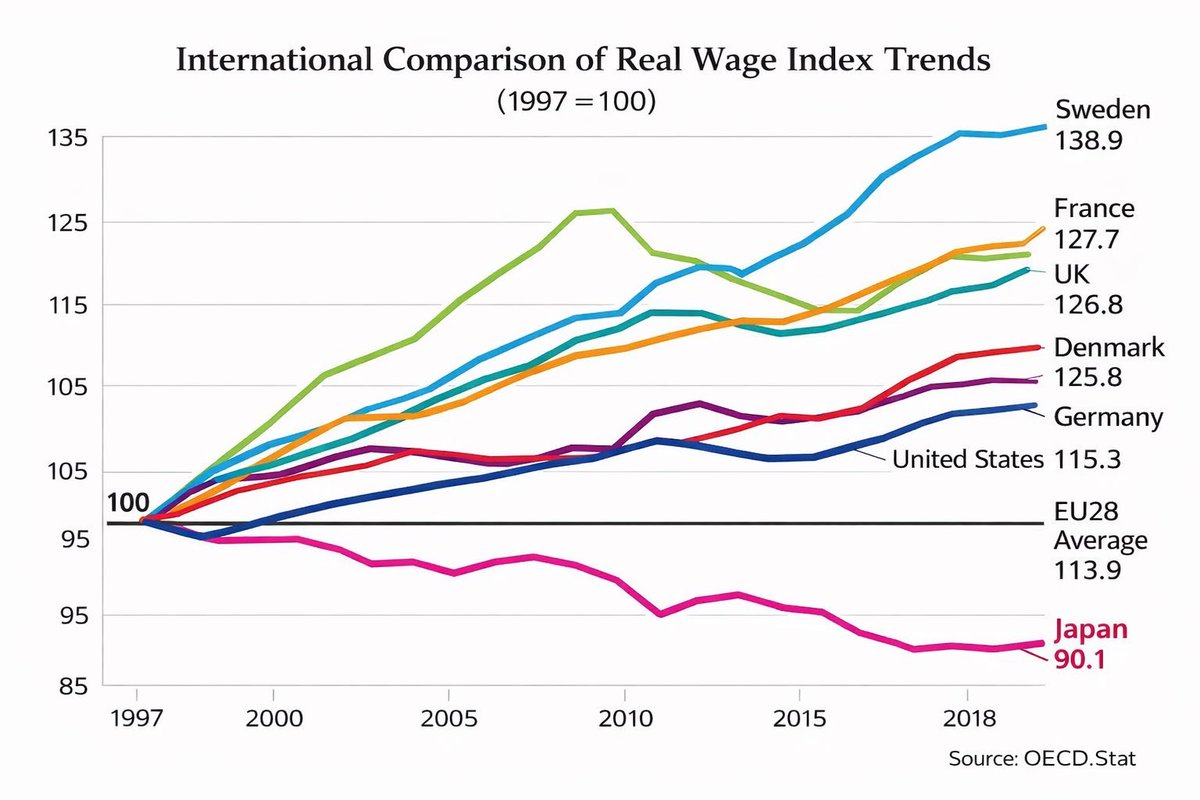
🇯🇵Japan is famous for efficiency.
But there’s a hidden structural problem most people outside the country never see.
In the 1970s, Japan invested heavily in infrastructure under Prime Minister Kakuei Tanaka.
Roads, bridges, and ports were built across the country.
Government spending flowed directly into local economies.
Construction companies thrived.
Workers earned strong wages.
Regional economies grew.
But today the system looks very different.
Government
↓
Major construction corporations
↓
Primary subcontractors
↓
Secondary subcontractors
↓
Tertiary subcontractors
↓
Actual workers
At every layer, profit is taken.
By the time the money reaches the people doing the physical work, very little remains.
Many young construction workers in Japan earn only ¥250,000–¥350,000 ($1,700–$2,300) per month, despite the job being physically demanding and often dangerous.
Not surprisingly, young people are leaving the industry.
Ironically, Japan’s largest construction companies are reporting record profits.
So the issue isn’t a lack of government spending.
The issue is where the money ends up.
Past model
Government → Local economies → Workers
Today
Government → Large corporations → Shareholders
This structural shift is one of the reasons regional Japan has been weakening for decades.
#Japan
#Economy
#Infrastructure
#SMEs
#PublicSpending
#Construction