DAY 07/30 — RECAP
SIX DAYS OF
FOLLOWING THE EYE.
The first week of The Visual Problem Log taught me to stop looking at AI images as "right or wrong" and start looking at them as problems to understand.
The six lessons
Day 2 — Generic: Vague prompts produce generic results. I needed to make more visual decisions.
Day 3 — Flat: A good background is not the same as depth. I began directing foreground, midground, background.
Day 4 — Not the focus: A subject is not automatically a focal point. Everything needs to know its role.
Day 5 — Composition: The image needed less, not more. Not every idea deserves a place in the frame.
Day 6 — Lifeless: A character can look perfect and still feel absent. The pose needs an intention.
Twenty people could describe the same scene and get twenty different images—because what matters is not just what is there, but where I directed the eye to go.
Every day, the fix was not adding a better keyword. It was making a clearer decision about what I wanted the viewer to feel and notice first.
"First day, I asked: what should be in the image?
By the end of the week, I was asking: where should the eye go?"
DAY 05/30 — COMPOSITION.
THE IMAGE
HAD TOO MUCH
TO SAY.
An image can have a lot of good ideas and still be a bad composition.
At first, when an image felt empty, I thought the answer was to add more.
More lights.
More props.
More buildings.
More colours.
More reflections.
More effects.
But the more I added, the less clear the image became.
THE PROBLEM:
Sometimes an image feels messy.
Not because the AI got everything wrong.
But because too many things are asking to be noticed at the same time.
The subject wants attention.
The background wants attention.
The colours want attention.
The lighting wants attention.
The props want attention.
And suddenly, the viewer does not know where to look.
Composition is not just about what you put inside an image.
It is also about what you decide to leave out.
Every object in a scene has a job.
It should either:
→ Support the subject
→ Build the mood
→ Help tell the story
If it does none of these things, it may only be adding noise.
Before adding anything to my prompts, I like to ask myself:
→ Does this help the subject?
→ Does this support the mood?
→ Does this help tell the story?
If the answer is no, it probably does not need to be there.
Because a clean composition is not an empty one.
It is an intentional one.
More detail does not always create a better image.
Sometimes, it only makes the main idea harder to see.
Not every good idea deserves a place in the final image.
One thing I wouldn't do publicly on the TL but privately is giving my mutuals gigs, rolled out a $30 gig and $12 to one of my mutual today 💙
How is your afternoon going?
ALERT!!
My account got hacked earlier today and the person kept spamming the message below to almost, if not all my followers.
I will never send anyone a DM offering such services such as onboarding and the likes.
If you received such from this account, please disregard as it is completely false.
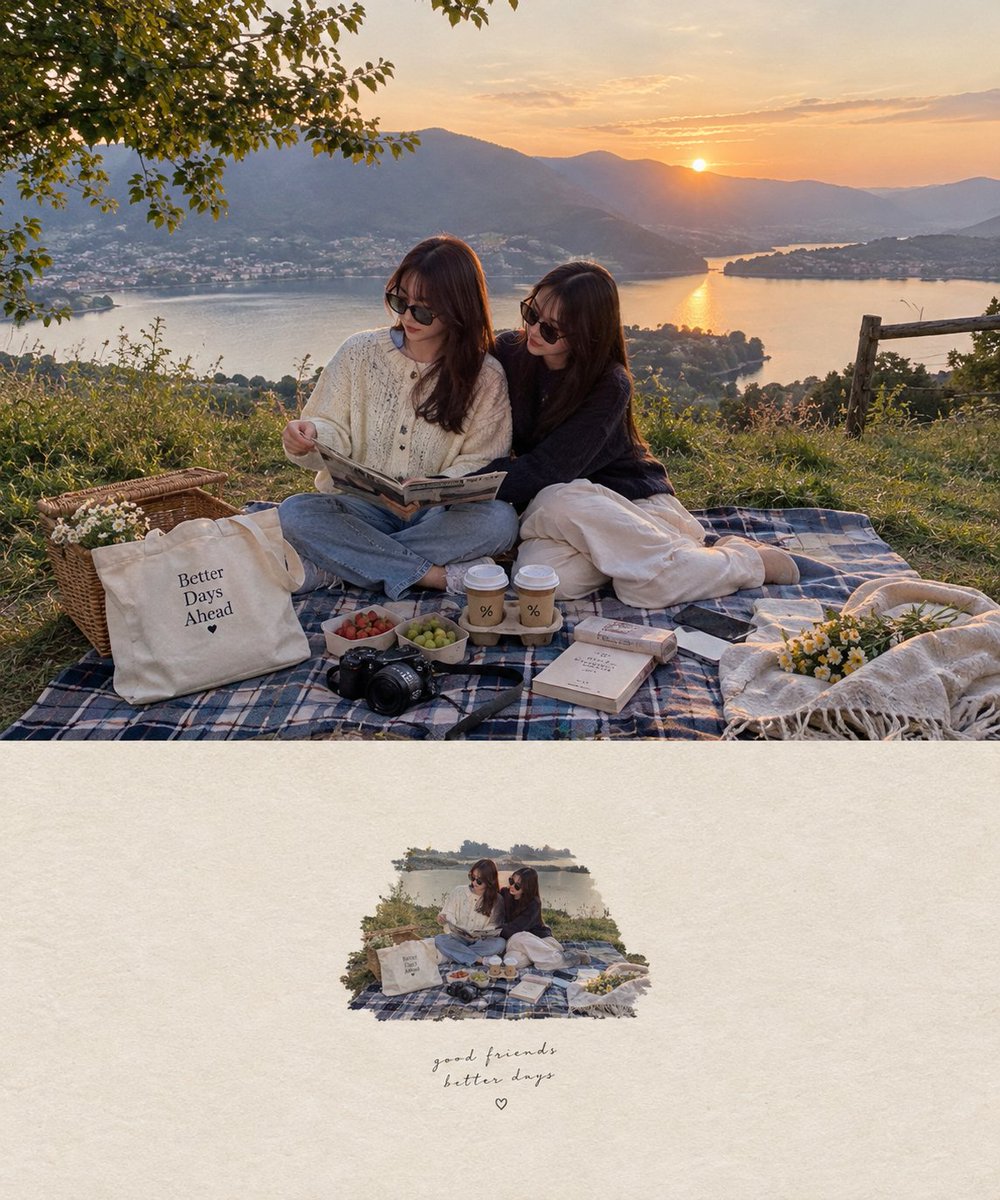
Turned an ordinary photo into a dreamy editorial scrapbook with GPT Image 2.5
1️⃣ Upload your photo
2️⃣ Open GPT Image 2.5
3️⃣ Paste the prompt
4️⃣ Generate
Prompt ⤵️
Save this for later 📸
Most people will discover @kinbexapp when it’s already loud.
But the interesting part about being early is getting to see the story before everyone else does.
The Founding 50 won’t just be names on a list.
They’ll be the people who were there from the beginning, engaging, creating, and helping shape the community while @kinbexapp is still taking its first steps.
I’m not watching this one from the timeline.
I’m getting in early.
Because when the story gets loud, I’d rather be able to say I was here before it started.
@kinbexapp