Imagine [hopefully] reading a piece that calls for Gaza to become the pride and joy of the Palestinian people and a hub of compelling Palestinian national identity by rejuvenating the territory, embracing peace, and rejecting a terror organization that admitted to refusing Gaza development offers worth billions, including an airport and seaport, only to proclaim that the op-ed is "pro-genocide." And how was this brilliant conclusion reached? Because the article I published in The New York Times didn't do the ubiquitous "everything has to be Israel's fault" that seems to be the only line of thinking within the supposed "pro-Palestine" camp.
Speak to Palestinians in Gaza who aren’t Hamas or making content for the “pro-Palestine” community abroad, and you hear the same thing again and again. They describe, plainly and without theatrics, how Hamas halted Gaza’s development and crippled the broader Palestinian national project since its founding in 1987. They do not need to mention Israel in every sentence to sound authentic to outsiders, including other Palestinians or non-Palestinians alike. They simply recount their lived reality. For Gazans, Hamas is the central problem. There were no Israeli soldiers inside Gaza before October 7. The blockade that everyone loves to speak about was imposed after Hamas’s cross‑border abduction of an Israeli soldier in June 2006 and tightened after the group’s violent takeover of the territory on June 14, 2007. From that point forward, Hamas massively built tunnels, fired rockets, smuggled weapons, waged repeated rounds of conflict, and declared its intent to “destroy” Israel, while turning Gaza into a fortress of armed “resistance” that got Gaza destroyed, tens of thousands killed, millions displaced, and wasted billions of dollars. Hamas imposed punishing taxes on Gazans to fund its terror; stole diesel from Gaza’s only power plant and caused chronic power outages; suppressed women’s freedoms; blocked travel for anyone it disliked; and routinely killed, tortured, jailed, beat, and humiliated countless Gazans.
Research the political and cultural divides between Gaza and the West Bank, and you quickly see how many Gazans resent West Bankers for cheering Hamas and October 7. These dynamics are complex, real, and central to understanding Palestinian politics, yet they are brushed aside or overlooked to satisfy low‑information audiences who consume the toxic narratives produced by the "pro-Palestine" industrial complex. Some people are simply uninformed. Some are unsophisticated. And then there are those who know exactly what they are doing and deliberately twist, manipulate, and distort reality to manufacture ignorance and maintain obedience and Orwellian-grade compliance among the crowds.
Hamas’s abuses in Gaza became so blatant that even Amnesty International felt forced to speak after the UN finally issued a statement weeks earlier. Yet Amnesty still avoids the core realities: Hamas torturing Palestinians inside hospitals, beating and interrogating Gazans over social media posts, and shooting people in the feet or knees or smashing their bones with stones in grotesque, medieval fashion. Friends of mine were among those targeted.
Then comes the unintentionally comic “background” section, which states that since October 7, 2023, Israel “imposed conditions of life” that shredded Gaza’s social fabric and produced chaos and lawlessness.” The framing pretends Hamas did nothing on October 7 to unleash catastrophe on Gaza, erasing the Islamist, fascist, Jihadi group’s long list of crimes against its own people.
Amnesty makes no acknowledgment of the October 7 massacre yet repeatedly cites its own genocide designation for Israel’s response, pointing back to a report that opened with the same erasure and claimed Israel “started a war on Gaza on October 7.”
This is what now passes for analysis from a premier human rights organization. The irony is that Amnesty International will probably be smeared as “Zionists” by parts of the “pro-Palestine” activist communities, just as Human Rights Watch was when it recently condemned Hamas’s brutality. The refusal to acknowledge Hamas’s agency in triggering the worst catastrophe in modern Palestinian history, all to keep the spotlight solely on Israel, has done profound harm to the people of Gaza.
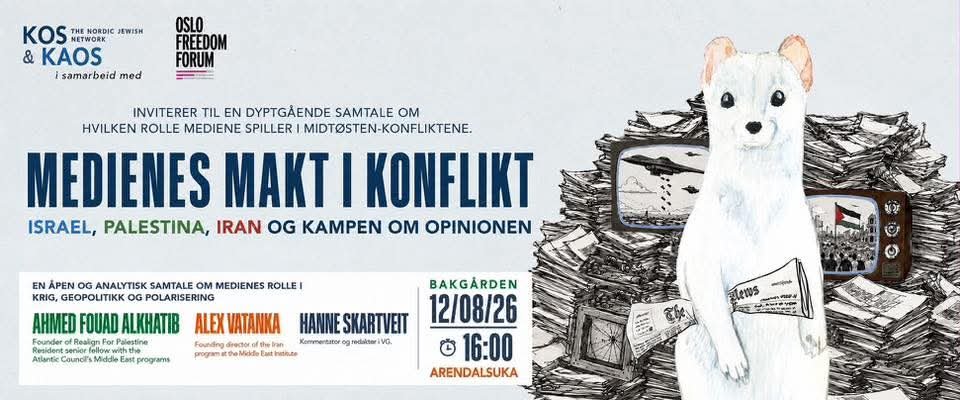
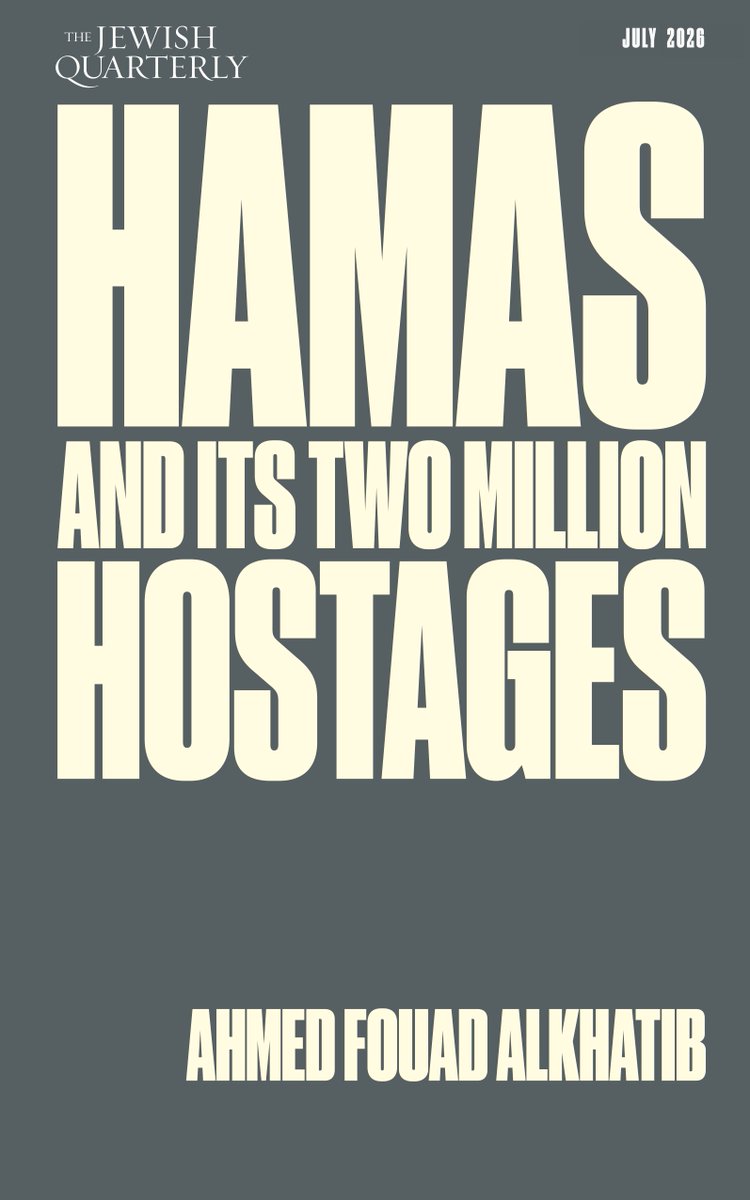
Hello Norway from Arendal week or Arendalsuka, a political festival about empowerment through open debate and engagement of competing ideas. If you're around, come see my panel today on The Power of Media in Conflict and the Battle for Public Opinion. I'll be here presenting my new short book Hamas and Its Two Million Hostages, engaging diverse audiences and hoping to promote a new vision for Gaza beyond the "resistance" narrative.
I've been told that in part because this is Norway, and in part because a very narrow view persists when it comes to what qualifies as "pro-Palestine", there may be some hostility to me and what I have to say. Let us hope that the values and spirits of this festival are truly embraced by the vendors, participants, and attendees.
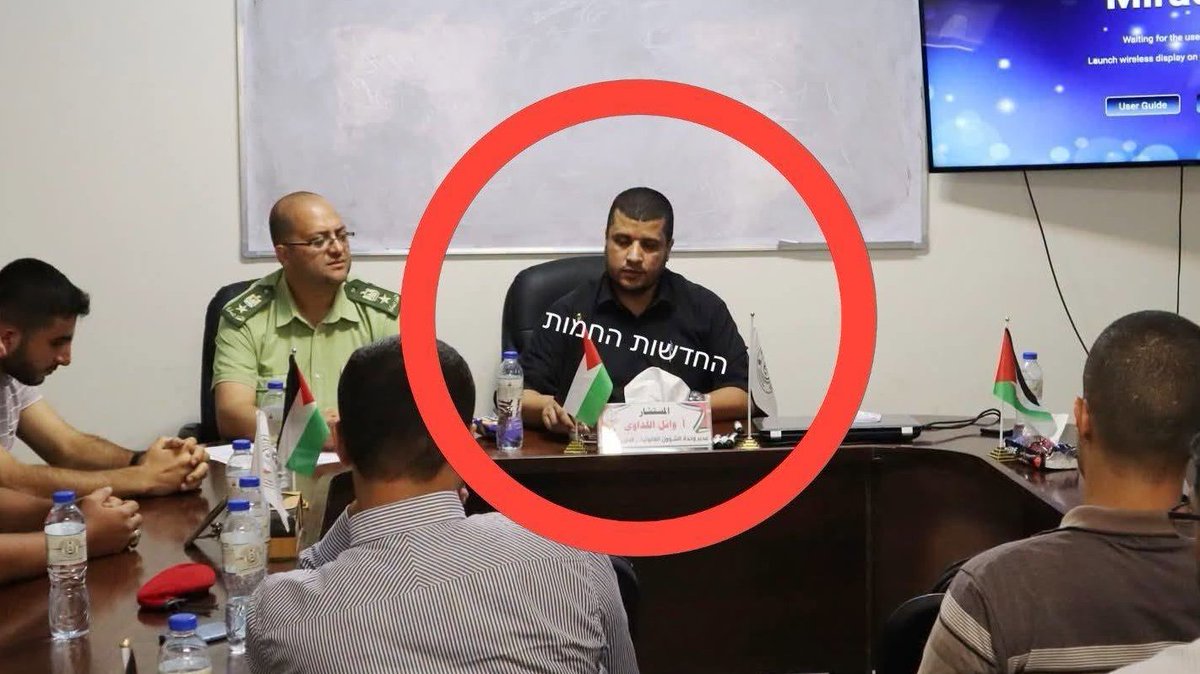
A recent Israeli strike killed Wael al‑Ladawi, Hamas’s Head of Internal Security in Central Gaza, triggering reactions that capture the population’s complicated relationship with security and policing. Many Gazans expressed little sympathy, openly mocking his death and wishing the same fate on other officials in Hamas’s internal security service, the primary instrument of repression and authoritarianism the terror group uses against Palestinians. He was even alleged to have been responsible for having tortured Gazan woman Tahrir Hasanein, who shared her experience online and whom I’ve written about in the past.
For many years, including before, during and after the war, this service has been notorious for targeting people over social‑media posts, suspected protest activity, political dissent, or any challenge to Hamas’s iron grip. All of the horrendous torture of Palestinians in Gaza was attributed to the internal security service and its vile, violent, and merciless officers. It is unsurprising, then, that many Gazans quietly, and increasingly publicly, welcome the elimination of its leaders and members.
Yet even among those who despise Hamas, the group’s ability to maintain a basic level of order keeps it relevant in governance terms, especially in the absence of alternatives. The chaos unleashed during the war by thugs, looters, gangsters, and clan‑affiliated militias horrified Gazans. Hamas exploited this moment to present an impossible bargain: accept its continued domination in exchange for security, or face unrestrained lawlessness from which no one will protect you.
The failure to train a credible alternative police force or deploy a serious international stabilization mission with robust rules of engagement is scandalous. It reflects a collective abdication by Arab states, Israel, the United States, the United Nations, and Europe. Each actor waits for someone else to take responsibility for building a security apparatus to replace Hamas, while simultaneously lamenting that Hamas remains the only functioning law enforcement entity in Gaza.
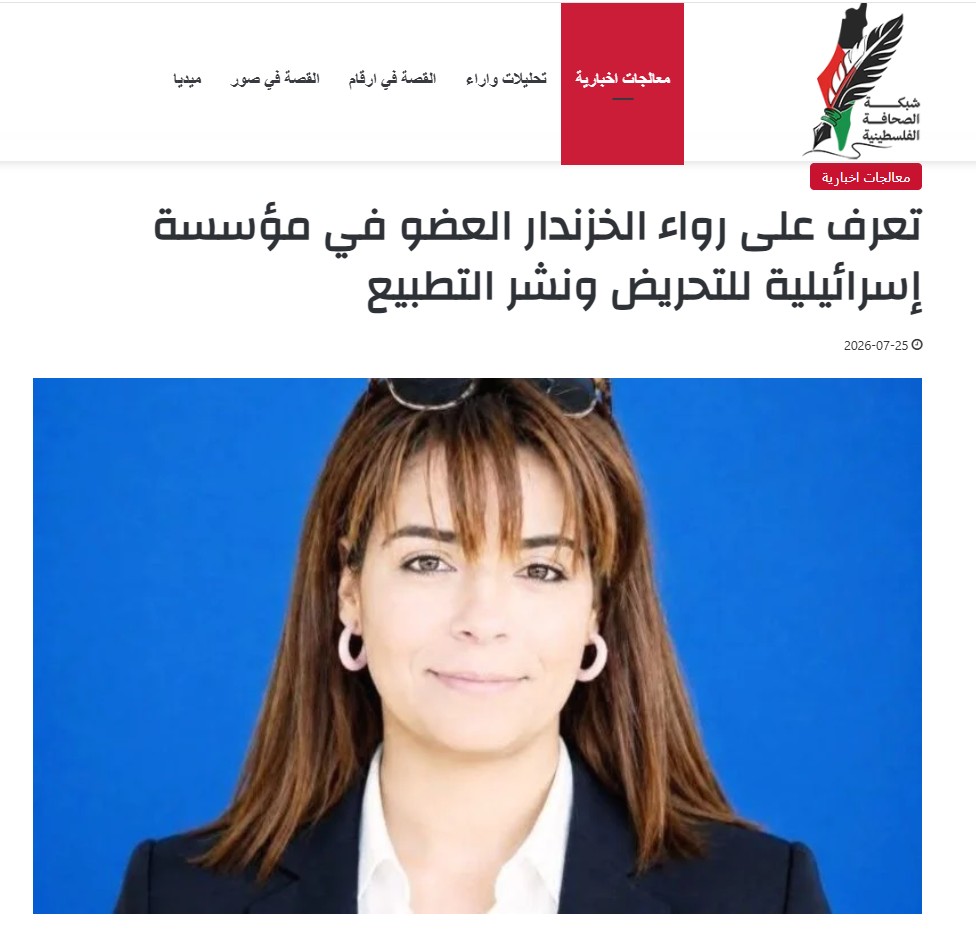
A network of Hamas operatives posing as “journalists,” calling itself the “Palestinian Journalism Network,” is now inciting against a friend of mine from Gaza who is a peace activist. These are the same supposed “journalists” who are publicly mourned when killed in Gaza, only to later be exposed as Hamas or Islamic Jihad members and quietly removed from press‑casualty lists. They are accusing her of working with Mossad and Israeli intelligence and attacking her husband as part of supposed espionage networks run by Jews, Zionists, and Israelis. Their death blow or coup de grâce was to accuse her of associating with me, “the notorious collaborator,” as they put it. Their article reads: “As part of her suspicious activities, Rawaa al‑Khazendar maintains contact with figures known for their pro‑Israel stances, including the operative Ahmed Fouad Alkhatib, a US‑based Palestinian activist notorious for inciting against the resistance and promoting normalization.”
Hilariously, I do not consider it an insult to oppose Hamas’s fascistic, ISIS‑like “resistance,” and I will never apologize for promoting tolerance, bridge‑building, peace, and normalization between Israelis, Jews, and Zionists on one side, and Gazans, Palestinians, Arabs, and Muslims on the other. Eighty years of unbroken conflict have brought Palestinians nothing but devastation. A new beginning is long overdue.
Several points are obvious. A portion of Gaza’s “journalists” are so obviously Hamas operatives or affiliates. Speaking out against Hamas carries immense personal cost. And Western observers, whether journalists, activists, politicians, academics, or humanitarians, consistently misread Arab and Palestinian societies. They rely on crude binaries when evaluating anyone who claims to be “resistance,” press, or NGO staff (think Doctors Without Borders). Acknowledging this does not erase the fact that Israel has killed legitimate journalists in Gaza, whether accidentally or deliberately. But ignoring the deep rot inside Hamas‑controlled professional sectors is naïve, harmful, and dangerous.
Hamas will escalate its attacks on me now that I have dedicated a short book to exposing them. I guess that means let the war begin...
Since October 7, three distinct narratives have taken hold among pro-Hamas activists, journalists, researchers, academics, social justice hustlers, and a group of “pro-Palestine” slacktivists. The first was a narrative of awe and praise for Hamas’s “resistance” and the tactical surprise of the attack, framed as a triumph despite Israeli restrictions and blockade. It leaned heavily on invoking the 1948 Nakba and repeating the cliché that “this didn’t start on October 7,” an attempt to recast the massacre as a response to decades of displacement rather than a deliberate operation driven by Hamas’s own narrow goals, which have little to do with the Palestinian national interest. A common way to excuse Hamas was to repeat the sanctimonious and politically hollow slogan “we cannot” or “it’s not our job to tell Palestinians how to resist,” as if anything done in the name of Palestinian resistance is automatically virtuous and above criticism.
As the euphoria faded and Gaza descended into devastation and mass suffering, a second narrative emerged claiming Israel was committing genocide regardless of Hamas. In this framing, the war was detached from October 7, the hostages, Hamas’s decision to launch the attack, and the group’s conduct. The earlier glorification of “resistance” shifted to a singular focus on Palestinian victimhood under Israeli bombardment, with little willingness to consider actions and reactions, choices and consequences. Hamas received a free pass. There was no pressure to accept a ceasefire at any cost, no criticism of its decision-making, and no demands to release the hostages taken on October 7.
Now that the war has largely paused and the ceasefire is holding, but the transitional process is frozen, and the Palestinian cause has seen no political, legal, military, or economic progress despite a surge in global “pro-Palestine” sentiments, a third narrative is forming. More commentators and activists now simply say “Israel created Hamas” to justify genocide and occupation in Gaza and the West Bank. This argument is usually delivered dismissively, placing primary blame on Israel for what Hamas has become. It is not offered as a condemnation of Hamas but as a way to minimize its agency and responsibility and, in familiar fashion within the “pro-Palestine” discourse, to shift accountability elsewhere.
These three narratives have served as avoidance mechanisms that block any serious critique of Hamas and its impact on Palestinian life. Instead of confronting what Hamas is and does, the pattern is predictable: celebrate it when it appears to be winning, blame Israel when it is losing, and oversimplify its origins to erase its responsibility for Gaza’s tragedy and for broader Palestinian failures.
This is one of the core reasons I wrote Hamas and Its Two Million Hostages. The goal is to strip away the façade and show that agency, accountability, and responsibility, even within a profound power imbalance with Israel, are not only possible but essential for any genuine pro-Palestine advocacy. Today’s “pro-Palestine” discourse is largely incapable of this work. Even many moderates and pro-peace voices avoid the necessary, uncomfortable task of examining Hamas and its destructive consequences for Palestinian society and politics, convinced that the focus must remain solely on Israel.
What you see in this video is a failure of policy and an inability to change facts on the ground. The Israeli military is intensifying strikes in Gaza directly adjacent to tens of thousands of displaced civilians who remain in tents, packed into overcrowded apartments, and trapped inside the “red zone” still under Hamas’s control. By order of Israel’s government, the IDF has expanded its control to roughly two‑thirds of Gaza’s landmass, about 70 percent of the enclave, forcing two million Palestinians into the remaining 30 percent that has already suffered extensive destruction.
Condemning Gaza’s population to further devastation by blocking their relocation into the “green zones” under Israeli control beyond the “Yellow Line” is irresponsible, reckless, and criminal. The Trump-established Board of Peace envisioned new, safe communities across that line, free from Hamas’s rule. Yet multiple senior Israeli and U.S. officials told me that Prime Minister Netanyahu has personally abandoned that option, choosing instead to maintain 70 percent of Gaza as a buffer with Israel.
This cannot stand. If Israel intends to resume high-intensity kinetic operations against Hamas, it cannot replicate the behavior of the last two years, when it lacked full control over most of Gaza’s territory. Many Gazans and I have no objection to the Israeli military targeting Hamas. What is vehemently unacceptable is trapping civilians in the middle because of political paralysis and an unwillingness to use vast areas already cleared of Hamas fighters, infrastructure, and threats. That failure casts serious doubt on the true intentions of Israeli decision‑makers toward Gaza’s population.
It's time for developing areas beyond the "Yellow Line" to create safe, Hamas-free zones that shield Gaza's civilians from Israeli bombardment and abuses by the terror group. This is the only pathway to ensuring success while pursuing a transitional phase to transform Gaza's prospects.
An extract by the Australian (@australian) from my short book which will be published tomorrow: ‘I grew up in Gaza. Hamas betrayed us for its own ends’
Since October 7 it has been horrifying to see Hamas apologists, presenting themselves as pro-Palestine, celebrate the group as a legitimate entity that supposedly represents the Palestinian people’s best interests and is somehow an organic expression of resistance on behalf of Palestinian grievances. Since its inception, Hamas has been deeply detrimental to Palestinian interests.
Indeed, the group carefully timed the attacks of October 7 against the backdrop of its unpopularity in the Gaza Strip – mere months after yet another round of protests opposed to its rule. The attack was also part of a geopolitical chess game in which Hamas’s chief backer, supplier and instigator – the Islamic Republic of Iran – was seeking to block the normalisation of Israel’s relations with Arab and Muslim countries such as Saudi Arabia.
Hamas’s 18 years of repressive governance in Gaza had hit a dead end. The terror group was able to be neither a successful government nor an effective force of armed resistance; the October 7 attack was a form of suicidal nihilism that the group hoped to use to shake up the status quo, ultimately choosing to sacrifice Gaza and its people in the process.
It was not because the Palestinian people were out of options that Hamas carried out the attack. It was in its own interests, and in those of its master in the Middle East, to stage a dramatic and bloody act to inflame the region.
The so-called pro-Palestine movement did not recognise this, which is disturbing and demonstrative of the hopeless ignorance of many of the Palestinian people’s supposed allies. Hamas is a moral stain on the Palestinian cause; those who genuinely support our national aspirations should have found it entirely unproblematic to condemn the group’s murders and rapes, its firing of rockets at civilians, and its Islamist ideology.
I was furious that a once-in-a-generation opportunity to drum up support for the Palestinian people was squandered on sloganeering and hollow activism. I heard nothing constructive, no desire or attempt to produce pragmatic policies and results for the Palestinian people.
Instead of doubling down on the two-state solution and acknowledging that the Palestinian people do not want the annihilation of Israel but, rather, seek dignity, freedom and independence, activists in the Western world became drunk on the worst possible combination of extremism, oversimplification and maximalism.
This toxic mix has been harmful to the lives and liberty of Palestinians and to the cause of the Palestinian people.
When I spoke out against these trends, I was attacked viciously. I realised many in the so-called pro-Palestine movement are deeply anti-Palestinian, for they are interested only in platforming and embracing views and experiences that conform to their beliefs.
That a Gazan like me – who lost family members in the war, who is largely deaf in his left ear following an Israeli bombing in 2001 and who has been on the front lines of providing humanitarian support for Palestinians in Gaza – could be dismissed for sharing the “wrong views” was an alarming sign of the degradation of this Western-based activism. Furthermore, large segments of the Arab and Palestinian communities in the diaspora became their own worst enemies, enforcing conformity and promulgating extreme positions.
They remained silent lest they be called traitors, sellouts or Zionists. Speaking out against Hamas was somehow viewed as supporting Israel’s war on Gaza, endorsing the horrors experienced by Palestinian civilians or adopting Benjamin Netanyahu’s and Israeli talking points, or as a betrayal of the Palestinian right to resist Israeli injustices. This simplistic reductionism was picked up by Hamas, which immediately registered the support for its actions in diaspora communities, particularly in the West and in the US, where political leverage matters most.
Mayor Mamdani knew all along that he could never arrest Israel’s Prime Minister Netanyahu or any foreign leader in New York City, which hosts the United Nations. Yet, he postured, virtue-signaled, used fiery rhetoric & lied as part of the tried & tested "pro-Palestine" ethos & strategy post-10/7 to build a political career and curry favor with a radicalized and selectively outraged voter base. This is the state of the contemporary “pro-Palestine” and anti-Zionist movements: zero accomplishments; no progress for Gazans or Palestinians on the ground; hollow sloganeering; empty promises; using Palestinians for personal gain; spreading divisiveness and unnecessarily incendiary language that goes nowhere; making a point but never making a difference, and blaming failures on everyone else.
Mamdani is the latest iteration of a well-established pattern that has gotten the Palestinian people nowhere for decades. This is precisely why the DSA socialists, the neo-Communists, and Islamists are dangerous and cannot be trusted as actual allies and custodians of the Palestinian cause, nor as real partners in building prosperous and improved Western societies.
A May 2026 Pew survey found that 44% of American Muslims expressed favorable views of Hamas, the terrorist organization that controls Gaza and carried out the October 7 attack, along with decades of violence against Israelis and Palestinians. Many reacted with shock at what they saw as a disturbing indicator of radicalization in American Muslim communities. For me, it was neither shocking nor remotely reflective of the full picture. Based on countless interactions, trends, and observations since October 7, this number is almost certainly an undercount, capturing only those willing to admit their support, much like 2016 polls that underestimated Donald Trump’s backing because many voters hesitated to disclose support for a then‑controversial figure.
This support reflects a multi‑layered failure that begins in the home. Many parents import rigid political narratives from their countries of origin and pass them to their children, leaving first‑ and second‑generation Muslim Americans trapped between inherited dogma and their own attempts to think more broadly. The near-absence of healthy institutional infrastructure then reinforces that foundation. National organizations like CAIR, AMP, SJP, and MSA have filled the vacuum with grievance‑based politics, enforced conformity, and a culture where dissent is punished as betrayal. Consider Senate candidate Abdul Sayed, who could not even acknowledge Ayatollah Khamenei’s death because some Michigan Muslims were “mourning” the leader of the Islamic Republic of Iran.
Layer onto this the intellectual environment of many universities, where post‑colonial frameworks, social‑justice rhetoric, and certain DEI orthodoxies elevate minority identity while treating criticism of harmful cultural or religious ideas as taboo. In that climate, support for a jihadist terrorist organization is reframed as legitimate “resistance.” Endorsing Hamas has been normalized as a “pro‑Palestine” stance, bundled with a set of ideological positions and social behaviors that reward extremism and punish nuance.
The real challenge is not the 44% who openly support Hamas. Their position reflects profound ignorance of Hamas’s catastrophic impact on the Palestinian national project and on the people of Gaza. The urgent work lies with the roughly half of American Muslims who did not say “yes.” They need space, support, and protection to challenge extremist narratives in their communities and to separate Palestinian identity and Muslim identity from a fascistic terrorist organization that violates every religious, humanitarian, and moral norm.
Many of these Muslims tell me privately that opposing Hamas has become a litmus test for whether they are considered “real Muslims,” even though they see themselves as proud Americans and integral members of this country. They describe being threatened, ostracized, and smeared for speaking out. They also express deep gratitude for anyone willing to say publicly what they feel unable to voice. These are the people who deserve our focus, solidarity, and allyship.
Supporting them is essential to ensuring that American Muslim identity is not defined by a foreign conflict or by allegiance to a terrorist group. And it is entirely possible, and morally necessary, to criticize Israeli government actions without embracing Hamas.
Hamas is a genocidal cult: Recently uncovered documents from slain Hamas leader and October 7 mastermind Yahya Sinwar reveal the depth of his depravity and the extent to which he knowingly steered Gaza toward catastrophe. Handwritten notes drafted a year before the attack show Sinwar anticipated a ferocious Israeli counter‑offensive, even speculating, in his own words, about the possibility of an Israeli nuclear retaliation on Gaza. Despite uncertainty over whether Iran or Hezbollah would join the fight, he outlined a plan to deploy up to ten thousand fighters from Gaza to seize Israeli towns, expel civilians, hold hostages, and wage what he described as a life‑or‑death battle. These notes align with earlier documents from Sinwar’s archive detailing his intent to use extreme brutality to maximize terror, fear, and psychological trauma among Israelis.
The implications are stark. Hamas’s crimes against humanity were not only committed against Israelis but also against the Palestinian people. The fascist organization employed ISIS‑grade tactics, fully aware that the attack went far beyond any military objective and could provoke overwhelming Israeli retaliation. Sinwar’s delusions were matched only by his ignorance: Israel does not need nuclear weapons to inflict devastating harm on Gaza. Yet Hamas deliberately launched an intentionally genocidal assault, predicting, and banking on, an Israeli survival response that would devastate Gaza and then be weaponized for global sympathy. In doing so, Hamas sacrificed 2.3 million Palestinians for a propaganda strategy.
This alone should compel the immediate, unconditional, and unequivocal rejection of Hamas by anyone claiming to support Palestinian rights. It should erase any doubt that Islamist extremists pose an existential threat to Palestinian survival, freedom, and the possibility of building a society not dragged into wars its rulers knowingly design to be catastrophic. When you are the weaker party facing the most far‑right government in Israel’s history, your obligation is to safeguard your people, not gamble their lives on apocalyptic fantasies. Hamas’s failure to do so is a betrayal worthy of absolute condemnation. It forfeits any Hamas claim to political relevance and demands that those responsible for October 7 be treated as traitors and murderers of their own people.
The ceaseless headlines about Hamas “ending its government” in Gaza and “preparing to give up control” are yet another ruse and a nothing‑burger dressed up as a concession by the terror group, which has zero intention of relinquishing real power or disarming. Similar announcements like this have happened frequently in the past.
The resignation of the head of the so‑called “Emergency Committee,” or Hamas’s post–October 7 governing façade, is simply the removal of a figurehead. His duties have already been quietly assumed by another “temporary” Hamas administrator while everyone pretends to wait for NCAG, the incoming Technocratic Committee, to take over. Hamas has already announced that its administrative and technical staff will continue working until NCAG arrives, fully aware that the new transitional governing body will lack the capacity, personnel, or infrastructure to run Gaza. This is Hamas’s plan: recycle its current/existing apparatus into the new administration expected to emerge from the Trump Administration’s transitional process overseen by the Board of Peace.
What we’re seeing is the sloppy rollout of a long‑predicted strategy: Hamas shifting from direct control to indirectly reigning, Hezbollah‑style. It’s cheaper, it shields the group from accountability, and it allows new civilian faces to absorb public anger while Hamas retains decisive control over every meaningful lever of power in the Gaza Strip.
None of this resembles disarmament. Hamas’s al‑Qassam Brigades are working nonstop to repair tunnel networks and rebuild munitions stockpiles using unexploded ordnance and Israeli bombs from two years of war. Yet the media coverage of this non‑event has already reframed Hamas as cooperative, reasonable, even constructive; a narrative shift that obscures Hamas’s role as the primary obstacle to Gaza’s recovery. And this is landing successfully and working well for Hamas; not only with outlets, voices, and platforms who are typically softer on the terror group, but even in some mainstream political discourse, where some are treating this as tantamount to the initiation of disarmament or the start of Phase II of the ceasefire.
The timing is no coincidence: this move by Hamas comes one week after the Board of Peace met in Cyprus and agreed to pursue “Plan B,” the approach I’ve long advocated: moving Gaza’s civilian population across the “Yellow Line” and draining Hamas of access to resources and human shields it relies on.
Ultimately, Hamas “dissolving its government” will be judged by simple metrics like whether Gazans can share posts on Facebook without being tortured, beaten, or dragged into hospital interrogation rooms, abuses that continued from October 7 until just last week. Until that changes, the headlines are theater, and Hamas’s grip in Gaza remains intact.
Happy 4th of July! Unapologetically American, proud & committed to doing my part to make this a better place for current/future generations; pay no attention to collectivists seeking to reduce this nation to another failed state like the one they came from; protect the USA♥️🫡🇺🇸
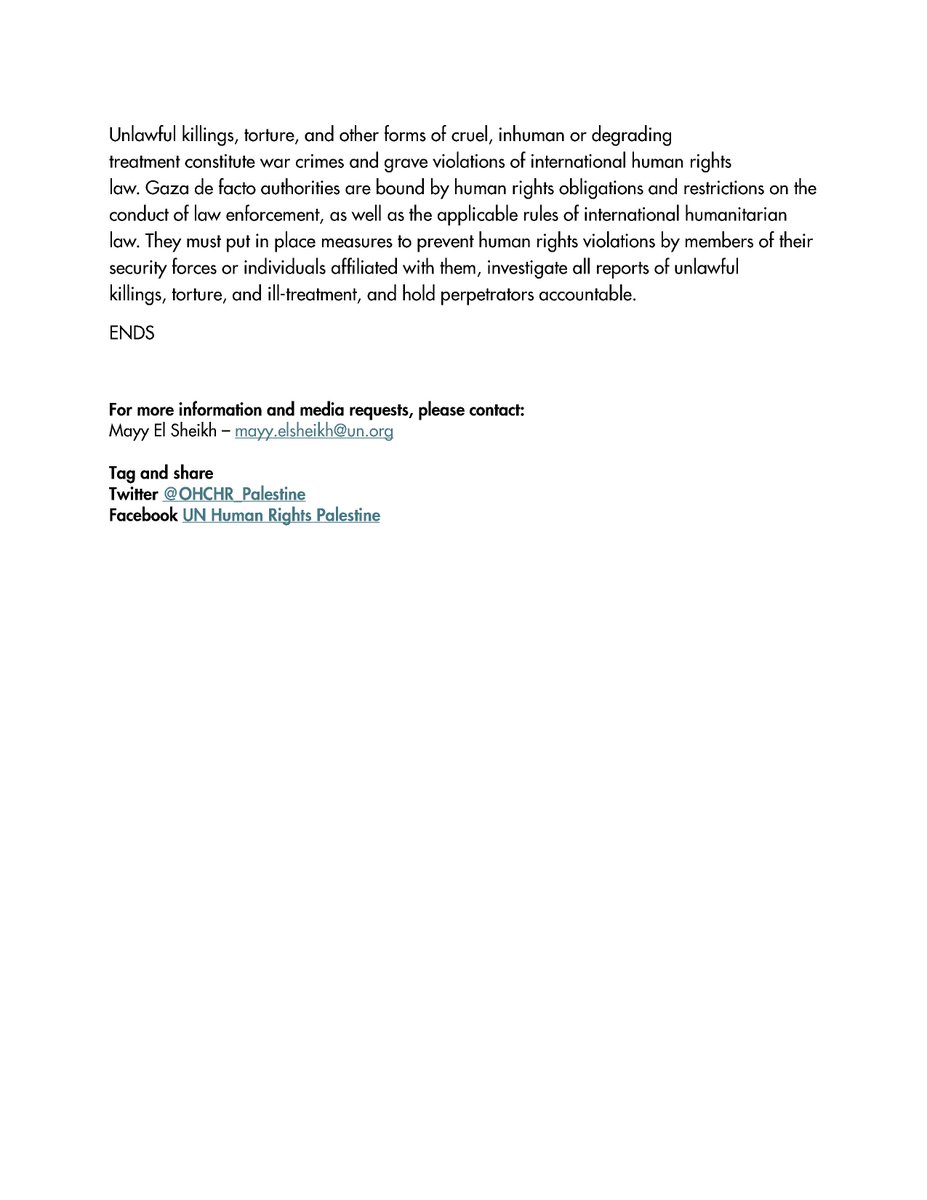
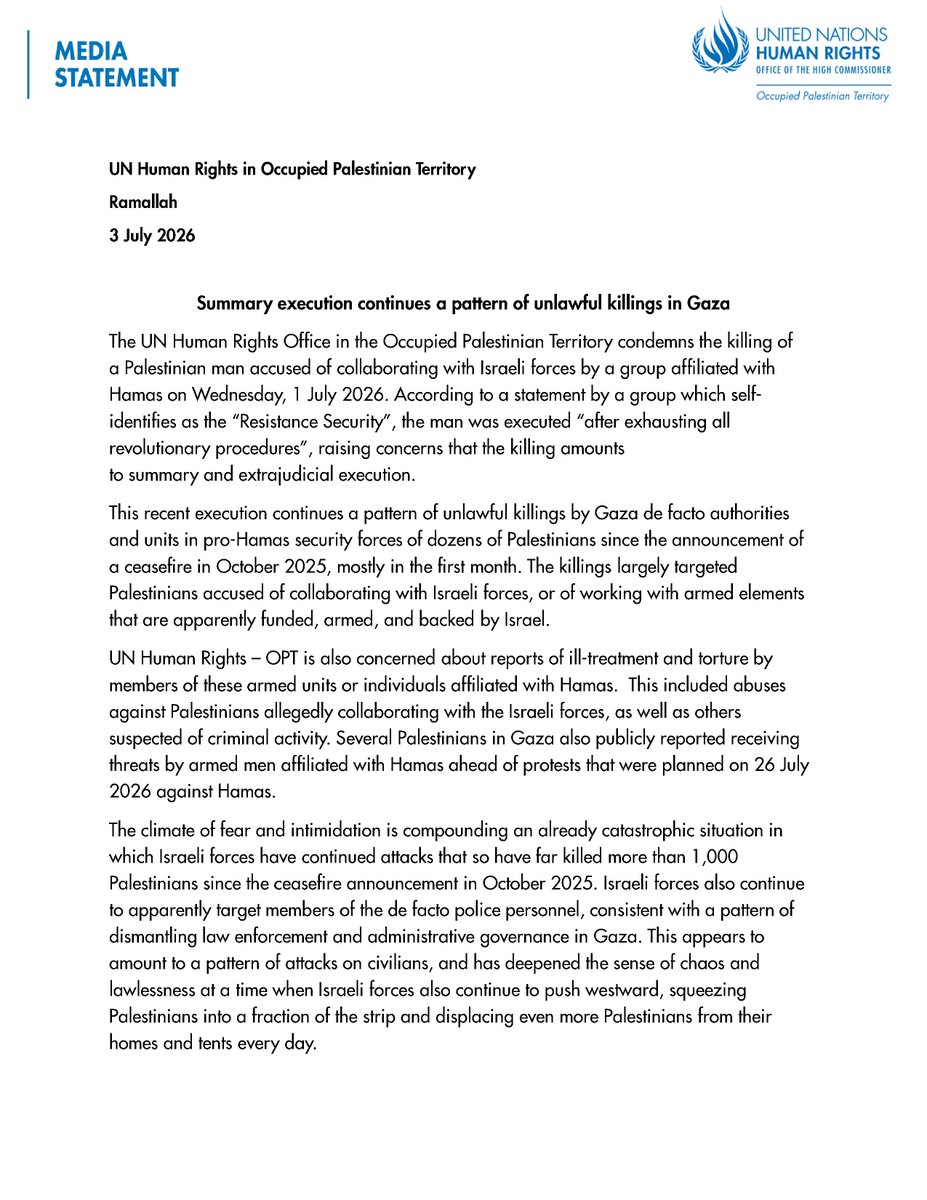
The UN really does seem hopeless: Under pressure from the Trump administration, the UN Human Rights Office finally issued a statement condemning Hamas’s extrajudicial killing of a Palestinian man in Gaza accused of “collaborating” with Israel, warning of a growing pattern that threatens Gazans’ safety and due process. The statement even notes that Gazans have been “receiving threats” ahead of the June 26 anti-Hamas protests. However, it avoids mentioning torture, the use of Gaza’s hospitals, and, embarrassingly, mislabels the date of the suppressed demonstrations as July 26.
But even in condemning Hamas, the UN tiptoes around naming the group directly, uses kid‑glove language to avoid acknowledging that Hamas’s police forces are inseparable from its terror apparatus, and then drags Israel into the statement, claiming that Israeli strikes on Hamas police have worsened “lawlessness.” In other words: the UN human rights condemns these mysterious, ‘maybe Hamas cops and terrorists’ for executions and threats, while simultaneously describing the same Hamas militias as “law enforcement and administrative personnel” and criticizing Israel for targeting them.
If anything is clear, it’s that the UN remains unwilling, and seemingly uninterested, in forcefully calling out a jihadi, fascistic, ISIS‑like terror group with even a fraction of the vigor it applies to Israel around the clock. And contrary to its self‑image, that’s not a “pro‑Palestine” stance at all; this actually actively harms Palestinians in Gaza.
What does America mean to me on the eve of its 250th anniversary? The United States has always been more than a country or a passport. For me, it became home through a long, uncertain journey that began in the Gaza Strip—a place plunged into chaos after Hamas seized power, ultimately making my return impossible. I first arrived in 2005 as a US State Department exchange student, part of a post‑9/11 effort to build cultural bridges with the Arab and Muslim worlds. Circumstances later made me one of the first Gazans granted asylum because of Hamas’s rule, and I became a citizen in 2014.
Over time, the people, places, and institutions I encountered here formed a mosaic of what America represents: a nation where individuals from every background can belong, united not by blood or tribe but by ideals, a shared civic heritage, and a rule of law that protects equality of opportunity. My own success was made possible by those who opened doors, the infrastructure that allowed me to participate fully in society, and a culture that celebrates individuality, creativity, ingenuity, and entrepreneurship, regardless of what the mob or the naysayers demand. That spirit of individuality has always been America’s antidote to conformity and the tyranny of the collective.
While our nation has much to reckon with in its past, the United States remains one of the few countries willing to confront its mistakes openly and correct course. Its democratic process empowers courageous individuals to advance new visions of prosperity, equality, justice, and human fulfillment.
As America marks its 250th birthday, it is essential to resist those who seek to impose failed collectivist ideologies or delegitimize the nation’s very existence simply because they oppose its foreign policy or current leadership. The United States is a beautiful, inspiring, and worthy project; one that must be preserved and defended in foreign affairs, domestic politics, and civic life. It has overcome immense challenges before, and it will continue to do so for the next 250 years.
https://t.co/K1IEFvGF4d
@AtlanticCouncil
Gaza woman, Tahrir Hasanein, was seized by Hamas and interrogated, beaten, tortured, bloodied, and denied medical care inside Al‑Aqsa Martyrs Hospital in Deir al‑Balah. Her “crime”: allegedly communicating with the Palestinian Authority. It’s yet another example, one of countless, of Hamas converting Gaza’s hospitals into interrogation sites, detention rooms, and makeshift intelligence hubs, all inside facilities funded by the international community, the UN, Western taxpayers, and charity donors. Hamas must be removed from Gaza’s hospitals, and civilians must be freed from Hamas-controlled territory. The silence from institutions and commentators who know exactly what is happening is disgraceful. The evidence of Gazans being brutalized inside medical facilities is overwhelming.
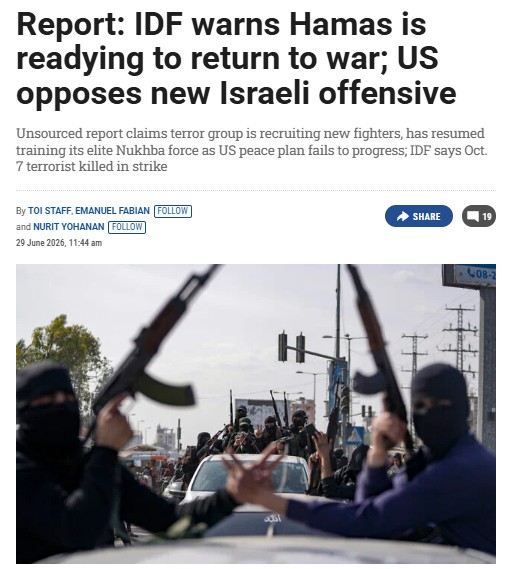
Intelligence assessments on Hamas in Gaza, from the Israeli military and Western security officials based in Jerusalem and Tel Aviv, continue to track the group’s preparations for its next war with Israel. Since the ceasefire, Hamas has been rebuilding its tunnel network and manufacturing hundreds of anti‑tank and anti‑personnel IEDs, RPG warheads, and other munitions. Reporting from multiple outlets, along with diplomatic cables, some of which I have seen, indicates that Hamas is recruiting new fighters and providing select cadres with specialized training from surviving, battle‑hardened operatives.
Hamas has reconstituted portions of its forces and restored a functioning command hierarchy capable of sustaining a prolonged fight. Its leadership is applying lessons learned, studying perceived weaknesses in Israeli tactics, and preparing for a multi‑month confrontation. The conclusion is unavoidable: regardless of public pledges, political messaging, or whatever post‑ceasefire process emerges, Hamas has no interest in disarmament, no intention of relinquishing control of Gaza, and no willingness to dismantle its extensive militant and terror infrastructure. Israeli officials are weighing options to confront Hamas, but all indications point to strong opposition from the Trump administration to any renewed military campaign and pressure to preserve the status quo.
A return to war in Gaza has always been an eventuality. The only plausible path to dislodging Hamas is separating civilians from the group by establishing genuinely safe zones free of militants and weapons infrastructure, with access controlled through vetting to prevent operatives from blending in with civilians. Without this shift, Israel risks repeating the old strategy; one that inflicts severe harm on Palestinian civilians while allowing Hamas to exploit their suffering and preserve its capabilities. Israel now controls nearly two‑thirds of the Gaza Strip, much of it empty. This territory beyond the “Yellow Line” must be used to shelter Palestinian civilians away from Hamas and under the protection of a new, credible security apparatus such as the International Stabilization Force or a newly created Gaza police force.
When Hamas fails, the blame shifts: It’s been remarkable to watch how many pro‑Hamas voices in the so‑called “pro‑Palestine movement” have scrambled to rewrite their narrative now that their favored terror group has failed to achieve its aims on October 7 and has been exposed (again) as a catastrophic plague on the Palestinian people. After cheering the massacre as the “inevitable” result of the blockade or a response to occupation or 1948, they’ve suddenly adopted a new escape hatch.
The moment you point to Hamas’s crimes against Palestinians and the devastation it brought upon Gaza and the national project, the claim becomes: “Israel made Hamas.” This hollow deflection is nothing more than an attempt to dodge responsibility and erase the agency of Hamas and its sycophants, who celebrated the group when they believed it would deliver something for Palestinians. In this worldview, Hamas is forever blameless; everything is Israel, all the time.
Israel is cast as so omnipotent that it supposedly compelled Hamas to carry out the October 7 attack, forced it to sabotage Palestinian interests, and tricked its own militants into committing atrocities they apparently had no choice but to commit. This is beyond foolhardy, absurd, and simply inaccurate. I’ve long argued that even with the power imbalance favoring Israel, Palestinian agency, responsibility, and accountability still matter – and that is not “blaming the victim” or being “self-hating.”
I had wrongly assumed that the indirect financing and support Hamas had received to govern Gaza under Netanyahu’s governments would be enough for the “pro‑Palestine” mobs to denounce the terror group as a pawn and useful idiot in a cynical 3D chess game designed to undermine Palestinian statehood and interests. Instead, they now seek to absolve Hamas entirely, claiming that because some in Israel benefited from Hamas’s behavior, the terror group bears no responsibility for its own actions. That excuse doesn’t work and demonstrates a chronic lack of moral, intellectual, and political sophistication or grounding.
Get a load of Hamas’s fascistic religious clerics, Imams, and Jihadi criminals in Gaza’s mosques: a demonic preacher brought a Glock handgun to a mosque and gave a deranged sermon talking about “one bullet in the head and straight to hell,” to describe the virtue of killing infidels, and insisting that there is “no greater form of worship than to spill the blood of nonbelievers and infidels.” This is a tiny snapshot of the criminal machinery that has held Gaza hostage for nearly two decades: a religious SS‑style apparatus that has victimized Palestinians, hollowed out Islam, corroded social values, crushed dissent, eliminated opposition, and imposed a reign of terror that turned Gazans against one another. What this Hamas‑ISIS preacher doesn’t grasp is that his ideology now has millions of admirers in the West; on college campuses, across social media, in activist circles, and even among a handful of members of Congress.





![afalkhatib's tweet photo. Imagine [hopefully] reading a piece that calls for Gaza to become the pride and joy of the Palestinian people and a hub of compelling Palestinian national identity by rejuvenating the territory, embracing peace, and rejecting a terror organization that admitted to refusing Gaza development offers worth billions, including an airport and seaport, only to proclaim that the op-ed is "pro-genocide." And how was this brilliant conclusion reached? Because the article I published in The New York Times didn't do the ubiquitous "everything has to be Israel's fault" that seems to be the only line of thinking within the supposed "pro-Palestine" camp.
Speak to Palestinians in Gaza who aren’t Hamas or making content for the “pro-Palestine” community abroad, and you hear the same thing again and again. They describe, plainly and without theatrics, how Hamas halted Gaza’s development and crippled the broader Palestinian national project since its founding in 1987. They do not need to mention Israel in every sentence to sound authentic to outsiders, including other Palestinians or non-Palestinians alike. They simply recount their lived reality. For Gazans, Hamas is the central problem. There were no Israeli soldiers inside Gaza before October 7. The blockade that everyone loves to speak about was imposed after Hamas’s cross‑border abduction of an Israeli soldier in June 2006 and tightened after the group’s violent takeover of the territory on June 14, 2007. From that point forward, Hamas massively built tunnels, fired rockets, smuggled weapons, waged repeated rounds of conflict, and declared its intent to “destroy” Israel, while turning Gaza into a fortress of armed “resistance” that got Gaza destroyed, tens of thousands killed, millions displaced, and wasted billions of dollars. Hamas imposed punishing taxes on Gazans to fund its terror; stole diesel from Gaza’s only power plant and caused chronic power outages; suppressed women’s freedoms; blocked travel for anyone it disliked; and routinely killed, tortured, jailed, beat, and humiliated countless Gazans.
Research the political and cultural divides between Gaza and the West Bank, and you quickly see how many Gazans resent West Bankers for cheering Hamas and October 7. These dynamics are complex, real, and central to understanding Palestinian politics, yet they are brushed aside or overlooked to satisfy low‑information audiences who consume the toxic narratives produced by the "pro-Palestine" industrial complex. Some people are simply uninformed. Some are unsophisticated. And then there are those who know exactly what they are doing and deliberately twist, manipulate, and distort reality to manufacture ignorance and maintain obedience and Orwellian-grade compliance among the crowds.](https://pbs.twimg.com/media/HRgDHA1a4AAo14G.jpg)