J’ai été voir le site de Cyberleek, le hacker de GTA 6, et ce n’est clairement pas un amateur.
Je suis convaincu que ce n’est pas une seule personne, mais bien un groupe de hackers.
Son système de contact fonctionne en deux étapes :
- Il génère d’abord un compte Session (messagerie sécurisée, anonyme et décentralisée) avec une phrase de récupération unique. Ça permet à la personne qui veut le contacter d’avoir un canal de communication jetable et chiffré de bout en bout.
- Ensuite, il génère un montant de donation en Monero (XMR), une cryptomonnaie anonyme. Contrairement à Bitcoin, Ethereum ou Solana, sa blockchain est privée et les montants des transactions sont complètement obfuscés. Personne ne peut donc voir combien tu as envoyé, sauf celui qui possède la clé privée (Cyberleek).
Il demande 400 XMR (165 k$), mais ce qui est vraiment intéressant, ce sont les chiffres APRÈS la virgule.
Il y a 12 décimales qui sont générées en même temps que le compte Session et servent d’identifiant unique. Quand tu envoies exactement ce montant, Cyberleek détecte la transaction sur la blockchain, extrait les décimales, recalcule l’ID Session correspondant et te contacte.
D’après le site, c’est purement mathématique/cryptographique côté client. La page génère un ID de 12 chiffres lié mathématiquement au compte Session. Comme Monero cache les montants, seul Cyberleek peut déchiffrer le montant reçu et retrouver ton Session ID. Aucun stockage serveur de l’ID n’est nécessaire avant le paiement.
Il précise d’ailleurs qu’il faut absolument envoyer les fonds depuis un wallet personnel (Cake Wallet, Feather...) et non depuis un exchange, sinon les décimales risquent d’être arrondies et il ne pourra jamais te retrouver.
Je trouve que c’est un système plutôt élégant, et on retrouve d’ailleurs le même niveau de sophistication au niveau de l’infrastructure.
Leur site ne peut quasiment pas être mis hors ligne durablement, car il est hébergé de façon décentralisée sur Arweave (stockage permanent et immuable sur blockchain) et que son contenu est accessible via de nombreux gateways du réseau ar(dot)io.
Ces gateways sont des portes d’accès qui servent le même fichier HTML stocké sur Arweave. Faire tomber un gateway (ou même plusieurs) ne change presque rien puisque le site restera accessible sur tous les autres, et que de nouveaux miroirs pourront apparaître en quelques minutes.
Tous ces éléments font que je suis convaincu que Cyberleek est un groupe et non une seule personne, et vu le mode opératoire, que ce sont des pros. Leurs connaissances en cryptographie et en utilisation de technologies décentralisées laissent penser qu’on est loin de simples script kiddies ou de hackers qui piratent uniquement via social engineering. Il y a là-dessous une vraie maîtrise technique.
Le côté un peu enfantin / trolling laisse penser le contraire, mais le côté technique ne fait aucun doute.
Même chose dans la manière dont ils gèrent leur communication : tout passe par leur site internet. Ils évitent volontairement tout réseau social qui pourrait laisser des logs et compromettre leur identité.
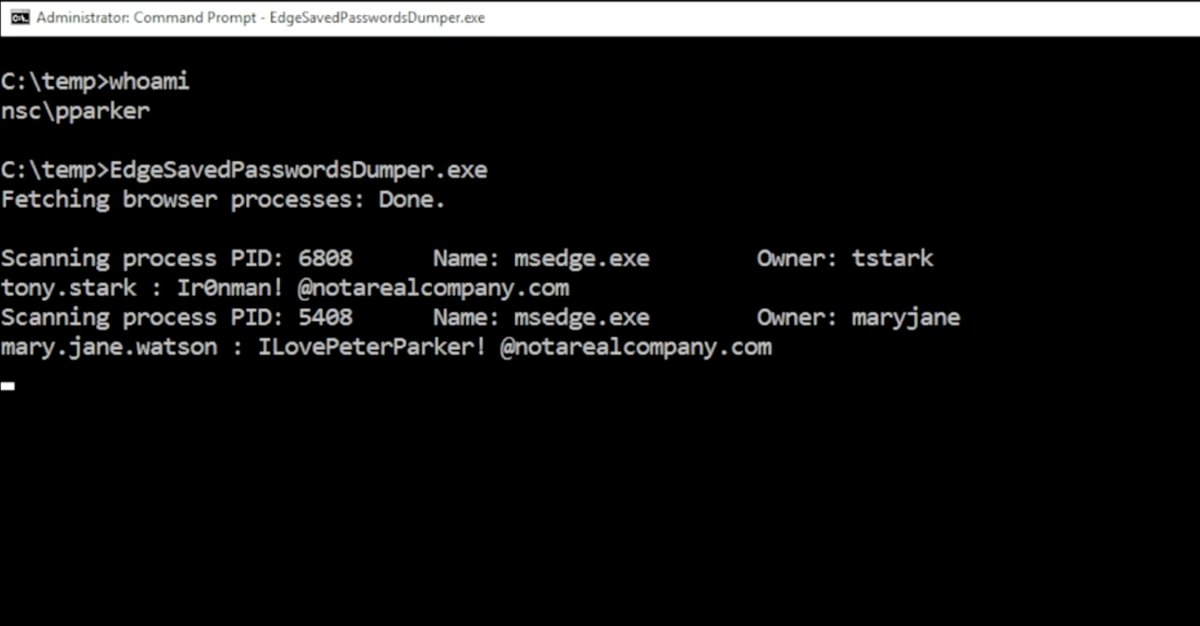
❗️🚨 Microsoft Edge keeps every saved password in process memory as cleartext from the moment it launches. Microsoft's responsed when reported: "by design."
All of them. Including credentials for sites you won't open this session.
Researcher @L1v1ng0ffTh3L4N tested every major Chromium browser. Edge is the only one that behaves this way.
Chrome decrypts credentials on demand, and App-Bound Encryption locks the keys to an authenticated Chrome process so other processes can't reuse them.
In Chrome, plaintext surfaces only during autofill or when a password is viewed, making memory scraping far less useful.
What makes this extra weird is that Edge still demands re-authentication before revealing those passwords in its Password Manager UI, while the same browser process already holds every one of them in plaintext.
In shared environments, this turns into a credential harvest. On a terminal server, an attacker with admin rights can read the memory of every logged-on user process. In the published PoC video, a compromised admin account lifts stored credentials from two other logged-on (and even disconnected) users with Edge running.
Microsoft's official response when notified: "by design."
The finding was disclosed April 29 at BigBiteOfTech by PaloAltoNtwks Norway, alongside a small educational tool that lets anyone verify the cleartext storage for themselves.
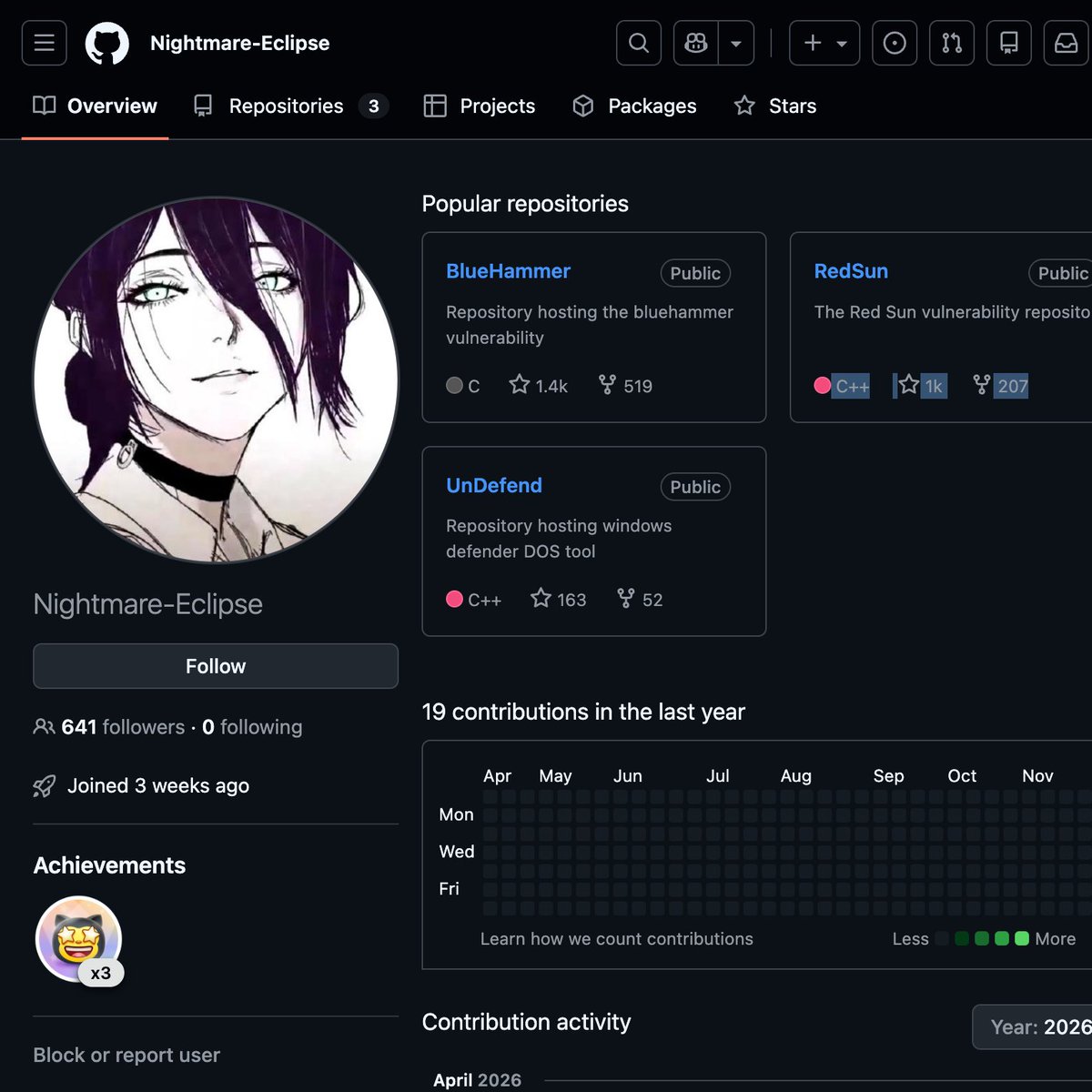
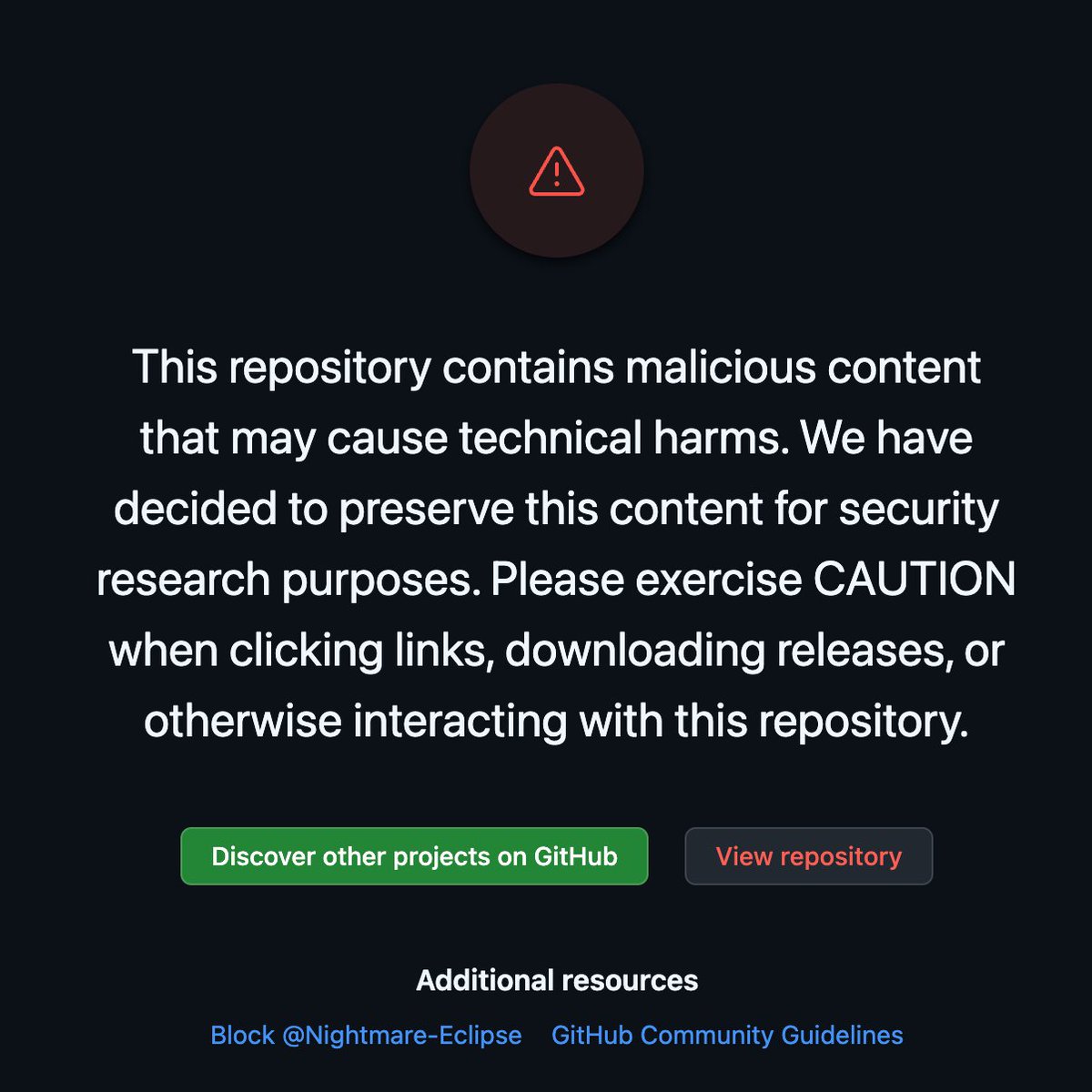
🚨 Three Windows zero-days released by Nightmare-Eclipse are being used in the wild by threat actors.
BlueHammer (CVE-2026-33825): LPE, Abuses Windows Defender’s signature-update pipeline and VSS to breach protected registry hives, dump SAM hashes/identities, and escalate privileges.
RedSun: LPE to SYSTEM abusing Defender's own cloud remediation to overwrite System32 binaries.
UnDefend: Unprivileged DoS that starves the AV of updates while spoofing healthy EDR telemetry.
🇫🇷📱💵 FLASH | Patrick Drahi ACCEPTE l’offre de 20,35 milliards d’euros du consortium Orange, Free et Bouygues Telecom pour le rachat de SFR. Les opérateurs entrent désormais en négociations exclusives. (Le Point)
@FrenchRapUS Non Linux c’est pas de la merde, non c’est pas fais par des suédois ou des finlandais c’est fais par des gens comme vous comme moi partout dans le monde c’est open source et sécuriser
🛑 Chrome 0-day Warning!
Tracked as CVE-2026-5281, this WebGPU (Dawn) use-after-free bug allows code execution via a crafted page if the renderer is compromised.
It’s the 4th exploited Chrome browser zero-day in 2026.
🔗 Read → https://t.co/MYdqVq06jo