The intellectual life was never something that only the elites enjoyed.
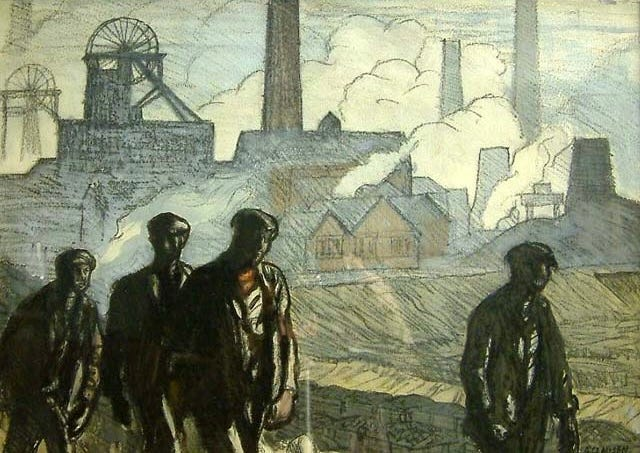
In England there has long existed a massive, self-directed culture of education among working-class people. Coal miners in industrial England read voraciously, with many even self-studying Latin or history after long shifts underground or in factories.
Coal miners, mill workers, and mechanics built their own libraries and formed reading societies to study Shakespeare, Dickens, Milton, even Plato. A grassroots intellectual movement that grew independent of elite institutions.
Jonathan Rose makes this case in "The Intellectual Life of the British Working Classes", one of the most illuminating cultural histories of recent decades.
While elites might have consumed culture for status, ordinary readers engaged with it morally and personally, seeing in Shakespeare and the classics a means of moral development and self-mastery. This revelation directly challenges the 20th-century academic assumption (inspired by postmodernism and Marxist cultural studies) that "high culture" is inherently exclusionary.
Pulling from autobiographies and letters, Rose shows that workers often described reading as a form of inner liberation, citing writers like Ruskin, Carlyle, and Dickens as their moral guides. They read with a degree of seriousness we rarely see today, treating their books as beloved companions in a lifelong pursuit of wisdom.
The rise of mass media and television following WWII made a preference for reading slowly give way to one for passive entertainment.
And the democratization of education paradoxically coincided with a lowering of intellectual standards — just like how more people than ever attend university today, yet popular culture as a whole is much less intellectually vibrant than it was 50 years ago.
One thing women are obsessed with is rewarding bad behavior while punishing good behavior.
It makes you question whether the bad behavior is actually good, or whether the good behavior is actually bad.
The whole “block her rapist” meme really brings this question to light. We’ve always known that women love bad boys, but to sympathize with your alleged rapist more than your boyfriend is quite bizarre.
From a relationship standpoint, how are men supposed to behave now, knowing that if you lie, cheat, and even assault a woman, you may be treated better?
What’s worse is that, from a broader standpoint, we see women sympathize with violent migrants more than their own countrymen. Not only is there sympathy, but given that women now have an outsized political influence, they have control over society’s ethical reward system.
So now, instead of bad behavior being rewarded only in relationships, it is rewarded on a societal scale.
If we’re being pragmatic, should society start telling men to behave poorly if they want to attract the most women? Should men act like violent migrants since it’s clearly more rewarded? Is that the moral thing to do?
I think this blurring of moral lines underscores a society that has lost its sense of values. It’s one of the reasons secular humanism and utilitarian ethics fail. If you don’t take a hard stance on morality, you get exactly what we have now.
Upstanding men get punished while their opposites get rewarded. Our ethical reward system is skewed to favor the worst people in society.
It shows how important it is that men regain control of the moral reward system.
In 1962, there were three Indigenous teachers (Joe Stanley Michel, Benjamin Paul, and Mabel Caron) at the Kamloops residential school.
By 1973, half the staff was Indigenous along with the principal (Nathan Matthew).
Other than the 215 murders, it was a pretty great school.
@LeCheuf1959 So, this is the Samual de Champlain statue in front of Our Lady of Montreal Basilica. Did not know it, and there were natives at its base.
@Z4BTC_ So, just woke's "misogyny" and say no to pickmes. Make sense.
Why question is this, why do women want to be in male space, if they are explicitly known they are not wanted?
"Entrepreneurs all over Britain are asking this question... Why not take a comfortable public sector job, collect the salary, enjoy the pension, work from home, avoid the stress and leave somebody else to create the wealth? Why bother? What's the point?"
We have exactly the same problem in Canada. Entrepreneurship and public sector employment are almost perfectly anticorrelated. The more onerous the regulatory state becomes, the more luxurious the lifestyles of its parasitic administrators.
In Colonial Australia, big business was beginning to replace White workers on cargo ships with Chinese workers, who worked for 1/4th of the price.
The White workers of the company in Sydney went on strike, the dock workers and others joined them. The entire public, regardless of class, then rallied around them.
Subscriptions to support the strikers poured in from Whites in every colony, including distant New Zealand and Western Australia.
The Company almost completely conceded, the government pulled their subsidies, and non-White workers were scaled back and soon removed altogether.
The question of cheap foreign labour was settled for the next century, Australians of every class just wouldn’t allow it.
1) Society finds competitive advantage in increasing complexity
2) Society increases complexity by optimizing for people without children
3) Society losses its identity and will to perpetuate itself, imports less civilized immigrants to compensate for a lack of vitality
4) Less tame immigrants undermine previous structures of civilization which collapses from without and within and the barbarians who are less tame take control in the chaos
5) Barbarians find competitive advantage in increasing complexity