The Bacuna Brothers
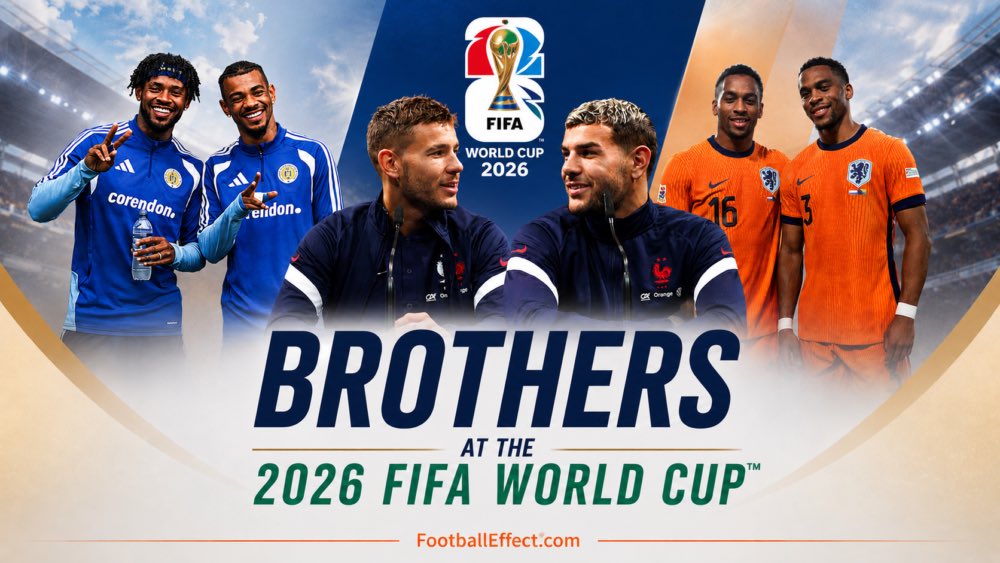
The smallest nation ever to qualify for a FIFA World Cup walks into this tournament carrying an entire population’s hope on its back. Curaçao, with around 185,000 people, has never played at a World Cup before. And at the midfield heart of this historic squad, you find two brothers: Leandro and Juninho Bacuna, captain and creative force, the living embodiment of the story that got them here.
Leandro Bacuna is one of the pioneers of the national team, and in a heartfelt interview reflected on the journey, explaining that he was born and raised in Groningen, played for the Netherlands youth sides but never made it to the senior squad, and then chose to play for Curaçao, calling it one of the best choices he ever made.
After he joined, many other players of Curaçaoan descent followed. That trail-blazing decision, years ago, eventually created the conditions for his brother to follow. Juninho Bacuna, Leandro’s younger brother, operates in central midfield and has 13 international goals, the squad’s second-best return. He scored in the 7-0 win over Bermuda alongside his brother during qualifying.
Together in midfield, the two brothers give Curaçao something no other team at this tournament has: a brother partnership at the heart of the team. That combination of familiarity, experience and shared motivation is a genuine asset.
In a squad where tournament experience is limited and the stage is bigger than anything they have faced before, having two brothers who have played alongside each other for years, who communicate in the shorthand that only siblings develop, could matter enormously in tight moments when instructions from the bench take too long to arrive.
Their qualifying record was extraordinary: played 10, won 7, drew 3, lost none, 28 goals scored, 5 conceded. On November 18, 2025, Curaçao travelled to Kingston and held Jamaica to a 0-0 draw, the point that sealed it.
They became the smallest nation by population ever to qualify for a FIFA World Cup. Leandro opened from the penalty spot in the 7-0 demolition of Bermuda. Juninho scored in the same game. Brothers, scoring together, writing history for 185,000 people back home.
In Group E, Curaçao face Germany, the Ivory Coast and Ecuador.
The odds do not flatter them. Germany and the Ivory Coast are significant obstacles by any measure. But Curaçao are not here to just participate, and Leandro has said as much directly, his quote doing the rounds:
“We want more than just being here.”
The Bacuna brothers, both raised in Groningen, both with careers built primarily in the Netherlands and England, are going to represent an island nation in the Caribbean at the World Cup. The poetry of that could fill several columns.
The Bacunas would probably prefer to fill the net instead.
Brothers at the 2026 FIFA World Cup: 8 Families, One Dream
The television director knew exactly where to point the camera. Guéla Doué had just swept the ball past Mike Maignan, Ivory Coast’s bench had erupted into pure chaos, and in the stands at Stade de la Beaujoire, the travelling Elephants supporters were singing something that shook the old concrete.
None of that was the shot. The shot was from the bench on the other side. Sitting there in a pale blue training top, watching his older brother sprint toward the corner flag on June 4, 2026, was Désiré Doué.
He smiled first.
A wide, involuntary, can’t-help-yourself smile that lasted maybe two seconds before something else crossed his face entirely, something caught between brotherhood and the loyalty that comes with a national shirt. The cameras caught all of it, and the clip travelled everywhere by morning.
After scoring, Guéla kicked the corner flag with its French Football Federation logo, a provocation that carried the specific energy of a family argument taken onto a public stage. Ivory Coast won 2-1, the first time in their history they had beaten France, and Guéla was involved in both goals.
Soccer
Désiré spent the entire match on the bench. His brother had the last laugh, and the whole world watched it happen.
That night in Nantes was a preview.
In a few days, both players will travel to North America as part of the 2026 FIFA World Cup, carrying the same family name into different dressing rooms, different badge colours, and different national dreams. They are not alone.
This tournament, the largest in World Cup history at 48 teams, carries eight confirmed pairs of brothers into its groups and knockout rounds, a number that reflects both the expanded tournament field and the increasingly complicated reality of how modern footballers relate to nationality, heritage, and home.
The Timber Twins
Where the Williams and Doué stories are defined by division, the Timber brothers offer something different. Quinten and Jurriën Timber emerged from Ajax’s renowned academy, and although they began their careers together, they eventually followed different club paths.
Jurriën became a key player for Arsenal, while Quinten continued his development in European football, eventually landing at Marseille. Both, however, are in the Netherlands squad for 2026, together, representing the same orange shirt.
Both their mother, Marilyn and their father are from Curaçao, part of the ABC Islands in the Dutch Caribbean. There is a thread here worth pulling at: the Timber twins have Curaçaoan roots but represent the Netherlands, while the Bacuna brothers, also born in the Netherlands with Curaçaoan heritage, chose to represent Curaçao. Two families, the same geography of origin, opposite international decisions.
The 2026 World Cup contains multitudes.
Jurriën’s place in the squad had significant uncertainty hanging over it before the announcement came. Ronald Koeman included Timber in his 26-man group despite the 24-year-old having missed the closing weeks of Arsenal’s Premier League title-winning campaign with a groin injury, creating doubt over his availability for both the Champions League final and the World Cup. Koeman gambled on his fitness, and the Arsenal defender gets the chance to prove that faith was justified.
The Timber brothers follow in the footsteps of famous Dutch sibling duos such as Ronald and Frank de Boer, as well as René and Willy van de Kerkhof. Dutch football has a long tradition of producing siblings good enough to earn the same call-up.
Soccer
What makes this iteration different is the global scale of the tournament and the level of both brothers’ club careers at the time of their inclusion.
The Doué Brothers
The Doué family’s story moves through France with the same rhythm, the same split at the end, but with one detail that gives it an extra layer of sharpness. Désiré and Guéla grew up in a family of Ivorian heritage that settled in France, and both began their football journeys at Stade Rennais.
The same club, the same youth corridors, the same city. Then, like so many sibling careers, the roads split. Désiré went to PSG and became one of the most discussed young attacking players in European football. Guéla chose to represent the Ivory Coast, the homeland of their parents.
Soccer
The defender, who scored for Ivory Coast against France in an international friendly on June 4, 2026, while Désiré watched from the bench, has become an established member of the Elephants squad while also impressing at club level with RC Strasbourg.
That specific match, a full international where Guéla scored against the country his younger brother represents, carries a strange and compelling charge. The goal went in. Désiré was on the bench. Their parents presumably had the same problem María Williams described.
FIFA has highlighted the Doué brothers as one of the tournament’s most intriguing family stories.
Guéla has 20 caps and 3 goals for the Ivory Coast, while Désiré has six caps and two goals for France. Désiré is the star by reputation, the PSG winger whose name gets typed first in most sentences. But Guéla has more caps, more international experience, and already has the psychological data point of having scored against France.
There is a meaningful conversation to be had about which brother is actually better prepared for a tournament of this scale and intensity, and the answer might not be the one most people give instinctively.
A Doué meeting at the tournament may carry even more emotion than the Williams clash because both brothers came through Rennes before choosing different international routes. The Williams brothers grew up together and then made choices that pointed them toward different countries.
The Doués essentially followed the same footballing path all the way to its fork, making the divergence feel starker, more deliberate, more loaded with things left unsaid.
Brothers at the 2026 FIFA World Cup: 8 Families, One Dream
The Williams Brothers
Iñaki Williams and Nico Williams are both products of the Athletic Club academy, raised in Spain after their parents emigrated from Ghana under difficult circumstances. Their father Félix and mother María made a journey that deserves its own long read.
In the early 1990s, their parents embarked on a perilous journey from Ghana to Europe in search of a better future, reportedly crossing the Sahara Desert under extremely difficult conditions, enduring hunger, uncertainty and numerous dangers before eventually settling in Spain’s Basque region.
That crossing, all those years before either son could kick a ball properly, is the root from which every other part of this story grows.
Iñaki came first, establishing himself in the Athletic first team and earning the kind of loyalty from the club’s supporters that takes years to build. He made a single appearance for the senior Spanish national team in a 2016 friendly match, and because that sole appearance was non-binding under FIFA rules, he remained eligible to switch national teams.
The switch, when it came in 2022, was not primarily about football. Family played a crucial role, particularly his grandfather, who reportedly expressed a wish for Iñaki to wear the Black Stars jersey. He went back to Ghana, thought about where his blood came from, and made a decision that changed the shape of the whole family story going forward.
Soccer
Nico, eight years younger, developed fast within the Spanish youth setups.
In late 2022, just as Ghana was heavily scouting both brothers, Spain fast-tracked Nico into their senior squad for the UEFA Nations League to secure his international future. He stayed. He won the 2024 Euros. He became one of the most exciting wide players in European football.
Now they both travel to the same tournament representing different countries, and the question hanging over every draw ceremony, every group stage fixture announcement, is whether they end up on opposite sides of the same pitch.
Nico has already spoken about it, saying he would like to play against his brother, with Iñaki representing Ghana and him representing Spain, describing it as a very nice duel, and admitting their parents would have a heart attack not knowing who to support.
That quote landed across global media in March and has not stopped circulating since, because it captures something true. Every family that has ever been divided by geography, by migration, by the complicated arithmetic of belonging somewhere knows exactly what Nico means.
The comparison to the Boateng brothers, Jerome and Kevin-Prince, who represented Germany and Ghana, respectively, at the 2010 World Cup, is already being drawn.
The sight inevitably drew those comparisons, and for their mother, María Williams, a World Cup featuring one son for Spain and another for Ghana is a moment filled with both pride and emotion.
For the 2026 tournament, Iñaki has more than 25 caps and two goals for Ghana, while Nico represents Spain with 30 caps and six goals, having won the 2024 Euros with La Roja. These are not bit-part players. Both will be central to their respective campaigns, and if the bracket allows it, they will meet.
1/10 ⚽💸 Why are World Cup tickets so expensive?
The 2026 FIFA World Cup is shaping up to be the most expensive World Cup ever for fans.
Here's what's really happening 👇
2/10
For the first time, FIFA is using large-scale dynamic pricing, meaning ticket prices can rise based on demand—similar to airline tickets and hotel bookings. (University of Colorado Boulder)
3/10
The World Cup happens only once every four years.
Millions want tickets.
Seats are limited.
Basic economics: huge demand + limited supply = higher prices. (Revenue Management Labs)
4/10
The 2026 tournament is hosted across the USA, Canada, and Mexico.
Experts say FIFA is targeting one of the world's biggest sports-spending markets, especially the United States. (Al Jazeera)
5/10
Some fans are paying hundreds or even thousands of dollars per ticket, especially for knockout matches and high-profile teams. (Houston Chronicle)
6/10
The tournament is expected to generate roughly $13 BILLION in revenue, making it the most lucrative World Cup in history. (Barron's)
7/10
And remember:
The ticket isn't the full cost.
You still need flights, hotels, transportation, food, and other travel expenses. (Newswise)
8/10
Many fans argue football is becoming less accessible to ordinary supporters and more attractive to wealthy spectators and corporate buyers. (Al Jazeera)
9/10
Ironically, some analysts believe FIFA may have pushed prices too high for certain matches, leading to criticism and resale-market turbulence. (The Times)
10/10
The real debate:
⚽ Is FIFA maximizing revenue?
Or
⚽ Is football's biggest tournament slowly pricing out the fans who built the game?
What's your verdict? 👇
#WorldCup2026 #FIFA #Football #Soccer #SportsBusiness #WorldCupTickets
1/10 ⚽💸 Why are World Cup tickets so expensive?
The 2026 FIFA World Cup is shaping up to be the most expensive World Cup ever for fans.
Here's what's really happening 👇
2/10
For the first time, FIFA is using large-scale dynamic pricing, meaning ticket prices can rise based on demand—similar to airline tickets and hotel bookings. (University of Colorado Boulder)
3/10
The World Cup happens only once every four years.
Millions want tickets.
Seats are limited.
Basic economics: huge demand + limited supply = higher prices. (Revenue Management Labs)
4/10
The 2026 tournament is hosted across the USA, Canada, and Mexico.
Experts say FIFA is targeting one of the world's biggest sports-spending markets, especially the United States. (Al Jazeera)
5/10
Some fans are paying hundreds or even thousands of dollars per ticket, especially for knockout matches and high-profile teams. (Houston Chronicle)
6/10
The tournament is expected to generate roughly $13 BILLION in revenue, making it the most lucrative World Cup in history. (Barron's)
7/10
And remember:
The ticket isn't the full cost.
You still need flights, hotels, transportation, food, and other travel expenses. (Newswise)
8/10
Many fans argue football is becoming less accessible to ordinary supporters and more attractive to wealthy spectators and corporate buyers. (Al Jazeera)
9/10
Ironically, some analysts believe FIFA may have pushed prices too high for certain matches, leading to criticism and resale-market turbulence. (The Times)
10/10
The real debate:
⚽ Is FIFA maximizing revenue?
Or
⚽ Is football's biggest tournament slowly pricing out the fans who built the game?
What's your verdict? 👇
#WorldCup2026 #FIFA #Football #Soccer #SportsBusiness #WorldCupTickets
💰🏆 The 2026 FIFA World Cup will be the richest World Cup ever!
Prize money breakdown:
🥇 Winner – $50M 🥈 Runner-up – $33M 🥉 3rd Place – $29M 🏅 4th Place – $27M ⚽ QF – $19M ⚽ R16 – $15M ⚽ R32 – $11M ⚽ Group Stage Exit – $10M+
48 teams. Record revenues. Bigger rewards than ever. 🌎⚽
Who wins it all in 2026? 👀
#WorldCup2026 #FIFAWorldCup #Football #Soccer #WorldCup #Footballeffect
Read more: https://t.co/1qX33yUlF0
Japan – The Team That Cannot Be Worked Out
Go back to the second half against Germany in Qatar. Japan is losing. Moriyasu makes his substitutions. The shape shifts. The press gets higher. The passing angles change. Germany cannot figure out where the danger is coming from, and Japan scored twice and won a game they had no right to win. Then they beat Spain. Then they top the group.
Soccer Balls
That is not a team that got lucky. That is a team with a tactical plan so flexible and so well-drilled that it can become a different side in the middle of a match without anybody losing their thread.
Japan came into this tournament as the first non-host team to qualify for 2026, finishing at the top of their Asian qualifying group ahead of schedule.
Ranked 18th in the world. A squad where almost every outfield player earns their living in a European league. Their players have spent the past four years competing at the highest levels of the Bundesliga, La Liga, the Premier League, and Serie A.
The Samurai Blue have beaten Germany, Brazil, England, and Spain since 2022. At some point, people need to stop being surprised by that and start accounting for it.
The player who carries the weight this time is Takefusa Kubo. He had a stunning season at Real Sociedad, terrorizing La Liga defenses, helping the club win the Copa del Rey, and establishing himself as one of the most watchable wingers in Spanish football.
Kaoru Mitoma is missing, injured in May, after a brutal blow. But Kubo has already promised to fill the space. Given what he showed all season, the confidence is not bravado. It is based on actual evidence.
Soccer
Wataru Endo at Liverpool provides the defensive foundation in midfield. Daichi Kamada keeps the ball moving. Ritsu Doan can score and create from wide areas. This is a squad with no single point of weakness that opposing coaches can simply target and neutralize.
They are in Group F with the Netherlands, Sweden, and Tunisia. The Netherlands is the strongest team on paper. But Sweden is beatable, and Tunisia is compact rather than overwhelming. Japan has a route through. And once they are in the round of 32 and beyond, history says, do not assume anything. A quarter-final would be the best result in Japanese football history.
Dark Horses of the 2026 World Cup: 5 Countries Primed to Disrupt the Tournament
Every World Cup has them. Teams that walk in silently, land in a bracket nobody envied, and then somewhere in the second week, they are still there, and everyone is scrambling to explain why.
Dark horses. The phrase gets thrown loosely before every tournament, attached to almost all countries outside the top ten, but the real ones share something.
They are not just good enough to cause an upset.
They have a reason. A hunger.
The dark horse is the best thing about the World Cup. Better than the favorites, honestly. Because the favorites arrive carrying the weight of expectation, and the dark horse arrives carrying nothing but hunger.
South Korea in 2002. Cameroon in 1990. Croatia in 2018, reaching the final from nowhere. Morocco in 2022, beating Spain, beating Portugal, going to the semi-finals, and making grown men in Rabat weep in the streets.
The 2026 World Cup is tailor-made for another one of those stories. Forty-eight teams. A brand new round of 32 that gives more nations a foothold. Eight third-placed teams advance from the group stage.
The format has opened a door that was always slightly ajar, and right now, five teams are already walking through it.
They are not here to make up the numbers. They just need the world to keep underestimating them long enough to make it matter.
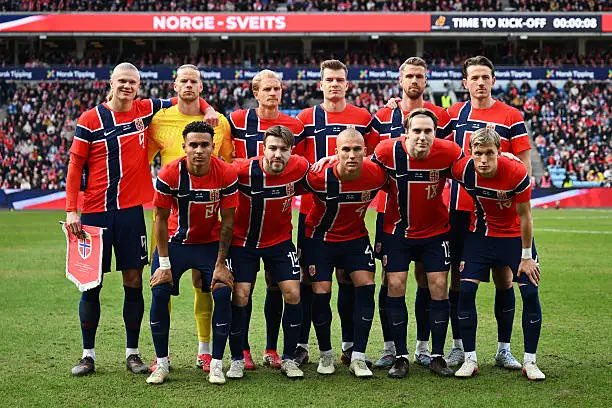
Norway – Haaland Finally Gets His Stage
The King of Norway announced the squad. Not a press conference, not a coach holding up a printed list.
King Harald V delivered it through a pre-recorded social media video that never once showed a player’s face. Instead, it ran through scenes of ordinary Norwegian people going about their lives, and the names of the 26 players were woven between them. The message was clear. This squad belongs to all of us.
That is the kind of cultural weight this moment carries for a country that has been waiting 28 years for it.
Haaland leads them in, obviously. He has 55 goals in 48 appearances for Norway. He scored 16 during qualifying alone, more than any other European striker.
The fastest player in Premier League history to reach 100 top-flight goals arrives at his first World Cup not as a man with something to prove but as a man who has spent his life pointing at this tournament on a calendar that used to have nothing written on it.
Soccer
Martin Ødegaard wears the armband. The Arsenal captain, Premier League winner, is one of the more complete midfielders currently playing the game. When he is sharp and healthy and running the tempo from the middle of the pitch, Norway looks like a side that could beat anybody in the world over 90 minutes.
That is not a stretch. That is just what happens when the two best players on the pitch belong to the same team.
The depth behind them is real, too. Antonio Nusa, at 20 years old, quick and unpredictable on the left wing, is the kind of player who finds tournament football liberating rather than suffocating.
Alexander Sørloth at Atletico Madrid gives Solbakken another forward who can carry the ball, hold up play, and score. Jørgen Strand Larsen at Crystal Palace is a highly rated third option who would walk into most international squads.
Norway land in Group I with France, Senegal, and Iraq. The market has them at minus-900 to advance.
On June 26, France is the game that will define their tournament. Norway will arrive at that fixture already through the group. The question is whether Haaland, when he finally steps into a knockout round at a World Cup for the first time in his life, decides to announce himself to the whole watching world.
Games
He usually does.