There are ~25 high-performance human centrifuges in the entire world.
Two companies build them. One trades at a $7.3 million market cap.
Its backlog is 9.6x the market cap. It did $62.9M in revenue last year. I spent several weeks on this.
Bessembinder's finding, visualized: Take every stock that has ever been publicly listed in the US. 96% of them, collectively, returned the same as Treasury bills. The entire excess return of equities over bonds was generated by 4% of companies. Your portfolio's performance is almost entirely determined by two questions:
Did you own any of the 4%?
Did you hold them long enough?
Most value investors are optimized for question 1 and terrible at question 2.
That structural mismatch between demand you can see coming (the LNG buildout alone involves tens of billions in permitted construction) and supply that takes half a decade to bring online is what makes coastal Louisiana credits price so differently from the rest of the country. It's also what makes an entity already holding approval on thousands of restorable acres hard to replicate. The full Footnote Capital post has the complete picture. Link in bio.
Author is long $AVOA. Opinions are my own. Nothing here is advice. The security discussed is illiquid and speculative. Do your own work.
One thing I couldn't give enough space in the post. The demand side of the Louisiana mitigation credit market isn't just LNG terminals. It's the entire Gulf Coast industrial complex. Every pipeline river crossing, every port dredging project, every highway expansion that touches a wetland in coastal Louisiana triggers a Section 404 permit... which triggers a credit purchase. Louisiana's state coastal permitting operates independently of the federal jurisdictional fights over "waters of the United States." The demand is baked into the permitting architecture at both levels.
Here's what makes the supply side so constrained. Getting an Army Corps-approved mitigation bank from prospectus to first credit release takes years. This entity submitted its prospectus in 2018, received its initial evaluation letter later that year, executed the Mitigation Banking Instrument in August 2020, and completed construction in 2021. Credits release on ecological milestone schedules... tree survival rates, hydrology metrics, agency inspections. You cannot compress the timeline. The biology sets the pace.
I've spent my career looking for the corners of the market where informational fog is too thick for institutional capital, liquidity is too thin for most funds, and time horizons are too long for most investors. These are the places where edge still exists for people willing to do the reading. The full post has everything I've learned about this one. I think it's worth your time even if you never buy a single unit.
https://t.co/R8u50UbIwI
Author holds a long position in $AVOA. This thread and the associated Footnote Capital post are for educational and informational purposes only. They do not constitute investment advice, a recommendation, or a solicitation to buy or sell securities. The security discussed is extremely illiquid and involves significant risk of loss. Do your own due diligence.
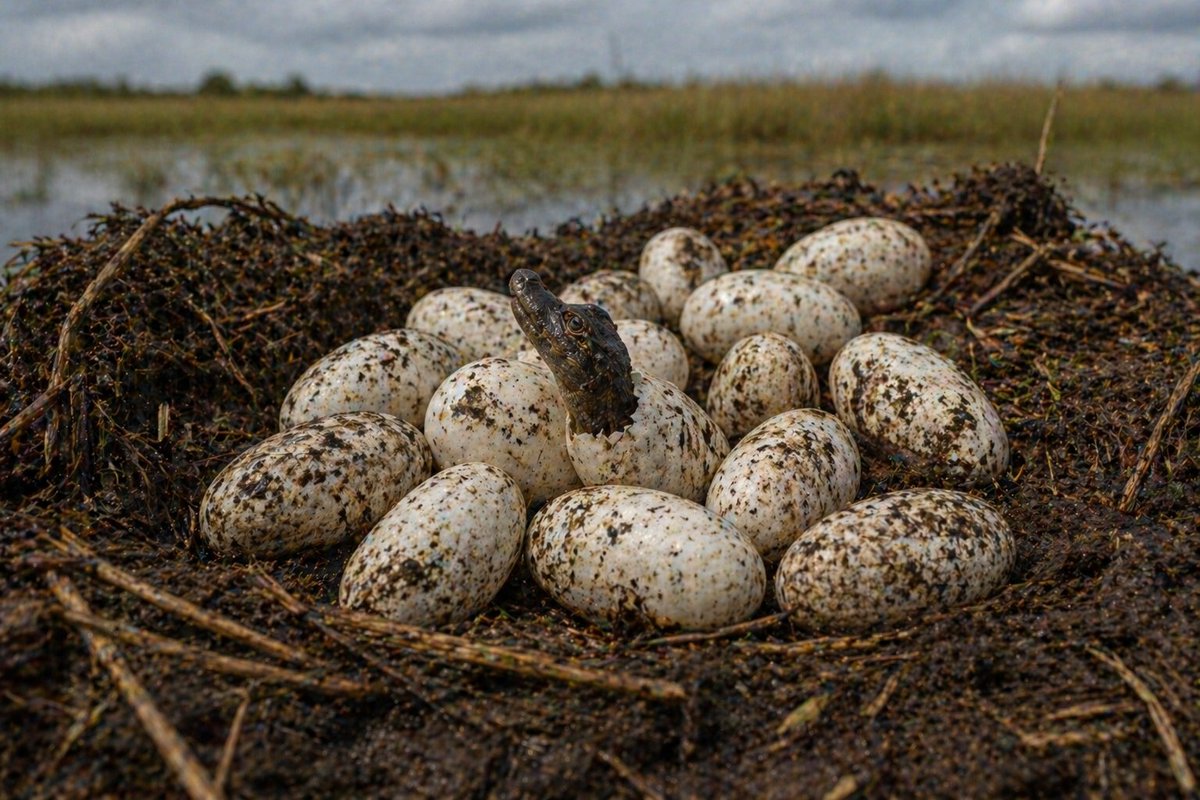
This one took me a long time. A Louisiana LLC, publicly traded on OTC Pink, that owns sixteen thousand acres of coastal wetland island in the bayou country near Morgan City. Controlled by the same bank since 1928. Three contractors, no employees. Deregistered with the SEC in 2004. Revenue from oil royalties, duck hunting, alligator eggs, cattle grazing, and an Army Corps-approved wetland mitigation bank. Here's why I think this is one of the strangest and most interesting situations in the American micro-cap universe.
The risks are real and I gave them their own section in the post. Illiquidity that the word "illiquid" doesn't capture. A controlling bank that could take it private at any price. A thirty-year restoration timeline. Legacy environmental liability from decades of oil production. Non-reporting status that puts you in informational fog. I do not resolve these for the reader. They are the cost of admission to something this rare.
The post covers the history back to the 1920s, the balance sheet in detail, the mitigation credit market and why it matters, the geological and legal context that makes Louisiana property unlike anywhere else in America, and the risks... which are genuine and which I name without softening. I tried to write the piece I would have wanted to find when I first started pulling on this thread.
Not investment advice, not a solicitation, not a recommendation. Do your own research.
Today, about a Louisiana LLC that owns sixteen thousand acres of coastal wetland, has been controlled by the same bank since 1928, has no employees, deregistered with the SEC twenty years ago, and generates revenue from oil royalties, duck hunting, alligator eggs, cattle grazing, and a federally approved wetland restoration bank. I know how that sounds. It's all real.
Tomorrow's Footnote Capital post is about a situation where I think the discount exists for reasons I can live with... illiquidity, obscurity, a controlling shareholder with a ninety-five-year time horizon. The asset underneath is real. The optionality is real. The fog is what creates the opportunity. Post goes live tomorrow afternoon.
Not a solicitation. Author is long the security profiled in tomorrow's Footnote Capital post. Your risk tolerance is not mine.
Ben Graham had this concept of the "net-net"... a company trading below the liquidation value of its current assets after subtracting all liabilities. The idea was that you were getting the business for free. Whatever it earned, whatever it owned beyond the liquid balance sheet, was a bonus. Graham made a career finding these in the 1930s and 1940s. They've mostly been arbitraged out of existence since then. Mostly.
Every once in a while I find something that rhymes with the Graham framework in a place where screens can't reach it. Non-reporting entities. OTC Pink tickers with single-digit daily volume. Situations where the informational fog is so thick that institutional capital structurally cannot participate. The market efficiency that killed the net-net everywhere else simply does not apply in these corners. The question is always whether the discount exists for a reason you can live with or a reason that should scare you off.
Tomorrow's Footnote Capital post is about one of the sellers in this market. An entity with Army Corps approval already in hand, sitting on thousands of restorable acres in the most valuable mitigation credit geography in America, trading at a market cap that the liquid securities on its balance sheet nearly cover by themselves. Everything else... the land, the minerals, the restoration program... you're getting for almost nothing. Details tomorrow afternoon.
I hold a position in the company discussed in tomorrow's post. This thread is educational, not a recommendation. Conduct your own due diligence.
There is a market most investors have never heard of. When a pipeline company or LNG terminal needs to destroy wetlands in Louisiana, federal law says they have to compensate. They buy credits from someone who has already restored equivalent wetlands elsewhere. Those credits trade in a government-administered system. In coastal Louisiana, the prices are extraordinary... driven by the largest LNG construction cycle in American history and the fact that supply takes years of Army Corps permitting to create.
Think of it like carbon offsets, except the regulatory mandate is absolute (Section 404 of the Clean Water Act), the demand is tied to physical infrastructure that has to get built somewhere, and the supply bottleneck is ecological... you cannot rush a cypress forest into existence. The credits release on tree survival schedules and hydrology milestones, not financial calendars. It is one of the most structurally constrained commodity markets I've ever encountered.
The Munger insight that applies here isn't about valuation. It's about the nature of optionality in patient hands. If you hold an asset long enough, the world eventually rearranges itself around it. New laws get written. New markets emerge. What was worthless becomes scarce. The question is whether you were still holding when it happened. Full post later this week.
This is not a recommendation to buy or sell any security. Author is long the company discussed in the forthcoming Footnote Capital post. All opinions are personal.
Charlie Munger used to talk about "sit on your ass investing." The idea that the really great returns come from finding something extraordinary and then doing almost nothing for a very long time. Most people cannot do it. Not because the analysis is hard. Because the waiting is hard. The instinct to act, to optimize, to trade around a position... it kills the compounding. Munger thought the willingness to be patient was itself a form of edge.
I keep thinking about that framework in the context of a situation I've been studying for a while now. A piece of coastal Louisiana held by the same institution since 1928. They watched a sugar dynasty go broke on it. They watched the oil boom come and go on it. They never sold. They never developed it. They just... collected what the land offered and waited. And now the thing they were waiting for may have arrived, in a form nobody would have predicted fifty years ago.