Milky Way’s Oldest Stars Reveal the True Age of the Universe
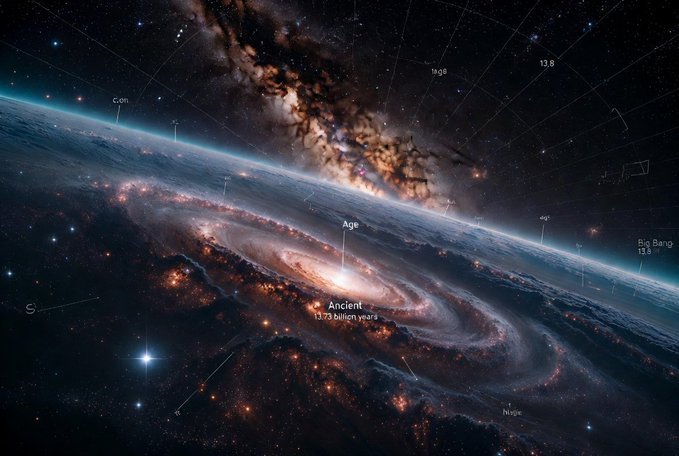
Imagine stars in the vast halo of our Galaxy that have been shining since the Universe was practically a newborn. These ancient celestial veterans have just delivered powerful new evidence: the cosmos is almost certainly 13.8 billion years old — right in line with the standard model of cosmology. Ideas that tried to make the Universe significantly younger to solve the famous “Hubble tension” now look far less plausible.
On July 17, 2026, an international team led by Indranil Banik from the University of St Andrews (UK) published their analysis of more than 155,000 ancient stars. Their conclusion is striking: observations of these galactic old-timers strongly support the classic 13.8-billion-year age and seriously challenge younger-Universe scenarios.
Why does this matter?
Astronomers usually calculate the Universe’s age from the cosmic microwave background — the faint afterglow of the Big Bang, released when the cosmos was just 380,000 years old. But there’s a completely independent check: find the oldest stars in the Milky Way. A star cannot be older than the Universe itself, so these objects set a firm lower limit on cosmic age.
This method has become especially important because of the Hubble tension — the long-standing discrepancy between different measurements of how fast the Universe is expanding. Since the 2010s, early-Universe data and local observations have refused to agree. Some proposed solutions required shrinking the Universe’s age to around 12.9 billion years. But if our Galaxy already contains stars older than that, those ideas run into serious trouble.
How they hunted for the oldest stars
The team started with a massive catalog of over 247,000 stars from the LAMOST spectroscopic survey and the Gaia mission’s precise astrometry. After rigorous filtering — removing unreliable parallaxes, binary systems, and stars with “too young” chemical signatures — they were left with about 155,600 reliable candidates within 16,300 light-years of the Sun.
Star ages aren’t measured directly. They’re inferred from temperature, luminosity, and chemistry, then compared with sophisticated stellar evolution models. To avoid being fooled by statistical outliers, the researchers used advanced statistical techniques that reconstruct the full underlying age distribution rather than simply trusting the single oldest-looking star.
The result? The oldest star in the sample clocks in at 13.73 billion years. Add the roughly 200 million years modern models suggest were needed for the first long-lived stars to form after the Big Bang, and you get a cosmic age that matches the standard 13.8 billion years beautifully.
What it all means
Ancient stars in the Milky Way fit the standard ΛCDM cosmological model almost perfectly — and fit poorly with younger-Universe alternatives. While stellar age estimates still depend on models and observational quality, this study adds strong independent support for the age we’ve long accepted.
The paper, available on the Cornell University preprint server, shows once again that sometimes the answers to the biggest questions in cosmology are shining right above our heads.
The Universe keeps revealing its secrets — and they’re written in starlight.
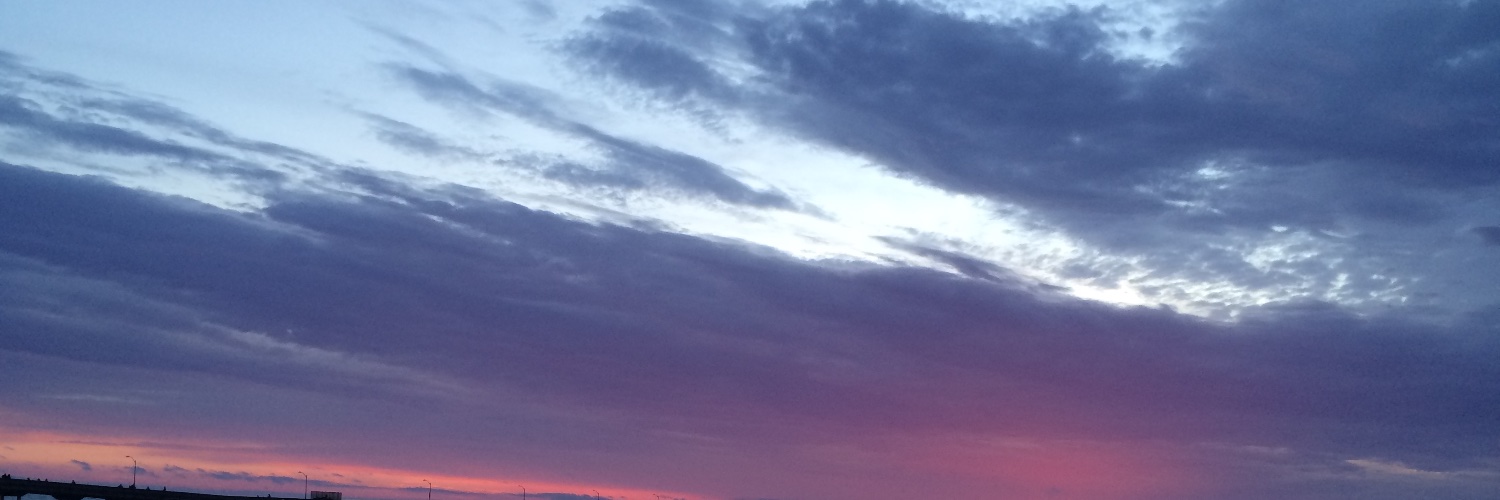
Nature doesn't need a filter, but Pic 2 definitely needs an explanation.
These are real, unedited photos of Earth. But if you zoom in on the second slide, the geometry looks so impossibly fluid and warped that it feels like a computer glitch.
Look closely at the pattern in Pic 2. What does that "anomaly" look like to you?
🚀 Martian Twilight: A View from Curiosity
NASA has released a unique image of Mars composed of two panoramas captured by the Curiosity rover at different times of day: just after sunrise and before sunset.
Temple of Apollo at Corinth. Culture: Greek. Place of origin: Corinth, Peloponnese. Date: photograph 1853–1854. Medium: Salted paper print. Collection: Benaki Museum, Athens. Photographer: James Robertson
🌕 Most lunar water is not polar ice but is chemically bound within the Moon's interior
For a long time, the Moon was considered virtually waterless. A turning point came after 2009, when missions revealed the presence of ice in the permanently shadowed regions of the poles. However, high-precision analysis of Apollo samples indicates that the bulk of the water is not in a free state but exists as hydroxyl groups "locked" within mineral structures. The key to this discovery lies in findings of apatite, a mineral that traps water within its crystals.
This shifts our perspective on the Moon's origins and the "water budget" of the Earth-Moon system following the giant impact 4.5 billion years ago. If water is bound deep within the interior, it is crucial to understand its distribution and the actual quantity present.
🚀 NASA’s *Lunar Trailblazer* orbiter—launched in February 2025 to map lunar water—was intended to provide these answers. However, the spacecraft was lost due to a configuration error following its separation from the launch vehicle.
🔭
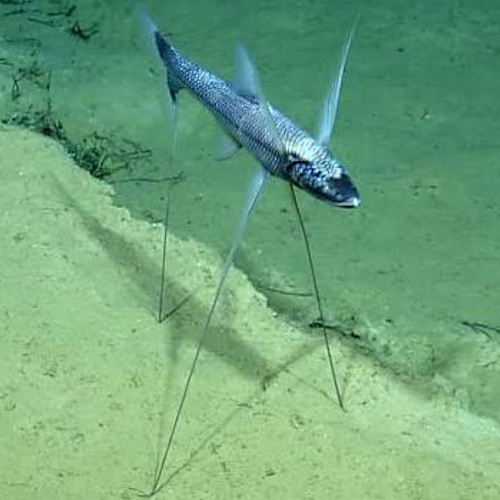
The tripodfish spends much of its life standing on the ocean floor
Using its long fin rays like stilts, it waits motionless in the deep sea for prey to drift within reach.
A rare 1 in 100,000 two-headed California kingsnake was born at East Bay Vivarium in Berkeley
Named Angel and Zeke, the snake shared one body with two brains and survived for nearly a year before dying just one day before its first birthday
Behold a cosmic masterpiece unveiled by NSF NOIRLab: the Corona Australis Molecular Cloud, one of the nearest stellar nurseries to our cosmic doorstep.
Captured in breathtaking detail by the 570-megapixel Dark Energy Camera (DECam) on the Víctor M. Blanco 4-meter telescope in Chile, this vivid portrait reveals swirling clouds of gas and dust aglow with the fires of newborn stars. Located just 430 light-years away, the region pulses with activity—protostars igniting, young suns emerging, and entire planetary systems in the making.
The image showcases ethereal reflection nebulae—delicate blue veils where starlight scatters off interstellar dust—alongside the compact Coronet Cluster (sometimes poetically likened to a chandelier of stars). Its swirling patterns and luminous brushstrokes irresistibly evoke Vincent van Gogh’s The Starry Night, as if the universe itself were painting a vibrant scene of creation.
This close-up window into star birth offers astronomers a front-row seat to the drama of stellar evolution. Embedded young stars at every stage light up the molecular cloud, illuminating how dense pockets of gas collapse under gravity to forge new worlds. At a mere 430 light-years distant—one of the closest such regions—it serves as a prime laboratory for understanding the origins of stars like our Sun and the planets that orbit them.
A true celestial gem, this release reminds us how dynamic and colorful our galaxy remains, even in its quieter corners. The universe is still busy forging its future, one sparkling protostar at a time.
🚨 GIVEAWAY 🚨
We're giving away a FANATICS FEST EXLCUSIVE Topps Series 2 Baseball FFNYC Blaster Box!
To enter:
1) REPOST, LIKE, & FOLLOW @SCCTradingCards
One winner will be selected on Monday, July 20. Must be following to win!