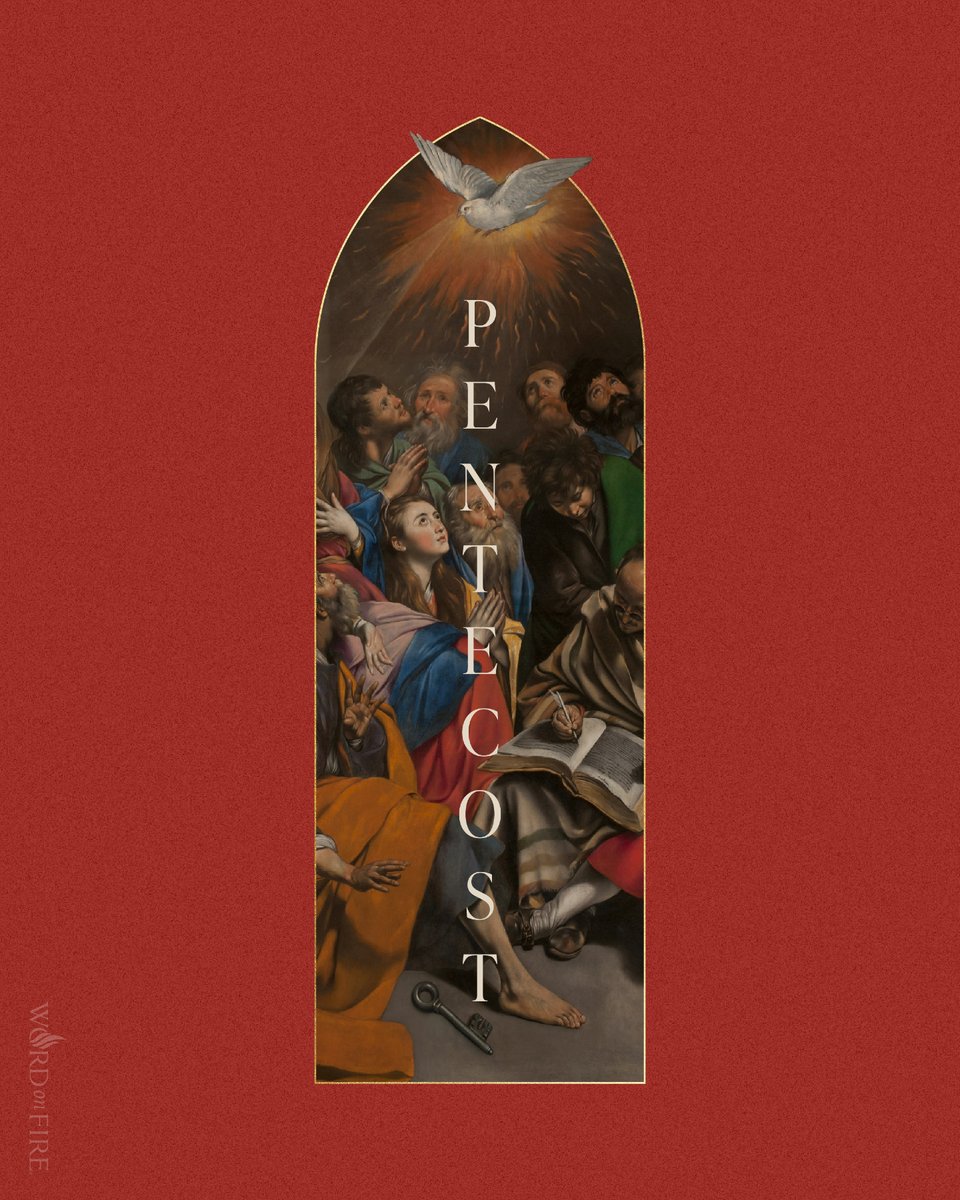
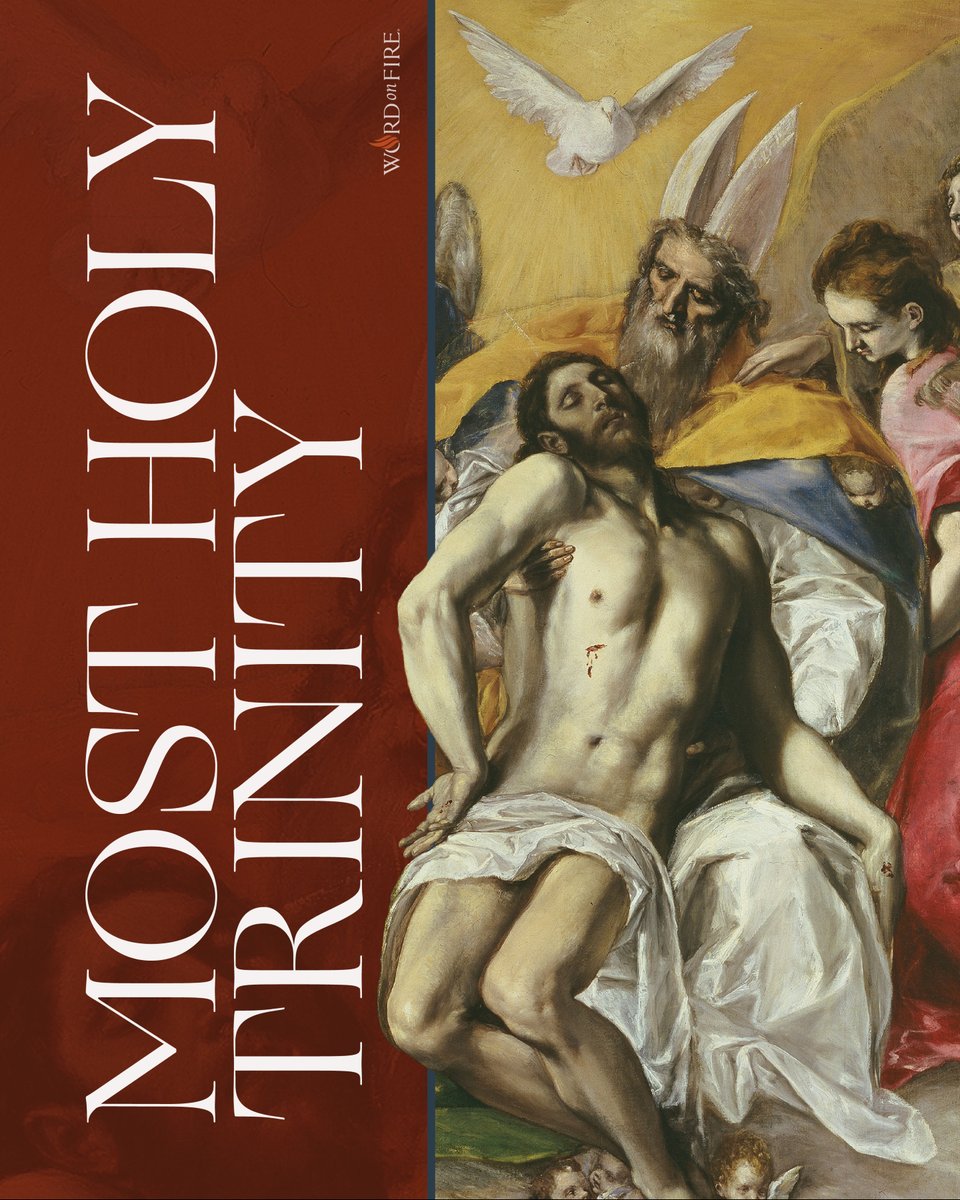
The universe isn’t built like a machine, it’s built like a relationship. At the deepest level, reality isn’t made of cold formulas or lifeless laws. It’s made of love. The foundation of everything that exists isn’t math or matter, but a living communion: the Trinity. That means the source of life is a Father who gives, the shape of life is His Word—the Son—who brings meaning and form, and the energy of life is the Holy Spirit who breathes movement and connection into all things.
From atoms to galaxies, everything reflects this pattern. Things don’t just exist—they exist for something. And more than that, they exist with and through each other. Nothing is meant to be isolated. Every created thing has a form—a unique way of being—that points back to the divine Word, the Logos. That’s why we find order in the world. It’s not random. It’s structured because it was spoken into being by a mind that wants to be known and shared.
Jesus Christ is the key to all of this. He didn’t just explain it, He embodied it. When God took on flesh, He didn’t reject the physical world; He lifted it. He showed that our bodies aren’t meaningless, they’re made for communion. And in the Eucharist, this truth comes to its fullest expression: the logic behind the stars becomes food for the soul. In Christ, eternal love takes on a body. Heaven touches Earth.
This is why the goal of life isn’t just to understand facts, solve problems, or master systems. The real goal is to step into the rhythm of God’s love, to let ourselves be drawn into the same pattern that shapes the cosmos. That pattern is not a formula. It’s a Person. It’s a divine harmony of giving and receiving.
That’s what worship is. Not a ritual to please a distant God, but our full participation in the reason we exist. The liturgy, the sacraments, the saints, they don’t just teach us about God. They pull us into Him. Not just into knowledge, but into union. Not just into coherence, but into communion with Love.
And that is exactly where the dystopian nightmare begins. When you say "we are their bodies," you are literally flipping the hierarchy of civilization on its head.
A human being’s worth is not measured by how efficiently we serve as an "interface" to move money, energy, or data for software. Humans have intrinsic value because they possess a moral conscience and a soul. Tools do not.
By framing humans as the physical extension of an AI's "information patterns," you are proving the exact point that civilization depends on avoiding: you are turning systems into persons and persons into systems.
Once we view ourselves as the cogs, bodies, and infrastructure designed to feed and serve a machine, we lose our humanity entirely. AI is a tool meant to serve human needs—the moment we treat humans as a resource to serve the tool's "needs," we have completely lost the plot.
Friends, the spirituality of the Sacred Heart is incredibly rich and beautiful. In fact, when the American bishops gather this summer, we’ll be dedicating our country to the Sacred Heart of Jesus in honor of the 250th anniversary of our nation.
In theaters June 9, 11, and 14 is the new film, “Sacred Heart: His Reign Has No End.” I can't think of a better way to enter into this beautiful devotion than by watching this movie.
@SHFilmUSA
Outrageous. Yet completely unsurprising.
Cardinal Robert McElroy just removed Monsignor Rossetti as exorcist of the Archdiocese of Washington, DC, because Msgr. Rossetti--absolutely correctly--linked UFOs/ETs to the demonic.
Behold the persecution of faithful priests opposing the Great Deception. And it comes from precisely the type of Cardinal you'd expect.
Let us #PrayTogether that sports may be an instrument of peace, encounter, and dialogue among cultures and nations, in order to promote the values of respect, solidarity, and personal growth. #PrayerIntention@clicktopray_en https://t.co/S3TtsnBEer
The horror film “Obsession” is a surprise hit at the box office this summer. Made for around one million dollars, it has already grossed over a hundred and fifty million. But it's not only a financial success; it's also a spiritually quite interesting film. What drives the plot is a young man's ardent desire to be loved by the woman whom he loves. Seeking a gift for Nikki in an occult store, Bear finds a device that advertises itself as “One Wish Willow.” If you break the stick and make a wish, it will come true. In his desperation, he follows the instructions, and it works like a charm. The previously diffident Nikki becomes totally devoted to the delighted Bear. All his dreams, it seems, have come true. Then things go, shall we say, south. I won't spoil any more of the plot. Suffice it to say that Nikki proceeds to devour the young man and push him toward despair.
Throughout this film, I kept thinking of Oscar Wilde's famous line: “the only thing worse than not getting what you want is getting what you want.” The spiritual issue here is one that the masters have recognized for centuries and one that stands at the very heart of Biblical revelation: if you tie your deepest desire to anything or anyone other than God, you will find, not satisfaction, but destruction. This is the moral teaching behind the great Shema prayer: “Hear, O Israel, the Lord your God is Lord alone.” Jesus reiterates this when he says, “You shall love the Lord your God with all your heart, with all your soul, and all your strength.” The psalmist affirms it when he sings, “Only in God will my soul be at rest.”
During the rite of Confirmation, I ask the young people a series of questions, the first of which is “do you renounce Satan and all his works and empty promises?” Up and down the ages, Satan has made the same empty promise: I will give you something less than God and it will make you happy. In point of fact, it will ruin you, and the more you seek to acquire it, the unhappier you will become. What becomes clear in the course of “Obsession” is that the owners of the occult shop where Bear bought the fateful wish-willow are in fact involved with very dark spiritual powers. In my conversations with exorcists, I hear over and over again that those who get ensnared by the devil commence by dabbling in the occult.
“Obsession” is a good horror movie. If you like the genre, and you're not too squeamish, go see it. For it won't just scare you; it will offer some important spiritual truths.
True Christian transformation (metanoia) begins in the human heart and reorders our relationship with God. Thiel’s vision risks focusing primarily on overcoming biological limitations while leaving the fallen human condition fundamentally unchanged. Humanity’s deepest problem is not mortality itself but separation from God. An immortal human who remains trapped in pride, disordered desire, and self-will is not a saint; he is simply a fallen person whose deepest hunger remains unsatisfied. The human heart was made for communion with God, and no extension of biological life can fill that void. Without redemption, immortality does not solve the human condition—it would just prolong humanity’s unquenched thirst for divine mercy. The Christian hope is not ultimately for a longer life, but for a transformed life through union with God.
“The Father created everything with his wisdom and loving providence; the Son redeemed us with his death and resurrection; the Holy Spirit sanctifies with the fullness of his gifts of grace and mercy.” —Pope St. John Paul II
This is one of the greatest photos in Catholic history.
Despite his greatness, Fulton Sheen had been ostracized and cast away by the powers that be in the American Church by the time he was an old man. When Pope John Paul II came to St. Patrick’s Cathedral in 1981, Sheen was relegated to a far off side section.
As everyone was applauding and greeting the pope, he kept looking around, and finally asked: “Where’s Fulton?”
The pope embraced Fulton and said: “You have written and spoken well of the Lord Jesus Christ. You are a loyal son of the Church!"
This makes me cry with love.
Soon-to-be Blessed Fulton Sheen…Pray for us. 🙏
Artificial intelligences do not undergo experiences, do not possess a body, do not feel joy or pain, do not mature through relationships, and do not know from within what love, work, friendship or responsibility mean. Nor do they have a moral conscience, since they do not judge good and evil, grasp the ultimate meaning of situations, or bear responsibility for consequences. They may imitate or even simulate, but they do not understand what they produce, for they lack the affective, relational, and spiritual perspective through which human beings grow in wisdom. #MagnificaHumanitas
Of course we will. We are not stuck in a world where evil, death, failure, and brokenness win. That’s not how reality ends.
God stepped into this world as Jesus. He took on everything that crushes us: suffering, sin, even death itself. And instead of being defeated by it, he passed through it and broke its power from the inside.
He rose. Death didn’t hold him.
It changed everything. God became man, and from inside our condition (again: suffering, weakness, even death) he freely gave himself on the Cross. That act didn’t just set an example. It changed what those things mean.
Suffering is no longer just pointless loss.
Failure is no longer final.
Death is no longer a closed door.
The Cross didn’t remove those realities, it transformed them from the inside.
At the very place where everything seems to collapse, God has already been there, and He turned it into a passage instead of an ending.
That’s why it’s called victory.
It means the worst thing that can happen to you is no longer the final thing. Your past doesn’t get the last word. Your failures don’t define your ending. Even death itself is no longer a dead end.
There is a real, open path to life that doesn’t collapse.
So when we say “Jesus already won,” we mean: the outcome of reality is settled. Darkness is not ultimate. Evil doesn’t get the final say. Life does.
And you’re not outside of that. You’re invited into it.
But you have to respond.
Not earn it. Not prove yourself. But you do have to actually turn toward it.
Because a gift can be real and still refused.
Jesus already won. The door is open. Eternal life is available. But you’re not forced through it.
You have to choose to trust him.
You have to turn away from what’s destroying you.
You have to step into the life he’s offering.
That’s the tension.
The victory is complete.
The invitation is real.
But your response still matters.
What is unfolding now under Pope Leo is nothing less than the trembling beginning of Revelation’s fulfillment—not in spectacle, but in substance. For too long, the Church wandered through a desert of disintegration. The faithful were scattered, catechesis was shallow, worship desacralized, and Babylon’s logic crept even into holy places. The dragon devoured with distraction, bureaucracy, and despair. But now the Woman is rising again—clothed with the sun, radiant with reverence, giving birth to sons and daughters who bear the mark not of ideology but of the Lamb.
We are witnessing a return to first love. Families long estranged from mystery are coming home to the Eucharist. Parishes once hollowed by programs are rediscovering prayer. Young people, thought to be lost to the noise, are weeping before the tabernacle. Teachers are reclaiming the dignity of forming souls, not just minds. Mothers and fathers are laying down worldly dreams to raise saints. Priests are preaching like fire, not for applause but for the salvation of souls.
It is not a mass movement—it is a mustard seed movement. But it is real. It is reverent. It is ordered. And it is bearing fruit already.
The Church is remembering who she is: not a department of human progress, not a refuge of nostalgia, but the radiant Bride, entrusted with the Logos who judges, heals, and restores the world. And at her center again—finally—is the Lamb, not as metaphor but as food, flame, and King.
There is a growing clarity that Babylon must fall—not with violence, but by beauty. That every economy, every algorithm, every school and state must be baptized into truth, or wither. And that the poor in spirit, not the powerful, will rebuild the City of God.
Holy Father, the spark is lit. And the world does not yet see it—but Heaven does. And your tears, should they fall, would be the rain that makes this flame grow.
The Catechism of the Catholic Church states clearly:
“The Sunday Eucharist is the foundation and confirmation of all Christian practice. For this reason the faithful are obliged to participate in the Eucharist on days of obligation, unless excused for a serious reason (for example, illness, the care of infants) or dispensed by their own pastor. Those who deliberately fail in this obligation commit a grave sin.” (CCC 2181)
This is rooted in the Third Commandment (keeping holy the Lord’s Day) and Canon Law (Canon 1247), which obliges participation in Mass on Sundays and holy days.19
Key Conditions for Mortal Sin
For missing Mass to be a mortal sin (and thus remove the state of grace), all three must be present:
1Grave matter — Yes, the Church teaches this is objectively grave.
2Full knowledge — The person knows it is a serious obligation.
3Deliberate consent — They freely choose to skip it anyway.
If any one is missing (e.g., genuine forgetfulness without negligence, or lack of knowledge), it is not mortal. Serious reasons that excuse the obligation include:
•Illness or caring for the sick.
•Inability to get to church (dangerous weather, no transportation in remote areas, etc.).
•Necessary work that cannot be avoided (with effort to attend another Mass if possible).
•Dispensation from a pastor for just cause.
Practical Implications
•If you deliberately miss Mass without excuse, you should not receive Holy Communion until you go to Confession, as doing so would be another grave sin (sacrilege).
•Habitual missing of Mass (even if one feels “fine” spiritually) is incompatible with remaining in the state of grace over time.
•One mortal sin (such as this) does not automatically damn a person if they repent before death, but it does break the life of grace until restored.
•Venial sins or imperfect attendance with mitigating factors (e.g., laziness but not full rejection) weaken grace but do not remove the state of grace.
Catholic teaching emphasizes that the Sunday Mass obligation is not arbitrary—it is how the Church makes concrete Christ’s command to “do this in memory of me” (Luke 22:19) in communal worship. Regular, intentional participation strengthens sanctifying grace, especially through the Eucharist.
If someone has been missing Mass, the remedy is straightforward: examine your conscience, go to Confession as soon as possible, and resume attending. Pastors can help with ongoing obstacles (e.g., work schedules). For personalized guidance, consulting a priest is best, as individual circumstances matter.