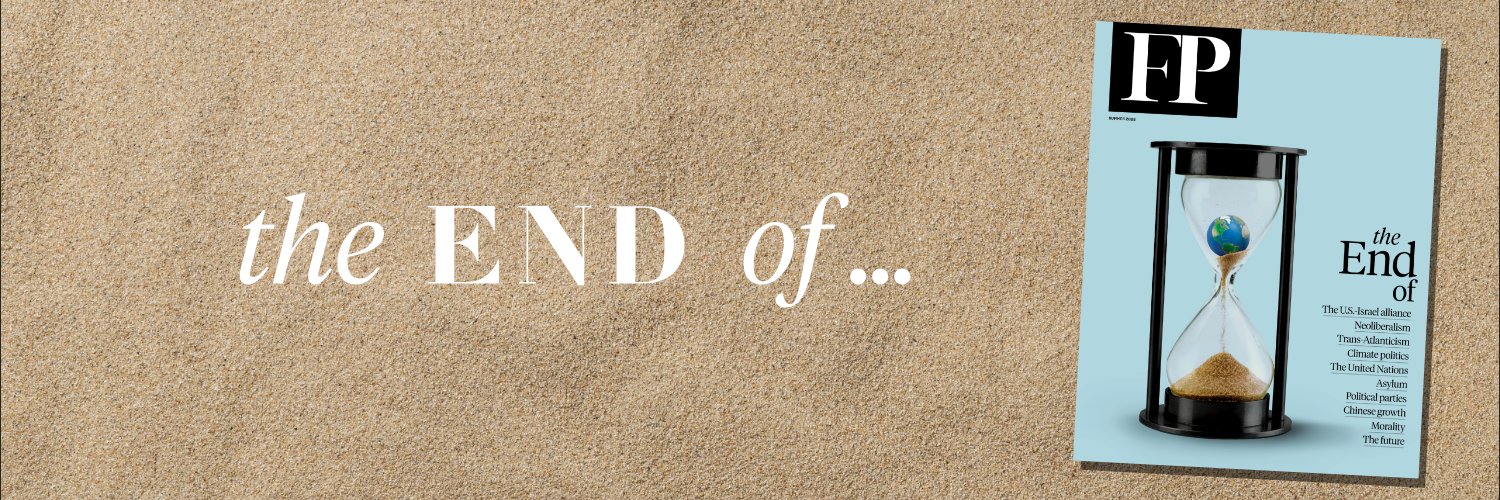
What does it mean when the rules that had quietly structured political life until now are rendered obsolete? In FP’s latest print package, our writers and contributors survey the extent of the damage. https://t.co/dU7uP6FeUK
In 2025, China’s three champions spent roughly one-tenth of what the U.S. hyperscalers spent on AI. Yet they are releasing models that rival the performance of U.S. AI leaders, writes @GrahamTAllison.
Read the essay for free: https://t.co/0RDhj9IL7N
In an effort to close ranks and fortify their positions at home, Europe’s national leaders assumed an incoherent position that will continue to sow doubt the next time that a crisis emerges, Naman Karl-Thomas Habtom writes.
https://t.co/BhvX8BE5WY
Methanol is a relatively convenient alternative fuel for conventional internal combustion engines, and its flexibility makes it particularly attractive for countries seeking greater energy security, write Lizzi C. Lee and Fengming Lu. https://t.co/dXteTrq2Wn
Even without any comprehensive federal statute or international agreement, U.S. states have the power to meaningfully regulate AI, writes @CDLaRoche. https://t.co/YQxPOu0Yjc
World Brief: The United States, Iran, and Oman negotiate the reopening of the Strait of Hormuz; Myanmar’s junta pursues political legitimacy in Thailand; and the Democratic Republic of the Congo bans cobalt and copper concentrate exports. https://t.co/geP5zAd93o
With his new book, Eyal Weizman joins a wave of outstanding younger scholars who have made environmental impact central to the documentation of war. https://t.co/3RhE7YbFWA
The country has been waging wars of choice that combine modest U.S. interests with extremely ambitious goals, Stephen M. Walt writes. https://t.co/RiKebSDcMM
The region has become ground zero for protests against poor governance, Michael Kugelman writes in this week’s South Asia Brief.
https://t.co/p6QbsDvgmL
Economic reality, especially stubborn inflation, won’t allow the Federal Reserve to lower interest rates, and so it is now facing the wrath of both financial markets and the White House, Keith Johnson writes.
https://t.co/1dM8I6lTsA
This year’s El Niño is underway, and it might end up being the strongest in 140 years. Southeast Asia will be hit hard, Joseph Rachman writes in this week’s newsletter on the region. Read more: https://t.co/QQLAylOKpu
Hanna Davis reports on the ground in northeast Syria during the latest stage in an ongoing confrontation between Damascus and the Kurdish-led autonomous administration. https://t.co/LPdF6ZZmJb
For the first time in history, U.S. companies are talking not in billions but trillions. Meanwhile, China is making their AI models free for everyone. @GrahamTAllison explores which bet will pay off.
Read for free: https://t.co/0RDhj9IL7N
China has launched a one-year “special campaign” against organized crime, promising a crackdown on enterprises ranging from online scam syndicates to human trafficking. Read more in this week’s China Brief newsletter:
https://t.co/xVuCTnYCzt