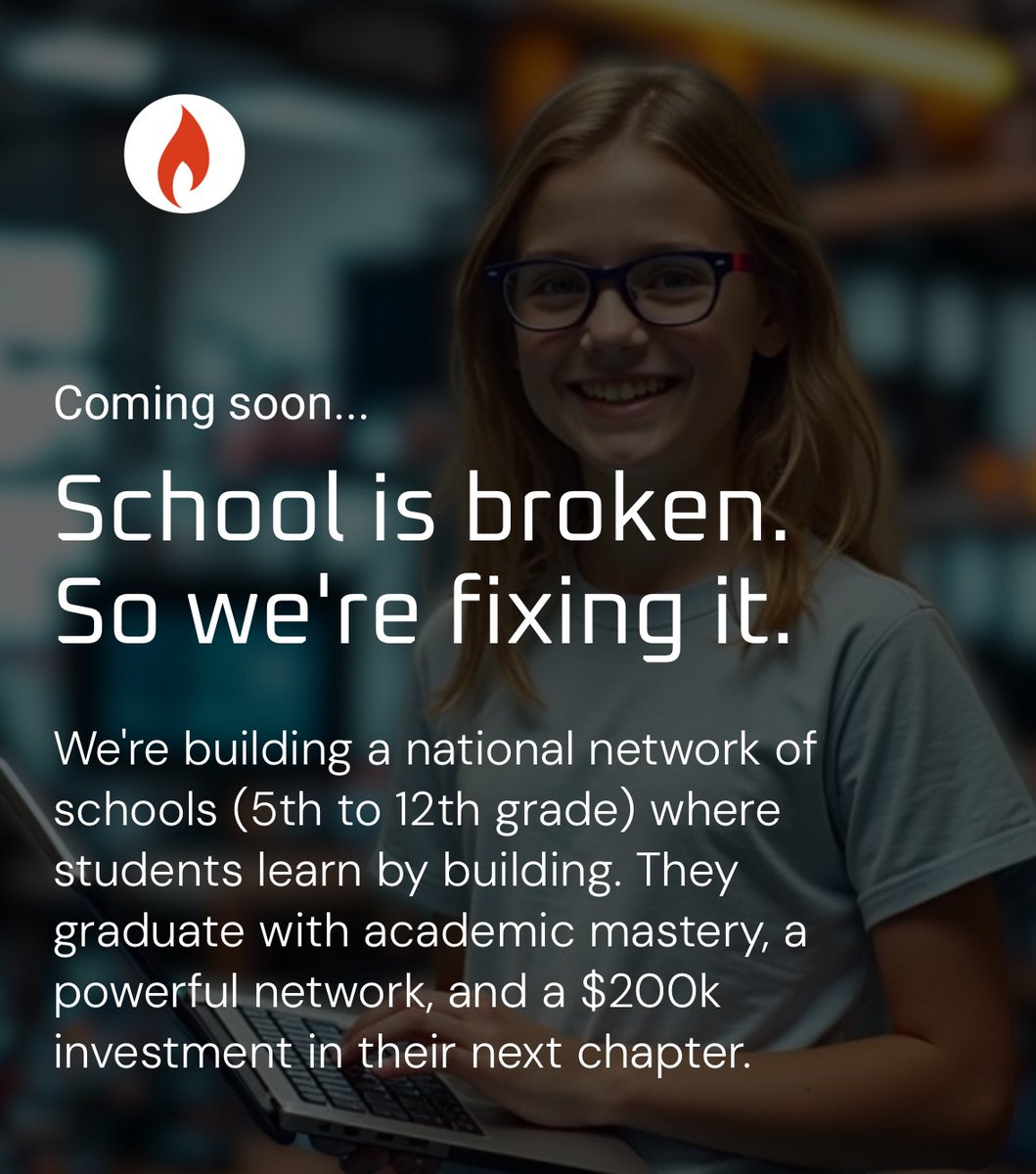
Most schools still measure obedience. Forge rejects that model. A middle/HS built for 2040, not 1940. Makers, not test-takers. Now enrolling for Fall 2026.
Great “trick” to get kids to learn
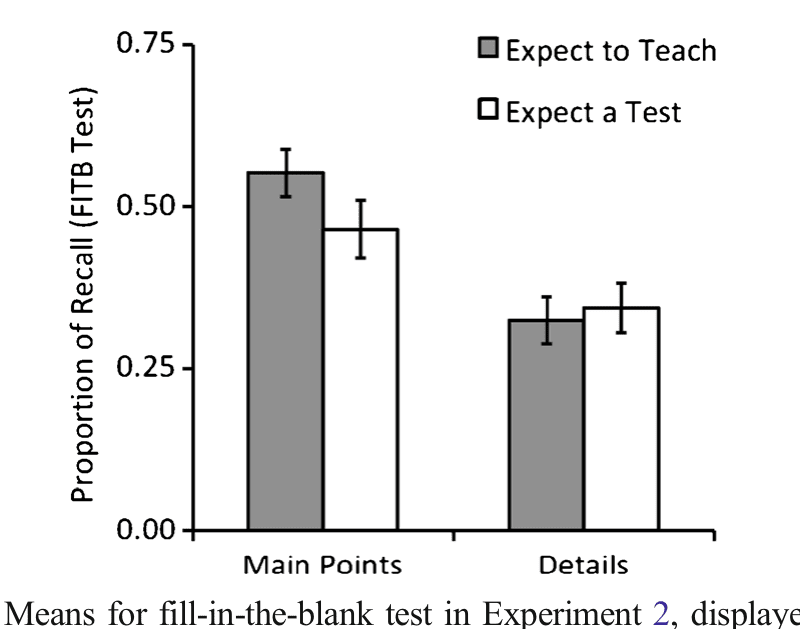
Two groups read the same passage.
* Group A was told they'd be tested.
* Group B was told they'd have to teach it to another student.
Nobody actually taught anything.
They were just told they’d have to teach.
Group B crushed it.
Better recall.
Better organization.
Advantage concentrated on main points.
So just believing they'd have to teach changed how they studied.
The researchers' line that stuck with me: students have effective study strategies they simply don't use unless prodded to.
So our kids already know how to learn well.
They just don't do it when they're told to study for a test. The test framing makes them passive.
While teaching makes them active.
At @ForgePrep, the highest level of mastery students can demonstrate is teaching another students to competence. It’s part of why we have Montessori mixed age classes as this creates more opportunities for this type of teaching
One of the strangest things schools do to curious, capable students is prevent them from moving at their own pace
In fact, going ahead can get you in trouble
We're literally teaching kids to stop being curious
How to NOT get friend-zoned in business
The big mistake I’ve made in my many startup efforts (7 in total) was trying to cater to everyone.
My thinking was
“The world is big. Why not go after all of it?”
Unfortunately, it doesn’t work.
Every time I've done this, it has backfired.
It made us plain vanilla.
It made us sand down all of our edges to try to be smooth and likable to everyone.
And so people liked us, but nobody loved us.
It’s the equivalent of that guy a girl goes out with and then when her friends ask how it went, she says “he was nice.”
#friendzone
And so in effort to learn from the past, we didn’t do that with @ForgePrep
We like to say
“We are a school for anybody, but we are not for everybody.”
We have a clear viewpoint on what education for 2040, not 1940 looks like, and we ensure that comes through in everything, including our website.
We are unapologetically a bit smash-mouthed and talk isht when asked
Love us or hate us, you will have an opinion.
And it’s working.
Since we announced our campus in Livingston, NJ in mid-December, 1007 families have signed up to learn more about Forge
And by the end of next week, I’ll have had 137 conversations with these families.
It feels like the early days of @CBinsights. Where are you Harrison?!? (iykyk)
Our early decision applications close on January 15th, and we’re seeing the right types of folks apply mostly because we have a viewpoint and it resonates w/ them.
And it repels others.
Which means when I jump on the phone with a family, they're already aligned.
They still want to learn more but they've self-selected in cuz they're already part of the tribe (at least philosophically)
* They're the kind of parents who are fine with their kid being independent and failing sometimes.
* They have kids who are deeply curious, creative and capable but who are bored with school.
They all think trad school has lots of problems
So for any startup founders out there...
If everyone is a potential customer, nobody is.
Clarity attracts.
Having some sharp edges repels.
Both are good and necessary (especially in the early days)
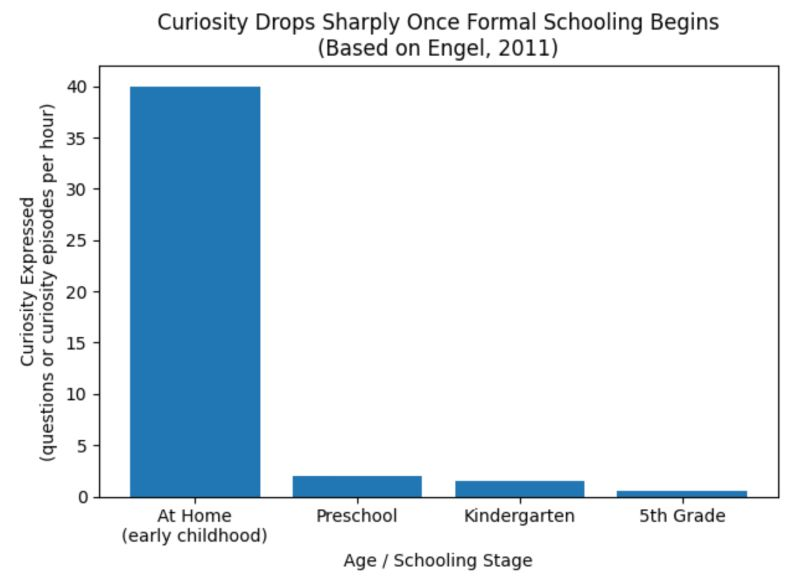
At home, kids ask dozens of questions per hour
Then school starts
By preschool, questions drop to a couple per hour
By upper elementary, they drop to near zero
School quietly teaches them that questions are a distraction
cc @rebelEducator
We're building a school that refuses to underestimate students.
One that values:
▪️ Competence over compliance.
▪️ Building over busywork.
▪️ Mastery over memorization.
A school built for 2040. Not 1940.
Just finalized our 1st school in Short Hills, NJ (400 students)
A new kind of school fixing education
Looking for someone to own grassroots mktg to ensure every family w/in 10 miles knows & loves us
Can be freelancer, agency or early teammate
Any recs? If this is you, DM me
Dear @DECAInc
2 of our recent grantees (high school students) have built an AI coach to help DECA students
This could be a great partnership for you and a way to show how you work with student founders directly
It's @tryprilo created by @TimmyMckeegan &
@RishiParikh01
Over the past year and a half my daughter has been building a crochet plushie business that has already made over $4,000 in revenue! Recently she was awarded a $1000 Formidable Fellowship grant to support her business. The Formidable Fellowship is a non-profit started by successful entrepreneurs to support middle and high school entrepreneurs in the USA. 🤙
@formidablegrant
Harvard is part of a national conspiracy to ruin our children's education...
The entire education system rewards inflated grades -while punishing honest ones.
At Harvard, 79% of grades are now A’s.
Students are studying less while getting better grades.
Resources per student have declined.
By every objective measure except grades, the trend lines point down.
The real cost of grade inflation isn’t monetary - it’s educational.
Solving grade inflation won’t be easy
The incentives that created it are deeply embedded in our educational system
What needs done:
- Decouple faculty evaluation from student satisfaction
- Create better metrics than graduation rates
- Restore meaning to grades by anchoring them to objective measures of competency
So we can remember what grades are for:
To provide accurate feedback that guides improvement
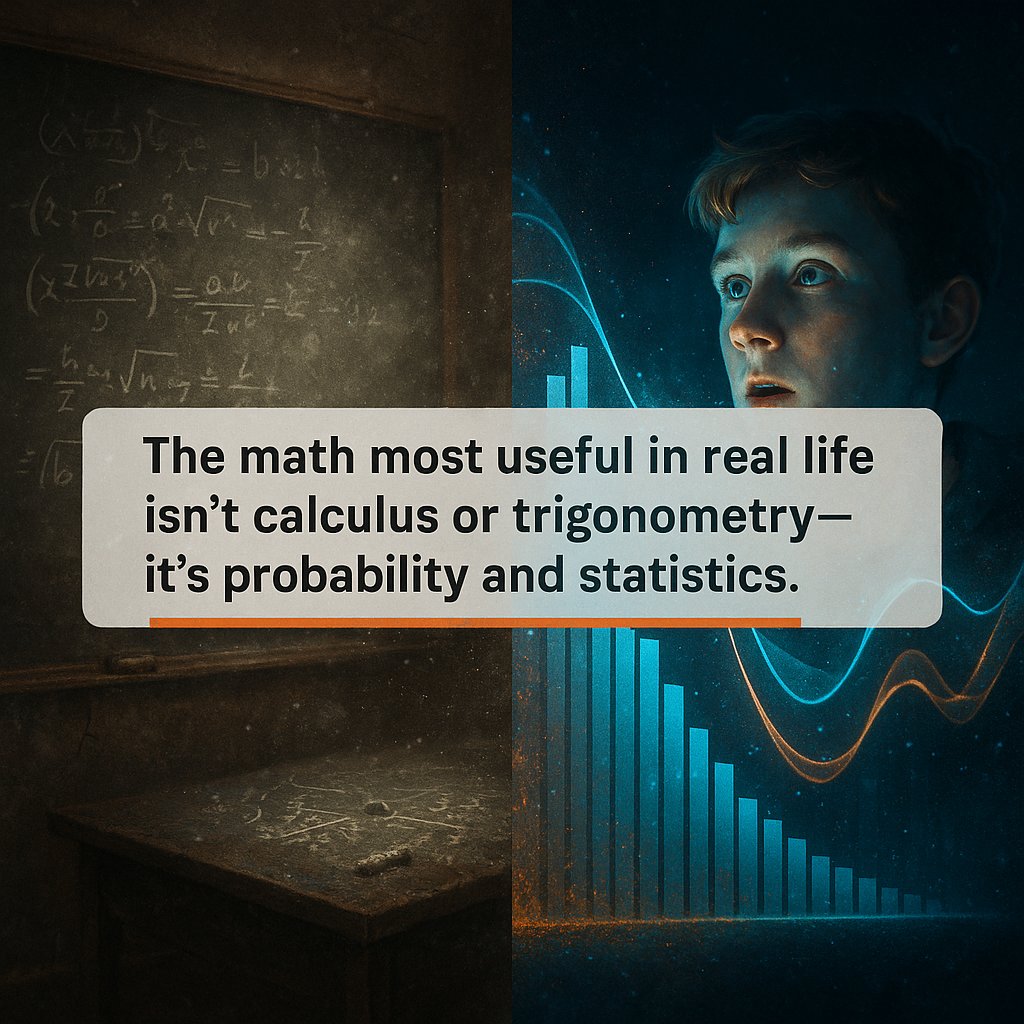
🎲 Why are we still pushing teens to 𝗰𝗮𝗹𝗰𝘂𝗹𝘂𝘀 when they're 𝗯𝗲𝗶𝗻𝗴 𝘁𝗮𝗿𝗴𝗲𝘁𝗲𝗱 𝗯𝘆 𝗴𝗮𝗺𝗯𝗹𝗶𝗻𝗴 𝗮𝗽𝗽𝘀?
Our math education system has backward priorities:
We treat probability and statistics as optional while pushing students toward "fancy math" most will never use.
Meanwhile, young people are making real-world decisions about risk every day without the mathematical tools to understand them.
The math that actually matters isn't about calculating derivatives—it's about detecting misleading claims, understanding financial risks, and seeing through the false promises of sports betting apps.
This isn't about making math easier.
It's about making it relevant.
Read the full essay "Math That Matters" to see why others are advocating for this long-overdue shift in what we teach. (see first comment)
It includes a proposed a high level year-by-year curriculum roadmap from middle school through high school that could transform math education.
Everyone’s excited about financial literacy.
But here’s a basic question:
Why teach compound interest… to kids who can’t divide by 2? It’s a classic distraction.
We’re debating budgeting modules while 74% of 8th graders can’t do basic math. The real issue goes beyond math.
It’s not just about calculations.
It’s about:
Impulse
Peer pressure
Status
Uncertainty about the future
We assumed sex ed could change behavior with facts.
Same mistake. Different subject.
Now we’re making the same mistake with money.
Financial education forgets what makes decisions hard.
Not math.
But emotion. Environment. Social dynamics.
And no lecture prepares you for that.
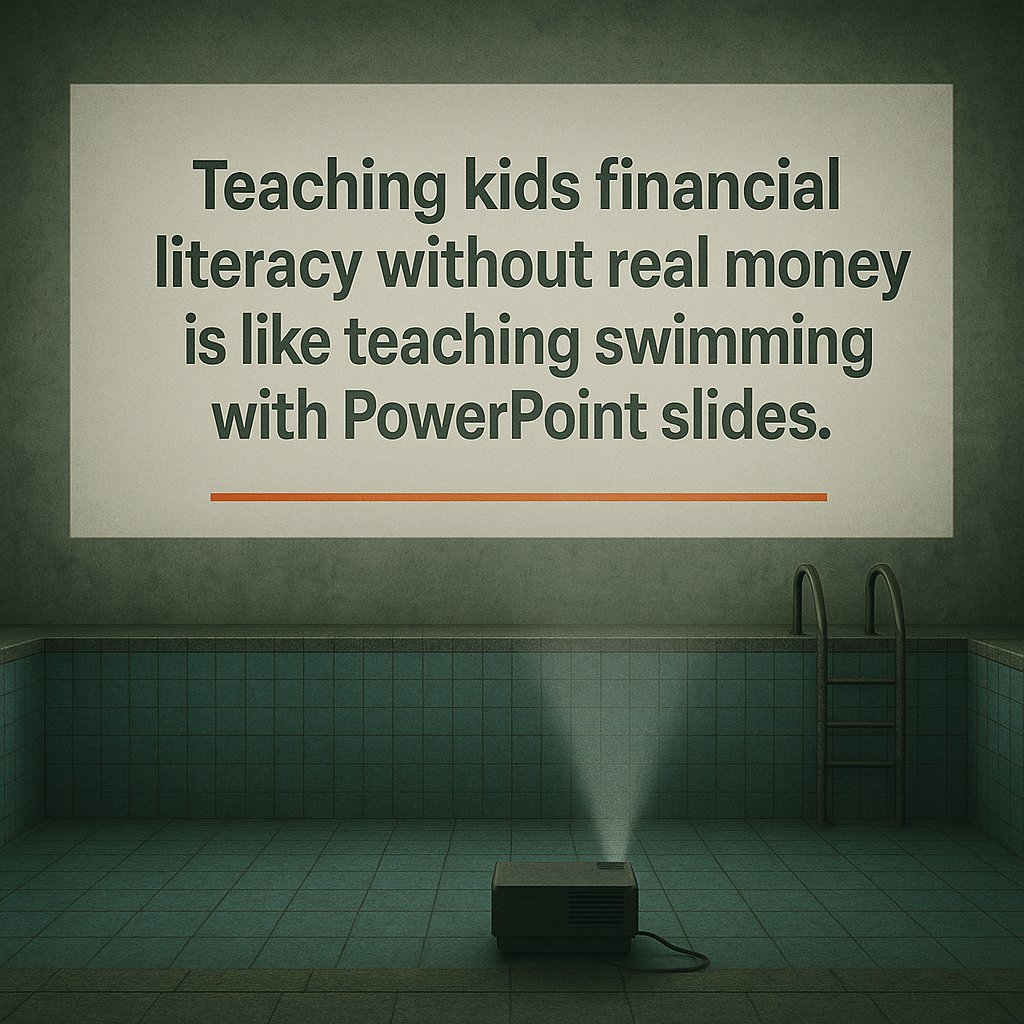
Real learning requires real consequences.
Making money. Losing money. Regretting it.
That’s what sticks.
A kid who earns $100 solving a problem…
…learns more than a semester of lectures.
Want to teach money? Let them dive in.
Start a business. Track spending. Make real decisions.
That’s how you build literacy.
So next time someone suggests another curriculum…
Ask: are we teaching kids to swim,
or just showing them slides about swimming?