Aspiration- exalted desire + holy zeal; centered in God Himself, seek first God’s Kingdom & His righteousness, press on in pursuit of the high calling, set your mind on Heaven, no one engaged in warfare entangles himself with the affairs of this life, (1)
Some of the most civilized and highly organized cultures, like Carthage at its wealthiest, had human sacrifice at its worst. Culture, like science, is no protection against demons.
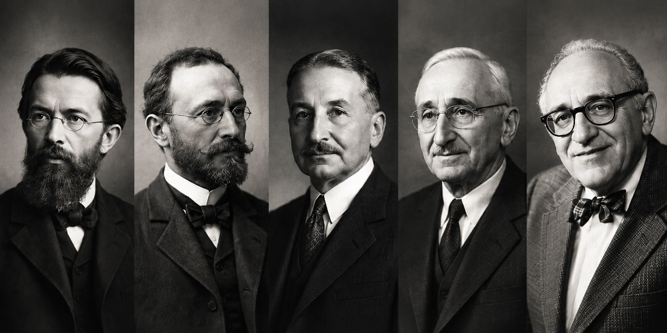
The intellectual case against Marxism was won more than a century ago. The most rigorous and devastating blows came from the Austrian School of economics – but the strange part is that hardly anyone is taught the winning arguments.
Carl Menger’s subjective theory of value, developed in the 1870s, undermined the labour theory of value on which Marx built his entire system. Eugen von Böhm-Bawerk then delivered a systematic demolition of Marx’s economics, exposing the contradictions in the theory of surplus value and the so-called transformation problem. Ludwig von Mises went further still, demonstrating that rational economic calculation is impossible under socialism because without private property and market prices there is no way to allocate resources efficiently. Friedrich Hayek later extended this into the knowledge problem: the information required to run a complex economy is dispersed and cannot be centralised. And Murray Rothbard showed how Marx misunderstood the nature of capitalism by replacing voluntary exchange and entrepreneurial creation with a false theory of exploitation based on labour value and class conflict.
These were not minor objections. They struck at the theoretical foundations of Marxism and, in the case of Mises and Hayek, correctly predicted the chronic waste, shortages, and eventual collapse of socialist economies. History confirmed their arguments on a civilisational scale.
Yet in universities, media and political debate, these critiques remain marginal. Marx is still widely taught as a serious economist and social theorist. His errors are softened, historicised, or treated as interesting starting points. The Austrian responses are rarely given equal weight. Students can pass through entire programmes in the social sciences without encountering Böhm-Bawerk’s critique or Mises’s calculation argument in any depth.
This neglect is not accidental. It reflects a deeper intellectual preference for theories that pathologise markets and legitimise expanded state power. The result is a public discourse that continues to recycle Marxist categories long after their economic foundations were shown to be unsound. The cost of that selective memory is still being paid.
If
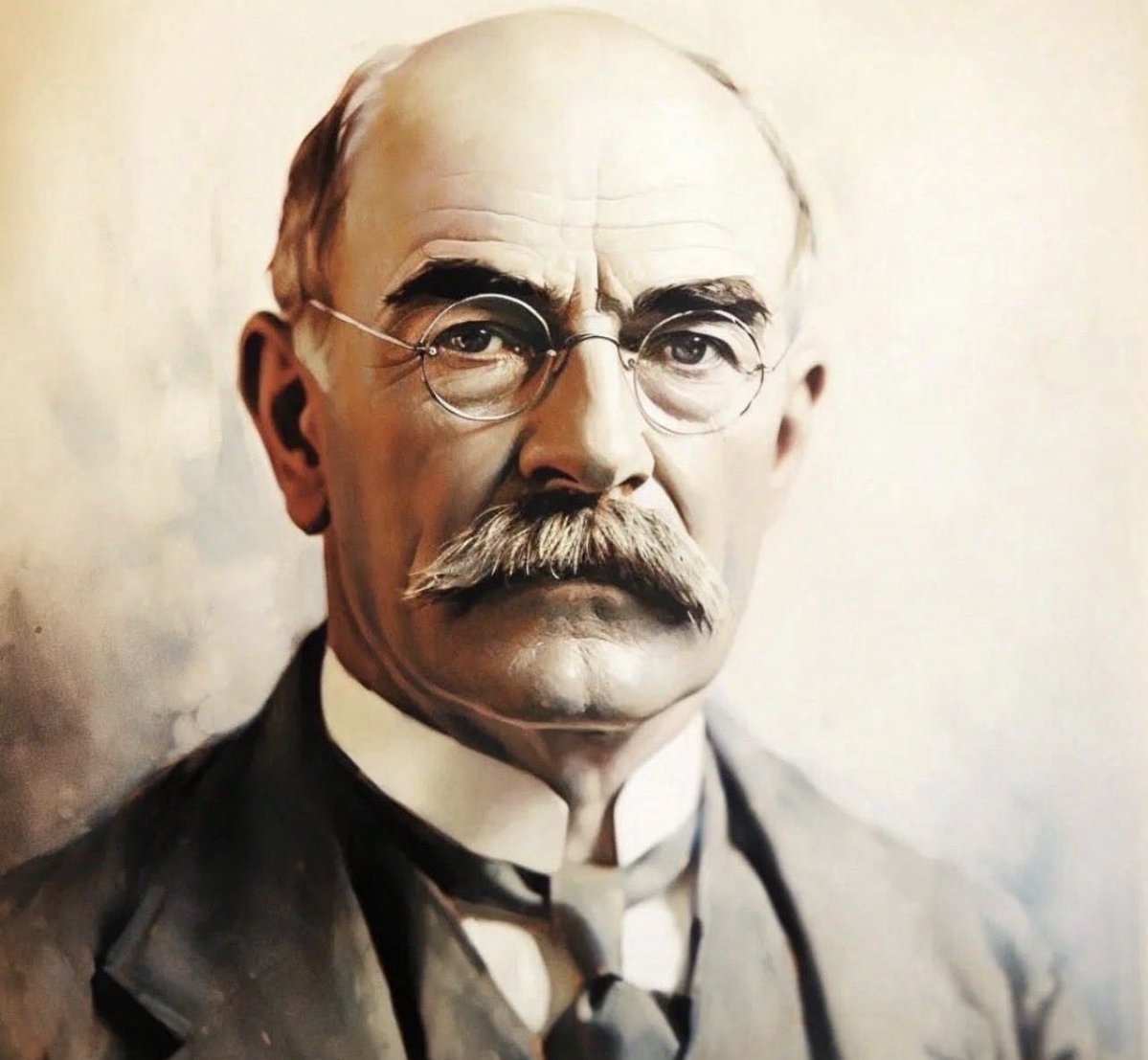
by Rudyard Kipling
If you can keep your head when all about you
Are losing theirs and blaming it on you,
If you can trust yourself when all men doubt you,
But make allowance for their doubting too;
If you can wait and not be tired by waiting,
Or being lied about, don’t deal in lies,
Or being hated, don’t give way to hating,
And yet don’t look too good, nor talk too wise:
If you can dream—and not make dreams your master;
If you can think—and not make thoughts your aim;
If you can meet with Triumph and Disaster
And treat those two impostors just the same;
If you can bear to hear the truth you’ve spoken
Twisted by knaves to make a trap for fools,
Or watch the things you gave your life to, broken,
And stoop and build ’em up with worn-out tools:
If you can make one heap of all your winnings
And risk it on one turn of pitch-and-toss,
And lose, and start again at your beginnings
And never breathe a word about your loss;
If you can force your heart and nerve and sinew
To serve your turn long after they are gone,
And so hold on when there is nothing in you
Except the Will which says to them: ‘Hold on!’
If you can talk with crowds and keep your virtue,
Or walk with Kings—nor lose the common touch,
If neither foes nor loving friends can hurt you,
If all men count with you, but none too much;
If you can fill the unforgiving minute
With sixty seconds’ worth of distance run,
Yours is the Earth and everything that’s in it,
And—which is more—you’ll be a Man, my son!
A pastor friend ends each day by asking his children, "Have I sinned against you in any way? Is there anything that I need to ask your forgiveness for?"
Imagine how healthy churches could be if all members treated each other like that.
Lord, teach us humility, charity, and love.
If you're going to exist as a family of unity, peace and love, you need to be a family rooted in patience.
Here are four basic principles to remember:
1. God has been patient with us.
2. Only God can change your family.
3. Our attempts to change others result in damage.
4. Patience requires waiting.
Sapientia — “Wisdom”
Intelligentia — “Understanding”
Timor Domini — “Fear of the Lord”
Pietas — “Piety”
Scientia — “Knowledge”
Fortitudo — “Fortitude”
Consilium — “Counsel”
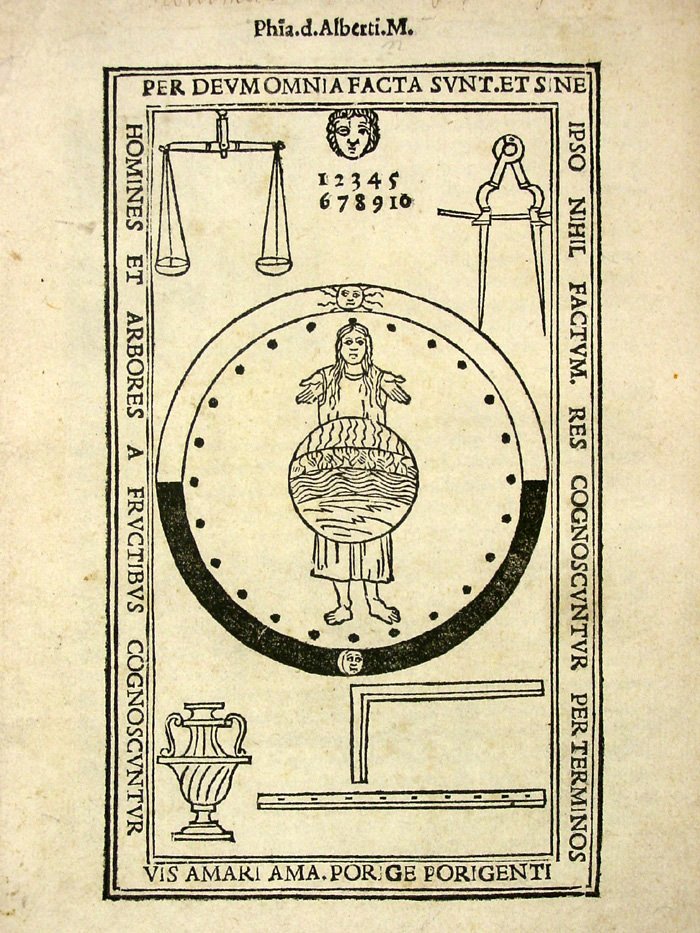
Ancient book frontispiece (1496) with five Latin proverbs you should remember:
1) Homines et arbores a fructibus cognoscuntur — “Men and trees are known by their fruits.”
2) Per Deum omnia facta sunt, et sine Ipso nihil factum — “Through God, all things were made, and without Him, nothing was made.”
3) Res cognoscuntur per terminos — “Things are known by their limits.”
4) Vis amari, ama — “If you want to be loved, love.”
5) Porige porigenti — “Give to the one who gives.”