Just 2 days after Ofgem confirmed a 26 percent jump in British energy bills for January, 96 Labour MPs just demanded Andy Burnham kill the Rosebank oilfield.
Read the exact reason buried inside their letter, because it exposes everything wrong with Westminster right now.
Those 92 backbenchers and four frontbenchers did not write to express concern over families facing £2,166 yearly utility costs or Britain’s shrinking domestic supply.
Instead, their letter openly warns that approving Rosebank would damage their "climate credentials" and risk alienating their "progressive electoral base." One frontbencher even compared blocking British oil to wanting to stop poverty.
What makes this ideological posturing so reckless is how completely disconnected it is from physical energy reality. Britain does not magically stop needing oil and gas when Labour blocks a North Sea field.
Shutting down domestic output simply forces the country to compete even harder in tight global shipping markets for replacement imports, right as European storage sits below 70 percent and Middle East disruptions shake supply chains.
Every barrel Britain refuses to produce at home still gets sourced elsewhere, while the UK forfeits domestic jobs, Treasury revenue, and energy resilience.
Private global suppliers and maritime logistics networks are already doing the heavy lifting to keep European markets moving through a difficult winter.
Watching 96 British MPs try to sabotage their own country’s domestic energy just to appease activist voters, two days after households were handed a £443 annual bill hike, shows how little ordinary families factor into Labour’s calculations.
“She was asked to lose gracefully to a lie, and she chose to tell the truth even when her own country called her bitter for it. Why is it so often easier for people to punish the person pointing out an obvious unfairness than to confront the system behind it?”
Sound familiar? We are living through this once again. But instead of East German female athletes on steroids, they are men. And the women who dare point it out are vilified. Again.
(Note: it is also a tragedy that these young East German women were secretly poisoned so their country could claim communist superiority through Olympic medals.)
Of course Raheem Sterling got a suspended sentence for ACTUALLY endangering lives… @LucyTCWife got years for a 3 hour social media post which morons claimed threatened people. Or a year for @RealDannyTommo for cutting a human traffickers dingy. This guy ACTUALLY put every road user around him in danger
SURPRISE.
Scientists have now confirmed what I suspected for a long time.
Saturated fat found in real butter, full fat milk and red meat is actually healthy.
A new two year long study from Norway found that people who ate saturated fat way above the recommended limit had in fact healthy cholesterol and triglyceride levels.
In other words, it seems like the "expert" food advice we have gotten over the last decades got it wrong all along.
Red meat and real butter is healthy actually.
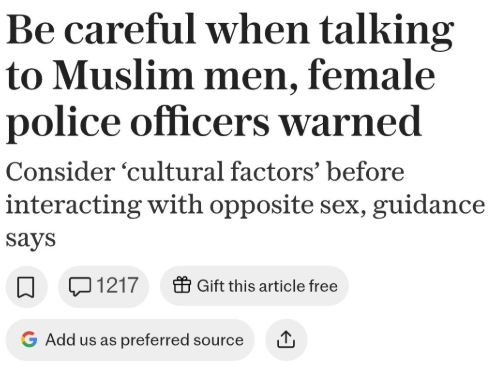
The stated objective of the Muslim Brotherhood is to establish a European Caliphate & impose Sharia Law by infiltrating and dominating the existing political landscape. At that point the concept of diversity, equality & inclusion will no longer exist. This is real and happening.
I'm sick of asylum seekers using 'trauma', 'cultural differences', and 'mental illness' to get away with theft, s-xassualt, and murder.
We are meant to be equal under the law.
Right now - we are not.
🚨NEWS: Andy Burnham is set to increase Government spending on its "Social Media Influencer Unit" to £25 Million
Andy Burnham forced the military to suspend major training exercises recently to save £30 Million
This is where Labour's priorities are
Rosebank: Labour Is Counting the Tax Revenue From an Oilfield It May Never Allow to Open
An extraordinary detail has emerged in the row over Rosebank. While nearly 100 Labour MPs are demanding that Andy Burnham block Britain's largest undeveloped oilfield, anticipated revenues from the project are already included in the fiscal forecasts underpinning John Healey's October Budget. The Government faces the prospect of refusing permission for an industrial development whose financial contribution forms part of its own fiscal outlook.
On 23 November, in response to a parliamentary question from Lord Bridges of Headley, Treasury minister Lord Pitt-Watson confirmed that Rosebank had been included in the Office for Budget Responsibility's forecasts since at least 2019. Yet when asked whether the Government had assessed the project's contribution to Treasury receipts and whether it would publish those figures, the minister provided neither an assessment nor a commitment to publish one.
Two weeks earlier, on 9 November, Treasury minister James Murray had been asked by Green MP Carla Denyer whether the Treasury had modelled a scenario in which Rosebank did not proceed. Murray explained that the forecasts were produced by the independent OBR and that the Energy Secretary would determine the project's future. The question of whether the Treasury had undertaken its own financial assessment remained unanswered.
There is further evidence in the Scottish Parliament's official record. On 11 November, OBR official Tom Josephs confirmed that its central production assumptions incorporated the development of both Jackdaw and Rosebank. Under those assumptions, North Sea production is expected to decline by around 10 per cent annually. Under an alternative scenario in which no further fields are developed, the decline rises to around 14 per cent.
Even with new developments factored in, the OBR expects North Sea tax revenues to fall from around £5 billion this financial year to almost nothing by 2030-31, reflecting declining production, anticipated lower oil and gas prices and accumulated tax losses.
Against that backdrop, Labour MP Fleur Anderson dismisses Rosebank's potential contribution as less than 0.1 per cent of Britain's annual tax revenues. Supporters of the development estimate that it could generate £500 million a year in taxation, although that figure is subject to considerable uncertainty. The Treasury has yet to disclose a project-specific assessment against which either claim can be properly judged.
Nobody sensibly expects every revenue forecast to materialise. Nor should an independent regulatory decision be predetermined by the Chancellor's financial requirements. But competent government requires contingency planning, particularly when ministers are contemplating a decision that could alter the assumptions underpinning their own Budget.
Labour's Rosebank rebels have made much of the need to retain the party's progressive electoral base. The country is entitled to know the financial consequences of the course they advocate. What would rejecting Rosebank mean for projected tax receipts, employment, investment and Britain's balance of trade? Has the Treasury calculated those costs? If so, why has it not published them?
Burnham and Healey have some explaining to do. Before any decision is announced, Parliament deserves a clear account of the financial implications of both approval and rejection. Environmental commitments must be weighed alongside fiscal responsibility and national energy security. Ministers should be prepared to demonstrate that they have done so.
The Treasury has twice been given the opportunity to explain the financial implications of its Government's impending decision. Twice it has left the substantive question unanswered. British taxpayers deserve better than that.
"Burnham and Healey have some explaining to do."
Sinéad O'Connor was 3 when her mother started making her strip naked, lie on the floor with her arms and legs spread open and take the kicks to her stomach, every single day. "She wants to burst my womb," Sinéad said. "She wants to stop me being a female." If the phone rang mid-b*ating, her mother answered in a sweet voice, "Oh, hi, how are you?", with her foot still on the little girl. In kindergarten, Sinéad won a prize for curling up into the smallest ball.
It was Dublin in the 1970s. Her earliest memory is her mother telling her she should never have been born, that she wanted a boy, and chopping off her hair. When Sinéad's father moved out, her mother told the kids that if they loved him so much, they could live in the shed he built them, and they lived in the garden for months. Once, a button was missing from her dress, so her mother took the light bulb out of her room, locked her inside and left with the rest of the family for the weekend.
In the video below, Sinéad tells Dr. Phil what happened inside what she called "a t*rture chamber," run by a woman who "would smile in hurting you."
A crooked lampshade after dusting was enough for a b*ating. The kids learned to recognize the sound of their mother waking up and would wet themselves. She made Sinéad repeat "I am nothing, I am nothing" until, in Sinéad's words, after a while you begin to believe it. She says the ab*se was sexual too: her mother was "either a sadist and a p*dophile, or possessed by the devil."
At 13, she ran away. Soon after, she was sent to An Grianán, a reform school next door to one of Ireland's notorious Magdalene laundries, and that's where she taught herself to play guitar. A few years later, "Nothing Compares 2 U" made her one of the biggest stars in the world.
Her mother died in a car crash in 1986. Sinéad was 19, and they hadn't spoken for nine months.
In 1992, she tore up a photo of the Pope on live TV. Two weeks later, a crowd at Madison Square Garden booed her off the stage. Almost nobody knew where that photo came from: it had hung on her dead mother's bedroom wall. She later wrote that it "represented lies and liars and ab*se."
When she sat down with Dr. Phil in 2017, she had never had trauma treatment in her life. "This was my treatment," she said. "Music." She died in London in 2023, at 56.
How many people who booed her in 1992 knew what that photo really meant?
🧵👇
When Glasgow’s so-called ‘superhospital’, the Queen Elizabeth University Hospital, opened, serious infections were found in 84 child cancer patients over the next few years, with some caused by a contaminated water system. Two died.
1/4
"She was forced to sign a confession after interrogators threatened to rape her sister in front of her"
Six women face execution in Iran over 2026 protests
Taraneh Rahimi and her twin sister Romina were arrested in late January 2026 after protests in the Isfahan region in which an IRGC terrorist was killed.
Taraneh was sentenced to death for moharebeh (“waging war against God”), and Romina received 25 years for aiding and abetting.
Both women endured severe physical torture and threats of sexual violence while in detention. Taraneh signed a forced confession, which the family says is the primary evidence against her, only after interrogators threatened to rape her sister in front of her.
Taraneh is currently unable to walk properly due to severe beatings to her legs and suffers from balance issues caused by an untreated head injury.
The twins’ mother says that when she first saw them in prison, their faces were swollen and bruised and their hair had been pulled out, and she could only recognize them by their voices.
Taraneh Rahimi is one of six women sentenced to death specifically in connection with the January 2026 protests, while at least three others face execution on separate charges.
Mahboubeh Shabani, a civil engineer, was arrested in February 2026 and sentenced to death after being accused of helping injured demonstrators reach a hospital during the unrest.
23-year-old Najmeh Amini was initially arrested in the wake of the January protests in Mashhad and later sentenced to death after being convicted of blasphemy over a social media post.
27-year-old Mojdeh Hashemi Bazargani was arrested in April 2026 during the conflict involving Iran, Israel and the U.S., and sentenced to death on espionage charges.
📸: Twin sisters Romina (left) and Taraneh (right) Rahimi.
People applying for British citizenship or permanent settlement are expected to study material covering Islamic religious traditions as part of the official Life in the UK test.
Examples reported from citizenship-test preparation materials include questions about Eid al-Fitr, the festival marking the end of Ramadan, and Eid al-Adha, commemorating the willingness of the prophet Ibrahim (Abraham) to sacrifice his son.
The test consists of 24 multiple-choice questions, lasts 45 minutes and requires a score of at least 75% to pass.
Not only do I want to see an end to this transfer of wealth from the UK tax payer to foreign nations and their citizens here in the UK, I want to see the next government take it back.
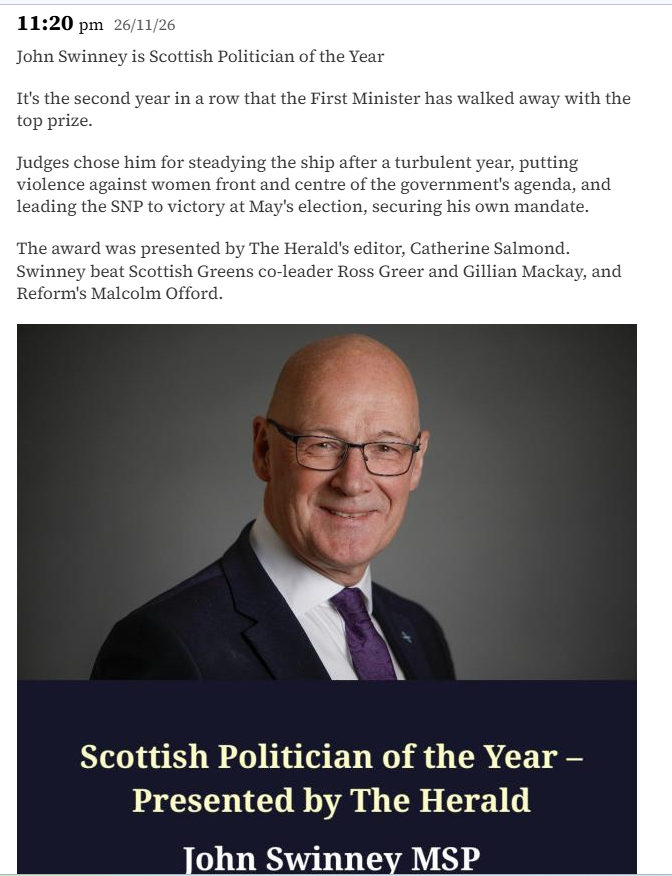
Despite what anything but honest John says, we know the Scottish NHS is in deep crisis and it is down to him and the SNP running Scotland into the ground. The buck stops with Swinney and he must go,
£45,000 world cup business flights, NHS Grampian scandal, Peter Murrell cover-up, Ferries fiasco and John Swinney wins politician of the year?
Is that a joke?