to recap: a serial child abuser and clan criminal broke out of a Turkish jail and fled to Germany where he lived openly for years, sired another child, and then ran into trouble with social workers when he came under investigation for shaken baby syndrome. he lost custody and in a rage shot dead a bunch of social workers assigned to his case, then attempted to escape the scene of the crime via the services of his getaway driver, a 65 year-old German woman named Silvia who also happened to be godmother to his brain-injured child, to work for some pro-migroid NGO and to be the mother-in-law of the Social Democrat 'migration commissioner' for the state of Niedersachsen.
In the early 1900s, a Sicilian immigrant looked at California’s summer heat and decided the answer wasn’t a better house.
Baldassare Forestiere arrived in the San Joaquin Valley expecting to grow citrus. The ground gave him hardpan instead: a dense, cement-like layer under the surface that fought roots, held water, and made a normal orchard almost useless.
So he started digging.
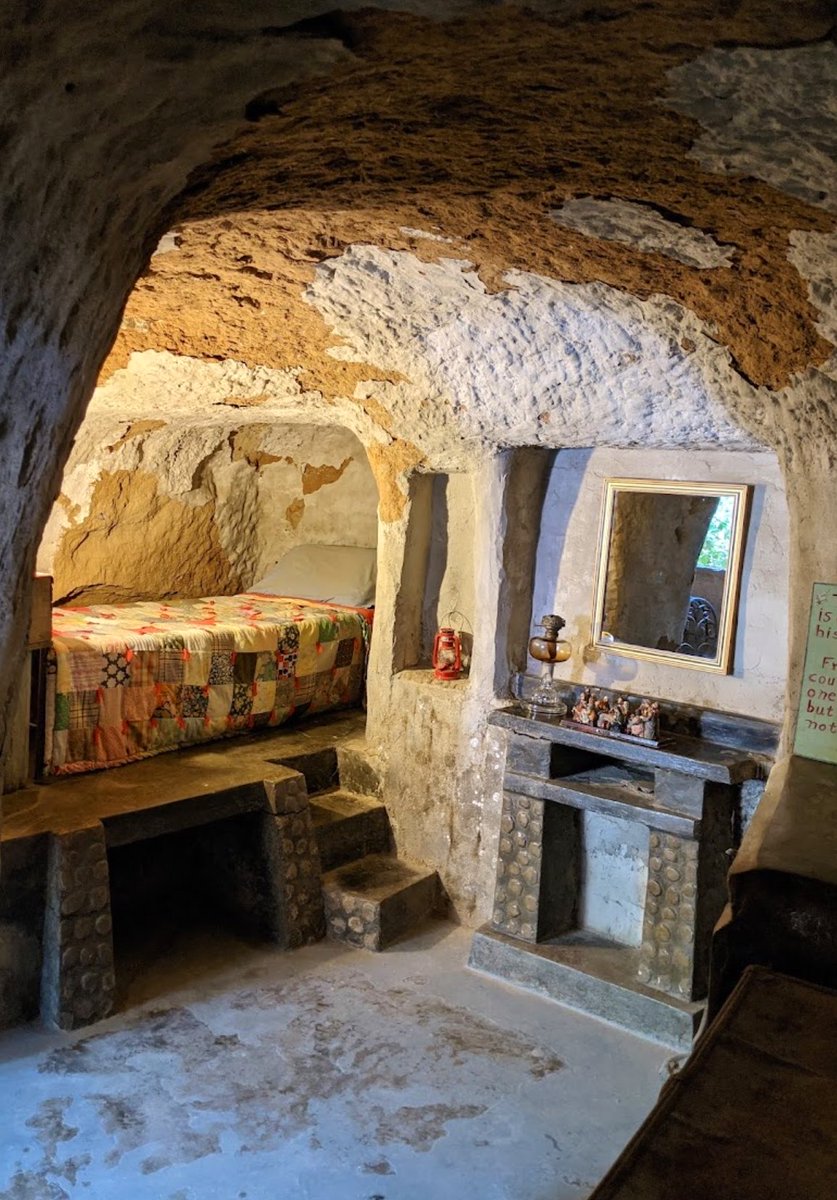
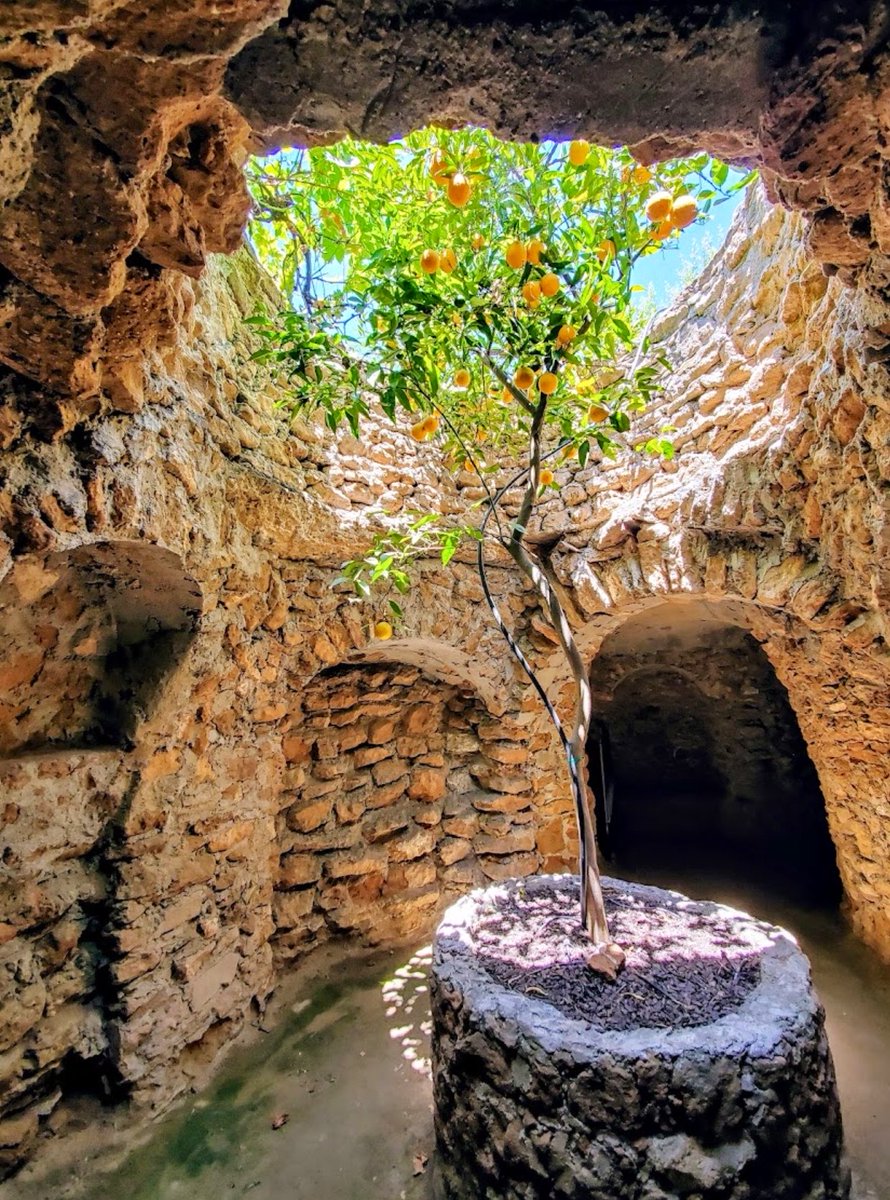
For nearly forty years, mostly by hand, Forestiere cut almost ten acres under Fresno into rooms, tunnels, arches, courtyards, and gardens. Sun came down through openings. Air moved through shafts. Oranges, lemons, grapefruit, grapes, and pomegranates grew from sunken courts, with the worst of the San Joaquin Valley heat left above them.
He had no architecture degree. No engineering firm. No machinery doing the real work. Just hand tools, Sicilian memory, and a problem that kept getting deeper the longer he answered it.
The Forestiere Underground Gardens are usually treated like a roadside oddity. That undersells them. This is immigrant architecture, climate adaptation, stubborn farming, and one of the strangest built landscapes in America all sitting under the same patch of Fresno.
A failed orchard became a buried world.
Nobody Could Explain Why They Were Hated. They Were Hated Anyway.
For roughly 700 years, a group of people lived in southwestern France and northern Spain called the Cagots. They spoke the same language as their neighbors, practiced the same Catholic faith, and were physically indistinguishable from the people around them. In 1880, a researcher who spent years studying the community concluded formally that he could find "no evidence which marks the Cagots out as a people distinct from the surrounding inhabitants." No different race, no different religion, no different language. Nothing.
They were still treated as untouchables. When they came to Mass, they entered through a separate side door, often designed to be intentionally low, forcing them to bow. They had their own holy water fonts; touching the shared one was forbidden. Priests served them communion at the end of long wooden spoons, to avoid skin contact. When they walked into a market town, they were required to shake a rattle to warn people of their approach, like a leper announcing himself. They wore a red badge in the shape of a goose's foot so no one would accidentally stand too close. They were banned from touching food in markets, from entering butchers and bakeries without announcement, from marrying outside their group. They were confined to ghettoes, called Cagoteries, usually built on the malarial side of the river. They were permitted to work as carpenters, masons, and rope-makers. In this capacity, they built many of the very churches that required them to enter through the servants' door. At some point in the 18th century, a wealthy Cagot in Brittany touched the normal holy water font. A soldier cut off his hand and nailed it to the church door.
Theories about their origin ran for centuries: descendants of Moorish soldiers, leftovers of the Visigoth invasions, heirs of Albigensian heretics, former lepers, members of a rival medieval woodworking guild whose enemies' contempt had hardened into law. None of them held up. The most recent serious theory, proposed in 2007 by British historian Graham Robb, is that they were simply a guild of skilled medieval craftsmen whose commercial rivals had successfully smeared them, and the smear ossified over five centuries into something that no one could any longer explain or undo.
The French Revolution abolished the legal distinction in 1789. Many Cagots raided local archives and destroyed every document that named them, erasing the paper trail of their own persecution. They assimilated and disappeared. Over 60 churches in the Pyrenees still have their separate Cagot entrances, bricked up now, partially obscured by paint and ivy. Nobody inside those churches ever really knew why they were built.
The most efficient prejudice is the kind that outlasts its own explanation.
June 29, 2000: Patrick Kluivert misses a PK against Italy, hitting the left upright.
June 29, 2026: Justin Kluivert misses a PK against Morocco, hitting the left upright.
This World Cup is engineered like a Hollywood movie to promote diversity. You should see the girlish titillation with which they pronounce the name Mbappe. He is their Supergirl.