One of the biggest lies in tech is the idea that users will patiently “learn” your interface if your product is good enough.
They won’t.
Users do not read your carefully crafted onboarding copy or your beautiful paragraph explaining the feature. They scan the screen for the fastest possible path to what they want and ignore everything else.
Not because they’re stupid.
Because human beings optimise for effort.
The F-pattern exists for a reason.
Half of UX discourse is designers emotionally attached to layouts that collapse the moment a real human being touches the product.
If users consistently misunderstand your interface, the problem is not “user education.”
The design is bad.
Simple.
Man, I’m really worried about consumers.
Not everyone’s tech savvy enough to know this ad is completely AI, and they’re not actually showing the product they’re selling.
AI ads are going to really take advantage of people.
One of the most expensive things in any creative industry is client involvement.
Not because clients are stupid, but because most people dramatically overestimate their ability to contribute meaningfully to disciplines they do not understand.
Everybody thinks creativity is easy until they are forced to make actual decisions.
That is why:
“You design, we watch”
is cheaper than
“You design, we advise.”
The moment an amateur starts “helping,” timelines double, clarity disappears and the project slowly mutates into a monument to confusion.
There is a reason experienced designers charge a premium for tolerance.
Managing people who don’t know what they want but are emotionally convinced they do is labour.
The funniest thing about the “I built this with Claude” genre is how aggressively it tries to erase labour.
Someone spent years learning systems design, programming paradigms, debugging, optimisation, security, infrastructure and software architecture so that an LLM could compress that knowledge into an interface simple enough for anybody to use. Then a guy generates 400 lines of code from prompts and suddenly wants to stand beside actual engineers like they did the same thing.
Please. Using a tool is not the same thing as possessing the underlying competence that created the tool.
By this logic, ordering food makes you a chef.
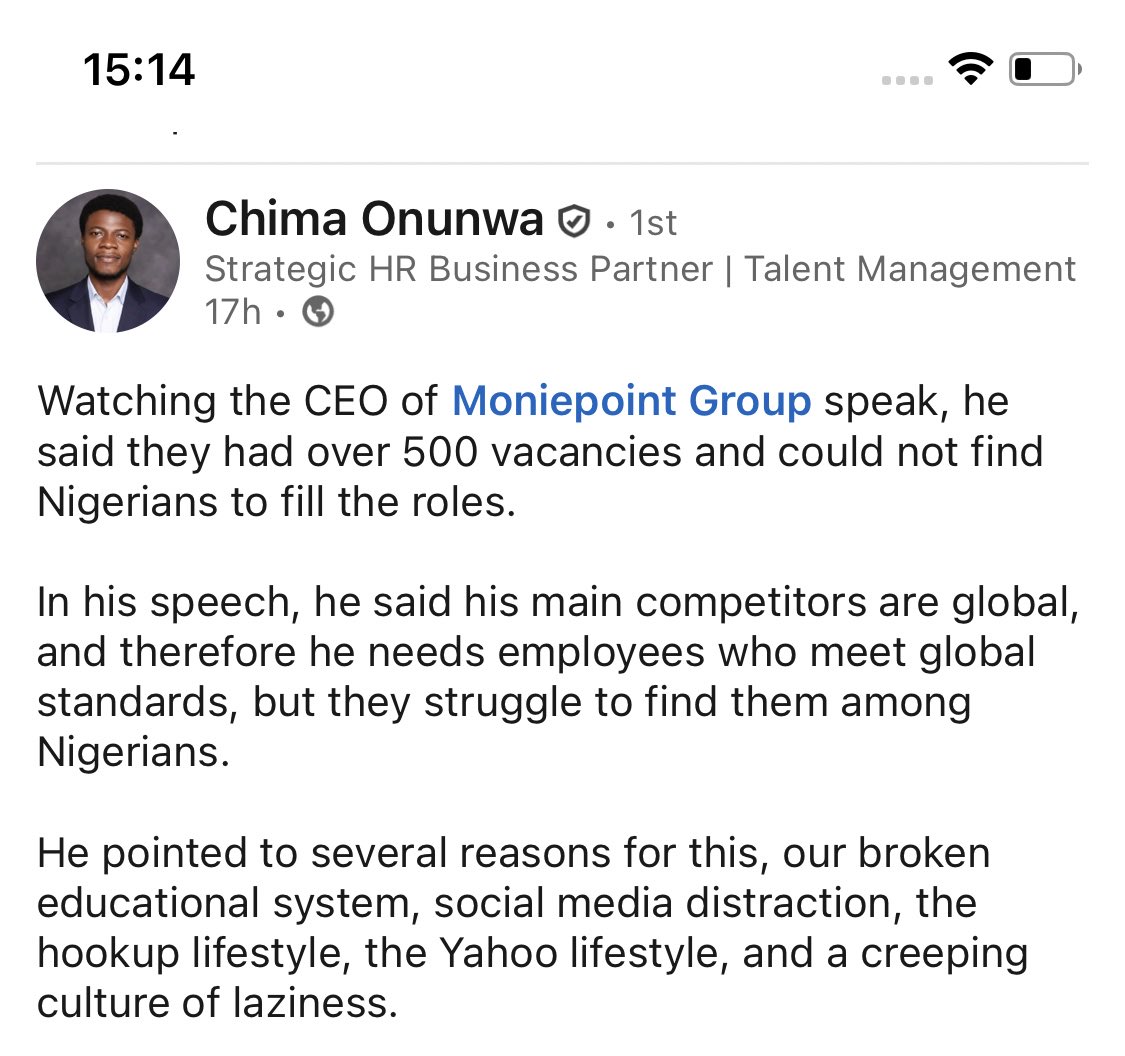
The “we’re hiring 500 people” announcement is one of the oldest tricks in the book.
You create the illusion of growth.
You signal momentum to investors.
You farm CVs and data.
You maybe hire 5 people.
The rest is theatre.
In a country with millions of underemployed graduates, claiming you “can’t find talent” is not incompetence.
It’s performance.
Motion without movement.
HE dropped a follow-up. Let's go through it point by point.
He says it's not a marketing stunt. Nobody serious said it was. The question was never about motive. It was about method. You banned 25,000 users and an entire country with no appeals process, no transparency report, and no methodology you are willing to share publicly. That is not a marketing question. That is a governance question.
He mentions a fake Android app impersonating Kled in Nigeria. This is important, and it actually hurts his own argument.
If a counterfeit version of your product was running in Nigeria with a different logo and 5,000 downloads, how confident are you that your 94.2% fraud figure comes entirely from verified Kled iOS users?
You are citing fraud statistics from a Nigerian dataset while simultaneously acknowledging that a fake version of your product existed in the same market at the same time. That is a contaminated sample. You cannot use contaminated data to indict an entire country.
He says Kled was top 100 in the Nigerian App Store multiple times. Yes. Nigerians adopted your product aggressively. They put you in the top 100. They were your earliest adopters. And when you had a fraud problem in that market, your response was to ban all 25,000 of them, including every legitimate user who gave you those rankings.
Top 100 means Nigerians believed in you. The ban is how you repaid them.
He points to Sensor Tower as verification. Nobody is disputing Sensor Tower. Sensor Tower measures app rankings. That is a verifiable third-party metric.
The fraud rate is an internal metric that only Kled can see, with no third-party audit, no public methodology, and no independent verification.
He is conflating two completely different categories of claim and hoping nobody notices. We NOTICED.
He says Kled pays users for their data for AI training, and frames that as the defence. That is not a defence. That is the problem restated.
You built a cash-for-data platform. You deployed it specifically in a high-unemployment market where people are financially motivated to maximise uploads.
You created a volume-based financial incentive and then acted shocked when people gamed a volume-based financial incentive.
Any economist would call that predictable. Any product designer would call that a design flaw. Neither would call it the country's fault.
He says 25,000 Nigerian users produced 10 million uploads. Do that math with me. That is 400 uploads per user on average. Your own incentive model rewarded volume.
High-volume upload behaviour is exactly what your product was designed to produce. When bad actors gamed a volume-based reward system, the correct response is to fix the reward system. Instead, you banned the country.
He says Kled is available everywhere else in Africa, just not Nigeria, and frames that as evidence of fairness. It is not.
Nigeria is the largest economy in Africa. The largest tech talent pool in Africa. The largest digital consumer market in Africa. Of course fraud concentration scales with adoption. More users means more bad actors, that is true in every market on earth.
Banning your biggest African market and calling it a targeted, surgical, race-neutral business decision is not the neutral call he thinks it is.
His final point is the most revealing.
He tells non-Nigerian readers to click through the profiles of angry commenters to confirm they are Nigerian, as if Nigerian equals biased and therefore dismissible. In the same thread where he is defending himself against accusations of prejudice, he called his critics "very low IQ individuals."
You do not get to insult people's intelligence and then ask them to respect your objectivity. You do not get to crowd-source profile-checking of your critics and call that data.
None of this is about defending fraud. Fraud is real. Bad actors exist in every market on earth. A 95% fraud rate from a volume-incentive platform deployed in a market with structural unemployment is a product design failure that was made worse by a blanket ban that punished tens of thousands of legitimate users alongside the bad ones.
The deeper issue remains unchanged. When a startup backed by investors whose network overlaps directly with the infrastructure that built and funds Palantir exits the largest digital market in Africa citing fraud after months of data collection, the question we should be asking is not only whether Nigerians committed fraud.
The question is: who audits them? Who holds the receipt? Who decides what counts as legitimate data in a system we do not own and cannot inspect?
To my fellow NIGERIANS, stop debating whether we deserve to be on their platform.
Start building the infrastructure so that no platform can make that decision for us. Data centers. Cloud rails. Local AI training pipelines. Identity systems we control.
Every platform that exits us citing fraud is just showing us what it costs to not own our own infrastructure. The exit is the argument. Our answer is ownership.
Allow these comedians to go- they will comeback and we will tag them to this post. Everyone should get to work.
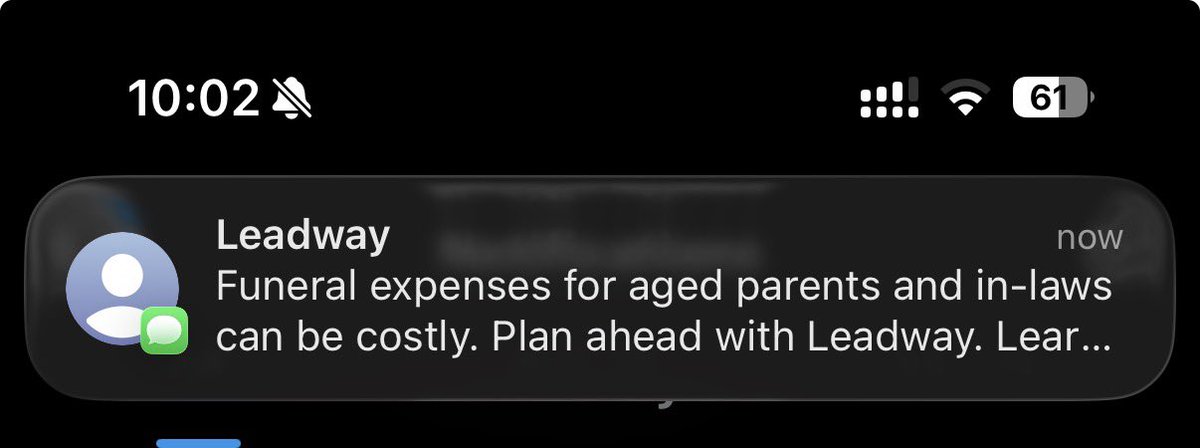
I get that you're grieving right now and this hits differently, but overall I don't think it's as bad as the light you're shedding. Realistically, aged relatives will die, it's inevitable, might as well plan for it.
This is the most annoying message I have gotten all year after losing a parent a few months ago. @LeadwayInsure Do you want to kill the other one too? BTW who is in charge of data protection in Nigeria? I’ve never had any business with this company. This lawlessness has to stop!
Moniepoint headquarters is in the UK.
241 Southwark Bridge Road, London.
But their operational base is in Lagos.
So let’s call it what it is.
They are hiring in Nigeria, paying in naira, while the headquarters sits in the UK.
The CEO wakes up in London, goes to the office, grabs his morning coffee, pays rent in pounds…
while the workforce powering the system is earning in naira.
And the Customers are Nigerians
Nice one. 🙂
Sometimes, just step back and understand the perspective of what is actually being said.
CLOWNS using the same PLAYBOOK.
Someone tagged me to this nonsense yesterday.
You banned Nigeria and called it fraud prevention. Let's be clear about what this actually is.
Your own post admits your detection system ran for months before catching a ~95% fraud rate. If your KYC is that strong, why did it take months? You don't get to announce your detection failure and then blame the country.
The 95% figure has zero public methodology. No third-party audit. No breakdown of how fraud was defined. No clarity on whether Nigerian users were flagged by the same thresholds as Malaysia or Indonesia.
You cannot cite a statistic only you can see and call it evidence.
That passport photo proves one person submitted a fake document. Not that 200 million people are fraudsters.
WE KNOW WHO YOU ARE.
A 22 year old college dropout who built a data harvesting app and dressed it up as fair compensation for the little guy.
Look at your own investor list. K5 Global and Founders Fund have co-invested in the same portfolio companies. Founders Fund is the original institutional backer of Palantir.
Your other backer, Aglaé Ventures, owned by Bernard Arnault, runs an AI portfolio that intersects directly with the same labs that Palantir's AIP platform integrates with. Nobody is making wild accusations here. We are just reading the room.
FOR MY NIGERIANS WHO DO NOT KNOW
Here is what that network is actually building. Kled mobilizes hundreds of thousands of gig workers, mostly from the Global South, to upload personal photos, videos, and documents.
You convert raw human life into machine readable product. The labs and platforms connected to your investors then take that data and make it actionable for governments, corporations, and in some cases, military operations.
Here is why Nigeria specifically matters to this model.
The major AI labs are currently being sued by artists, writers, and publishers for stealing data through web scraping. To win those cases, they need to prove they have clean, consented data.
Buying a dataset from a platform like Kled, where every user signed a digital consent form in exchange for a few dollars, gives billion dollar tech companies a legal free pass.
You are not disrupting anything. You are laundering consent for people with far more power than you.
And here is the part nobody is saying out loud. Imagine if a company already under fire for government surveillance and military contracts openly offered to pay people in developing countries to film their homes and daily lives. It would look exactly like what it is.
By using smaller startups as the public face, the same data gets collected, the same surveillance infrastructure gets fed, and the powerful names stay clean in the public eye.
A 22 year old dropout does not accidentally end up with this investor network. The connections around him tell a very specific story. We are just the ones reading it out loud.
This is the same playbook PayPal ran on Nigeria for years. Locked us out. Called us fraudsters. Made us third-class citizens of the internet economy. And when they finally came back, after years of Nigerian developers building workarounds and Nigerian users funding entire ecosystems without them, we had already moved on.
We didn't need them. We needed the infrastructure they refused to give us. They did not give it to us and we survived. You will try to re-enter but it will be too late.
To MY FELLOW NIGERIANS,
Every time a foreign platform exits Nigeria citing fraud, we debate the fraud. We rarely ask why a country of 220 million people with the largest developer community in Africa still does not own the servers, the data centers, or the infrastructure that defines what "legitimate" looks like online.
When you don't own your data infrastructure, someone else defines your identity. They decide what counts as fraud. They decide what counts as valid. They hold the receipt and you argue at the door.
The answer to Kled is not begging them to return. The answer is owning the pipes. Data centers. Local cloud infrastructure. Payment rails we control. Identity systems we built.
Every platform that exits us citing fraud is just showing us what it costs to not own our own infrastructure.
That bill keeps compounding. It is time we paid it differently.
So that next time, comedians like this will not have the guts to call us fraud without evidence.
When it's time to sell your products that nobody knows about, you tag Nigeria.
"Imagine coming from an Indian"
The Nigerian government please fix this country and give us bragging rights.
Why the fuck do you need people's information to train your freaking AI.
Perilous times