Every year on or right before 9/11, we show this video to our students. It’s not only powerful story-telling, it’s a reminder to a younger generation about how life altering 9/11 was for those of us who lived it. It’s only 10 min #themanintheredbandana
This is one of the most interesting stories I’ve ever read in Bitcoin and we’re just a week out from Coldcard’s catastrophic failure.
I highly recommend you take the time to read this, you will not regret it, seriously.
Credit: @hodlonaut
https://t.co/LNUc8lAOd7
@BTCsessions Surprised that @FoundationHQ Passport is not more well known. Awesome UI and the original Passport signer is my favorite for utilizing passphrases (not to mention stealthy design to carry when traveling 🥷) Blockstream Jade would be my 2nd for utilitarian functionality.
@FoundationHQ@CypherSafe@unchained Been waiting for this! Support for the best HWW is the only thing holding me back from using the otherwise excellent services of @unchained 👍👍
God has filled this world with beauty.
The beauty of the created world was never meant to satisfy our hearts. It was never meant to be the beauty that we would give ourselves to search for, live for, cry for and die for.
Rather, the physical beauties of earth are meant to be SIGN BEAUTIES. Everything we see, touch, taste and hear is designed to be a sign that points to the ULTIMATE BEAUTY: the One who created the world and everything in it.
Makes you think! 🤔🎯
“A reserve asset has to be useless, because money that doubles as something people need to consume punishes everyone the moment it goes up.
The purest reserve asset isn’t the one with the fewest uses. It’s the one with none.”
#goldisgood#bitcoinisbetter
A gold analyst just made the best case for bitcoin I've heard all year. By accident.
His whole thesis: "the beauty of gold is it's not used for anything." Send gold to $1,000,000 and nobody gets hurt. Send corn to $1,000 a bushel and people starve. Send oil there and the economy collapses. A reserve asset has to be useless, because money that doubles as something people need to consume punishes everyone the moment it goes up.
He's right. He just stopped one step short.
Gold still has day jobs. Jewelry, electronics, dentistry. Bitcoin is used for even less. It was built to be money and nothing else. No industrial demand fighting its monetary demand, nothing to melt down, no factory waiting on the supply.
Gold is useless enough to be great money. Bitcoin is useless at everything except being money. Same principle, taken to its logical end.
The purest reserve asset isn't the one with the fewest uses. It's the one with none.
Don't miss the epic origin story of America's first hero — Young Washington marches into theaters this July 3. Enjoy this official clip, and get your tickets today!
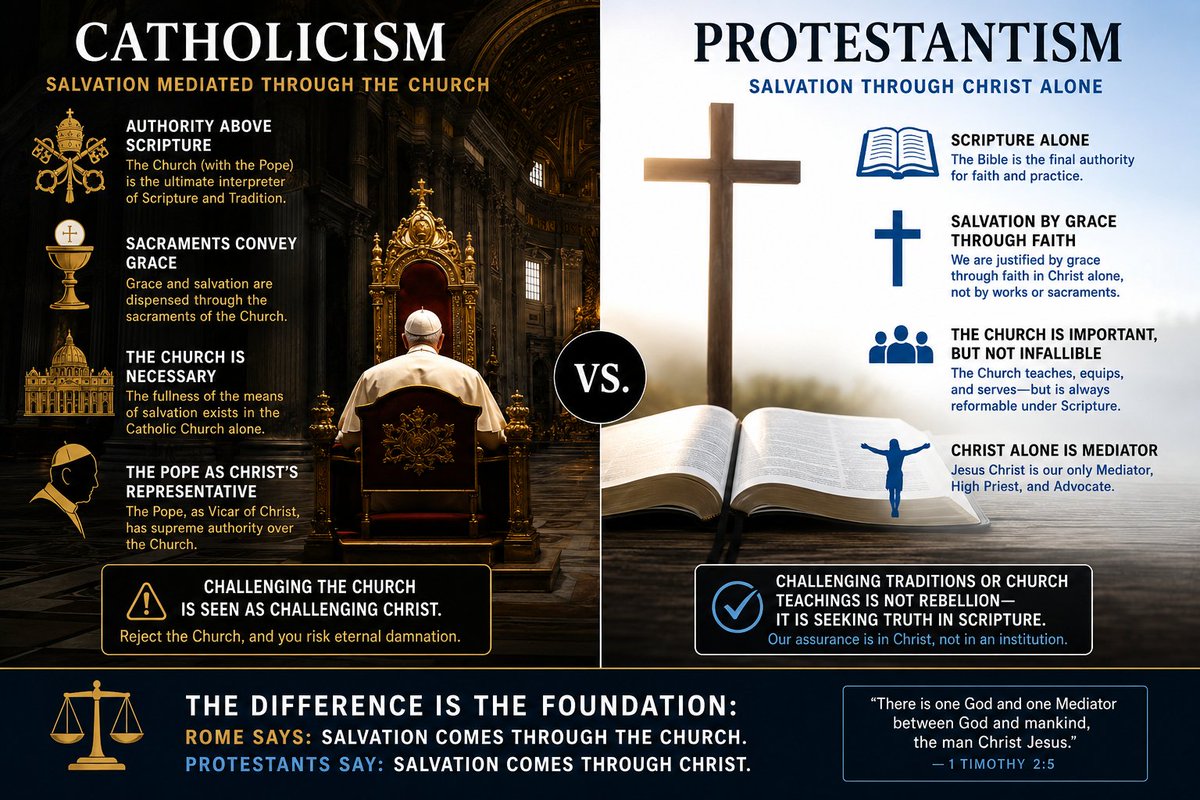
“Protestantism can admit that church history is messy because the visible Church is always in need of retorm. Protestants can also recognize ambiguity in the historical record and draw reasoned conclusions that differ from others without collapsing the faith. Rome cannot” 🎯
The Roman Catholic backlash to @gavinortlund and @WesleyLHuff has been instructive. Both men are irenic, careful, and respectful in how they address what they believe are errors in Roman Catholic doctrine. Yet both have drawn deeply personal attacks for their apologetic work. This raises an important question many Protestants are asking: why do thoughtful, respectful critiques of Roman Catholicism often provoke such a visceral response?
The visceral reaction many Catholics have when Rome is challenged makes sense once we understand the Roman Catholic system. Rome is not merely one church among others in their theology. It is the visible institution possessing the fullness of the means of salvation, the sacramental economy, the authentic interpretation of Scripture and Tradition, and the Petrine office of universal authority. Therefore, to challenge Rome is not received as a mere doctrinal disagreement. Rather, it is received as an attack on the what they believe is the very structure by which Christ supposedly teaches, governs, absolves, and saves.
In contrast, Protestants are less threatened by challenges to a particular church tradition because Protestantism, at its best, does not locate salvation in institutional submission. The Baptist does not need the Baptist church to be indefectible. The Presbyterian does not need every presbytery to be incapable of grave error. The Lutheran does not need Wittenberg to be the necessary center of visible unity. Protestants argue fiercely, but their assurance rests finally in Christ’s finished work received by faith, not in the claim that one visible hierarchy or institution uniquely dispenses the fullness of saving grace.
That is the real issue: Rome’s authority claims make historical criticism an existential threat. Protestantism can admit that church history is messy because the visible Church is always in need of reform. Protestants can also recognize ambiguity in the historical record and draw reasoned conclusions that differ from others without collapsing the faith. Rome cannot do this so easily. If too much historical complexity is admitted, Rome’s claim to be the indefectible guardian and interpreter of the apostolic deposit begins to weaken. History must produce clear answers because Rome must show that she has always taught what she now requires believers to confess—whether baptismal regeneration, Eucharistic transubstantiation, or papal supremacy. If the historical record shows change, ambiguity, contradiction, or later accretion rather than apostolic continuity, the entire sacerdotal system is threatened.
So when a Roman Catholic lashes out at a protestant theologian or historian who is making an argument that runs counter to the approved narrative, the issue is often deeper than the topic being debated. The Protestant is arguing about history or doctrine. The Catholic may feel that their whole edifice of certainty, grace, authority, and salvation is being pulled down. And in a sense, the Catholic is right to feel critical importance of the stakes. If Rome is wrong about herself, then she is not merely wrong about secondary matters. She is wrong about the very place she has assigned herself between Christ and the believer.
“providence does not anesthetize fear or grief, make chemotherapy pleasant or prognosis irrelevant. But it has released me from the illusion that my life depends on my ability to outrun the numbers… to live instead like a daughter whose father knows the end from the beginning.”
The pizzas may have cost 10,000 BTC…
but this COLDCARD is free 🍕
We’re giving a COLDCARD Q away for Bitcoin Pizza Day!
To enter:
• Follow
• Repost
• Comment your favorite pizza topping🍕
Don't forget our Bitcoin Pizza Day sale is live:
15% off at https://t.co/rbbl2BO8ub
Here’s a simple way to get unstuck when you’re worried, overwhelmed, or overthinking a decision.
Ask yourself one question:
What kind of thing am I dealing with?
Most issues fall into one of three categories.
1. Settled Things
These are things that have already been decided.
Your birth family.
Your nation of origin.
Your height.
Your past decisions.
Your upbringing.
Things you did.
Things done to you.
Some of these things were decided by your own past actions. Others were decided by God’s providence. As Paul says in Acts 17:26, God determined our appointed times and the boundaries of our dwelling place.
You can’t go back and change these things.
So the question is not, “How do I undo this?”
The question is, “Does this have any bearing on what I should do now?”
If not, leave it alone. Don’t spend your life fighting settled things.
2. Action Things
These are things you have some real control over.
Your diet.
Your exercise.
Your spending.
Your work ethic.
Your attitude.
Your friendships.
Your theological knowledge.
Your presentability.
Your habits.
Your skills.
These are your controllables.
You may not control everything about your health, finances, relationships, or future. But you usually control more than you think.
So if the issue falls here, don’t overthink it.
Take direct action.
Start small if you have to. Make the call. Go on the walk. Open the Bible. Apologize. Apply for the job. Pay the bill. Clean the room. Do the next faithful thing.
3. Prayer Things
These are things outside your direct control, but not outside God’s control.
The economy.
The weather.
The housing market.
The availability of a suitable spouse.
Other people’s choices.
Timing.
Open doors.
Closed doors.
You can’t force these things. You can’t grab the steering wheel of providence.
But God can act.
So you take indirect action through prayer. You ask. You wait. You prepare. You remain faithful. You do what you can do and trust God with what only He can do.
So ask yourself:
Is this settled?
Then accept it and learn from it.
Is this actionable?
Then do something.
Is this outside my control?
Then pray and trust God.
This is a simple framework, and yes, it’s a little reductionistic. But that’s the point. The goal is not to explain every complexity of life. The goal is to get you unstuck.
Most people waste too much energy trying to change the past, control what belongs to God, or pray about things they simply need to obey.
So categorize the issue.
Then act accordingly.
Accept what is settled.
Act on what is yours.
Pray over what belongs to God.
@lava_xyz No details anywhere about the reward structure, makes it feel sketchy, like another “trust me bro” unprofessional startup. Need to see some proof of work that matches your marketing 🤷♂️👀
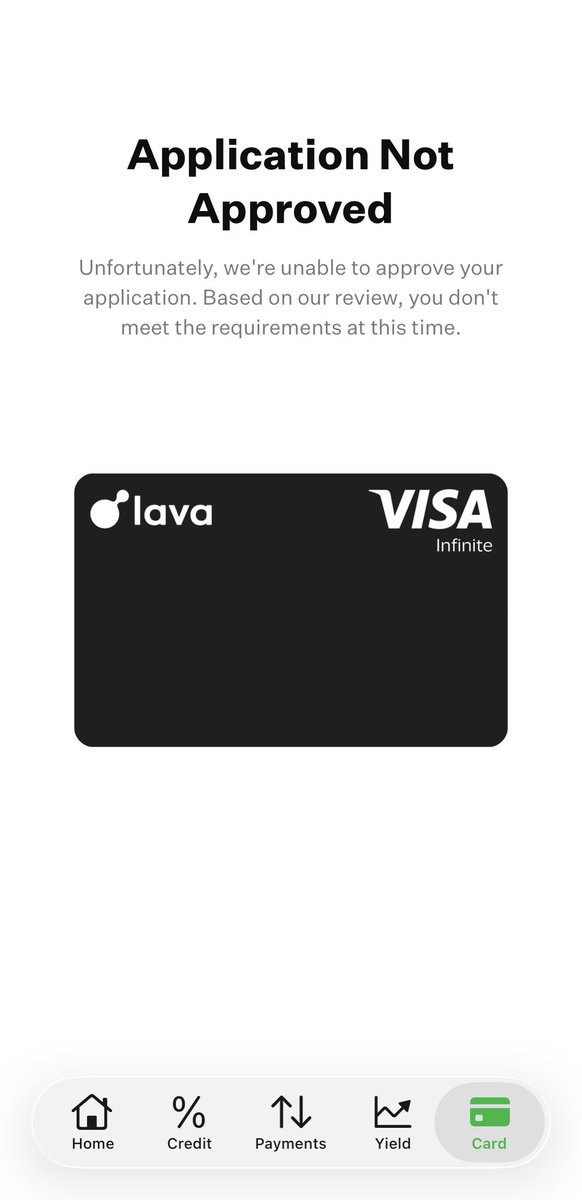
@lava_xyz Very strange rollout process 🤨 No updates on the waitlist in App. We originally had to “make a purchase” to be eligible. ✔️No communication or notification, but I looked again and it says “must get verified” to be on the waitlist. ✔️ After that it says “apply” ✔️ 2min… denied!