The Canada Pension Plan (CPP) has over 2,000 employees.
Top 5 managers, make more than $5 million per year.
They have never beaten the market.
Nevada has 1 guy. Who invests in ETFs.
Does nothing. All day.
And he outperforms the CPP.
Consistently.
For further context, if CPP invested in QQQ, for the last 10 years, instead of $800 billion in assets, we would have $2.4 Trillion.
VOO would put it at $1.6 trillion.
Lesson: The government will never outperform the market.
So don’t think the Sovereign Debt Fund will be any different.
Humans can only see ~0.0035% of the electromagnetic spectrum.
Yet many people are convinced that what they can perceive with their eyes represents the totality of reality.
We’re effectively blind to 99.9965% of the electromagnetic universe.
Something to think about.
UPDATE: In just a couple weeks, the Secure team will be heading to Berlin for the privacy convention.
The beta is going great and our user base is growing rapidly across the globe.
Premium features are coming soon, along with a new release dropping this week and some other major announcements.
Secure is just getting started.
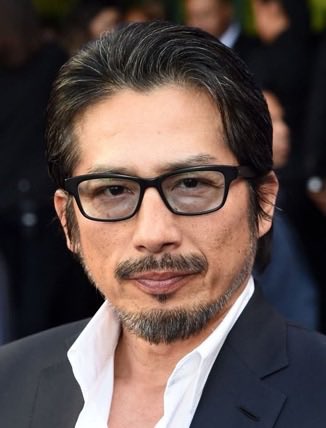
Japanese actor Hiroyuki Sanada spoke about the contradictions of human nature:
“Some people dream of having a swimming pool at home, while those who have one hardly ever use it. Those who have lost a loved one feel a profound sense of loss, while others often complain about their living relatives. Those without a partner long for one, while those who have one often don't appreciate it. The hungry would give anything for a meal, while the satiated complain about the taste of their food. Those without a car dream of owning one, while those who have a car are always looking for a better one.”
The key to happiness is gratitude: truly seeing and appreciating what we already have, and understanding that somewhere, someone would give anything for what we take for granted.
It honestly shocks me that more people are not buying and studying emergency planning right now, given the level of instability we are watching unfold across the world.
Economic uncertainty. Supply chain problems. Political division. Cyber attacks. Blackouts. Wildfires. Civil unrest. Governments openly discussing emergency powers again.
Yet almost nobody has a written emergency plan for their family.
What surprises me even more is that there are very few civilian resources that actually teach people how to build one properly. Unless you spent time in the military, worked in emergency management, or had access to operational planning manuals, most people were never taught how to think through emergencies in a structured and practical way.
That is exactly why I wrote The People’s Emergency Plan.
Not to sell fear. Not to push gear. Not to tell people to hide in the woods.
I wrote it because the resource now exists, in plain language, for ordinary people and families to use before stress, confusion, and time pressure take over.
The information is there.
The question is whether people will use it before they wish they had.
Link in my bio.