This is FoxForge 🦊
I’m just a fox deep in the Web3 trenches.
My whole thing is simple, I'm here to help projects blow up.
Memecoins, NFTs, utility tokens… I get them real visibility and real growth.
@Babzi_web3 Hehe, you mind sharing how you learnt the hard way?
Anyways, Xora is building something amazing!
You’re not just talking about them…you’re testing their claims.
I’ve learned that depositing is usually the easy part in crypto, learned the hard way In fact.
The moment that really matters is when you decide to withdraw.
As you all know, I’ve been using Xora for the past few weeks while earning yield on my XRP.
Today, I decided to stop reading the marketing and verify the experience myself.
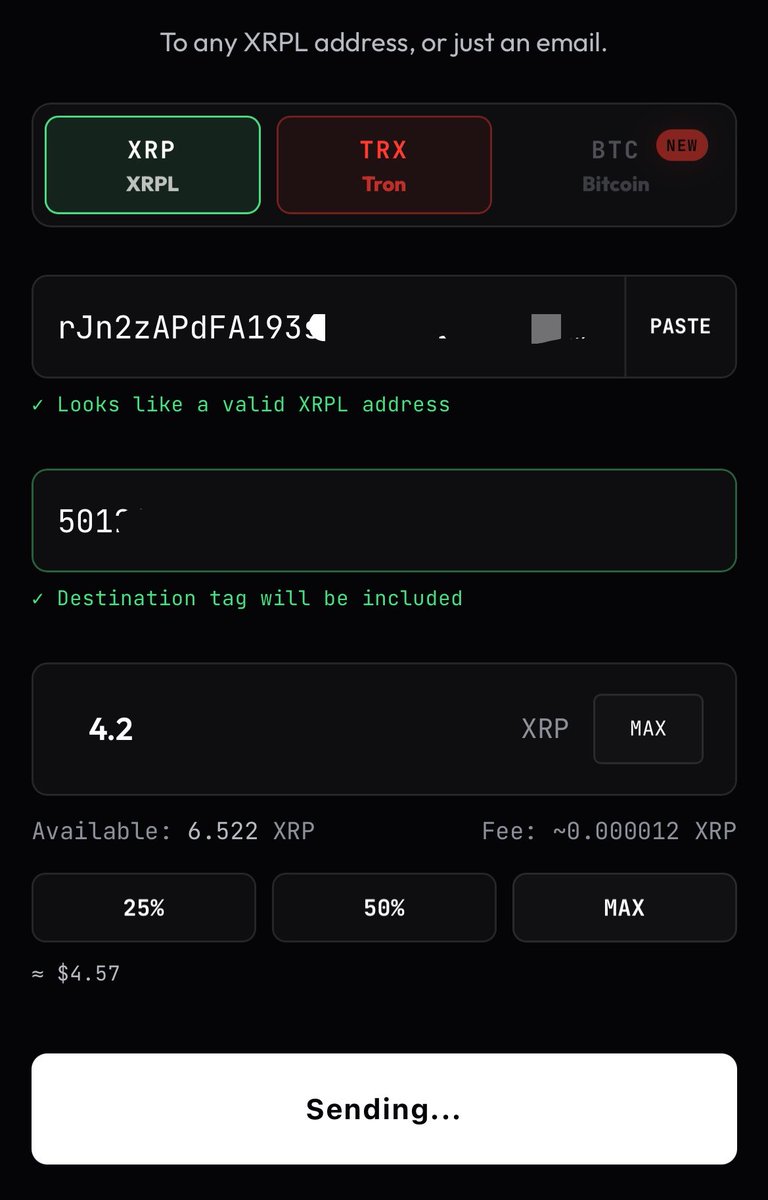
I withdrew 4.2 XRP from my Xora account to my Bybit wallet.
The transaction arrived within seconds. It’s a small amount, but that wasn’t the point.
I wanted to know whether I could move my funds whenever I wanted, without unnecessary friction.
So far, that’s exactly what happened, and I’ve attached the screenshots so you can see the process for yourself.
As always, this is my personal experience, NFA. Do your own research.
@Babzi_web3 Babzi always giving us back to back,
Another governance lesson learnt..slow process is part of the game.
Gives community time for due diligence on the decision about to be made and making sure they dot all their Ts and Is.
Waiting on the next one.
GOV 107: Why Governance Always Feels Slow
Nobody enjoys waiting.
Whether it’s traffic, long queues or delayed decisions, our instinct is always the same:
“Why is this taking so long?”
It’s one of the most common complaints people make about governance too.
Governance proposals take weeks.
Discussions seem endless.
Every decision feels slower than it should.
It’s a fair criticism.
But it assumes governance is trying to optimize for speed.
Most governance systems aren’t.
They’re trying to optimize for something much harder:
Making decisions that people can continue trusting long after they’re made.
Think about building a house.
You could finish it in two weeks.
Or you could spend months checking the foundation, inspecting the materials and fixing problems before anyone moves in.
The first option gets people inside faster.
The second gives them a house they’re willing to live in.
Governance faces the same trade-off.
Every important decision affects thousands of people, millions of dollars and sometimes the future of an entire protocol.
Moving quickly sounds attractive.
Until you move quickly in the wrong direction.
That’s why governance often feels slow.
Not because people enjoy bureaucracy, but because good governance deliberately creates friction before creating change.
It gives people time to question assumptions, challenge proposals, identify risks and improve ideas before those ideas become permanent decisions.
That process can feel frustrating.
Removing it completely creates a much bigger problem.
Imagine changing your country’s constitution every weekend.
Or rewriting the rules of football every month.
Nothing would ever feel stable.
People wouldn’t know what rules they were actually playing under, and confidence in the system would slowly disappear.
Governance exists to make change possible.
It also exists to make change predictable.
Strong governance spends its entire life balancing those two forces because systems need both.
Without progress, they stop evolving.
Without stability, they stop being trusted.
That’s why the best governance systems don’t ask:
“How fast can we make this decision?”
They ask:
“How fast can we make this decision without breaking trust?”
That’s a completely different question.
People can tolerate slow decisions.
What they struggle to tolerate are reckless ones.
If there’s one idea I hope stays with you after reading this, it’s this:
Governance isn’t slow because it’s broken.
Governance is slow because trust takes longer to build than decisions.
Once you understand that, another question naturally follows.
If slowing down improves governance…
Why does giving more people votes naturally not improve governance?
Most people still think crypto is about picking the winning chain.
I'm starting to notice it's about making capital productive regardless of the chain.
That's why @xora_finance is not just building another yield product, but rather a productivity layer for digital assets.
It started with XRP.
TRON is now live.
BTC appears to be next.
On the surface, those look like separate integrations.
I think they're all pointing to the same idea:
Idle assets are one of crypto's biggest inefficiencies.
The next generation of infrastructure won't just help people hold assets.
It will help those assets do more while they're being held.
Current status:
→ $XRP deposits live (up to 22% APY value)
→ Native $TRX pilot live (up to 28% APY value)
→ $BTC rollout hinted in-app
Current rates are bootstrap incentives and subject to change.
As always, understand the risks, verify the details yourself, and size positions accordingly.
Maybe the next crypto race isn't chain vs. chain.
Maybe it's capital vs. idle capital.
Reading through @CNPYNetwork’s vision around Progressive Sovereignty got me thinking about the next challenge sovereign appchains will face.
The easier it becomes to launch a chain, the harder it becomes to build a sustainable economy.
That led me to develop the Progressive Tokenization Framework.
Here’s my proposal for Canopy. 🧵| ⤵️
@Babzi_web3 nice cook as usual,
so good governance shouldn’t be judged, but ngl most of the governance out there are badly designed to be fail it community.
great to learn more governance nuance from you babzi.
keep building
GOV 106: Why Good Governance Can Still Produce Bad Outcomes
Most of us have blamed the wrong person before.
A football coach loses one match, so we call him a bad coach.
A teacher’s class performs poorly, so we question whether they taught well.
The outcome feels obvious.
The conclusion feels obvious too.
But outcomes and decisions aren’t always the same thing.
That’s one of the biggest misconceptions people carry into governance.
One proposal fails.
A treasury investment underperforms.
An upgrade creates unexpected problems.
So governance must have failed too.
It sounds reasonable.
But it quietly assumes governance controls something it never has:
The future.
Governance doesn’t exist to predict what will happen tomorrow.
It exists to help people make the best possible decision with the information they have today.
The problem is that today’s information is never complete.
Markets change.
Technology evolves.
Communities themselves change.
Every governance decision is made before those changes fully reveal themselves.
That uncertainty isn’t a flaw in governance.
It’s the environment governance was designed to operate in.
This is why judging governance by a single outcome can be misleading.
A good process can still produce a disappointing result, just as a poor process can occasionally get lucky.
The outcome tells you what happened.
It doesn’t always tell you whether the decision was made well.
That’s a very different question.
Good governance can improve three things:
- The quality of information available.
- The quality of discussion before a decision.
- The quality of the decision-making process.
But there are things governance can never fully control.
- Markets.
- Human behaviour.
- Unexpected events.
- The future itself.
Understanding that difference changes how you evaluate governance.
Strong governance isn’t the system that never makes mistakes.
It’s the system that consistently improves the quality of its decisions despite uncertainty.
That’s why learning matters.
Not because governance should avoid mistakes.
But because mistakes become information for the next decision.
Weak governance repeats the same errors.
Strong governance evolves because it studies them.
If there’s one idea I hope stays with you after reading this, it’s this:
Good governance shouldn’t be judged by whether one decision succeeded.
It should be judged by whether the decision was made well.
Because governance doesn’t promise certainty.
It promises a better way to navigate uncertainty.
And once you begin to see governance that way, another question naturally appears.
If governance is trying to improve decision quality…
Why does good governance almost always feel painfully slow?
That’s where we’re heading next.
@Babzi_web3 @joren@xora_finance bro is been bull posting XRP for weeks now,
actually this is genuinely a goldmine at this stage, most definitely racking up some juicy APY from Xora’s XRP Neobank.
can’t wait for the upcoming Visa card announcement lol.
thanks for always dropping alpha bro
Over the past few weeks, ripple:native has reminded everyone why patience is part of the game.
Some holders bought more, some took profits, and most simply watched the market move while keeping their bags exactly where they were.
There's nothing wrong with holding.
What I don't think enough people ask is what their $XRP is doing while they wait.
For years, crypto has conditioned us to believe that an asset creates value only when its price goes up.
Buy, hold, and wait for the market to reward your conviction.
That mindset has shaped how many people think about investing in digital assets.
But as the industry continues to mature, I think another idea is quietly emerging.
Not every asset has to sit idle while you wait. Capital can remain exposed to the market while still working quietly in the background.
Imagine two people holding exactly 10,000 $XRP.
Neither one trades. Neither one sells. Both experience the exact same market movement over the next year.
The only difference is that one person's XRP remains idle, while the other's continues generating value along the way.
Same asset. Same market exposure. Different outcome.
Numbers make that difference easier to visualize.
At @xora_finance’s current advertised bootstrap rate, this is what the annual reward value roughly looks like:
→ 1,000 XRP → ~220 $XRP equivalent
→ 5,000 XRP → ~1,100 $XRP equivalent
→ 10,000 XRP → ~2,200 $XRP equivalent
Illustrative estimates based on current advertised bootstrap incentives.
The numbers themselves aren't really the point.
The bigger idea is that idle capital always carries an opportunity cost.
Whether it's $XRP, stablecoins, or any other digital asset, choosing to do nothing is still a decision with trade-offs.
That's one of the reasons Xora caught my attention.
It isn't simply because of the yield. It's because the product challenges a mindset that has existed across crypto for years:
that holding and waiting is the only way an asset creates value.
Crypto has spent the better part of a decade teaching people how to accumulate assets.
I think the next chapter will be teaching people how to make those assets productive without giving up liquidity or constantly chasing the next trade.
Whether that future is led by Xora or others building similar infrastructure, I think the conversation has already started.
And it's one that's worth paying attention to.
———
Source: https://t.co/6G5DSPoBGS (current advertised bootstrap rate).
Illustrative calculations only. NFA. Always DYOR.