Prof. of Criminology @Unicatt & @Transcrime. Co-Editor Global Crime. Mafia,organized crime,illicit markets,sports,reading,beer (order changes during we).❤️=🔖
In our latest publication in the Journal of Criminal Justice @DehManzi and I used agent-based models to examine the resilience of drug trafficking organizations against law enforcement interventions: https://t.co/7cQAt7zuVG.
📢 Publication alert! 📚 Delve into the resilience of drug trafficking organizations and the effects of targeted law enforcement interventions. Explore our study with @FraCalderoni in the Journal of Criminal Justice!
Full article here: https://t.co/70DsxONA2Q
Our Michael Lo Giudice walks through the tool’s key capabilities, co-designed with EU authorities, journalists and compliance officers in response to increasingly sophisticated criminal tactics.
Discover more: https://t.co/tklHVsHIwp.
Our tools: https://t.co/1sF2m8Tqtf.
👇 This is what an AI-powered investigation looks like in 2026.
Watch how a real EU funds fraud – engineered to withstand scrutiny – was exposed through data-driven risk assessment, network analysis and AI screening, run end-to-end within our tool #RiskVisioner.
Famously (there is a beautiful Works in Progress piece on this) in 2016, Geoffrey Hinton told an audience in Toronto that medical schools should stop training radiologists, since AI would soon outperform them at reading scans. Ten years later, there are more radiologists than ever, and they earn more than they did then.
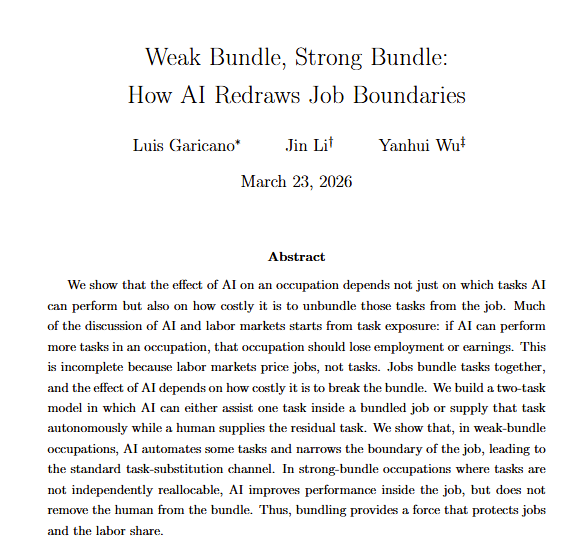
Hinton was right about the task, but he was wrong (so far!) on the future of the radiology profession. Times have never been better for them. The gap between those two claims, the difference between tasks and jobs, is the subject of a paper I have written with Jin Li and Yanhui Wu, and that we release today: "Weak Bundle, Strong Bundle: How AI Redraws Job Boundaries." (Very relatedly we are also finishing the first draft of our book "Messy Jobs" on AI and Jobs!! You will be the first to hear).
We start from the observation that the growing literature on AI and labor markets measures the AI shock by task exposure: people count how many tasks AI can perform in a given occupation AI can perform, and infer that more exposure means more displacement. Eloundou et al. published a paper in Science in 2024 that started this literature, and many follow the same logic. The inference they make is that the more exposed tasks, the worse the outcomes.
This is incomplete, because labor markets price jobs, not tasks. A radiologist does not just sell image classification, but does many other jobs: triages cases, communicates with other physicians, trains residents, makes the difficult decisions, and signs a diagnosis. The market buys a bundled service. The question AI poses is not whether it can do one task inside the bundle. The question is whether that task can be pulled out.
Thread (1/3)
https://t.co/wEYMfjGbeX
@maxdantoni Il ragionamento di Bersani è molto interessante, perché contiene implicitamente il chiarimento di un equivoco: il ruolo che la sua cultura politica attribuisce al giudice non è quello tipico della separazione dei poteri, nonostante l’abbiano evocata più e più volte
2nd DATACROS III training:
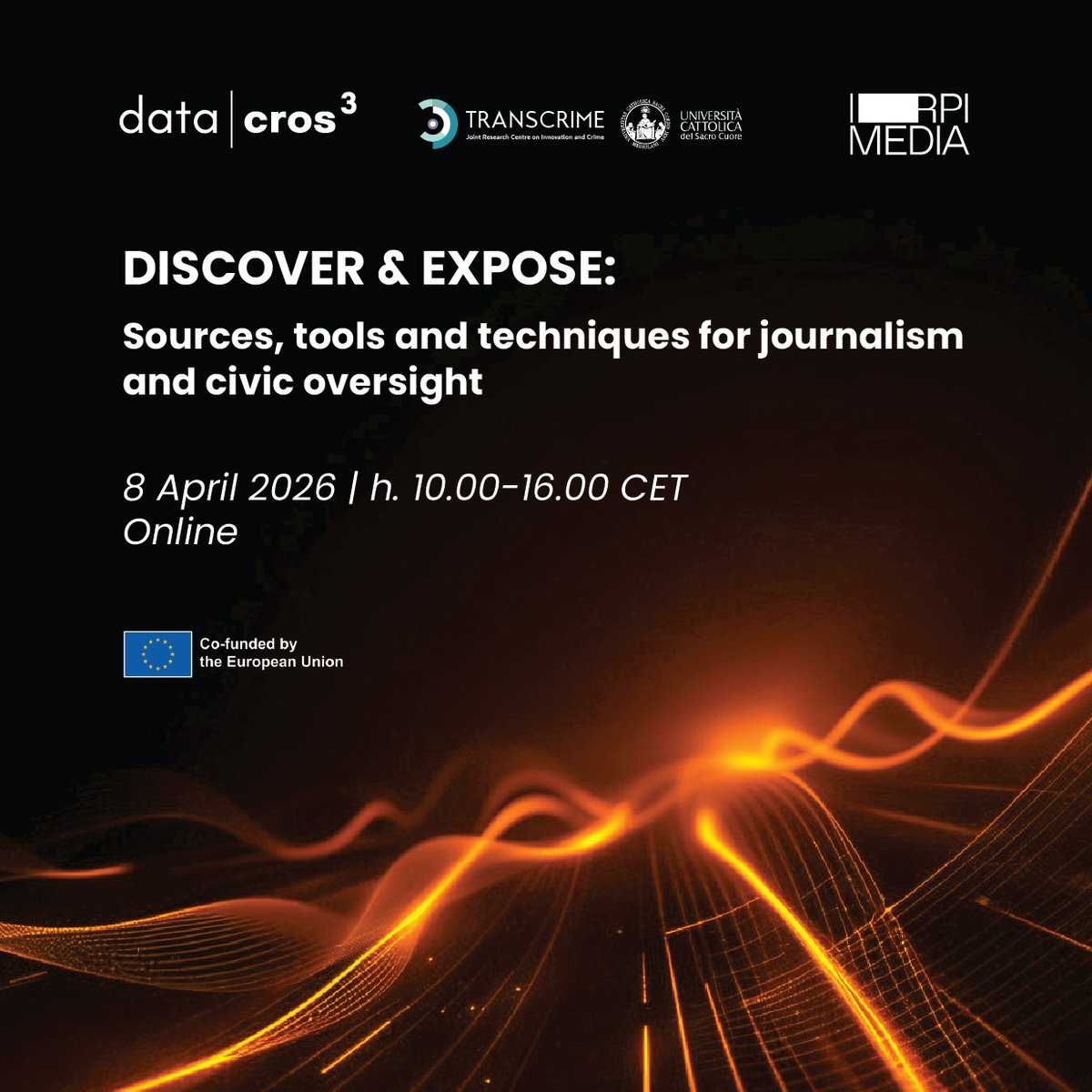
"𝗗𝗜𝗦𝗖𝗢𝗩𝗘𝗥 & 𝗘𝗫𝗣𝗢𝗦𝗘 | Sources, tools and techniques for journalism and civic oversight"
🔹 8 April
🔹 10-16 CET
🔹 Online
🔗 Free registration until 5 April: https://t.co/vDY4CVkJTl
Organised by @IrpiMedia and @transcrime.
More info 👇
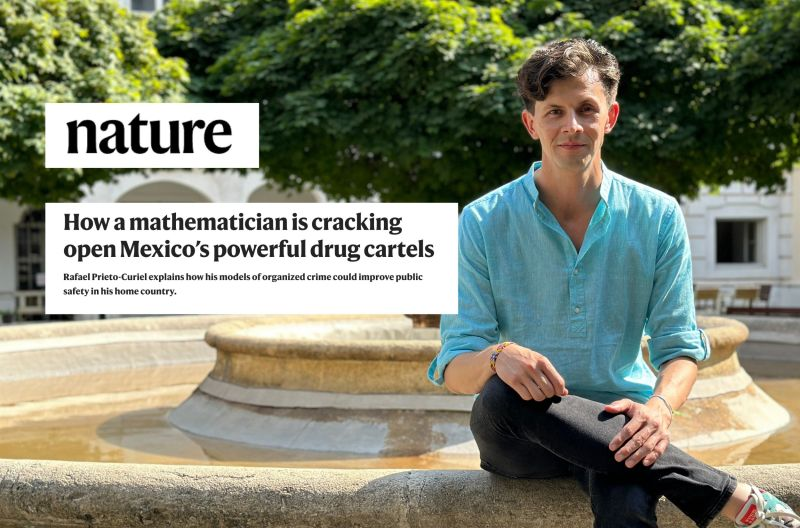
This week, @Nature published an article on how I use mathematical models to study what is otherwise very hard to measure: the scale and dynamics of cartels.
How a mathematician is cracking open Mexico's powerful drug cartels.
👇🧮🧑🔬
https://t.co/0Rdg0s8HIp
New paper in #Criminology(OA):
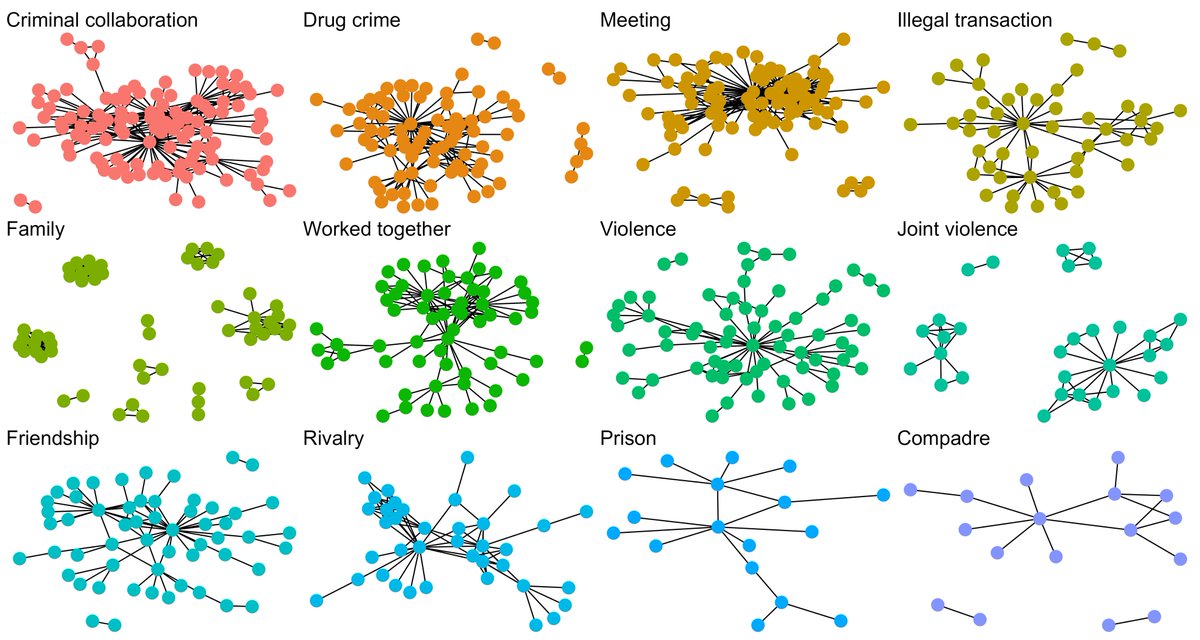
Across 3 ’Ndrangheta investigations, and looking at both meetings and phone calls, we find the same network dynamics: being male, kinship, leadership, and clan affiliation consistently shape criminal collaboration over time.
https://t.co/CEbs3Nn7eZ
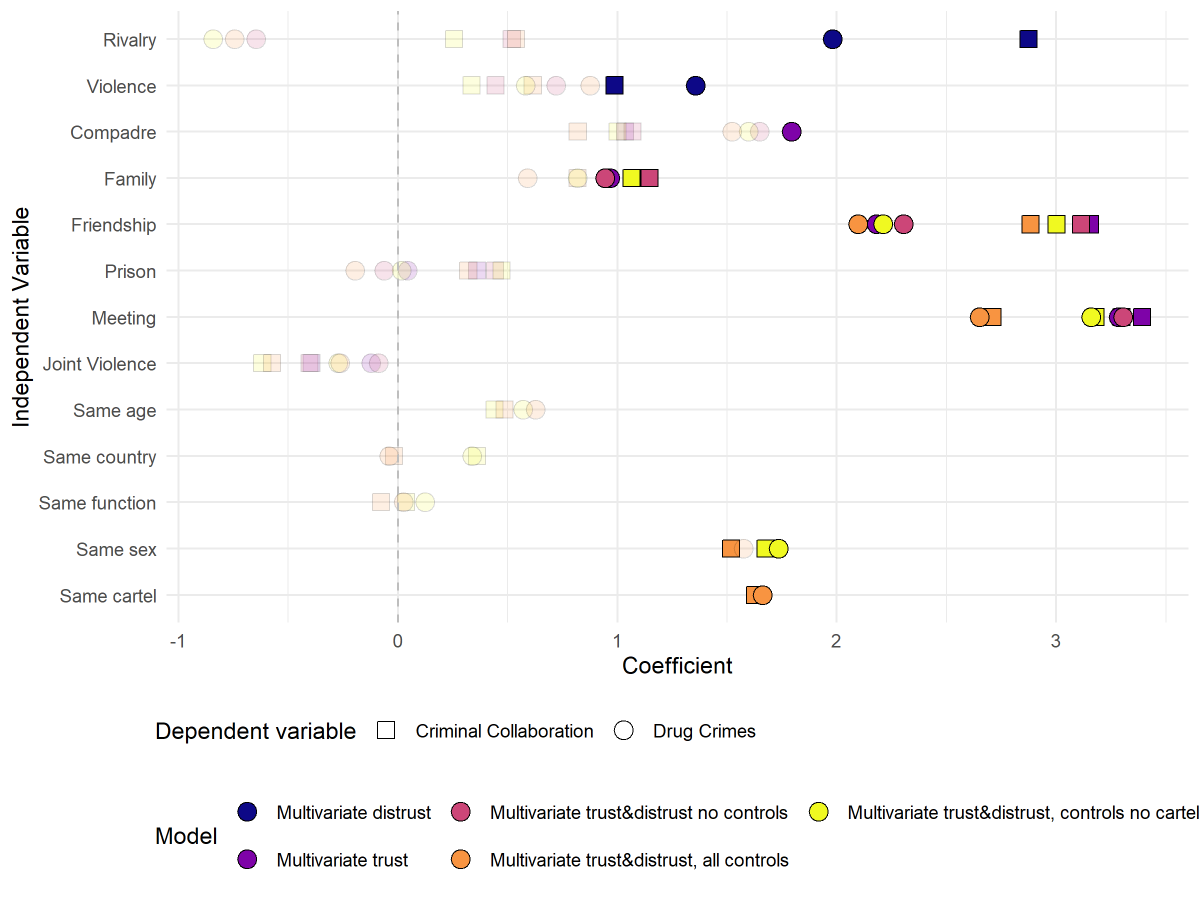
Out now in @journalrcd: Social Embeddedness, Multiplexity, and Criminal Collaboration within the Sinaloa Cartel
With @valentinpereda & @ddhetu, we analyze how kinship, friendship, and shared collaboration shape cooperation within the cartel.
https://t.co/Hzs4SSmBVX
Out now in @journalrcd: Social Embeddedness, Multiplexity, and Criminal Collaboration within the Sinaloa Cartel
With @valentinpereda & @ddhetu, we analyze how kinship, friendship, and shared collaboration shape cooperation within the cartel.
https://t.co/Hzs4SSmBVX
At #ASC2025, our studies on:
🔹Risk and protective factors for victims and actors in human trafficking
🔹How social ties foster cooperation within the Sinaloa Cartel
🔹Specialised false-invoicing providers enabling money-laundering-as-a-service
Agenda👉 https://t.co/M20SDGbqUN
"Prevent & Detect — How to early-detect organised crime infiltration, corruption & fraud"
📅 14 Nov | ⏰ 10:30–16:30 CET | 💻 Online
Training aimed at local or regional administrations and EU institutions engaged in procurement and compliance
👉 https://t.co/Bs7OIxQSas
Il nostro benvenuto ai nuovi studenti e studentesse di #CrimeSec: aspiranti criminologi che iniziano oggi il percorso di laurea in Crime & Security Analysis. Buon viaggio!
📢⏰ Very happy to share a new article published in the Journal of Quantitative Criminology having as 1st author @AriadnaAlbors, brilliant PhD student co-advised w/@mtizzoni. Open access link: https://t.co/1djINZEghf. Congrats to Ariadna for her first publication! Some info ⬇️
How does #corruption operate across Europe and what actions are needed to counter it?
The @FalconProjectHE released a new Brief on corruption schemes and impact across multiple domains, with policy recommendations for prevention.
👉 Read the report: https://t.co/G3VSDeigA6