Wow.
Sen. Chris Murphy (D-CT) floor speech on Trump Admin. corruption has now received 1 million views
He opens the remarks by arguing that Trump has turned the White House into a 24/7 corruption operation
https://t.co/0GEyvQd51z
#BREAKING: Velshi: “Now, let’s be honest about what this voting bill actually [#SAVEAct] is. The premise is FALSE. Non-citizen voting essentially DOES NOT exist in America. I have lots of examples but tonight I’m going to give you Utah. Utah two million registered voters and found—I hope you’re sitting down for this—ONE confirmed non-citizen registration and ZERO instances of non-citizens actually voting.” 😳
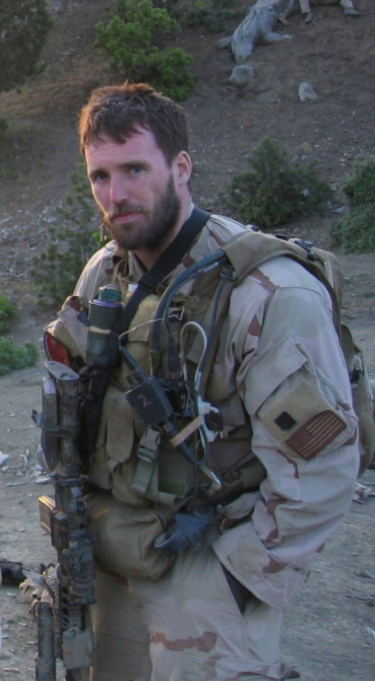
Today, we recognize and honor Long Island native and Navy Seal, Lieutenant Michael P. Murphy, for his ultimate sacrifice on June 28, 2005. Lt. Murphy was posthumously awarded a Silver Star, Purple Heart and the Medal of Honor for his courageous actions.
#NoVeteranEverDies
On this day, June 28, 2005, Lt. Cdr. Erik Kristensen, the SEAL officer who led the rescue force into the Hindu Kush, was killed during Operation Red Wings.
When Lt. Michael Murphy’s call for help came down, Kristensen was the ground commander of the quick reaction force, and he did not have to be on that helicopter. As a senior officer in SEAL Team 10, he sat above the platoons that ran most of the direct action, and his own mother was told he likely wouldn’t be aboard.
But these were his men in trouble, men he had trained, and so he went, leading from the front. He boarded Turbine 33 with 7 other SEALs and 8 Night Stalkers from the 160th, and an RPG brought the Chinook down before they could reach the team. All 16 aboard were killed.
Kristensen’s road to that mountain was a long one. Born into a Navy family, son of a future rear admiral, he was a Naval Academy graduate who majored in English, taught the subject back at Annapolis, and was attending St. John’s College before he walked away from the classroom to chase a harder calling.
He reported to BUD/S at 27, one of the oldest men in his class, and earned his Trident. Friends remembered a brilliant, funny, slightly absent minded man who once showed up to a dance class in flip flops, an officer who led with wit instead of weight. He was set to study in Paris on a scholarship after the deployment, thinking already about a life beyond the Teams.
He never got the chance. In the wreckage of Turbine 33, recovery troops found a dog tag stamped not with a name but with the Warrior Ethos, ending in the line "I will never leave a fallen comrade."
Erik Kristensen and the men he led embodied exactly that. He is buried in the Naval Academy Cemetery, and his example is still taught to the midshipmen who walk the grounds he once did.
Not forgotten 🔱
On this day, June 28, 2005, 11 Navy SEALS and 8 Night Stalkers, 19 of America's finest warriors, died during Operation Red Wings. Please help me honor them.
BREAKING: Mallory McMorrow just took to the Senate floor and destroyed Donald Trump for holding the housing bill hostage. Every American needs to watch this speech.
Marines Fighting in Falujah, November 2004.
The guys coming home from Fallujah had some of the highest rates of PTSD. That place was hell on earth. The soldiers did a tremendous job, capturing Fallujah twice, and paying a huge price after returning home. And some didn't return at all. If any Fallujah vet is reading this, I hope you know how much we appreciate your service and sacrifice.
She was the highest ranking Vietnamese American woman ever to command an operational brigade in the U.S. Army.
Her name is Danielle Ngo.
It was April 29, 1975. The day before Saigon fell.
Her mother, Thai-An, just 24 years old, carried Danielle and her baby sister Lan-Dinh up the ramp of a U.S. military cargo plane as North Vietnamese rockets rained down on Tan Son Nhat airport. Soldiers were pushing equipment off the back of the aircraft to make room for refugees.
They were among the last people to make it out of that airport.
Her father was not on that plane.
He was a captain in the South Vietnamese army and he stayed behind to keep fighting as his wife and two small daughters fled.
It would be years before he made it to America and saw his family again.
A week earlier, the South Vietnamese government had restricted travel. Danielle was in the seaside town of Vung Tau, away from her mother. Her grandfather refused to let the family be separated with the country collapsing around them.
So he took eight buses and scooters across a war zone to bring the three-year-old back to her mother's arms.
And when the moment came to say goodbye, knowing he could not go with them, her grandfather knelt down, folded a U.S. one-dollar bill, and tucked it into her little shirt pocket.
It is the only thing she remembers from the day she became a refugee.
The plane landed on Wake Island, a speck in the Pacific 2,300 miles from Hawaii. They spent three months there in a refugee camp, waiting to learn if any country would take them.
America did.
After camps in Hawaii and Arkansas, an uncle sponsored them, and the family finally settled in Massachusetts. They lived in subsidized housing for eight years. Danielle and Lan-Dinh were the only Vietnamese girls in their school. Their mother worked her way through an associate's, a bachelor's, and a master's degree, and insisted the children speak only English at home so she could learn it through them.
When Danielle was seventeen, she asked her mother to sign her enlistment papers so she could join the Army Reserve.
Her mother resisted with a sentence only a refugee mother could say:
"I didn't pull you out of a war for you to go back into a war."
But Danielle had already decided. As she put it: "I signed up for the Army because my mother said it was the Army that rescued us."
The Army had carried her out of Saigon. She was going to give it her life in return.
She enlisted in 1990 and earned her degree from UMass and her commission from Boston University in 1994, choosing one of the hardest, most male-dominated paths in the force: combat engineering.
She didn't want the safer assignments. She wanted airborne. She wanted combat units.
In 2001, she became the first female company commander in a combat engineer battalion attached directly to a combat brigade.
She deployed to Bosnia. To Iraq, where her brigade was part of the 4th Infantry Division during the operations that captured Saddam Hussein. To Afghanistan to help plan the surge.
She commanded the 52nd Engineer Battalion at Fort Carson, whose soldiers cut fire lines through the Waldo Canyon and Black Forest wildfires, two of the most destructive in Colorado history. "I guess you could call us the natural disaster battalion," she said.
In 2016, she took command of the 130th Engineer Brigade in Hawaii, becoming the highest-ranking woman of Vietnamese descent ever to command an operational brigade in the U.S. Army.
By 2021, the Army described her as the highest-ranking active-duty woman of Vietnamese descent in the entire force, second only to Major General Viet Xuan Luong.
She retired in April 2023, after 33 years.
She went back to Vietnam years later and found her grandfather, the man who took eight buses and gave her a dollar. They could barely speak, her Vietnamese had faded, his English was thin, so they sat in his little art shop and passed handwritten notes back and forth.
🇺🇸This Is What An American Hero Looks Like! United States Marine Corps Major James Capers, Jr.!
Awarded the Congressional Medal of Honor by President Trump yesterday for his valiant service in Vietnam!
Semper Fi, Marine! 🇺🇸