We live and breathe this and have done for 20 years and i am happy to say a growing number of farmers are leading a quiet but powerful movement to restore the land they love too. Regenerative farming is about more than growing food; it's about rebuilding healthy soils, welcoming wildlife back into our landscapes, and leaving the land in better heart for the generations that follow. Farmers are not the problem, we are part of the solution ❤️
Built as student accommodation in 2015 as a single vaulted structure out of load-bearing clay plastered straw-bale. The purpose was to find a low cost sustainable alternative to modern building practices using volunteer labour for the most part. The first of its kind in Germany. 143m² in Buchberg-Wangelin.
Everyone calls us a robotics company.
We are a stone company.
The robots exist because Britain no longer has the armies of carvers and stonemasons who built Blenheim, Castle Howard, and Westminster.
We are rebuilding that capacity.
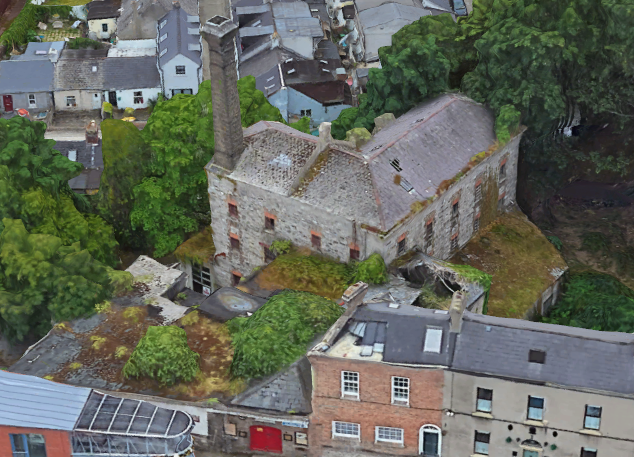
This Protected Structure, Kilmainham Mills, is an early 19th-century watermill complex on the River Camac. Vacant since 2000, it was bought by Dublin City Council in 2018 and stabilised in 2023, but full restoration is currently “in abeyance,” and the site is at risk of renewed dereliction.
Below is a webpage I built to highlight dereliction in Ireland, propose solutions, and showcase heritage buildings and at-risk sites.
📍 Protected Structure Research (Vacancy & Dereliction):
https://t.co/o8E3xUXzzW
#HousingCrisis #DerelictIreland #VacantIreland #Dublin #Ireland #Heritage #HeritageAtRisk ,
Central Tokyo has on average 6 dedicated purpose built public restrooms per square kilometer (maxing at over 12 in very central locations like Shibuya, 120-130k nighttime pop). London in comparison has 0.01 per square kilometer. These numbers do not include Tokyo's convenience stores that often have restrooms open to the public (12 per square kilometer) nor the other shops or restaurants or stations (497 train and subway stations have public restrooms).
#GoodUrbanism means extensive, numerous, clean and safe, public restrooms.
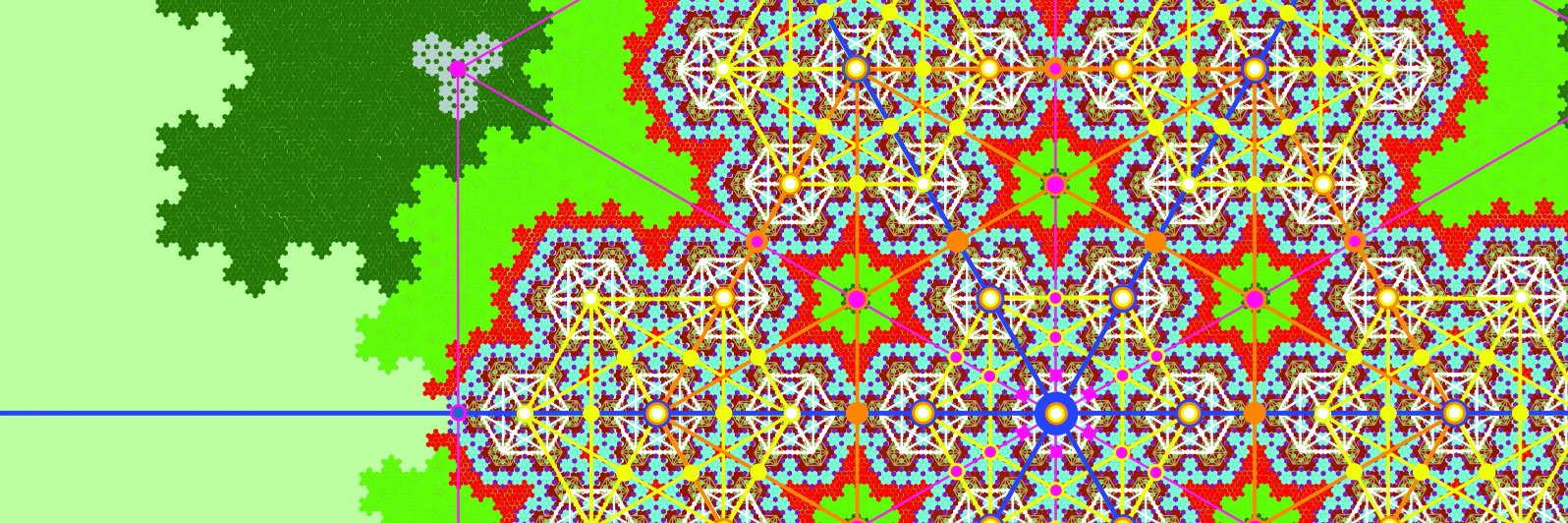
Fractal Garden City Model 2014 | (The Hamiltonian is ready) Polycentric, Time-Calibrated, Nested Mixed-Use Neighbourhood Units, Integrated Agroecological Greenspaces, Biomimetically Scalable, Denser Re-Organised Revival of Howards Garden City.
Urban Core Fractal D≈1.77, Greenspaces Fractal D≈1.26.
Uses a Hex Spatial Unit calibrated to create optimum density. 6 Essential Social Urban Functions delivered via 12 land use types are mapped to K-Cycle waves and Maslow's Latter Needs Hierarchy for socio-economic stability and needs satisfaction across multiple dimensions.
Modular design, with hexagonal tiling facilitates urban infill/extensions/retrofits and integration with, or avoidance of natural geographical features. 19 street type configurations, formulate diverse neighbourhoods, within 7 different district-scale formations, nested in 2 different vale types within one highly heterogenous City-Scale model.
Very high info-theoretic efficiency, machine readable, perfect for CA-ABM hybrids, AI-assisted participatory planning, and easily translated to QUBO for Quantum Optimisation.
(The Hamiltonian is ready)
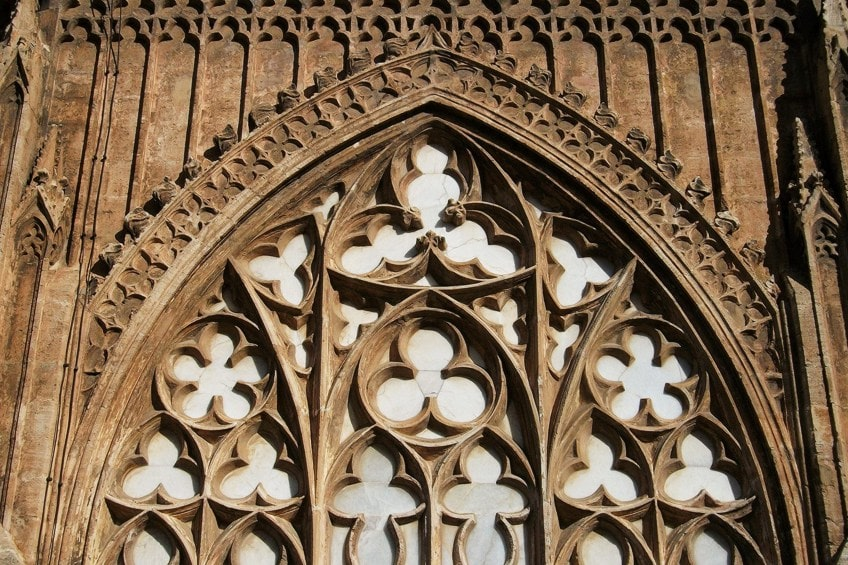
Every generation before the 20th century carved ornament into their buildings as a matter of course.
One generation decided to stop: They removed it from schools, from practice, and from the entire profession.
The only generation in history whose buildings nobody wants to live near...
@BenBrownBBC Nick Maynard: "it seemed to us like this was almost like a game of target practice. We're going to shoot the head today. Tomorrow it'll be the chest. The next day it'll be the testicles"
July 2025
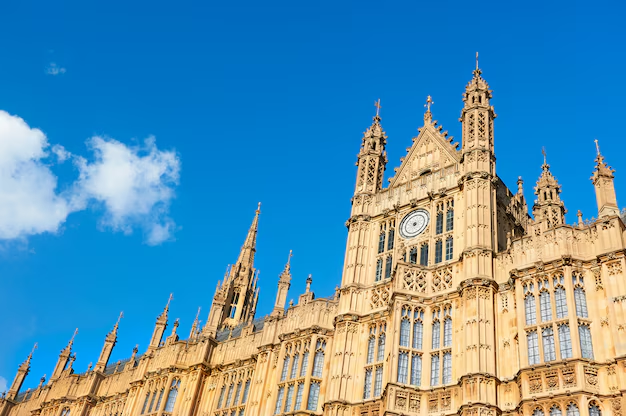
The British government is spending £2 million a week just to stop the Parliament from falling down.
Running repairs up 70% in three years
The full restoration will cost up to £22 billion
The Public Accounts Committee said it could collapse before work ever begins
Someone has to actually fix it
That is what Gondor is for...
“Air pollution fell substantially as Paris restricted car traffic and made way for parks, people-streets and bike-lanes.”
Better for the climate, better for health, better for livability and quality of life.
Common sense.
Such a no-brainer, it’s remarkable that more cities HAVEN’T done the same.
https://t.co/YwgDbhDGft
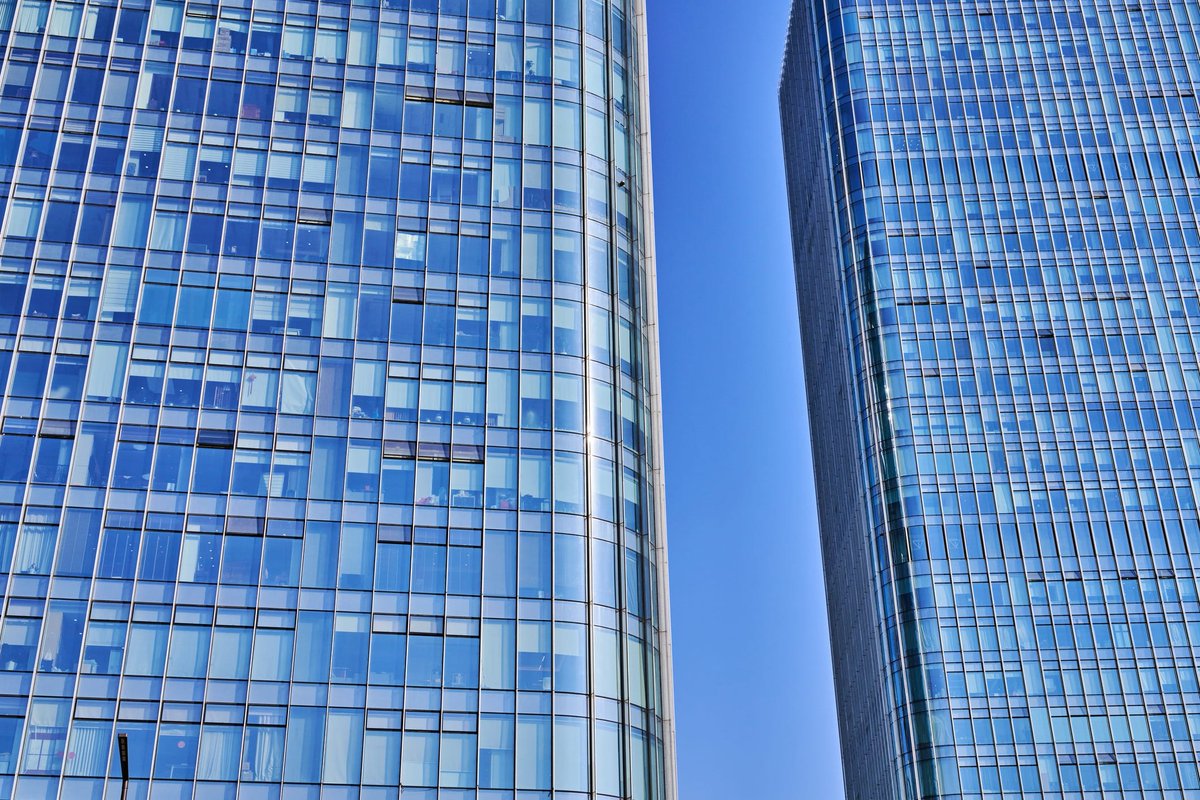
Design for a mass timber skyscraper in Copenhagen
The arched columns are inspired by local waterfront warehouses and gateways
By Vilhelm Lauritzen Architects
Access to nature is a class issue.
When developers push for lower standards it deepens inequality and it's the poorest who pay.
A Labour government shouldn't be making life greyer and less healthy for these communities.
Nature belongs to all of us - not just the richest.
Avant / Après Rue de Châteaudun dans le 9ème arrondissement de Paris. Le stationnement à gauche a été remplacé par de la chaussée, les arbres plantés en 2024 paraissent maintenant "au milieu" de la rue. A droite c'est un couloir de bus élargi partagé avec les vélos.
Some of the best projects I have shared here are from one architect. Francis Kéré grew up in Gando, a small village in Burkina Faso with no school. As a child he walked 40 kilometres to sit in a classroom that was dark, airless and suffocating. He went to Berlin, studied architecture, and came back. Something most African experts in the diaspora never do.
He came back to fix what he had lived through.
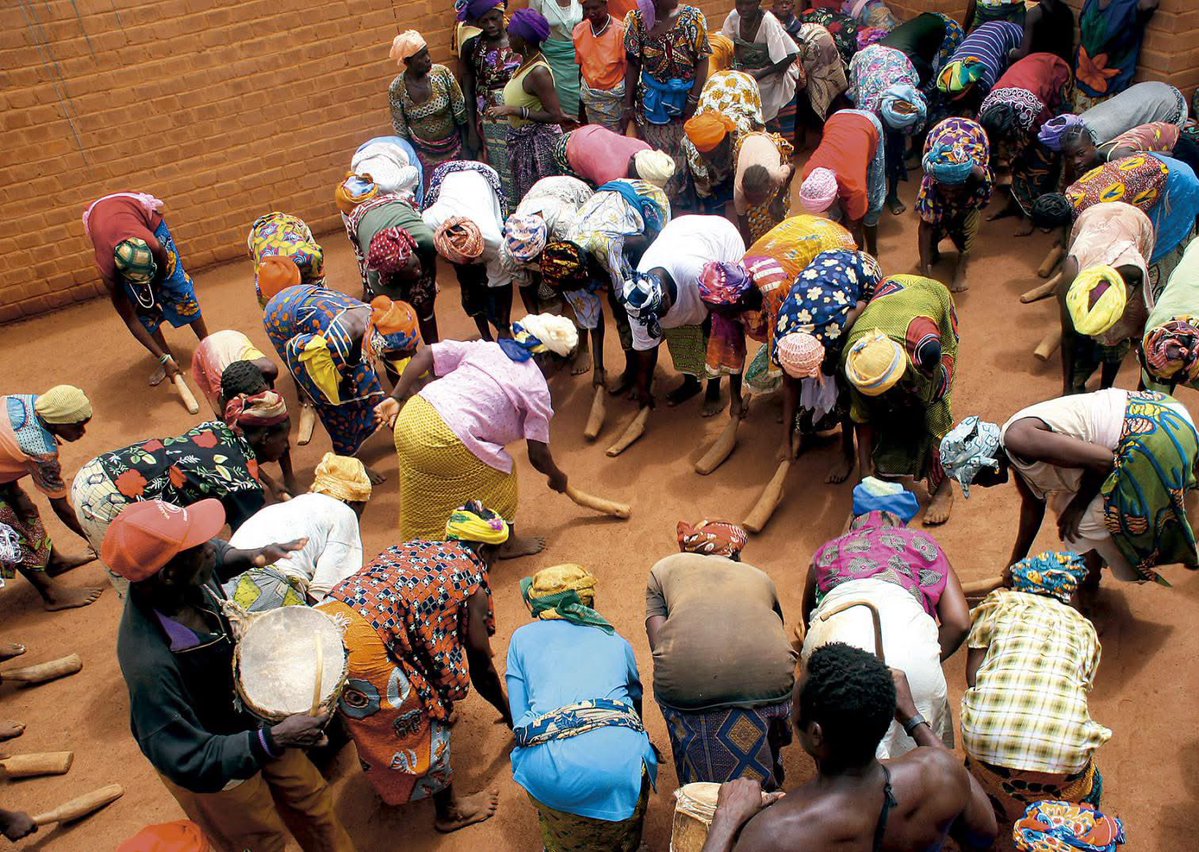
Gando Primary School was completed in 2001. The bricks are local clay stabilized with a small amount of cement, made on site by the community. Children gathered stones for the foundation. Women hauled water for brick production. The entire village built their own school. That decision was not just logistical. It was economic. Every material purchased stayed in the local economy. Every skill learned on that construction site stayed in the hands of the people who learned it. The building created income, training and dignity before it was even finished.
The roof floats above the building. A perforated brick ceiling sits below it with a deliberate gap between the two layers. Hot air rises and escapes through the perforations before the metal canopy above can transfer its heat into the classroom. Temperatures outside exceed 40 degrees Celsius. Inside, children can learn.
This is what community centered infrastructure looks like. The community is not the beneficiary at the end of the process. They are the process. They build it, they own it, they maintain it, because it was never handed to them. It was built with them.
It won the Aga Khan Award for Architecture in 2004 and launched one of the most consequential architectural practices working in Africa today. One man returned home, built with what the ground offered, and proved that the most advanced climate solutions and the most dignified economic development can come from the same handful of earth.
Kéré Architecture | Gando, Burkina Faso 🇧🇫 | 310 m² | 2001
📸 Siméon Duchoud, Erik Jan Ouwerkerk
Thousands of protected-structure buildings lie vacant or derelict across Dublin, and in every city, town, and village in Ireland. Many could be brought back into use as homes. Here is an example: mid-19th-century terraced houses opposite the Phoenix Park entrance gates on Conyngham Road, Dublin 8, owned by the state body CIÉ since 1965 and vacant since the 1980s.
Here’s a webpage I set up with useful links that guide people through the various available grants:
"Protected Structure needing major repair" — protected-structure owner planning significant works
or
"Georgian townhouse converted into apartments for rent" — multi-unit conversion of a Protected Structure
💶Grants: https://t.co/QC0BV1FV2t
🏚️Detail: https://t.co/p0FWulbx6t
👀Google Street View:
https://t.co/QnuzI2Vnsl
#HousingCrisis #DerelictIreland #VacantIreland #Dublin #Ireland #HeritageAtRisk #BuildingAtRisk
Do you own a vacant space above a shop or commercial premises?
The Vacant Above the Shop Grant offers up to €135,000 to convert vacant upper-floor spaces into residential use, while retaining the existing commercial premises.
Learn more at https://t.co/l5UWuznW3w
Fractal Garden City Model 2014 | (The Hamiltonian is ready) Polycentric, Time-Calibrated, Nested Mixed-Use Neighbourhood Units, Integrated Agroecological Greenspaces, Biomimetically Scalable, Denser Re-Organised Revival of Howards Garden City.
Urban Core Fractal D≈1.77, Greenspaces Fractal D≈1.26.
Uses a Hex Spatial Unit calibrated to create optimum density. 6 Essential Social Urban Functions delivered via 12 land use types are mapped to K-Cycle waves and Maslow's Latter Needs Hierarchy for socio-economic stability and needs satisfaction across multiple dimensions.
Modular design, with hexagonal tiling facilitates urban infill/extensions/retrofits and integration with, or avoidance of natural geographical features. 19 street type configurations, formulate diverse neighbourhoods, within 7 different district-scale formations, nested in 2 different vale types within one highly heterogenous City-Scale model.
Very high info-theoretic efficiency, machine readable, perfect for CA-ABM hybrids, AI-assisted participatory planning, and easily translated to QUBO for Quantum Optimisation.
(The Hamiltonian is ready)