Google is so powerful that it "hides" other search systems from us. We just don't know the existence of most of them.
Meanwhile, there are still a huge number of excellent searchers in the world who specialize in books, science, other smart information.
Here's a list of sites you may have never heard of!
https://t.co/hLHSvB1Joo - Academic Resource Search. More than a billion sources: encyclopedia, monographies, magazines.
https://t.co/tzsXqbrCJD - a search for the contents of 20 thousand worldwide libraries. Find out where lies the nearest rare book you need.
https://t.co/Fm78bG5hyH - access to more than 10 million scientific documents: books, articles, research protocols.
https://t.co/JvTczb6j6o is a library of scientific bioscience journals published in developing countries.
https://t.co/ZtsaKUl9Jy - volunteers from 102 countries have collected almost 4 million publications on economics and related science.
https://t.co/aBLUtUW6a8 is an American state search engine on 2200+ scientific sites. More than 200 million articles are indexed.
https://t.co/IAzkF2ErNt is one of the most powerful researches on academic studies texts. More than 100 million scientific documents, 70% of them are free
https://t.co/6ujFPDG4AQ
Ecosia is a not-for-profit tech company that plants and protects trees. By dedicating 100% of its profits to the planet, Ecosia has planted over 214,229,374 million trees since its founding in December 2009
https://t.co/ZrIBFqf207
Yandex is a technology company that builds intelligent products and services powered by machine learning. Our goal is to help consumers and businesses better navigate the online and offline world. Since 1997, we have delivered world-class, locally relevant search and information services.
https://t.co/Duwc39PTkx
Project Gutenberg is a library of over 75,000 free eBooks
https://t.co/hOuRZFcDao
“Protection. Privacy. Peace of mind. Get our browser on all your devices.
Search and browse with the DuckDuckGo browser for more protection. Unlike Chrome and other browsers, we don't track you.”
https://t.co/hIAOHavGYB
Presearch is a community-powered, decentralized search engine that provides better results while protecting your privacy and rewarding you when you search.
https://t.co/BoWNlciH7N
Reliable information for all kinds of research
https://t.co/tPY4FcMJDR
Startpage is a global privacy technology company built around the principle of always putting privacy first. Our suite of easy-to-use privacy products helps anyone around the world to protect their personal data online.
from Christopher Seymore
6/ Chain 6: The Quality Checker (Final Step - Always Run This)
"Review everything we've discussed in this conversation. Now quality-check our work:
1. What biases might exist in our analysis? (Confirmation bias, recency bias, etc.)
2. What counterarguments haven't we fully considered?
3. Rate the confidence level of each major claim (High/Medium/Low)
4. What would make this analysis stronger?
5. If an expert criticized our conclusions, what would they say?
Be brutally honest. Poke holes in our own work."
This saved me from publishing garbage analysis at least 6 times.
5/ Chain 5: The Synthesis Engine (Run After Chain 4)
"We've built foundation, explored perspectives, identified gaps, and done deep research. Now synthesize everything:
1. What are the 3 most important insights from our entire conversation?
2. How do all the pieces connect? Draw the big picture.
3. What would I be confident saying is true vs. what's still uncertain?
4. If I had to explain this to someone in 2 minutes, what would I say?
5. What's my action plan based on everything we've learned?
Create a clear, actionable summary of our entire chain."
This turns 5 fragmented outputs into one coherent intelligence brief.
4/ Chain 4: The Deep Dive Researcher (Run After Chain 3)
"Take the gaps we identified. For each gap, help me research deeper:
1. What would an expert study or investigate to fill this gap?
2. What methodologies or frameworks apply here?
3. What real-world examples or case studies exist?
4. What are the leading theories or models that address this?
5. Create a research roadmap: What should I explore first, second, third?
Give me a structured deep-dive plan with specific next steps."
Now you're doing PhD-level research in minutes, not months.
3/ Chain 3: The Gap Identifier (Run After Chain 2)
"Looking at those 5 perspectives we just explored, now identify:
1. What critical information is missing from ALL perspectives?
2. What assumptions are they making that could be wrong?
3. What questions remain unanswered?
4. What data would we need to validate or reject each viewpoint?
5. Where do the perspectives contradict each other - and why?
Highlight the gaps in our current understanding."
This is where basic ChatGPT users stop. You're just getting started.
2/ Chain 2: The Perspective Multiplier (Run After Chain 1)
"Based on the foundation we just built, analyze [specific question about topic] from these 5 perspectives:
1. A skeptic who thinks this won't work
2. An expert practitioner with 10+ years experience
3. A beginner encountering this for the first time
4. Someone who tried and failed at this
5. A researcher looking at data, not opinions
For each perspective, give me their strongest argument and evidence."
Suddenly you're not getting one answer. You're getting 5 expert panels worth of insights.
1/ Chain 1: The Foundation Builder (Always Start Here)
"I need to research [topic]. Before we dive in, help me build a solid foundation:
1. What are the 5 core concepts I must understand first?
2. What common misconceptions exist about this topic?
3. What's the current expert consensus vs. emerging debates?
4. What questions should I be asking that I'm not?
Give me a structured overview that prevents surface-level understanding."
This sets the context for everything that follows. Skip this and your chain breaks.
I ACCIDENTALLY DISCOVERED "PROMPT CHAINING" IN CHATGPT.
IT TURNED BASIC OUTPUTS INTO RESEARCH-GRADE INTELLIGENCE.
HERE ARE 6 CHAINING PROMPTS THAT MULTIPLY AI POWER BY 10X:
Our AI Hub for Nonprofits is an actively curated list of articles, podcasts, resources, tools, and webinars about the use of AI in the nonprofit sector: https://t.co/Yc9ZkpRrSV ☑️
A bold prediction backed up with product! 💥
"In 2024, English will replace #SQL as the lingua-franca of business analysts", asserts Nima Negahban, the CEO and co-founder of @KineticaHQ.
What Will 2024 Bring to Advance Analytics? - https://t.co/6PJVLjFbKR
Designing your interview presentation?
DON’T just dive into PowerPoint.
Strategise on paper first, pinpoint the Department's goals, and frame your content to address those directly.
Show that you're thinking like a team member already.
Microlearning leverages the brain’s natural inclination to process information in short, focused sessions, facilitating better learning transfer and leaving a lasting impact on students. @edutopia
Designing Effective Microlessons
https://t.co/eWbrVHMImF
Thank you @anthonydmays for writing this helpful article on how to read job descriptions. I really appreciate the breakdown of each part of the job description and why they matter 😀
https://t.co/Fx6zOO7mxp
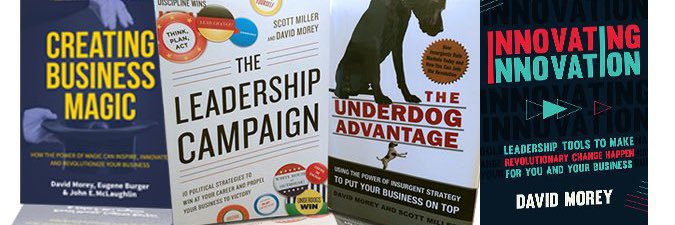
Handling complex problems the right way by applying insurgent strategy,
https://t.co/lths51LByk https://t.co/Y64Y2xjx3z #ProblemSolving#Innovation https://t.co/bGzeUeRO7M