Most of the obituaries and tributes to David Hockney will, I imagine, focus primarily on his extraordinary craft and brilliance as an artist. Perhaps they might also mention his brilliance as a communicator (he was such a fine writer and speaker).
But there was something else rather unique about him too. He was also strikingly honest about the tricks/techniques artists use and used to paint. His book Secret Knowledge is a rather wonderful detective work into how renaissance and Dutch golden age painters used glass and mirrors to help them master perspective.
It's a pretty compelling case (see this video clip from a BBC doc he made alongside the book👇) though I'm sure some art historians will raise their eyebrows. Many will be aghast at the notion that greats like Vermeer might have been using lenses and camera obscuras to help them draw and paint. As if it were in some way "cheating". But Hockney was so self-evidently brilliant he was one of the few people who could document this without anyone gainsaying his own talent.
There are very few artists, living or dead, who have this degree of self-confidence. Not just to know their craft, but to be bracingly honest about how it works. One other who comes to mind is Paul Simon: not just an extraordinary musician but is also an extraordinary communicator about the tricks and techniques of how to write and perform music.
For many great artists, the temptation is to cloak their crafts in mystery, like a member of the magic circle. Hockney wasn't having any of it. So yes, he was a legend in all the obvious ways. But also in a few other less obvious ways as well. RIP.
I lost my beloved daughter Grace O’Malley-Kumar in the Nottingham attacks. She was a 19 year old medical student. She fought a marauding man almost twice her age armed with a dagger. She tried to protect a friend and paid the ultimate price. She placed,
‘friendship before fear’
#graceomalleykumarfoundation #graceomalleykumarcup
Scottish Rugby is immensely saddened to learn of the death earlier today of former Scotland and British & Irish Lions centre, Scott Hastings. He was 61.
@tomkington How does an element like potassium increase as the banana ripens? It could potentially become more bioavailable. But it would surely contain the same quantity.
205 years ago today, Napoleon Bonaparte died on a tiny British prison island in the middle of the South Atlantic. He was 51. He had ruled most of Europe. And he changed the world so thoroughly that you are still living inside the systems he built.
Start with the obvious one. The Napoleonic Code. He commissioned it in 1800, sat in on the drafting sessions personally, argued with the lawyers, and pushed it through in four years. Equality before the law. Property rights. Religious freedom. The end of feudal privilege. It is still the basis of civil law in France, Belgium, the Netherlands, Italy, Spain, Portugal, most of Latin America, Quebec, Louisiana, and chunks of the Middle East and Africa. About a third of the planet writes contracts using rules a Corsican artillery officer wrote between battles.
He sold Louisiana to Thomas Jefferson in 1803 for 15 million dollars. Roughly four cents an acre. It doubled the size of the United States overnight. Without that deal there is no St. Louis, no New Orleans as an American city, no Lewis and Clark, no Manifest Destiny. The American century starts with Napoleon needing cash for a war.
He invaded Egypt in 1798 with an army and, weirdly, 167 scientists, mathematicians, and artists. They found the Rosetta Stone. That single slab is the reason we can read hieroglyphs at all. Egyptology as a field exists because Napoleon brought scholars to a war.
He built the Bank of France, which still runs French monetary policy. He created the lycée system that still educates French teenagers. He shoved the metric system across Europe at sword-point until it stuck. He emancipated the Jews of every territory he conquered, tearing down ghetto walls in Rome, Venice, Frankfurt. He abolished serfdom in Poland. He standardized road networks, civil registries, and tax codes that European governments still operate from.
And then there's the soldiering. He fought around 60 major battles and won most of them. Austerlitz, in 1805, against the combined Russian and Austrian empires, is still taught at West Point as one of the closest things to a tactically perfect battle ever fought. He was outnumbered, baited the enemy onto ground he had pre-selected, and broke them in a single afternoon. Three emperors took the field that morning. Only one walked off it on his own terms.
He slept four hours a night. He read constantly, dictated letters to four secretaries at the same time, and personally signed off on everything from cavalry boot specs to the seating chart at the Comédie-Française. Wellington, the man who finally beat him at Waterloo, was asked decades later who the greatest general in history was. He answered without hesitating. "In this age, in past ages, in any age, Napoleon."
He lost, in the end, because he could not stop. Russia in 1812 swallowed his army whole. Six hundred thousand men marched in. Maybe a tenth came back. He abdicated in 1814, escaped from Elba, ruled France again for 100 days, and lost it all for good in a wheat field in Belgium in June 1815.
The British shipped him to St. Helena, a volcanic dot 1,200 miles off the African coast, and waited. He spent six years there dictating his memoirs, gardening, complaining about the dampness, and quietly rewriting his own legend so effectively that Europe spent the next century arguing about him.
He died on May 5, 1821, during a storm so violent it ripped up the willow tree he liked to read under. His last words trailed off into fever. France. The army. Joséphine.
Nineteen years later France brought him home. Two million people stood in the snow to watch the coffin go by.
He was a tyrant. He was a reformer. He started wars that killed somewhere between three and six million people. He also wrote the rulebook that a third of humanity still lives under.
Most people who try to conquer the world are forgotten inside a generation. Napoleon has been dead for 205 years and we are still arguing about him because we are still using his furniture.
My musical tribute to Football Focus: the BBC One football show which is to end this summer after 52 years. As a kid I spent many Saturday lunchtimes watching it when it was part of Grandstand. Here’s the Grandstand theme by Keith Mansfield. @BBCSport@BBCMOTD@BBCRadio3
I grew-up close to where the attack on this North West London synagogue took place. Everyone I know there is shocked and disgusted that a Jewish place of worship has been targeted. Hate crimes must never be tolerated. I hope the perpetrators are brought to justice.
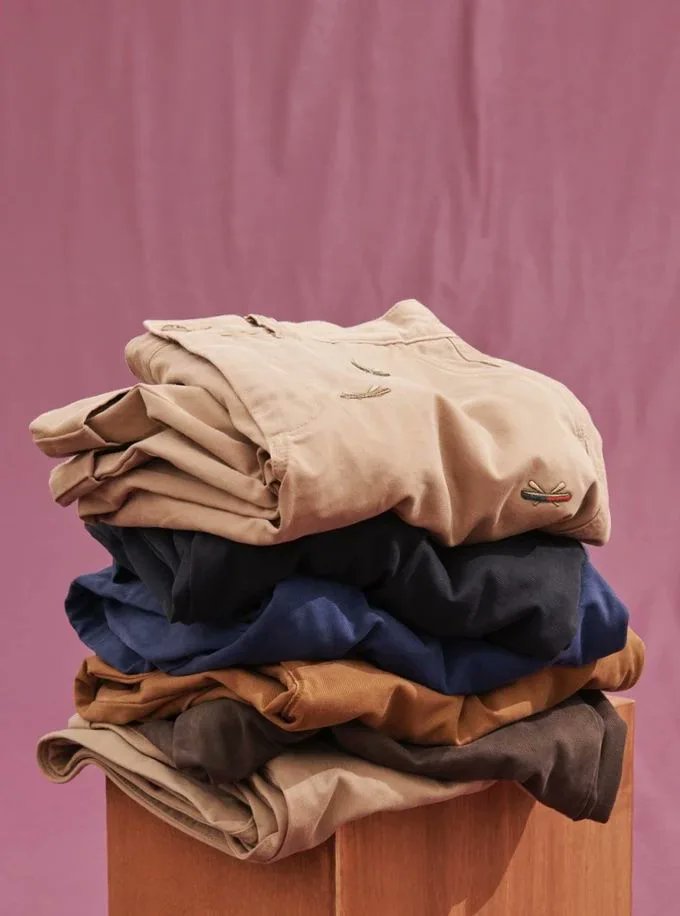
Someone asked if I could tell them where to buy a pair of good chinos. In this thread, I will tell you, but my answer is not simple. On the upside, I think this is a better approach when shopping for clothes and you can apply it to any kind of item. 🧵
Simon Pegg on why he thinks fast Zombies are pointless & the movies that Edgar Wright & he watched in preparation for "Shaun of the De@d" (2004):
"Interviewer: What do you think of the trend towards fast moving zombies?
Pegg: I think it's kind of pointless. For me, zombies are supposed to be slow. The word zombie comes from "somnambulist," which means sleepwalker. They're creepier when they're are slow, plus when they're fast, you can't share any screen time with them because you're always running away.
Interviewer: What was the process for you and Edgar?
Pegg: We watched a lot of siege movies like 'Straw Dogs' (1971), 'Assault on Precinct 13' (1976) and a lot of well-structured films like 'Back to the Future' (1985) and 'Raising Arizona' (1987). Then, we literally wrote out scenes on index cards."
(Simon Pegg's interview with Daniel Robert Epstein)
P.S: On this day, 22 years ago, "Shaun of the De@d" (2004) premiered in London, England.
Glorious entertainment at the Palladium tonight watching Clinton Baptiste commune with the spirit world in a classic venue. Ably supported by a mobility-scootering Barry from Watford before the interval. Song, dance and non stop laughter throughout. Loved it.
21 February 1946. Aneurin Bevan announced the Labour Government’s proposals for a National Health Service. The service began on 5 July 1948. Its introduction represented one of the greatest social reforms in British History which helped every citizen.
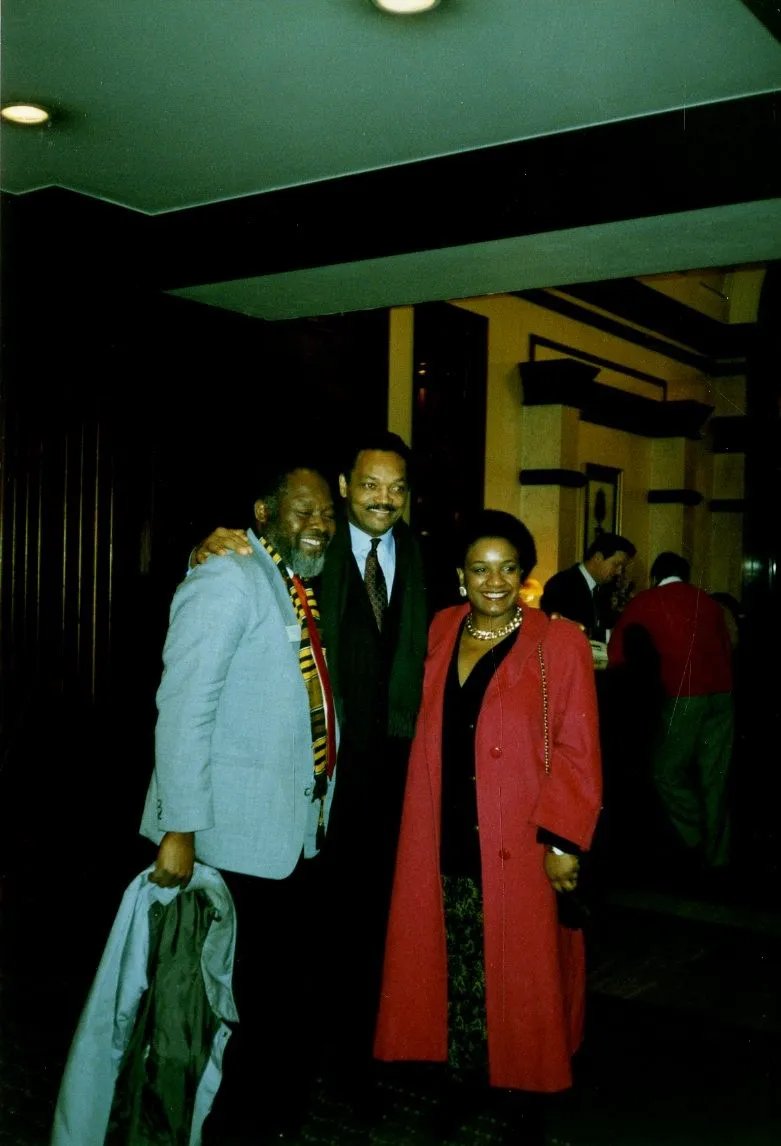
I first met Rev. Jesse Jackson when I was a new MP in 1987. He was very smart, warm and hugely charismatic.
A direct connection to the great era of civil rights.
RIP.
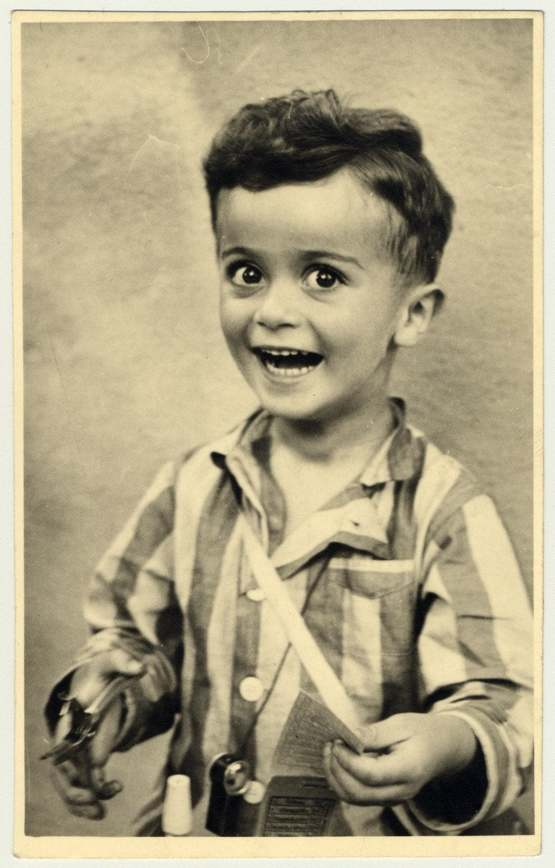
Once again, I post this @AuschwitzMuseum photo of Istvan Reiner, as I do every year on #HolocaustMemorialDay. The Nazis had given him a ticket punch to play with. Such a radiant, happy little soul, innocent and pure. And then they gassed him, and snuffed him out. #NeverForget🕯️
Let me tell you something. People don’t talk about this enough. They really don’t.
The European Union? It’s big. It’s strong. Tremendously strong. Twenty-seven countries — working together. That’s power. That’s leverage. That’s winning.
When you’re in the EU, you don’t go it alone. You negotiate as a bloc. The biggest trading bloc in the world. Bigger than anyone. And when you sit at the table like that, people listen. Believe me.
Jobs? Millions of them. Real jobs. Manufacturing, services, science, tech — all of it. Businesses invest because they know the rules are stable. They know the market is huge. They like certainty. Businesses love certainty.
Freedom of movement — people say it’s complicated. It’s not. It’s simple. You want to work? You work. You want to study? You study. You want to retire in the sun? You retire in the sun. No endless paperwork. No begging for visas. Just opportunity.
And let’s talk about influence. When Europe sets standards, the world follows. On trade. On consumer protection. On the environment. On digital rules. That’s leadership. That’s being in the room where decisions are made — not waiting outside hoping someone texts you the result.
The EU isn’t perfect. Nobody says it is. But it’s a deal — and it’s a very good deal. Shared strength. Shared prosperity. Shared future.
And frankly? Countries do better when they work together. The numbers prove it. The jobs prove it. The opportunities prove it.
That’s not ideology.
That’s just winning.