Sharing the real lessons behind every trade.
Every piece of advice I give here is a conversation I give to myself, to continuously improve. You too can gain.
Why I Keep Pushing in Forex Trading🧵
Whenever I went to the market to trade with my dad, I would also visit a friend at his office. His office isn’t in the market like my dad’s, but in the evenings, after the market closed, I would go there to have some evening hangout with him and his friends. My friend is a successful businessman, so his office was always filled with people having evening discussions about business.
One statement from one of his friends about my forex trading has stayed with me and fueled my desire to succeed in this career. He didn’t say it to ridicule me, but what I understood from his words was a reflection of the fear and doubt many people have about trading. Most people who haven’t fully grasped the concepts or the potential of forex often focus only on the losses or the belief that success is rare.
His exact words were:
"Guy, where have you been, this forex boy? Have you made it in this forex trading since you introduced us to it? You know, I’d rather use my money to bet on two informed teams winning every week for a whole season than put my money into forex."
I had shown them forex charts years ago, back in 2018, and he made this statement in 2024. I wrote it down in my journal to remind myself of the limitations people place on their expectations of success.
This statement is now a motivation for me. One day, by God’s grace, I will show tangible proof that trading can truly be profitable.
@ohajielom This is a great advice for every trader and mostly swing traders. For traders that constantly are in the arena, this will do them little service.
My take on this 'Olodo Uprising' issue.
From the perspective and experience of someone struggling in life to become the best version of himself, while being constantly stretched on the rollercoaster of information and addiction to social media.
My first Twitter profile, which is still active but now used seldomly due to a personal decision stemming from the content I consumed on it, is a vivid explanation of the impact of social media on reasoning, thought processing, attention span, and intent to consume specific information.
The type of content that filled my timeline was a result of the choice of accounts I followed at the initial stage when I joined X and the consequent accounts I continued following. As time went by, I found myself constantly scrolling and searching for content that only entertained my being. I became so engrossed in it that my life was quietly being directed towards only content that triggered entertainment.
Whenever I came across educational content or something that would elicit deep thought, I would scroll by and pass it. Years later, I noticed that my trajectory wasn't going in the direction I wanted. It took me a lot of self-reflection to attribute a huge part of my downward spiral in performance to the rate at which I frequented my account and the soaking of my soul for long hours into downloading and internalizing trivial content that didn’t push my thought boundaries or improve my life in the direction I wanted.
That was when I created this account that has been my main and active account. What I did was specifically select the niche I needed to focus on, which was everything about trading, followed specific accounts that were trading-related, and currently and consciously dismiss any pop-up of accounts that post content that is not trading-related.
Also, I actively avoid opening trending topics that will end up messing with my timeline. I only open ones that are intellectually important.
So that subtle social engineering of content through algorithms has been minimized to the barest minimum on this account.
I chose to consciously do this. Now imagine people who struggle to have this self-awareness and the sheer will to push through this, who are in the millions. They will end up consuming content that shows up on their page, as the algorithm will constantly push highly engaged content first before pushing intellectual content, if not specifically sought out by oneself.
NIGERIANS DO NOT HAVE SHORT ATTENTION SPANS. THEY WILL WATCH A 24 HOUR FIGHT BETWEEN CONTENT CREATORS, BUT CALL FIVE PARAGRAPHS OF EDUCATIONAL CONTENTS “TOO LONG.” IS THIS NOT THE PERFECT DEFINITION OF THE OLODO UPRISING?
The so called “Olodo Uprising” is not merely about people who did not perform well in school. It is not an attack on content creators, comedians or people without university degrees. It describes a dangerous culture in which ignorance is deliberately displayed, celebrated, rewarded and defended as though refusing to think is now a form of authenticity.
The biggest problem is not even with the people producing empty content. The biggest problem is the audience consuming it. Nigerians have repeatedly demonstrated that they would rather be entertained than educated, distracted than informed, and emotionally stimulated than intellectually challenged.
Post something foolish, controversial or completely meaningless, and millions of people will gather within hours. Post something that teaches financial literacy, law, science, history, health, politics or personal development, and the same people suddenly become too busy to read.
People claim that educational content is boring, but they can spend six uninterrupted hours watching strangers quarrel online. They cannot read ten paragraphs explaining something that could improve their lives, but they will read five thousand comments beneath a celebrity scandal that contributes nothing to their future.
One of the clearest examples of the “Olodo Uprising” is how some people react whenever I make my usual posts about law, finance and trading.
Even when a post contains only a few short paragraphs, you will see people complaining that they cannot read it. Many of them have already decided not to read it simply because they consider it too long.
But when the post or topic is about a fight between two content creators, something that will add absolutely nothing to their lives, they do not mind watching a 24 hour video, interview or livestream. They suddenly have the time, patience and attention.
The perfect real life example is this: 90% of the people who see this post will simply swipe past it because they do not want anything meaningful to hold their attention for three to five minutes. Ironically, many of these same people are criticising Ycee and condemning the “Olodo Uprising.”
That is the perfect definition of the “Olodo Uprising”: people would rather be entertained for hours than educated for a few minutes.
This is why the “Olodo Uprising” continues to grow. Social media rewards what people repeatedly consume. The algorithm did not independently decide that foolishness should dominate Nigerian social media. Nigerians have continuously voted for it with their attention, reposts, comments, laughter and money.
Every time you promote meaningless drama while ignoring valuable information, you are helping to build the culture you later complain about. Every time you make an unserious person famous merely because they are loud, you are teaching the next generation that noise is more profitable than knowledge.
We now live in a society where someone can explain an important economic policy and receive little engagement, while another person can intentionally mispronounce simple words, display ignorance or start an unnecessary fight and become a national conversation. That is not merely entertainment. It reveals what society values.
There is nothing wrong with entertainment. Human beings need laughter, music, comedy and relaxation. But entertainment becomes dangerous when it completely replaces education, critical thinking and meaningful public conversation.
A serious society knows how to entertain itself without worshipping ignorance. It can celebrate comedians while respecting scholars. It can reward content creators while still honouring lawyers, doctors, engineers, teachers, researchers, writers, entrepreneurs and skilled professionals.
But Nigeria increasingly treats intelligence as arrogance and ignorance as relatability. Speak thoughtfully, and people accuse you of trying to sound intelligent. Speak confidently without understanding the subject, and thousands of people applaud you for being “real.”
We have created an environment where people are no longer embarrassed by what they do not know. Instead of asking questions and learning, they defend their ignorance aggressively. They insult anyone who corrects them and gather other uninformed people to turn their error into a movement.
The ability to make money does not automatically make someone intelligent, informed or worthy of imitation. Money proves that a person has found something the market rewards. It does not prove that everything the person says is correct or that their behaviour should become society’s standard.
Education is also bigger than possessing a university degree. A person can hold several certificates and remain intellectually lazy. Another person may never attend university but may constantly read, learn, question ideas, develop valuable skills and demonstrate exceptional intelligence.
Therefore, the real enemy is not the uneducated person. The enemy is the person who glorifies remaining uninformed, ridicules learning and encourages millions of young people to believe that knowledge, competence and discipline are unnecessary.
The most dangerous part is what children are learning from this culture. They can clearly see who receives attention, endorsement deals, invitations and money. They are watching society reward spectacle more loudly than substance, and many of them will naturally imitate whatever appears to produce success.
You cannot consistently make foolishness profitable and then become surprised when more people choose foolishness. You cannot ignore intelligent creators, refuse to share educational content and then complain that social media contains nothing valuable.
Many people defending the “Olodo Uprising” are confusing the right to earn money with immunity from criticism. Content creators have every right to earn an honest living. Society also has every right to examine the values their content promotes and the influence it has on younger audiences.
Nigeria needs entertainment, but Nigeria also needs citizens who can analyse policies, identify misinformation, understand contracts, manage money, question political leaders and make rational decisions. A country facing serious economic, legal, technological and security problems cannot afford to make critical thinking unfashionable.
The uncomfortable truth is that many Nigerians do not genuinely want education. They want entertainment disguised as education. The teacher must dance, shout, create controversy, use comedy and compress a complex subject into thirty seconds before they are willing to listen.
That demand is gradually forcing intelligent people to either become entertainers or remain invisible. Meanwhile, loud people with little knowledge dominate serious discussions because they understand how to capture attention. We are allowing popularity to replace credibility and virality to replace competence.
The “Olodo Uprising” will not end by attacking one influencer or mocking people who struggled academically. It will end when the public changes what it rewards. Follow people who teach you something. Share useful information. Celebrate excellence. Ask better questions. Demand substance from the people you make famous.
Until Nigerians learn to value education as much as entertainment, the “Olodo Uprising” will continue. The painful truth is that the uprising is not being imposed on us. We are financing it, promoting it and strengthening it every day with our attention.
Most times, I am in this dilemma of using my real name on my twitter profile or just my username. At the end of this year I'll definitely have to make a profound choice and live through it endlessly.
NIGERIANS DO NOT HAVE SHORT ATTENTION SPANS. THEY WILL WATCH A 24 HOUR FIGHT BETWEEN CONTENT CREATORS, BUT CALL FIVE PARAGRAPHS OF EDUCATIONAL CONTENTS “TOO LONG.” IS THIS NOT THE PERFECT DEFINITION OF THE OLODO UPRISING?
The so called “Olodo Uprising” is not merely about people who did not perform well in school. It is not an attack on content creators, comedians or people without university degrees. It describes a dangerous culture in which ignorance is deliberately displayed, celebrated, rewarded and defended as though refusing to think is now a form of authenticity.
The biggest problem is not even with the people producing empty content. The biggest problem is the audience consuming it. Nigerians have repeatedly demonstrated that they would rather be entertained than educated, distracted than informed, and emotionally stimulated than intellectually challenged.
Post something foolish, controversial or completely meaningless, and millions of people will gather within hours. Post something that teaches financial literacy, law, science, history, health, politics or personal development, and the same people suddenly become too busy to read.
People claim that educational content is boring, but they can spend six uninterrupted hours watching strangers quarrel online. They cannot read ten paragraphs explaining something that could improve their lives, but they will read five thousand comments beneath a celebrity scandal that contributes nothing to their future.
One of the clearest examples of the “Olodo Uprising” is how some people react whenever I make my usual posts about law, finance and trading.
Even when a post contains only a few short paragraphs, you will see people complaining that they cannot read it. Many of them have already decided not to read it simply because they consider it too long.
But when the post or topic is about a fight between two content creators, something that will add absolutely nothing to their lives, they do not mind watching a 24 hour video, interview or livestream. They suddenly have the time, patience and attention.
The perfect real life example is this: 90% of the people who see this post will simply swipe past it because they do not want anything meaningful to hold their attention for three to five minutes. Ironically, many of these same people are criticising Ycee and condemning the “Olodo Uprising.”
That is the perfect definition of the “Olodo Uprising”: people would rather be entertained for hours than educated for a few minutes.
This is why the “Olodo Uprising” continues to grow. Social media rewards what people repeatedly consume. The algorithm did not independently decide that foolishness should dominate Nigerian social media. Nigerians have continuously voted for it with their attention, reposts, comments, laughter and money.
Every time you promote meaningless drama while ignoring valuable information, you are helping to build the culture you later complain about. Every time you make an unserious person famous merely because they are loud, you are teaching the next generation that noise is more profitable than knowledge.
We now live in a society where someone can explain an important economic policy and receive little engagement, while another person can intentionally mispronounce simple words, display ignorance or start an unnecessary fight and become a national conversation. That is not merely entertainment. It reveals what society values.
There is nothing wrong with entertainment. Human beings need laughter, music, comedy and relaxation. But entertainment becomes dangerous when it completely replaces education, critical thinking and meaningful public conversation.
A serious society knows how to entertain itself without worshipping ignorance. It can celebrate comedians while respecting scholars. It can reward content creators while still honouring lawyers, doctors, engineers, teachers, researchers, writers, entrepreneurs and skilled professionals.
But Nigeria increasingly treats intelligence as arrogance and ignorance as relatability. Speak thoughtfully, and people accuse you of trying to sound intelligent. Speak confidently without understanding the subject, and thousands of people applaud you for being “real.”
We have created an environment where people are no longer embarrassed by what they do not know. Instead of asking questions and learning, they defend their ignorance aggressively. They insult anyone who corrects them and gather other uninformed people to turn their error into a movement.
The ability to make money does not automatically make someone intelligent, informed or worthy of imitation. Money proves that a person has found something the market rewards. It does not prove that everything the person says is correct or that their behaviour should become society’s standard.
Education is also bigger than possessing a university degree. A person can hold several certificates and remain intellectually lazy. Another person may never attend university but may constantly read, learn, question ideas, develop valuable skills and demonstrate exceptional intelligence.
Therefore, the real enemy is not the uneducated person. The enemy is the person who glorifies remaining uninformed, ridicules learning and encourages millions of young people to believe that knowledge, competence and discipline are unnecessary.
The most dangerous part is what children are learning from this culture. They can clearly see who receives attention, endorsement deals, invitations and money. They are watching society reward spectacle more loudly than substance, and many of them will naturally imitate whatever appears to produce success.
You cannot consistently make foolishness profitable and then become surprised when more people choose foolishness. You cannot ignore intelligent creators, refuse to share educational content and then complain that social media contains nothing valuable.
Many people defending the “Olodo Uprising” are confusing the right to earn money with immunity from criticism. Content creators have every right to earn an honest living. Society also has every right to examine the values their content promotes and the influence it has on younger audiences.
Nigeria needs entertainment, but Nigeria also needs citizens who can analyse policies, identify misinformation, understand contracts, manage money, question political leaders and make rational decisions. A country facing serious economic, legal, technological and security problems cannot afford to make critical thinking unfashionable.
The uncomfortable truth is that many Nigerians do not genuinely want education. They want entertainment disguised as education. The teacher must dance, shout, create controversy, use comedy and compress a complex subject into thirty seconds before they are willing to listen.
That demand is gradually forcing intelligent people to either become entertainers or remain invisible. Meanwhile, loud people with little knowledge dominate serious discussions because they understand how to capture attention. We are allowing popularity to replace credibility and virality to replace competence.
The “Olodo Uprising” will not end by attacking one influencer or mocking people who struggled academically. It will end when the public changes what it rewards. Follow people who teach you something. Share useful information. Celebrate excellence. Ask better questions. Demand substance from the people you make famous.
Until Nigerians learn to value education as much as entertainment, the “Olodo Uprising” will continue. The painful truth is that the uprising is not being imposed on us. We are financing it, promoting it and strengthening it every day with our attention.
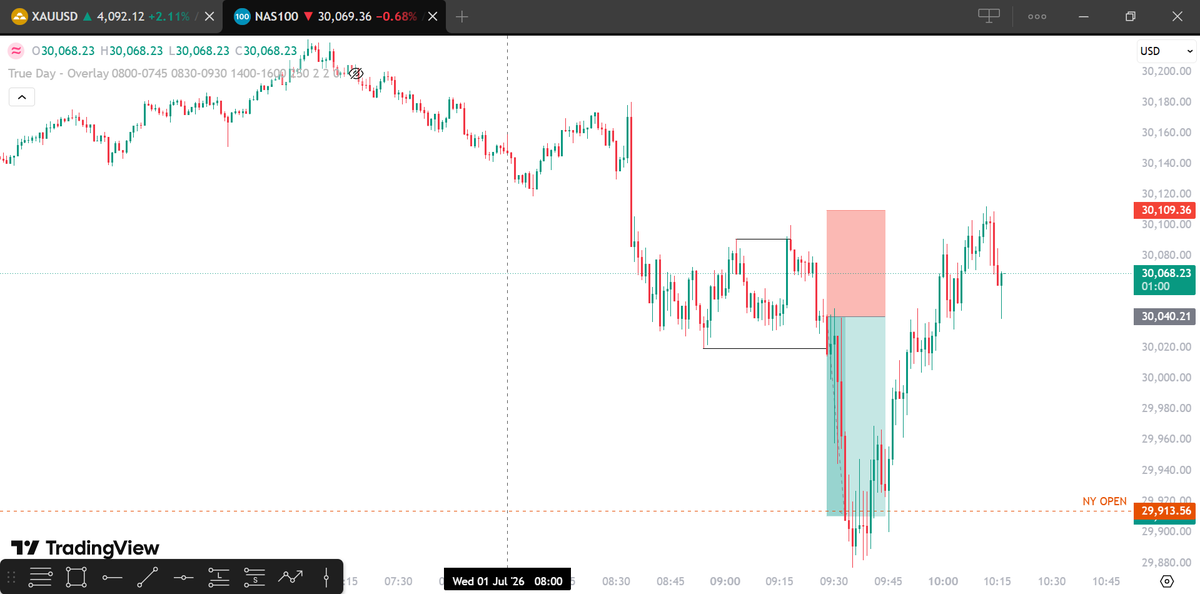
CLASSIC MODEL.
Today's trade on $GOLD
SSL taken
MSS complete
FIRST PRESENTED FVG marked out.
Trade executed as price retraced to FVG.
Target at current Buyside liquidity.
CLASSIC MODEL.
Today's trade on $GOLD
SSL taken
MSS complete
FIRST PRESENTED FVG marked out.
Trade executed as price retraced to FVG.
Target at current Buyside liquidity.