Agente di sviluppo, economista. Il mio motto è molto con poco. Mi piace il coworking, il riciclo e il riuso e la sharing economy. Mi occupo edilizia scolastica
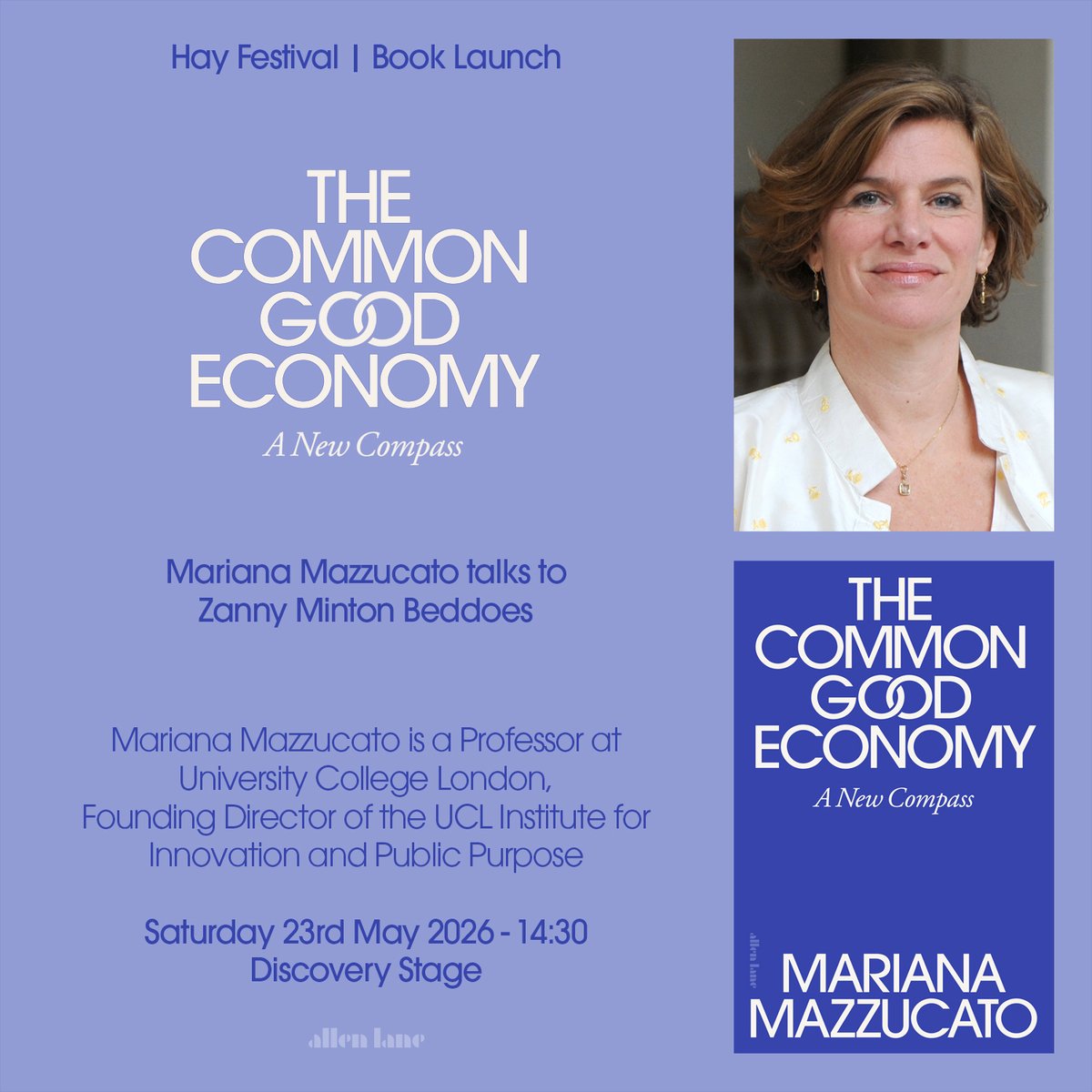
Economies are failing. Not by coincidence, but by design. If the best economics can offer is public goods or corrections to market failures, it is not surprising that good is impossible to achieve. In my new book The Common Good Economy, I argue that purpose, participation, reciprocity, shared learning, shared benefits and accountability are not additions to the economy, they are fundamental.
On 23 May I'll be at @hayfestival in conversation with @zannymb, Editor-in-Chief of @TheEconomist, to discuss the book. Links in replies.
We can't do 'good' in the economy without a new economic theory of what 'good' is. That is the starting point of my new book, The Common Good Economy.
Join me at @hayfestival on 23 May in conversation with @zannymb, Editor-in-Chief of @TheEconomist. Pre-order and ticket links in replies.
Too often the debate about government is about size — slimming it down or scaling it up. The real question is whether public institutions have the dynamic capabilities to set direction, coordinate across sectors, experiment and learn. At @CityLab this morning presenting the @IIPP_UCL Public Sector Capabilities Index — the first global attempt to measure these capabilities in city governments.
Culture is not a sector at the margins of the economy. It shapes what societies value, invest in, protect and imagine — and therefore what markets produce and make possible.
I am honoured to be appointed @_TheWhitechapel’s first Economist-in-Residence, extending our Public Value of Arts and Culture work to examine how culture creates public value — and how that value can be governed and sustained.
Growth is not the mission. It is the outcome of investment and innovation directed at solving real challenges — clean energy, healthy food, decent housing.
Speaking this morning at the National Growth Debate, hosted by @GoodGrowthFdn.
Our economic system is broken. Climate crisis accelerating. Inequality deepening. Public trust crumbling. Wealth concentrates while governments scramble to fix what markets can't do, rather than shape them from the outset.
Presenting my new book The Common Good Economy live at @HowToAcademy—a reimagining of economics and a manifesto for a future economy that serves people and planet.
How we achieve collective goals—through participation, reciprocity and reward-sharing—matters as much as what those goals are.
2 June | 19:00 | St Martin-in-the-Fields | Ticket link below
New working paper with Rainer Kattel: governments are stuck using frameworks designed to fix market failures. But climate, inequality and technological transformation require shaping collective futures—not patching up existing ones.
Market-Shaping States reframes the state as a co-creator of public value, not just a market corrector. This requires capabilities to set direction, coordinate across silos, experiment under uncertainty and learn from what works.
Read more ➡️ https://t.co/uG02EbD4n8
Thank you to @FEPS_Europe and @LaszloAndorEU for honoring me with the Progressive Person of the Year Award.
Great to highlight our work @IIPP_UCL translating economic theory into practice across academia, government and civil society with leaders in the European labour movement.
More about our @IIPP_UCL work on missions ️ ➡️ https://t.co/4hCq5ob0ac
Great to speak about our school meals research at a food systems event at #COP30 hosted by @FAO and @GAINalliance. Designed well, school meals are an opportunity for industrial strategy to bring climate, nutrition, and economic goals into alignment.
Our @IIPP_UCL report here ➡️ https://t.co/nAtYT3PHKB
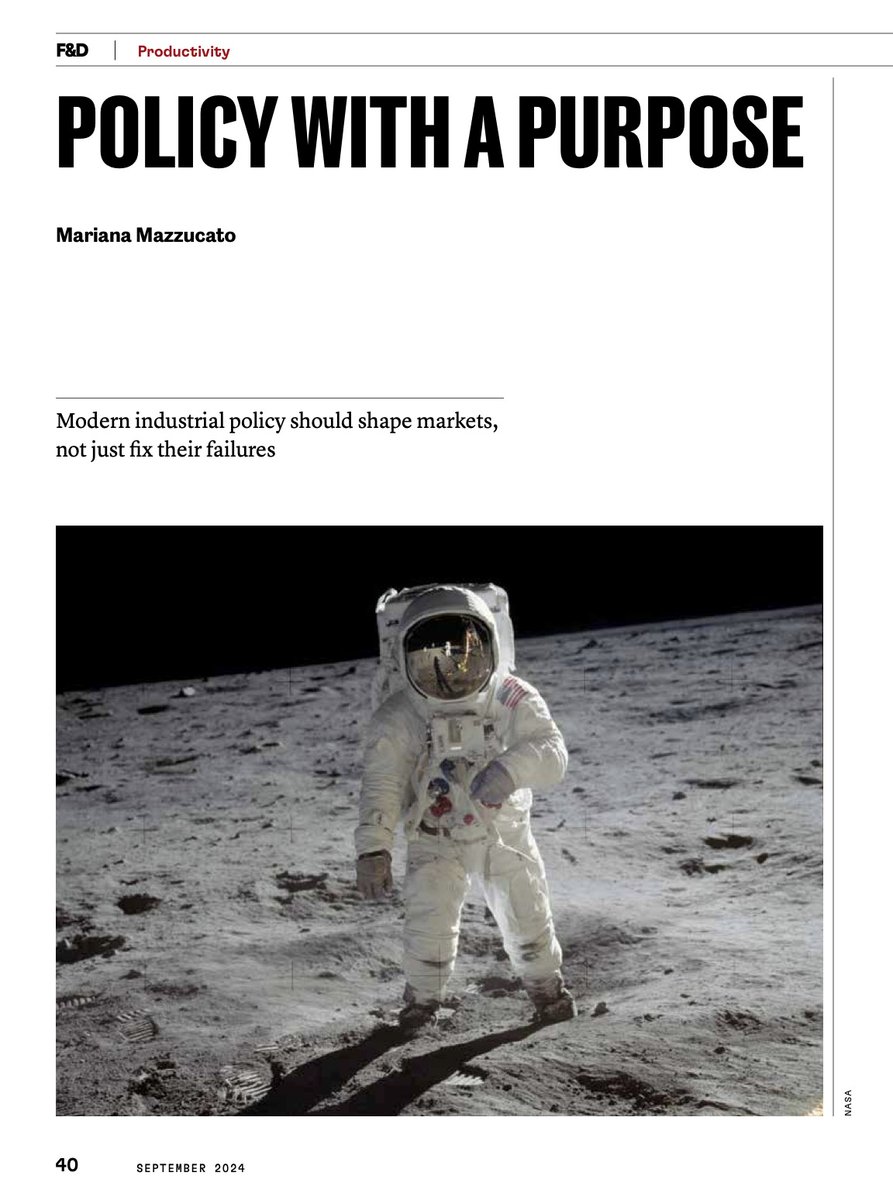
In our recent @IMFNews F&D Magazine article, we argue that effective industrial strategy requires new forms of public-private collaboration. It's about aligning stakeholders around common missions, from green transitions to digital transformations.
Read more: https://t.co/GE5aXMdJpr
Per la Conferenza Episcopale Italiana l’autonomia regionale differenziata è un “pericolo mortale”, perché è una #secessionedeiricchi
Intervista al Vicepresidente Savino su Repubblica
Perché è importante investire nelle infrastrutture scolastiche al Sud? Perché si contrasta la povertà educativa, che lì è molto più alta. (Relazione Bankitalia p.146)
(Ecco perché è così negativo il taglio del fondo perequativo infrastrutturale fatto dal governo Meloni&Fitto)
The Mayoral election is next Thursday.
The choice is clear: a Tory candidate who doesn’t share London’s values, or my plans for a fairer, safer and greener city for all Londoners.
If you love London - vote for it. #VoteLabour
La mia personale storia dell’Italia repubblicana parte con la scelta fatta da Antonio in Puglia, perché mi ha insegnato che “La storia siamo noi. Siamo noi padri e figli. Siamo noi Bella Ciao, che partiamo”.
14 mesi di lavoro, circa 70 persone e altrettanti saggi, più di 50 presenti alla festa, da tutta Europa. E @fabriziobarca all’oscuro di tutto. Un piano ben riuscito e un libro non usuale, diciamo👇
#ClimateChangeAfrica2024
Our recommendations: a collaborative mission-oriented
approach to enhance #climate#finance in the #African continent:
1. an international mission-oriented approach
2. strenghtening policies, governance, and institutions
3. adopting alternative finanzial instruments
Adele Fusi, Sustainability Consultant #TEHA