@typedfemale Not sure if this is relevant. If your vector can be represented by a matrix product state (or some more complicated tensor network), you can simply multiply the matrix Kronecker factors with the tensors of the vector.
Noise is for good reasons seen as the main antagonist to #quantumcomputing. Here, we provide evidence and prove that saddle points can be avoided in #variationalquantumalgorithms by exploiting stochasticity: The right kind of #noise can be helpful.
https://t.co/H3V1RgOMXT
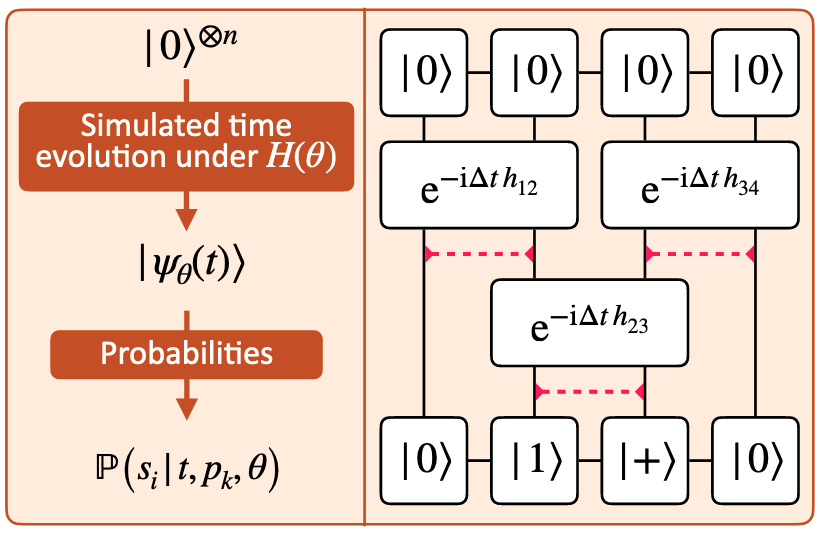
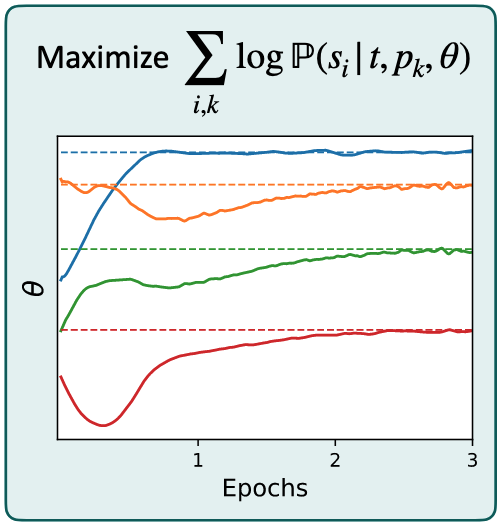
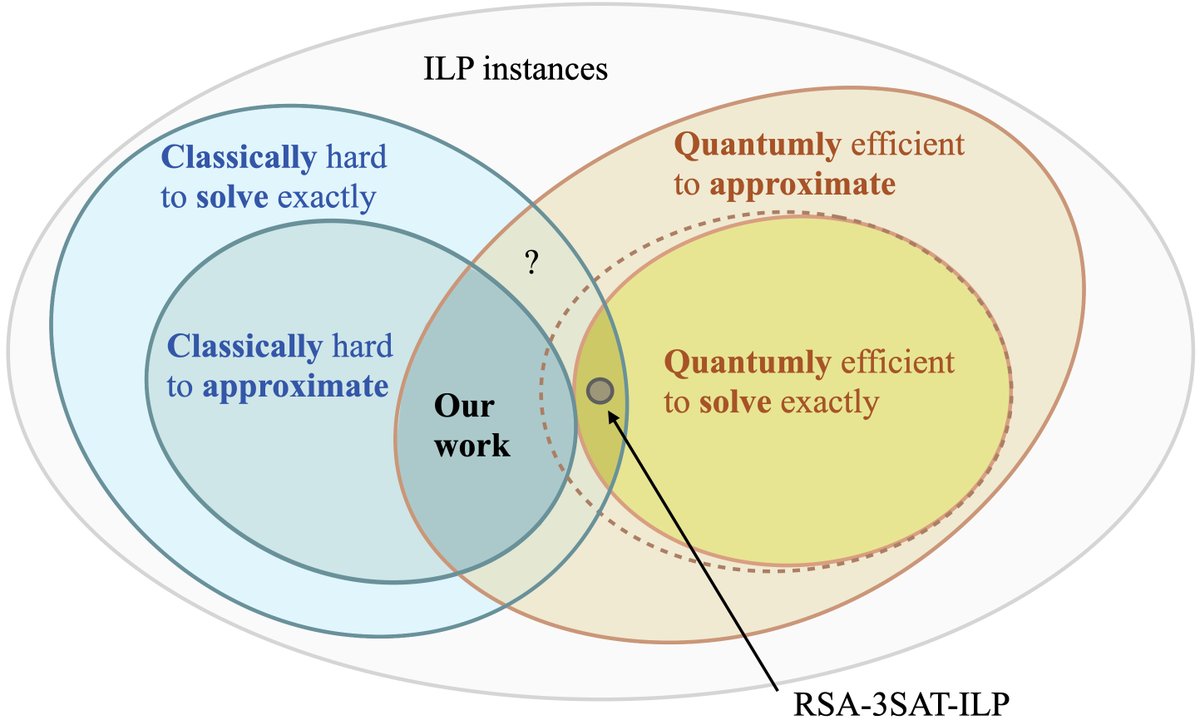
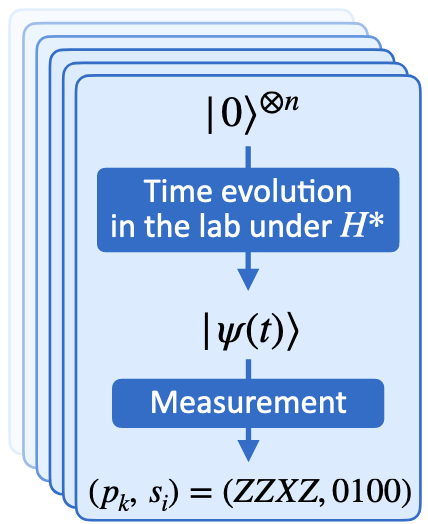
Very happy with our new paper on Hamiltonian learning
https://t.co/iZFwQCbWth
We use auto-diff to train a tensor-network based simulator (TEBD) on dynamical measurement data.
This piece of work is particularly close to my heart. It presents a scalable and highly experimentally friendly method of #Hamiltonianlearning, by combining ideas of #tensornetworks and #machinelearning. It has been in the making for over two years.
https://t.co/bsmoemfGt6
@ccanonne_ The section of code where this happens probably looks something like this:
// this throws an error
errors.errorRaiser.raiseError("The printer has an error.");
@kareem_carr You can often push GPT-3 towards giving the answer you want by asking a biased question. Not arguing about the original question, just wanted to show that you can also get the opposite result.