Delivery platforms like Uber, Bolt, Glovo and Little will pay higher licence fees after the CA introduced a new licence category for the sector, effective July 29.
The new rules include:
— A new "Courier Hailing Service Provider" licence
— Sh5,000 application fee
— Sh100,000 licence fee, up from Sh30,000
— Sh100,000 annual fee or 0.4% of gross turnover, whichever is higher
— 0.5% universal service levy on annual gross turnover
— A 10-year nationwide licence
— Existing operators must move to the new licence category
The audit reveals that Finsprint, a private firm involved in the SHA payment system, deducts a 2% fee from every payment made to hospitals before the money is sent.
Strangely, it also says the firm's majority shareholder has no verifiable address.
A sharp decline in student numbers has hit universities four years after President William Ruto’s new funding model was introduced, exposing deep cracks in the system.
Data from the Ministry of Education shows that university enrolment has fallen to a seven-year low.
https://t.co/hvyjXUewCv
A Bill before Parliament seeks to require internet providers to assign every user a unique internet meter number, track usage in real time, and submit annual records to the Communications Authority.
ICJ Kenya has raised concerns that the proposal could enable mass surveillance and weaken privacy protections
KNH has increased the cost of several medical services, with some fees more than tripling since April.
Here is how some charges changed:
— Endoscopy: up 208% to Sh20,000
— Ultrasound scan: up 167% to Sh4,800
— Colonoscopy: up 155% to Sh25,000
— Endoscopy + biopsy: up 150% to Sh22,500
— Colonoscopy + biopsy: up 137% to Sh27,500
— Consultation fee: up 35% to Sh1,550
After nearly 13 years in South Africa, Ruth Wambui is among the Kenyans who have returned home this week following recent anti-migrant protests.
The mother of two opens up about building a life abroad, the persecution African foreigners face, and her emotional decision to return. #FixingTheNationNTV @NationFmKE@ericlatiff@MariamBishar@blinkypenguin
Some of the major measures under Kenya's Finance Bill 2026 officially took effect yesterday.
You can check out the new laws in our analysis in the tweet below.
Wilberforce Akello’s constitutional petition argues that the Traffic (Motor Vehicle Inspection) Rules, 2026 and NTSA’s notice of 26th June were rolled out without a Regulatory Impact Statement, without meaningful public participation and without timely tabling before Parliament, contrary to the Statutory Instruments Act and Articles 10 and 118 of the Constitution. He also challenges the blanket age‑based inspection rule as irrational and disproportionately punitive to lower‑income motorists who own older cars, turning economic status into a proxy for regulatory burden.
Substantively, the case attacks four pillars of the regime. The compulsory annual inspection for vehicles over four years old (Rule 3/“Rule 31”), the power to de‑register “Category A” salvage vehicles without notice, hearing or compensation (Rule 12/“Rule 122”), the vague offence of “any act intended to circumvent” the Rules (Rule 30(1)(d)), and the booking fees payable to NTSA which are projected to raise billions but are not tied to any disclosed costed service or public‑finance framework as required under Articles 201, 206 and 210.
Crucially, the Court has issued conservatory orders suspending the operation and enforcement of the impugned provisions and the NTSA notice of 26th June, to the extent they affect private non‑commercial vehicles, until June 2027, when the application will be heard inter partes. That means, for now, private car owners cannot be compelled to undergo the new annual inspections or pay the contested booking fees on the strength of the challenged Rules, even as enforcement continues for PSVs, commercial vehicles and school transport under the existing legal framework.
Beyond motorists’ immediate relief, this dispute is a major stress‑test of delegated legislation and administrative power in Kenya. It asks whether Executive agencies can effectively create mass-revenue-raising, criminally‑enforced obligations through subsidiary legislation and shifting press statements, or whether they must submit to the full rigour of constitutional public‑participation, reasonableness, and public‑finance safeguards before loading billions of shillings and penal risk onto citizens.
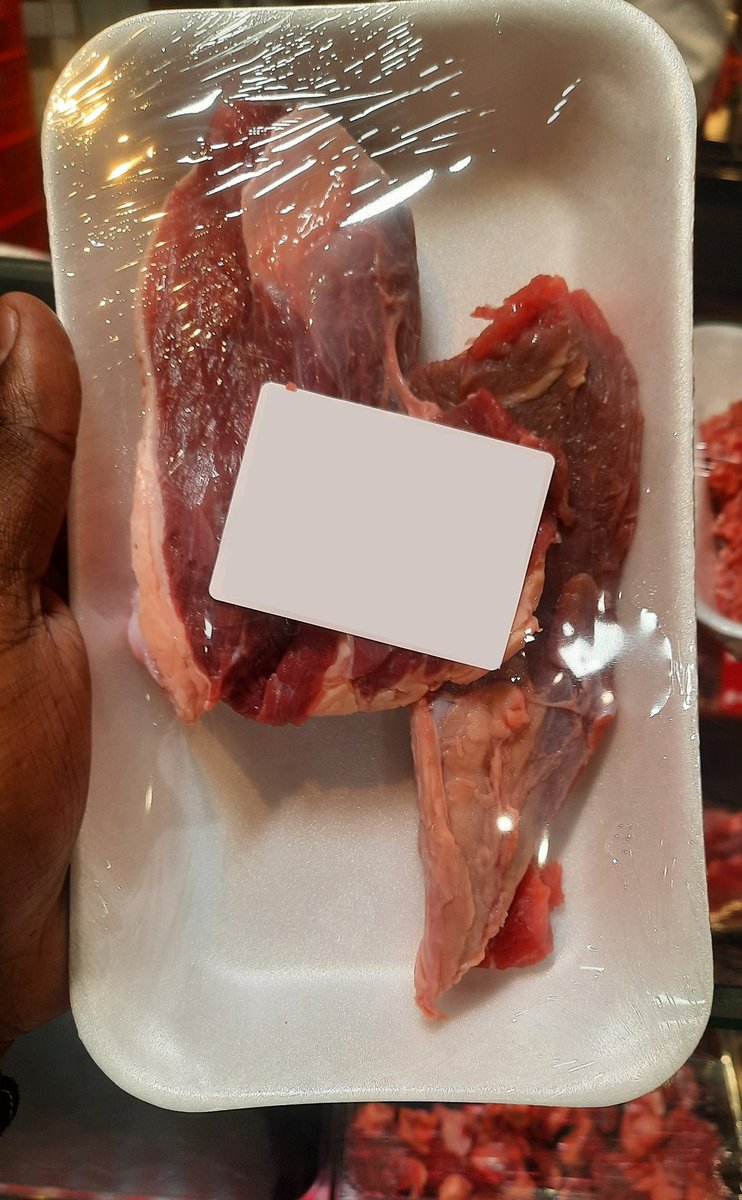
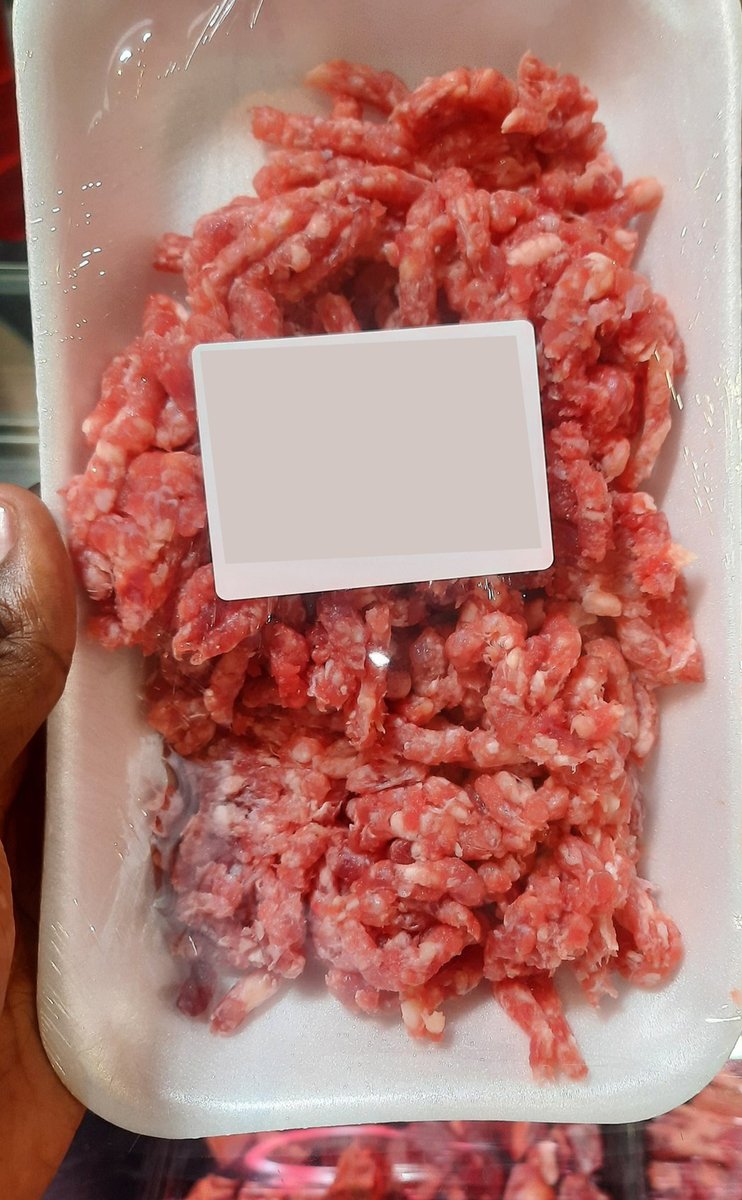
My people, as I promised, here are the long-awaited meat test results. Let me take you through everything honestly, step by step.
For the last two weeks, many of you have been asking us to look into what is really happening with the meat being sold across Kenya.
So between the 4th and 14th of this month my teams collected samples from Nairobi, Mombasa, Rongai, Ruiru, Kahawa, Juja, Eastleigh, Mukuru, Kibera, South C, Fedha, supermarkets, and a few other locations.
Some butchers were very busy places, others were small corner shops that relied on a handful of customers a day.
We did that deliberately, to see whether adulteration is a widespread issue or concentrated in certain places.
JUST IN: A Supplementary Budget has been tabled in Parliament.
State House is seeking another KSh 1 billion.
The Office of the President wants an additional KSh 200 million.
There are less than two weeks left before the financial year ends.
Kenyans are constantly told there is no money. That taxes must go up. That more loans must be taken.
Yet somehow there is always money for more spending at the top.
How do you budget for 12 months, exhaust the allocation, then come back for more days before the books close?
This is no longer about money. It is about priorities, discipline, and accountability. Ruto must go.
Wicknell Chivayo company, Chinese partner win $2.9 billion Kenya airport tender
♦️ IMC Construction is a joint venture partner with state-owned Chinese conglomerate
https://t.co/ML55QqaSoE
Ruto Booed At State House: Marsabit and Moyale Residents Reject Imaginary Projects and Mandazi Bribes
Residents of Marsabit and Moyale counties were herded to State House Nakuru yesterday like livestock for a so-called briefing on “development projects” by the British-backed war criminal and mass murderer William Ruto.
The moment the pathological liar opened his mouth - peddling fantasies about imaginary projects and shamelessly trying to steal credit for the Isiolo-Moyale highway built by Mwai Kibaki, the crowd erupted in boos, exposing the emperor’s nakedness.
Unable to stomach the barrage of empty rhetoric, the fed-up residents turned rowdy, forcing Ruto’s security to violently evict them from the venue.
They stormed out in disgust, rightly decrying the utter waste of time and the insulting emptiness of the entire charade.
In classic Ruto fashion, the regime attempted to buy their silence with a pathetic handout of two thousand (2,000) shillings each, accompanied by a few mandazis and tea - the standard bribe for subjects expected to clap for their own oppression.
Pathetic.