Irish citizens are being told their children have to go into a lottery to enroll in school because illegal migrants are given priority.
“My own child in his own local school, I was told that there's only so many spaces and first of all, diversity kids have to be picked, then the Ukrainian children will be picked, and then the local Irish children are put into a lottery system for the remaining places”
@SombirSinghjat1 BS, this was my American Staffordshire Terrier who recently passed away from cancer at 11 years old. He never bit anyone and could not have been more loving to all who met him.
In September 1887 a 23-year-old reporter spent a night in a New York boarding house pulling faces she had practised in the mirror, and within days a judge and a string of doctors had certified her insane, one of them calling her positively demented and a hopeless case, and put her on the boat to the women's asylum on Blackwell's Island.
Her name was Nellie Bly, and Joseph Pulitzer's New York World had sent her to do it. She checked into the boarding house as Nellie Brown, stared at nothing, and frightened the other lodgers until they called the police.
The judge decided she had been drugged. The head of the insane pavilion at Bellevue pronounced her undoubtedly insane. One of the examining doctors, she noted, paid rather more attention to the pretty nurse than to the patient.
On the island she dropped the act and behaved exactly like herself. It made no difference. She wrote that the more sanely she talked and acted, the crazier they thought she was.
Supper was a bowl of pinkish tea and a slab of bread with butter so rancid she could not eat it. On other days it was spoiled meat, thin broth, and bread so stale it was dried dough, one slice with a spider in it. The women were put through ice-cold baths and made to sit on hard benches from morning until night. The most troublesome were roped together by belts at the waist and marched out like a team of mules.
She met women she believed were no more insane than she was: immigrants who could not make themselves understood, and poor women nobody had come for.
After ten days the World got her out. Her articles caused a sensation, a grand jury went over to the island, and the city found nearly a million dollars more for the care of the insane.
The doctors had taken minutes to certify her.
It took her ten days to certify them.
Two Russian-built surface-to-air missiles ripped through the night clouds outside Belgrade, blew the left wing off an American F-117A stealth fighter, and pinned Lieutenant Colonel Dale Zelko to his seat under seven negative Gs as his jet tumbled toward the earth.
Fighting blood rushing into his eyeballs on the night of March 27, 1999, call sign Vega 31 reached down, pulled his ejection handles, and parachuted straight into an open farm field just miles from a major enemy airbase.
Every highway around him lit up with headlights. Soldiers, police, and tracking dogs fanned out across the dark fields to capture America's first downed stealth pilot.
Zelko buried his parachute in black mud, slid flat into a narrow drainage ditch, covered his face with dirt, and whispered a brief radio check to an orbiting Air Force tanker overhead before going dead silent.
At one point in the freezing dark, enemy searchers walked close enough along the ditch bank for Zelko to hear their boots squelching in the mud and smell their cigarette smoke.
Across the border, three U.S. Air Force special operations helicopters, two massive MH-53 Pave Lows and an MH-60G Pave Hawk packed with pararescuemen, punched straight into enemy radar and violent thunderstorms at treetop height to get him back.
Nearly six hours after the shootdown, with enemy patrols closing within minutes of his ditch, Zelko popped one infrared strobe into the mist.
Moccasin 60 flared hard out of the pitch-black clouds, two Air Force pararescuemen sprinted down the ramp with rifles raised, hauled Zelko aboard in forty seconds flat, and lifted back into the night before the search party reached the field.
@its_The_Dr VERY smart man to think to use his jacket like that!!! And ALL smart men carry a pocket knife, but not all can open them with one hand… 🔥🔥🔥👌👌👌
**Imagine being so miserable that you decide to harass a police officer working a FUNERAL PROCESSION because his patrol vehicle is parked on the GRASS. 🙄**
A family is trying to lay a loved one to rest, and THIS is the hill she chooses to die on?
Ma'am, he's helping with a FUNERAL, not hosting a tailgate party!
Some people wake up every morning looking for something to complain about.
**Read the room, Karen. And show some RESPECT!**
She is OBVIOUSLY a cop hating libtard.
In May 1942, three California families had days to pack two suitcases and leave their 90 acres of farmland behind.
Locked in detention camps for three years, they had no way to water their crops or pay the banks.
When they came home in 1945, every vine was pruned, every house was intact, and every mortgage was paid in full.
His name was Bob Fletcher.
In 1942, Bob was 30 years old and worked as a state agriculture inspector near Florin, California.
After Executive Order 9066 was signed, his Japanese American neighbors were sent to internment camps.
Before leaving, a grower named Al Tsukamoto asked Bob to look after his 40 acres of Tokay grapes.
Two neighboring families, the Okamotos and the Nittas, soon asked him to watch their grape and strawberry farms too.
Bob quit his state job.
He moved into the empty Tsukamoto farmhouse and took on all 90 acres by himself.
Then the town turned on him.
Locals were furious that a white man was protecting land for families in detention camps.
People shouted insults at him in town and told him to walk away from the fields.
One night, someone fired a bullet straight through the wall of his barn.
Bob stayed on the land.
For three years, he worked 18 hours a day watering, pruning, and harvesting all three farms alone.
With the harvest money, he paid the property taxes, water bills, and mortgages on every farm.
When the war ended in 1945, the Tsukamoto, Okamoto, and Nitta families returned to Florin.
While most detainees across California came back to lost homes, the three families walked onto thriving fields free of debt.
Bob kept half of the net profit for his three years of labor and handed the rest of the cash to the families.
Decades later, he brushed off praise and said he simply did what any neighbor should do.
Bob Fletcher lived to be 101 years old and died in Sacramento in May 2013.
Three families left their farms with two suitcases, and one neighbor took a bullet through his barn wall and worked 18 hours a day for three years so they could come home to 90 acres of paid land.
Muslim woman sets up ISLAMIC PREACHING STALL on CHRISTMAS-LIT LONDON STREET — blasting LOUD ISLAMIC CHANTS as shoppers WALK BY
FACES BACKLASH over alleged DELIBERATE 'PROVOCATION' — critics ACCUSE her of PURPOSEFULLY choosing festive location as she SMILES at camera
🚨BREAKING UPDATE: ICE detained Mexican nationals Ricardo Larrondo Mendoza and his daughter Sofia Hernandez Mejia at Seattle-Tacoma Airport — the same pair who entered for the World Cup and never left after it ended in July.
Their visas expired months ago. They stayed anyway. On Saturday, while boarding an Alaska Airlines flight to Los Angeles, ICE arrested them for overstaying. During the stop on the jet bridge, Hernandez Mejia threw hot coffee on the federal officers.
Washington Governor Bob Ferguson called ICE “out of control.” The media called them an “innocent family.” The facts show two people who came for a soccer tournament, overstayed their legal stay, and then one assaulted the agents enforcing the law.
America is not a hotel you check into for the World Cup and never check out of. Overstaying is illegal. Throwing hot coffee on ICE is a felony assault. ICE did its job. If you don’t want to be detained, don’t break the law.
Understand?
If you ever want to meet the backbone of America, look inside a work truck heading to an oilfield in the dark in February.
In Green River, Wyoming, a 33-year-old oilfield derrickhand named Ryan Pasborg was driving to his shift when he smelled smoke and saw flames glowing inside a split-level house.
Outside in the February cold, three kids who had escaped screamed that their 4-year-old brother and their mom were still inside.
Pasborg went in through the garage, climbed the steps, and hit smoke so thick it forced him flat onto his hands and knees.
Listening through shrieking smoke detectors, he crawled three feet into the black kitchen, felt the 4-year-old boy on the floor, hooked his right arm around him, and crawled backward to carry him out.
He put all four kids inside his warm work truck. Then he turned around and went back into the burning house a second time.
Back on his hands and knees in blistering heat, he crawled until he found their unconscious 34-year-old mother, dragged her down the steps and out the garage, performed CPR on her himself, and drove the whole family down their long driveway in his work truck to meet the ambulances.
Both the boy and his mother survived. Pasborg breathed in smoke, turned down medical treatment, and went on with his life.
Armed hijackers corner a woman in her own Alberton driveway, and instead of waiting to become another statistic, she slams her car straight into them.
Nobody in South Africa should have to fight off gunmen at their own gate because the ANC refuses to keep people safe.
(Alberton, Aug 2018)
As someone from Japan, one thing about America never stops amazing me: what this country will launch into the sky for two ordinary citizens with a flashlight.
This September, rising Arctic river water trapped two hunters on a remote bank of the Kukpowruk River, 120 miles north of Kotzebue, Alaska.
Bad weather blocked the local search-and-rescue helicopter from getting through.
So Alaska Air National Guard's 176th Wing launched a four-engine HC-130J Combat King II transport plane and scrambled an HH-60W Jolly Green II helicopter from Eielson Air Force Base.
When the HC-130J crew spotted the hunters' tent and a tiny flashlight beam, a low cloud ceiling hung right over the river, limiting helicopter operations.
The Pararescuemen of the 212th Rescue Squadron did not turn back and wait for a sunny day.
They strapped on a pack raft and conducted a low-altitude parachute jump straight out of the plane beneath the Arctic clouds while the crew airdropped a second raft and survival gear.
On the ground, those elite combat rescuers rigged an overhead rope system across the swollen river, ferried both hunters safely to shore, and then gathered wood and started a campfire on the riverbank just to keep two cold strangers warm until a helicopter could finally slip in and fly them home.
In December 1927, Navy divers outside a sunken submarine tapped hammers on the steel hull to talk to six living sailors they had no way to save.
Inside the dark hull off Massachusetts, those six men tapped Morse code back until winter storms drove help away and their air ran out on the ocean floor.
A submarine officer named Charles Momsen could not get those six trapped men out of his head.
He could not bear the thought of another crew sitting on the bottom of the sea, tapping on steel in the dark and waiting to die.
With fellow officer Allan McCann, he spent years building a steel rescue chamber made to ride a cable down, seal over a hatch, and pull men out dry.
On the morning of May 23, 1939, the new submarine Squalus dove off Portsmouth, New Hampshire, on a test run when a main air valve failed to close.
Freezing seawater flooded the rear rooms and killed 26 men before a crewman slammed the bulkhead door shut.
The hull sank 243 feet to the bottom in total darkness.
Beyond that door, 33 survivors huddled in blankets in the freezing dark and spread chemical powder so their own carbon dioxide would not kill them.
Nobody in history had ever rescued a crew alive from a submarine that deep.
Momsen rushed out aboard the rescue ship Falcon with the steel chamber he had built for this moment.
The next morning, a diver descended 243 feet through icy dark water and fastened a guide cable onto the forward hatch.
Operators lowered the chamber, sealed it tight, passed hot soup down to the freezing men, and lifted 7 survivors up into fresh air.
Two more trips brought up 9 men each, leaving the last 8 survivors waiting in the dark below.
On the fourth climb, with all 8 remaining men sealed inside, the guide cable jammed in the deep.
Pulling harder by machine risked snapping the wire and dropping all 8 men back to the ocean floor.
Momsen sent divers into the freezing water to cut the tangled cable, then lined sailors along the wet deck of the Falcon to haul the heavy chamber up hand over hand.
Just after midnight, nearly 40 hours after the Squalus sank, the chamber broke the surface and the last 8 men stepped onto the deck alive.
More than a decade after six sailors died waiting in the dark off Massachusetts, the officer who refused to forget them brought all 33 survivors of the Squalus home.
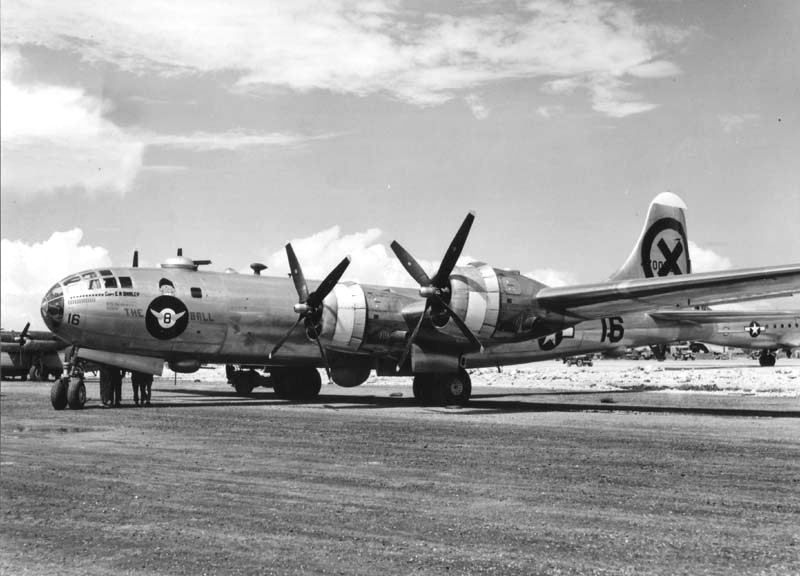
In 1964, forty-two-year-old Air Force Reserve Lieutenant Colonel Michael Novosel, who had flown giant B-29 bombers out of Tinian at the end of World War II, tried to volunteer for active duty in Vietnam.
The Air Force turned him down flat: they had too many senior officers, and at forty-two he was considered too old for a combat cockpit.
So Novosel walked across the street to the U.S. Army and made an astonishing offer: strip off my Lieutenant Colonel silver oak leaves, drop me down to Warrant Officer, and let me fly unarmed "Dustoff" medical ambulance helicopters so nineteen-year-old kids do not bleed to death in the mud.
At age forty-seven, on October 2, 1969, flying an unarmed Huey with zero gunship cover, Novosel made fifteen separate passes into point-blank machine-gun fire, getting shot in the leg and hand and even hovering backward up to an enemy bunker to pull twenty-nine surrounded soldiers to safety, earning the Medal of Honor.
Then his story somehow got even better.
His twenty-year-old son, Michael Novosel Junior, became an Army Warrant Officer too and requested assignment to his father's exact same Dustoff ambulance unit.
During a single week in March 1970, Mike Junior's helicopter went down with engine failure over hostile territory, and his forty-seven-year-old dad diverted overhead and rescued his own son. Exactly seven days later, enemy gunfire blew the tail rotor off the father's helicopter and sent him crashing into a flooded rice paddy, and twenty-year-old Mike Junior flew straight in and rescued his dad.
Before retiring as the last active-duty World War II aviator in the U.S. military, the father who gave up his rank personally evacuated five thousand five hundred and eighty-nine wounded souls.
Coyotes and large raptors can kill cats and small dogs. Please watch over your small animals when they’re outside. Cold weather is here, and the wild critters are hungry. I’ve already had two close encounters with a large hawk and found two empty kitten collars on my property.