Speaking about the deep contradictions in human nature, Japanese actor Hiroyuki Sanada said:
“Some people dream of having a swimming pool at home, while those who have one barely use it. Those who have lost a loved one feel a profound sense of loss, while others often complain about the relatives still in their lives. Those without a partner long for one, while those who have a partner often fail to appreciate them. The hungry would give anything for a meal, while the full complain about the taste of their food. Those without a car dream of owning one, while those who have a car are always looking for a better one.
The key to happiness is gratitude—to truly see and value what we already have, and to understand that somewhere, someone would give everything for what we take for granted”
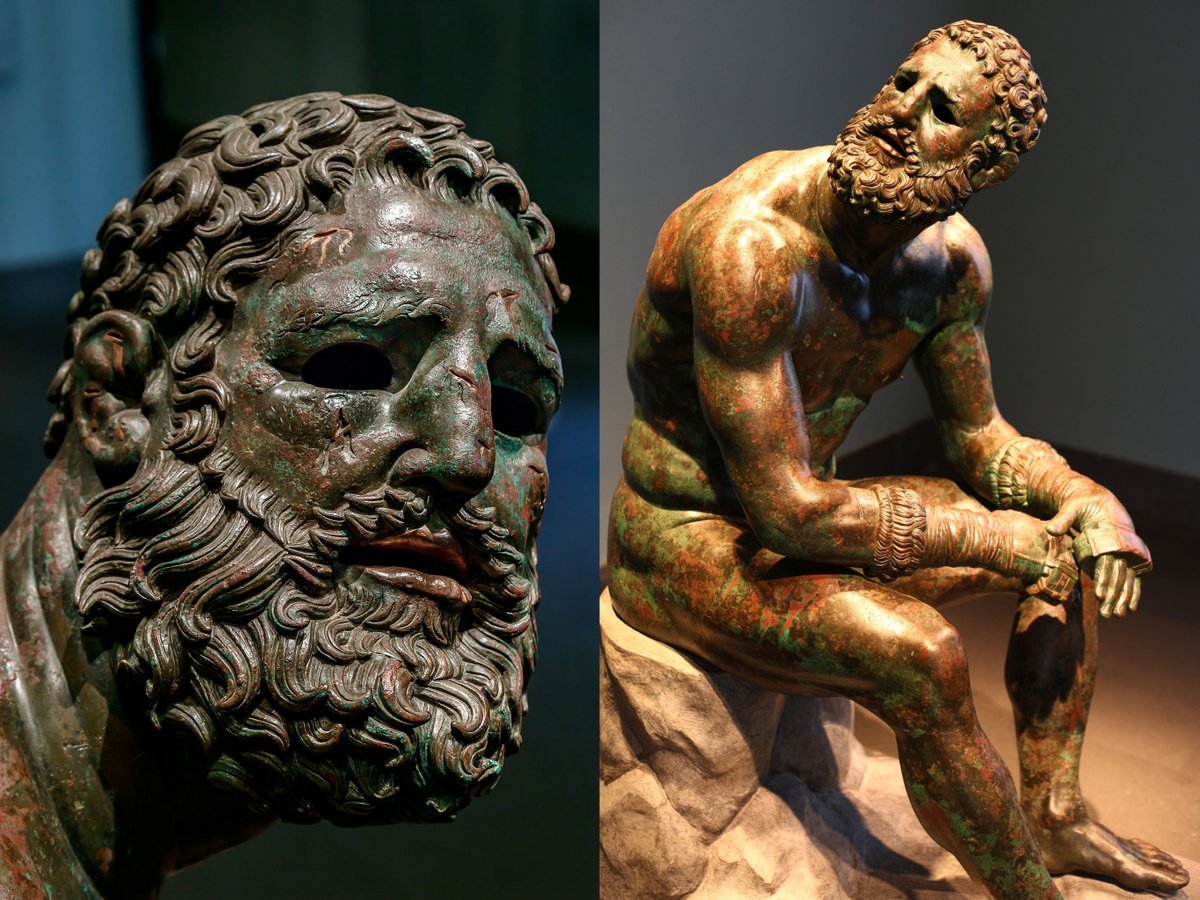
This statue is more than 2000 years old.
It’s the Boxer at Rest, an original Greek bronze from the Hellenistic period. He sits slumped on a rock, still wearing his boxing gloves, and turns his head as if someone has just called his name. Every detail of his face tells the story of a life spent fighting: the cauliflower ears, swollen and misshapen from years of blows, the broken nose, the old scars, and the fresh cuts from the match he has just finished.
In ancient Greek boxing, fighters aimed mostly for the head, which is why his face took such a beating...
Now look at his right arm and thigh: those dark spots are drops of blood from his face, made not with paint but with inlaid copper, so they’d shine a little redder than the bronze around them. Even his lips were made of copper.
He was found in Rome in 1885, on the slope of the Quirinal Hill, near the ruins of the ancient Baths of Constantine, where he was probably once on display.
And there’s one small detail that makes him feel even more human: his fingers are worn smooth because in ancient times people walking past couldn’t resist reaching out and touching his hands...