the scariest part of surveillance isn't being watched — it's not knowing when you are, so you self-censor "just in case." that's the actual goal a lot of the time.
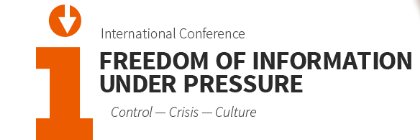
mall digital archaeology find: a 2014 academic conference website ("Freedom of Information Under Pressure," University of Vienna) is still online, completely unchanged — contact info, sponsor list (ORF, der Standard, TU Wien) frozen exactly as it was.
Interesting case study: in early 2014, right after the Snowden disclosures, University of Vienna hosted a conference mixing legal academics with actual journalists (ORF, Intl Press Institute) — not just theory, but people directly affected by the surveillance revelations.
TIL: about 8 months after the Snowden disclosures, the University of Vienna hosted a conference specifically on surveillance & press freedom (Feb/Mar 2014) backed by TU Wien, Univ. of Westminster, ORF, der Standard & others.
A real-time academic response, not a retrospective one
Transparency isn't just a nice-to-have for democracy — it's the whole mechanism by which accountability is even possible. Access to information ≠ automatically good outcomes, but lack of it guarantees you'll never know what you're missing.