So it’s posted here: The First Amendment applies so unless this falls into a narrow category of unprotected speech like defamation, it’s protected.
We’ll likely see many of these AI-generated videos this year. Many will likely constitute core political speech. Some may not. In any case, the best course of action is more speech.
Ursula von der Leyen has confirmed that everyone in the EU will need to use the EU's app for identity authentication before being able to access or post on social media websites.
🇪🇺 As an expert in online child safety, I am here to expose the misinformation and misdirection in von der Leyen's statements.
Today von der Leyen said:
"This is not about whether children can access social media, it is about whether social media can access our children".
💡The first part is true. This isn't about children. It's about surveillance and combating political dissent. A state that can't control its own citizens is more dangerous than a state rife with criminals. The second part is a PR soundbite that politicians are using like a campaign slogan straight out of 1984.
🇪🇺"The question is no longer if children face risks online, but what can we do to give children a safer start online".
💡No. You can't give children a "safer start" online any more than you can offline. In the offline world, the government doesn't enforce curfews or ban children from entering liquor stores, bars or restaurants. That's a parent's responsibility. The digital world should be no different.
🇪🇺"The age verification app is one of the tools to get it done".
💡This is a contradiction because she also said "It won't be foolproof".
🇪🇺"It's easy to use, it is privacy preserving and it is open source".
💡The app was compromised as soon as it was released. "Privacy-preserving" age verification is an oxymoron. You can't verify a person's age without verifying their identity. Where or how that age is shared afterwards is irrelevant.
🇪🇺"This is basically about putting back the power into the hands of parents".
💡More from 1984. The EU is doing the opposite. Parents are having their authority stripped by politicians who think they know better. Many parents are capable and unaffected by peer pressure, and they know how to use parental controls to block any app classified as 13+. Some teens are safe, their parents trust them, and the state has no business overruling that trust.
🇪🇺"We don't give our children keys to the car before they have their licence"
💡Comparing an app to a car is a false equivalence used to justify mass surveillance. Governments don't decide when a young person is ready for car keys, guardians do.
💡Forcing every adult and child into a biometric checkpoint just to use an app or website is not licensing drivers. It's the state seizing everyone's keys, locking the garage, and forcing every driver to ask a private company for permission to take a drive.
💡 This is a gross, unethical overreach that strips authority from parents while imposing state sanctioned identity verification on every adult who doesn't even have a child.
💡Additionally, people who pass a test, obtain a licence and drive a car aren't forced to use an app to constantly authenticate their suitability to drive.
🇪🇺"We do not let them buy alcohol until they are legally allowed"
💡False equivalence. We don't force every person to show ID at a shopping mall entrance just because a few people might buy alcohol with a meal at a restaurant. Some parents are okay with their 12 year-old going to the mall with friends while others aren't. Either way, it's their choice. Whatever irresponsible decisions some parents might make, every adult in the country shouldn't be forced to pay the price.
🇪🇺"It won't be foolproof"
💡This is all the proof we need to show that the EU and every government know that banning social media for teens won't protect them. When pressed by journalists about VPNs being used to circumvent a ban, politicians always state the ban isn't a silver bullet and will take time. The Mayor of London, Sadiq Khan went as far as to say "we know it's not the solution".
💡Either age verification works, or it doesn't. As a technical expert in this space, I can tell you there are no additional steps to take and no progress to be made. Either the approach does what it is supposed to do, or it's not fit for purpose. If they claim a bulletproof solution is coming, it can only mean one thing. They intend to ban or restrict VPNs to people who verify their identity.
🇪🇺"It will take time to invite the cultural change that is already taking shape in our society, just as it took time to outlaw drink driving, just as it took time to use seatbelts in the cars. Great change never happens overnight, but when it comes to our safety it is always worth it".
💡Comparing a social media ban and age verification to seatbelts is a completely broken analogy. Seatbelts are a safety feature that protects children while allowing them to travel in a car. A ban doesn't give kids a seatbelt. It kicks them out of the car entirely.
💡Instead of supporting parents who want to guide their own children through the digital world, this heavy-handed law strips away parental authority by banning the apps and websites that many parents are perfectly fine with and actively monitor.
💡Furthermore, enforcing these bans requires biometric age verification, which means forcing millions of adult citizens to scan their IDs, faces or credit cards just to browse the internet. That isn't a common-sense traffic law.
💡It's a digital checkpoint on every street. True safety means teaching kids how to navigate the digital world safely with real guardrails and parental guidance, not burning down digital spaces for everyone under the guise of protection.
🇪🇺☠️ The EU wants to ban teens from social media so every person is forced to verify their identity before they can read, share or post anything online. In their words, this is to protect children from dangerous content.
🇪🇺☠️ The EU wants to enforce "Chat Control" so every app has to monitor everything people say privately inside it, including apps with end-to-end encryption. In their words, this is to protect children from dangerous criminals.
💡Where this ends
🇪🇺 "If you want a picture of the future, imagine a boot stamping on a human face - forever".
George Orwell, 1984.
Wired has a new piece about a very democracy-facing use of AI in Estonia to identify flaws in existing law.
If I’m not mistaken, the U.S. has experimented with similar uses.
I think AI is quite useful for this. It would be a fruitful exercise to run the U.S. Code and other federal law through it to see what we get back.
Where we could go wrong here is making laws more aligned with government AI systems than human review. One of the ways we do that by creating complexity only AI can interpret or by dramatically increasing the volume of federal laws from its already bloated state.
i hooked up a rotary phone from the 1920s to an AI agent, that replies on a mechanical display
it’s like a dumbphone without distracting notifications
here’s how i built this w/ @cursor_ai
I can only imagine the world of false positives we’ll inhabit if federal legislation mandates this type of screening and takedown for everyday content categories.
I’m thinking of the NO FAKES Act and its “stay down” requirements.
This weekend, our safety systems incorrectly triggered and banned around 200 accounts. Everyone affected has been reinstated.
Here's what happened. A thread 🧵
Best tech policy essay of 2026 so far.
Don't miss @gmdickinson's new law review article on "Law Proofing the Future" in the Harvard Journal on Legislation.
BREAKING:
The EU today introduced the new requirement for all new cars registered in Europe to have installed cameras filming the driver’s face.
The system is called Advanced Driver Distraction Warning, ADDW, and is part of the EU’s General Safety Regulation.
The camera tracks the driver’s gaze, head movements and attention.
According to the regulations, the system must be active from 20 kilometers per hour. At lower speeds, it should be able to warn if the driver looks away for too long, while the requirements become stricter at higher speeds.
The requirement does not yet mean any obligation to record the driver for the authorities.
Critics warn that the technology could pave the way for more extensive monitoring and recording in the car once the cameras, sensors and software are installed.
Some states enacted "obscenity for minors" laws requiring adult-content websites to verify users' ages before granting access.
Texas's HB 1181 is the leading example. Because the Supreme Court upheld its age-verification requirement, many people now argue that governments can require age verification for any online service.
That's not what the Court decided.
Requiring age verification for one category of content is very different from making age checks a routine condition of online speech.
La fragata Libertad anoche, en la tormenta que azoto New York .
Habia llegado el dia anterior junto a otros buques miticos , como la Vepucci Italiana para participar del #Sail2026Parade
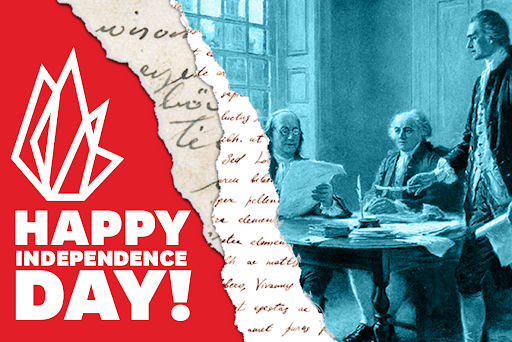
The Fourth of July celebrates the most radical idea in American history: that ordinary people can speak, argue, dissent, and govern themselves.
Free speech has a remarkable power to defend itself. Let people talk, and bad ideas can be answered, dogmas can be challenged, and truth has a fighting chance.
But the culture that makes free speech possible needs defenders.
Join us at Soapbox to help keep it alive:
https://t.co/mrbepK8I1l
Scientists at the Library of Congress recently looked under a microscope at Thomas Jefferson’s original draft of the Declaration of Independence.
Using spectral imaging, they found what was originally written underneath: "our fellow subjects."
Jefferson literally scraped that word away and wrote "citizens" right on top of it.
This is the exact moment the American mindset shifted.
A subject is ruled by a government or a king. A subject is subservient.
A citizen is a free individual with inherent rights, answering to no one.
Today I believe our government thinks we are once again subjects. It’s time to rewrite that once again. 🇺🇸
This Atlantic piece explores the issue of AI in education, particularly focusing on motivation to learn in general has a major resistor for students.
For the small percentage of motivated kids, it’s supercharging their efforts. Everyone else simply aren’t using them.
Apart from redesigning curriculum to prepare students for the AI world they’ll soon enter, we need continued iteration here to explore needed friction and motivators. Not for AI’s sake, but for the great benefit a particularized AI system could have for students who learn differently.
It’s a tool teachers could deploy, not a replacement.
“Taken together, this week’s developments point toward the same conclusion: we should be cautious about centralizing authority. There shouldn’t be one official vision of AI.”
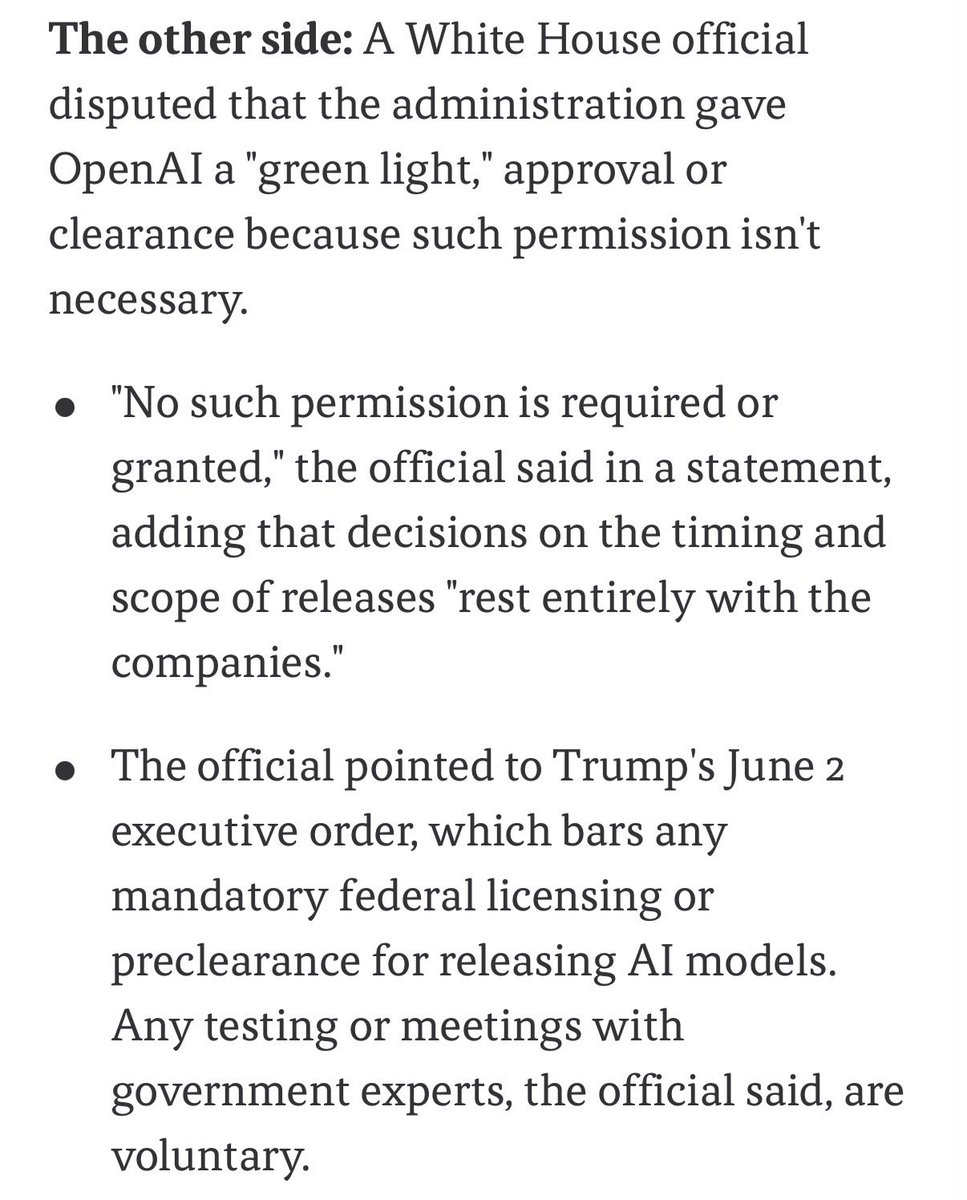
This week in AI policy: the White House reportedly keeps reviewing frontier models, Anthropic resumed Claude Fable 5 with new restrictions, the FTC proposed a novel AI accuracy policy, the House passed the KIDS Act, and Congress debated the NO FAKES Act.
One theme runs through all of it: AI is emerging as one of the most important expressive mediums through which people create, communicate, and discover knowledge.
This week in AI policy: the White House reportedly keeps reviewing frontier models, Anthropic resumed Claude Fable 5 with new restrictions, the FTC proposed a novel AI accuracy policy, the House passed the KIDS Act, and Congress debated the NO FAKES Act.
One theme runs through all of it: AI is emerging as one of the most important expressive mediums through which people create, communicate, and discover knowledge.
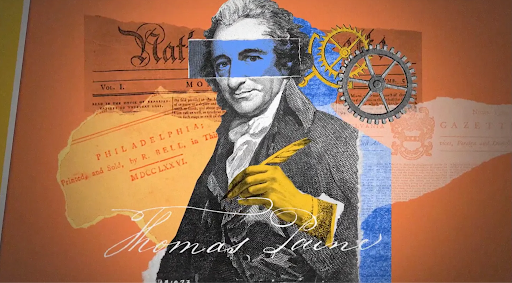
Thomas Paine was too radical, too irreverent, and too useful to be comfortably loved. Which is exactly why he belongs at the center of America’s 250th birthday.
Check out the Founding Father worth revisiting:
https://t.co/QFf0ilmzt5