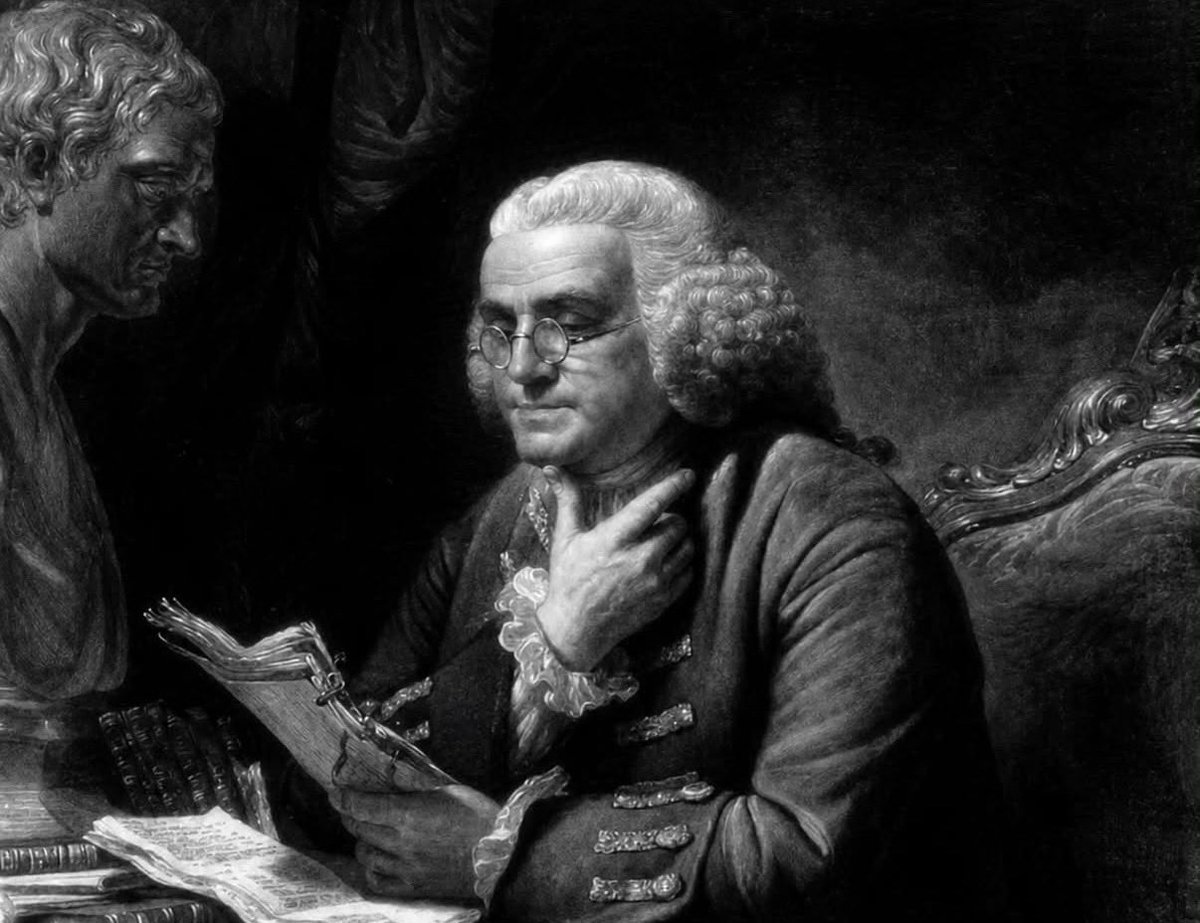
“We are all born ignorant, but one must work hard to remain stupid.”
- Benjamin Franklin
Benjamin Franklin (1706–1790) was an American author, scientist, inventor, diplomat, and influential thinker of the Enlightenment. He championed education, critical thinking, curiosity, and personal development, believing that individuals could continuously improve themselves by pursuing knowledge and learning from experience.
“We are all born ignorant, but one must work hard to remain stupid.”
Although this saying is commonly credited to Franklin, its precise wording has not been conclusively traced to his original writings. Nevertheless, its message aligns with his emphasis on education, intellectual curiosity, and lifelong self-improvement.
The statement draws a clear distinction between ignorance and stupidity. Ignorance is simply the absence of knowledge, a condition everyone experiences from birth. However, deliberately avoiding new information, resisting questions, and refusing to acknowledge mistakes reflects something different. It suggests that ignorance can become a conscious choice when opportunities for learning are consistently dismissed.
Ultimately, the message reminds us that lacking knowledge is not a personal failure, but choosing to remain uninformed can be. True intelligence involves more than what we already know; it requires the humility to recognize what we don’t know and the curiosity to discover more. We all begin life knowing very little, but our willingness to learn determines how much we grow.
“The insult only works if you accept it.”
- Diogenes
Diogenes of Sinope was a Greek philosopher who lived in the 4th century BCE and became one of the most famous figures of the Cynic school of philosophy.
He rejected wealth, status, luxury, and conventional ideas of respectability. Ancient accounts describe him living with very few possessions and sleeping in a large ceramic storage vessel in Athens. Stories also portray him deliberately challenging powerful figures and dismissing insults to show how little he cared about public opinion. For Diogenes, true freedom came from needing as little as possible, including the approval of others.
The image is Jean-Léon Gérôme’s 1860 painting Diogenes. It depicts the famous story of Diogenes carrying a lamp in broad daylight while claiming to be searching for an honest man. Gérôme surrounded him with dogs, referencing the origin of the word “Cynic,” which comes from the Greek kynikos, meaning “dog-like,” and reflected the Cynics’ deliberately unconventional way of life.
Mi parte favorita de ir a Limón en bus es cuando empezamos a entrar al Zurquí y todos se quedan sin señal… 😂
0 llamadas, audios de WhatsApp, tikitokis y ya por último, sólo queda esperar que no vaya algún señor mayor poniendo videos de la galería del cel…
Cuando #SantosLaguna vino a #CostaRica, fui a la gradería con los Santistas y camisa de verde, es mi equipo MX favorito…
Yo me siento a ver los partidos las veces que puedo… acaso que nacer en CR me impide elegir otros equipos del área para mi propio entretenimiento? #Herediano
¿Se esperaban esto de Jafet Soto?👀🔥
Si usted es aficionado de Saprissa o la Liga y quiere ir a ver al Pachuca debe pensarlo dos veces, ¿Por qué?🏟️🔽
https://t.co/0IS2qdlVEf