A4. Some norms I really appreciate: (1) lean into discomfort, (2) attend to power dynamics in interactions so as to center non-dominant perspectives, (3) don't move to closure prematurely—scaffold dissent and engage in critical analysis. #NGSSchat
@3DplanJeanane @nextgenstoryli1@OpenSciEd I agree! Implementing these storylines with my colleagues is a great way to grow my understanding of NGSS #NGSSchat
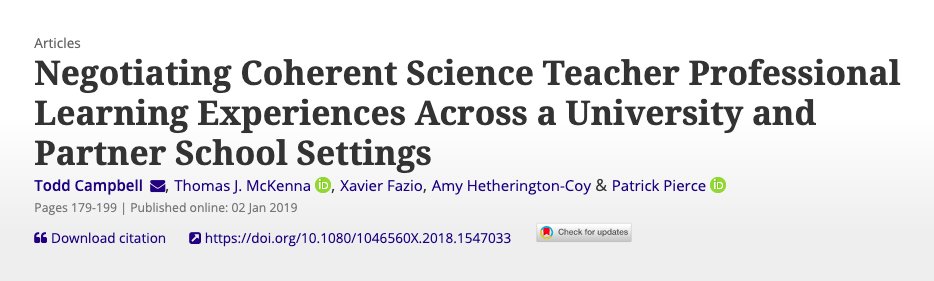
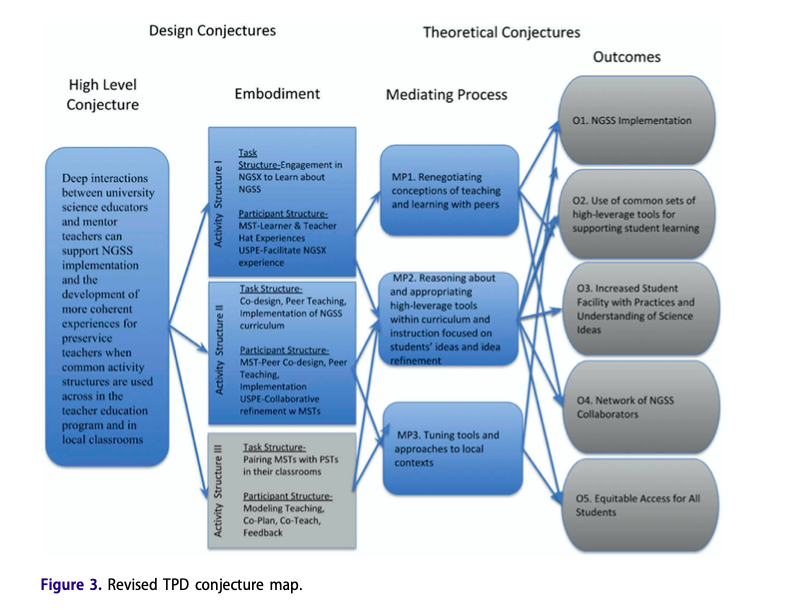
It is also important to think about coherence across universities and school settings - this is a study we did exploring the assumptions underlying the work of a research–practice partnership (RPP) focused on this #NGSSchat https://t.co/7gVIdE3azy
A4: Supporting PST's to attend to students' resources and recognize/trouble how race, language, culture influence what they interpret and respond to as scientific. #ngsschat
I would say:
1. Shift to making sense of phenomena
2. Ss playing a role in planning instruction
3. Use of Modeling and Explanation
4. Student to student evidence-based discourse
#NGSSChat
A4 Major concept we should focus on next is sociocultural learning. I want our next generation to be able to be empathic leaders that can problem solve and communicate based on evidence #NGSSchat
A 3 The experience of developing and implementing storylines has had the biggest influence for me teaching science. I was introduced to inquiry instead of cookie cutter labs but Ss learning based on a phenomenon has had the most impact. #NGSSchat
A7: When we look for phenomena to investigate, we use culturally relevant phenomena where communities have been impacted such as the Flint, MI water crisis, African American birth mortality rates, access to power in Puerto Rico, tsunamis on the big island in HI, etc. #ngsschat