If you haven't already checked out @disneyplus we can give you more reason to. Now streaming is the @NatGeo show #GreatMigrations Dr Fryxell was featured on in 2010! Tune in to learn more about Dr Fryxell's past field work and how he got his birds-eye view of migration patterns🎈
Happy 2020! Our lab just published a new paper on the role of food availability and temperature on Daphnia life history traits. Second author is our PhD student @Sharon_SnowJade
Check it out:
https://t.co/uTQHkOiWT5
Today's lab meeting discussion: Pros and Cons of @uofg for grad school as new students prospect what to do in the New Year. A big plus from everyone in our lab are all the #dogs, it also helps that Guelph is a research intensive university. 🤷
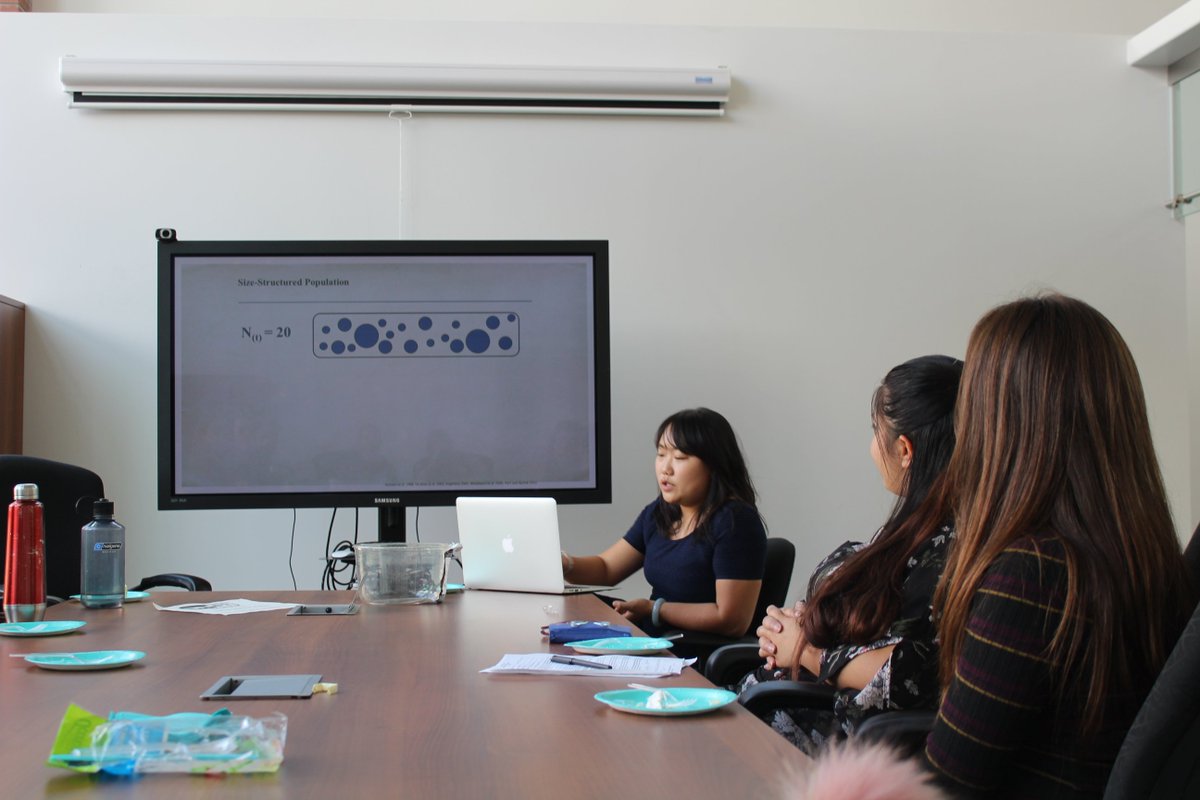
The countdown is on! Our masters student @SShawmcdonald practiced her defense presentation to our lab today in prep for her #mastersdefence this Thursday. The scope of Sam's research is taking a critical look at the impact of fisheries harvesting strategies on fish populations.
🚨🚨NEW UNIT ALERT 🚨🚨
Interrupted Migrations is a #MiddleSchool#PBL#SocialStudies unit. Over 3 lessons, students investigate human impacts on animal migrations & produce an original game to inform & inspire their community about the issues. #SSchat
https://t.co/zGgMlUN6XQ
Moving into aquatic systems, Erica Seeley's project is using Daphnia as a model organism to look at global fisheries. She wants to see how changing food availability interacts with high fishing intensities and warming temperatures to impact fish populations #posterday
#PosterDay! Our undergrad student Jillian McGroaty is looking at how prey abundance can change the diet breadth of the bug Orius sp. in #agricultural environments to evaluate their effectiveness as a biological control agent. Check out that poster design!
Our lab members recently spent a season in #Norway surveying vegetation in wild ranges to better understand the connection between Norwegian reindeer location and their energetics. You can find out more about the findings of their research on our website: https://t.co/1vlNRMN9sV
This past week Dr Fryxell traveled to Ottawa to be welcomed as a fellow to the @RoyalSociety of #Canada. To be a fellow of the #RCS is recognition of significant contribution a scientist has made to their field. Get to know more about the research Dr Fryxell was recognized for:
Check out all that #biodiversity! 👏The photos Dr. John Fryxell took at his most recent trip to the #Serengeti almost do the beauty of the Tanzanian wildlife justice. To find out more about the research that we do here check out our site: https://t.co/z4d8XkabR1
This weather has us dreaming of warmer days and living vicariously through this vid from our #cariboucam. We use this footage to observe the caribous movement and feeding rates. Check out that view (and the lil babe 😭)!
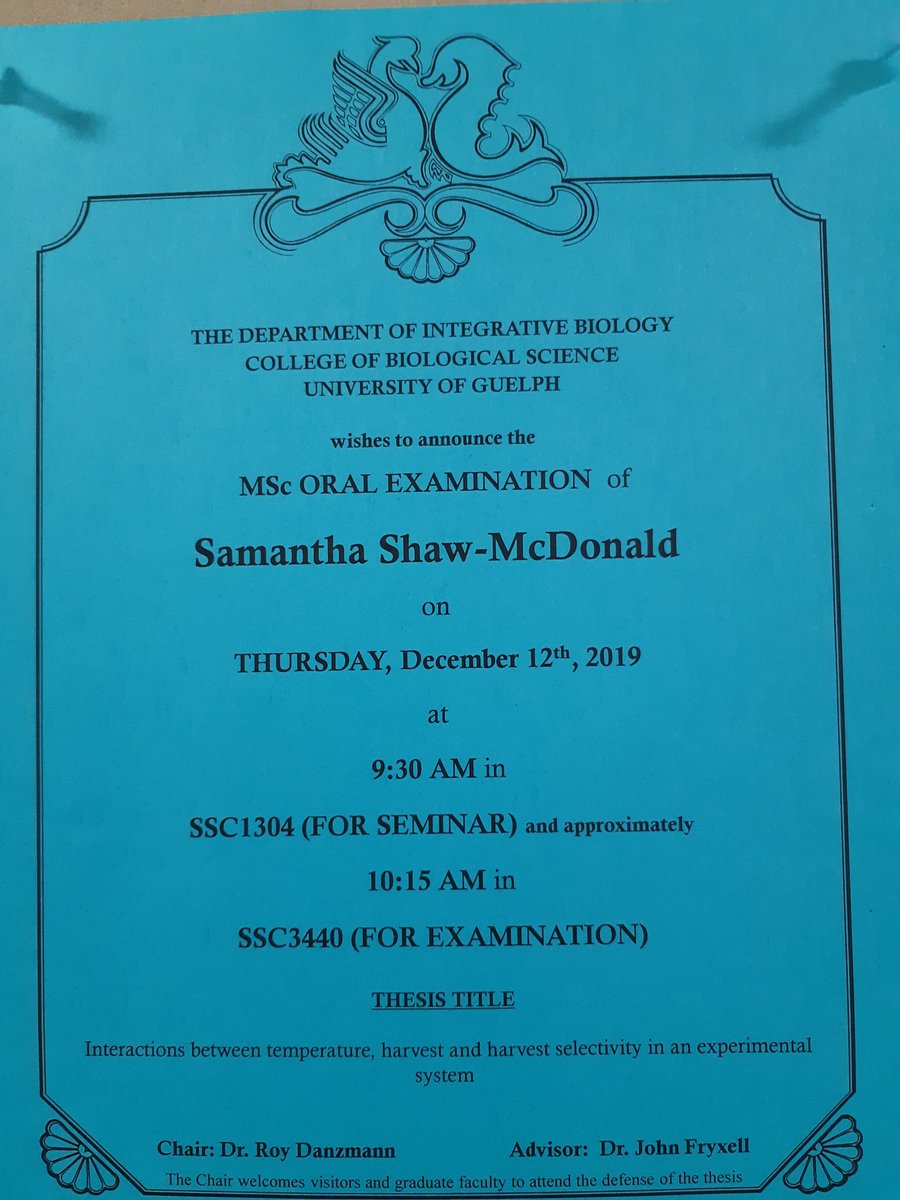
Our lovely master's student @SShawmcdonald is finishing up her time with us studying the effects of harvesting and climate on an experimental aquatic population. A date has been set! Congrats Sam!!
The end is in sight! Defense date set for masters work with @FryxellLab. This month is now dedicated to studying, practicing my presentation and not getting sick!
@uofg The @FryxellLab is working with @UofG_FfT on a project compiling and analyzing data from malaise traps set across ecosystems across southern Ontario. This will help them to understand how the number and variety of different insect species vary across different dimensions.
Check out those little kicks! This is a #microscopic view of our experimental zooplankton that are the main variable in most of our lab experiments. If you look closely, you can see this mature daphnia's neonates - the little black egg-like bulbs on it's backend! #sciencebutcute
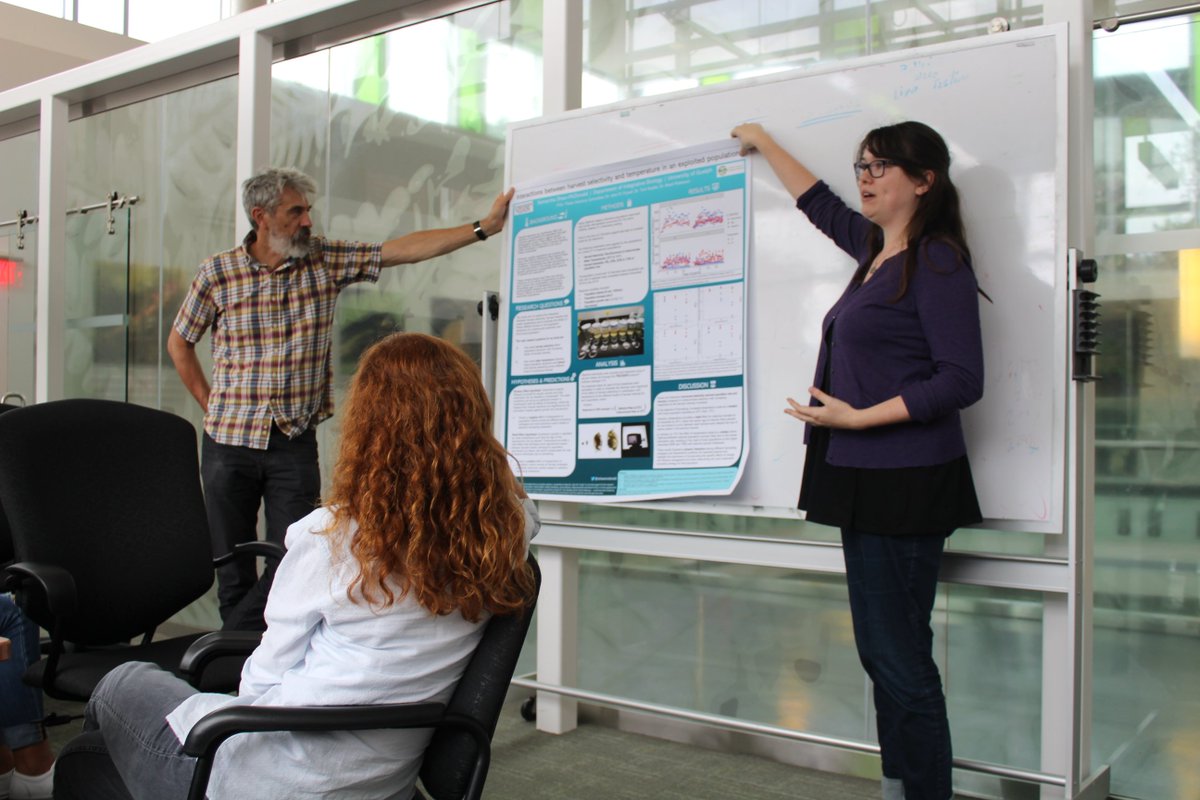
Some action shots of our lab meeting yesterday. Our lab members, @Sharon_SnowJade a PhD Student and @SShawmcdonald a masters student, shared their oral and poster presentations to our growing lab team and held a discussion on the pros and cons of oral vs poster presentations
An exciting moment for the Fryxell Lab! We're honoured for our research to be recognized by the Royal Society of Canada for making a positive impact on the world.
Congratulations to Prof. John Fryxell, executive director of the Biodiversity Institute of Ontario, on being elected the Royal Society of Canada!
Read the full announcement here: https://t.co/HBXjCQZ9ee
@FryxellLab@IntUGrativeBiol@uofg